Best Email Apps for Restaurant Owners (2026): 6 Tools Ranked

The short answer
For a restaurant owner, the best email app sorts supplier invoices out of the booking queue, drafts fast replies to private-dining enquiries in your restaurant's voice, and holds every AI send for one-tap approval. Our pick is AI Emaily for owner-operators; Front is the mature answer if you already run a hotel-scale reservations desk. We build AI Emaily.
The best email app for restaurant owners sorts supplier invoices from private-dining enquiries, drafts booking replies, and holds every AI send for approval.
On this page
- 01The short answer
- 02How we compared
- 03Comparison at a glance
- 041. AI Emaily — best for the owner-operator
- 052. Front — best for a group or a hotel F&B team
- 063. Missive — best for owner plus assistant or GM
- 074. Superhuman Mail — best for a director whose personal inbox is the choke point
- 085. Shortwave — best for AI search over past guest history on Gmail
- 096. Fyxer — best as an overlay on your existing client
- 10How to choose for your situation
- 11Frequently asked questions
The restaurant owner's inbox is not really an inbox. It is a stack of four different jobs stapled together: private-dining enquiries that decide whether the function room pays for itself this month, supplier invoices and price-list updates that decide whether your food cost holds, delivery-platform mail from Uber Eats or DoorDash that needs a same-day answer, and staff messages that arrive at the worst possible moment. All of it lands in the same place, most of it lands during service, and none of the tools sold to restaurants — POS, reservation platforms, inventory apps — do much to help.
This guide picks the best email app for a restaurant owner who works service, answers to nobody but their own P&L, and cannot afford to let an enquiry sit for six hours because the private-dining page was live but the reply window was not. We compared six tools on how they handle those four workloads specifically, rather than on generic feature counts. Pricing shifts constantly in this category, so we describe packaging shape and tell you where to check the current number.
The short answer#
For an owner-operator running one to three sites with a small ops team, our pick is AI Emaily. It connects to your existing Gmail, Outlook or IMAP mailbox — including the Fastmail, Rackspace and cPanel-hosted mailboxes many independent restaurants actually use — sorts supplier mail out of the enquiry queue automatically, drafts first replies to private-dining requests in your restaurant's voice, and holds every send for one-tap approval by default. The AI never speaks to a guest without a human on the line.
For a larger operation — a small group with a full-time events team, or a hotel restaurant where reservations and F&B share a shift rotation — Front is the more mature answer. It is a shared-inbox platform built for pooled assignment, internal comments and SLA reporting, and it has been the operating layer for a lot of hospitality customer service teams for years. It is over-built for a single owner-operator, and we say so below.
We build AI Emaily. We are recommending it for the shape of team it is genuinely built for. Where Front, Shortwave or a shared-inbox tool is the honest fit, we say that too.
Reservation platforms are not email software
How we compared#
We ranked on documented capability against the four workloads a restaurant owner's inbox actually carries, in the shape a single-site or small-group operation runs. The dimensions:
- Private-dining and event enquiries — how fast a real first reply can be drafted with the guest's date, party size and dietary requests already extracted, and whether the AI ever sends without a human seeing it.
- Supplier noise control — whether price-list updates, invoices and order confirmations from produce, meat, wine and dry-goods vendors can be sorted out of the reply queue automatically so they do not compete with guest mail.
- Delivery-platform mail — whether messages from Uber Eats, DoorDash, Deliveroo and Just Eat can be triaged and answered from the same view as guest enquiries, without alt-tab across four dashboards.
- Complaint handling — whether an angry guest, a food-safety report or a public-review threat gets routed to a human immediately, untouched, with the thread history attached.
- Provider coverage — Gmail, Microsoft 365, and IMAP for the mail hosts most independent restaurants use. A Gmail-only tool is a hard filter for anyone on cPanel-hosted mail.
- Autonomy safety — mandatory approval before send in the default mode, a full audit trail, and undo. Reservations and supplier mail is money mail; the safety story matters more than the speed story.
We deliberately did not compare on published star ratings, review counts or vendor pricing. Ratings shift monthly and prices change without notice; a printed number is stale before the post is indexed. Instead each option is described by packaging shape — free tier, trial, per-seat, usage-metered — with a note to verify the current number on the vendor's own page. Verify every capability against the vendor's live site before you sign anything; hospitality software vendors reshape their tiers and add-ons often.
Comparison at a glance#
| Tool | Shape | Best for | Approve-before-send AI | Packaging |
|---|---|---|---|---|
| AI Emaily | AI-native email client | Owner-operator or 1–3 person ops team on Gmail, Outlook or IMAP | Yes — Copilot approval by default; Autopilot only within rules you set | 7-day free trial (card required, $0 if cancelled), then paid tiers or a lifetime deal |
| Front | Shared-inbox platform | Group with a full-time events desk or a hotel F&B team | AI Copilot is an add-on outside Enterprise; approval flow depends on tier | Per-seat tiers — Starter, Professional, Enterprise; caps on seats and rules |
| Missive | Shared-inbox client with team chat in every thread | Owner plus an assistant or GM who work threads together | AI drafting available; team approval via internal comments | Free tier, per-user paid tiers |
| Superhuman Mail | Fast Gmail/Outlook client (Grammarly-owned) | A single owner whose personal inbox is the choke point | Drafts held for user send — no autonomous send | Per-seat subscription; Mail Starter, Business, Enterprise |
| Shortwave | AI-native Gmail client | Google Workspace restaurant that wants strong AI search over guest history | AI drafts held for user send by default | Paid tiers with a trial; verify current tiers on shortwave.com |
| Fyxer | Overlay on Gmail/Outlook | Owner who wants triage and first drafts without changing clients | Drafts held; extension-level access to the mailbox | Per-user subscription with a trial; verify on fyxer.ai |
The most important column in that table is the third one. Read it as "which shape of operation is this thing actually built for" rather than as a rank within a single shape. A tool built for a full-time events team is over-built and expensive for a solo owner; a client built for a single power user is under-built for a two-site group with an assistant.
1. AI Emaily — best for the owner-operator#
AI Emaily is an AI-native email client that runs on top of your existing Gmail, Microsoft 365 or IMAP account. That last one is why it belongs first here specifically for restaurants: a lot of independents run their mail on Fastmail, Rackspace or a cPanel-hosted mailbox tied to the restaurant's own domain, and most AI-email tools quietly do not support that. You keep [email protected]; we sit on top of it, and nothing about your reservation platform, POS or delivery-app integrations changes.
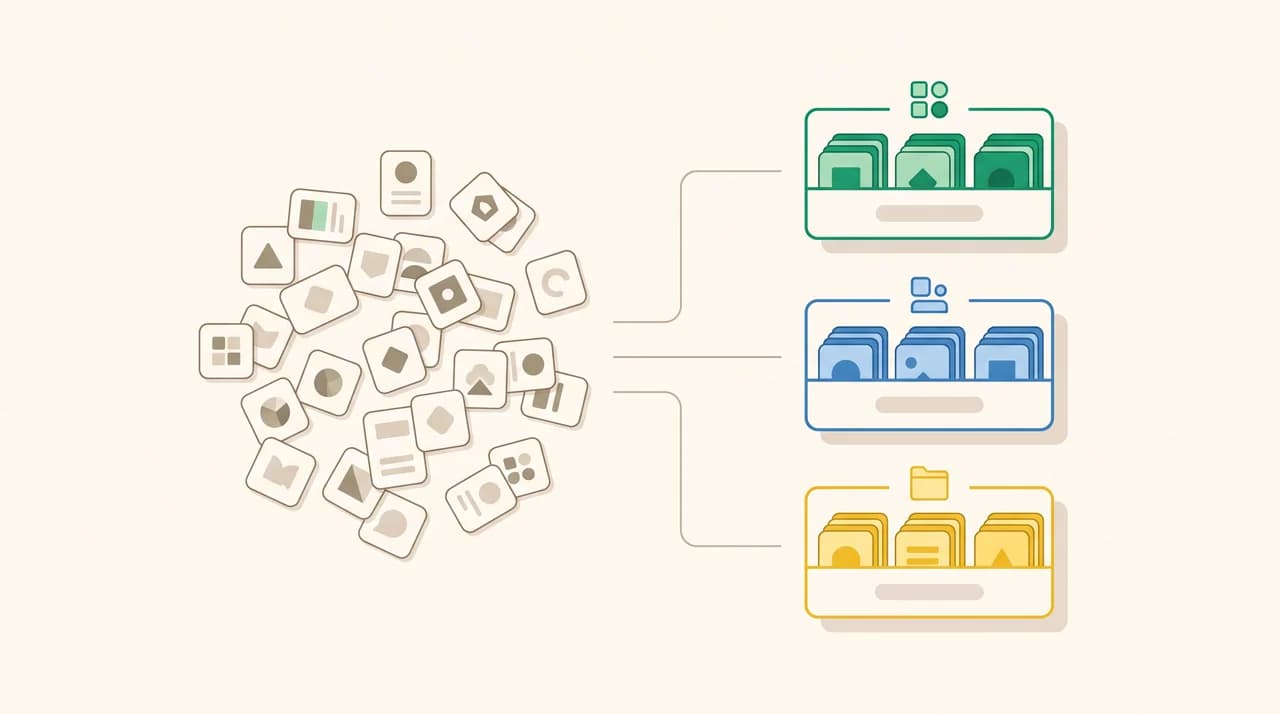
For a restaurant inbox specifically, the first job the tool does is get the four workloads apart. Supplier price-list updates, order confirmations and invoices from produce, meat, wine and dry-goods vendors are routed out of the reply queue automatically — you still see them, they just do not compete for attention with a guest enquiry that needs a same-day answer. Delivery-platform mail is bucketed on its own. Private-dining and event enquiries land where you can see them at a glance, with the date, party size and any specific requests already pulled out of the message.
The drafting works the same way. A private-dining enquiry gets a first reply written in your restaurant's voice within seconds — not a generic acknowledgement, a real reply with the room, capacity, minimum spend and next-step call scheduling. Voice is not learned from your sent mail; it is defined by a Personal Context brain you set once and per-client profiles you can maintain over time. That matters more for hospitality than any other vertical, because guests notice when the reply sounds off — a formal five-course dinner enquiry and a walk-in wine-bar booking need different tones and it should not take you writing both to teach the tool.
The autonomy model is what makes it safe on a money inbox. In Manual mode, the AI drafts and you send. In Copilot mode — the default — every draft waits for your one-tap approval before it goes to a guest or a supplier. In Autopilot mode, you can allow specific low-risk scenarios (an out-of-hours acknowledgement to a private-dining enquiry, say) to send inside rules you set, while forcing anything that looks like a complaint, a delivery-platform dispute, or an angry tone to escalate to a human, untouched. Every action is logged in an audit trail and every send has an undo. A bad automated reply is recoverable, not shipped to a guest with your restaurant's name on it.
Where AI Emaily is a genuine fit: an owner-operator or a one-to-three-person ops team, mixed thread types, and a preference for keeping the reservation platform and delivery-app dashboards you already use. Where it is not the right pick: a group with a full-time events desk that needs pooled SLA dashboards, message-level timers and assignment as a first-class primitive. That is Front's job, and we say so below.
We build AI Emaily. It ships as a downloadable Mac app (Apple Silicon), a Windows installer, a native iOS app, an Android PWA and the web. There is no permanent free tier — start a 7-day free trial (card required, $0 if you cancel before day 7), or take the lifetime deal at /lifetime if you prefer a one-time buy. Verify current pricing on our /pricing page; we ship changes often.
2. Front — best for a group or a hotel F&B team#
Front has built harder on multi-agent shared-inbox operations than we have. That is the honest concession, and it is why Front is entry two here and not lower. If your operation runs a full-time events or reservations desk with four or more people on a rotation — pooled email plus SMS plus WhatsApp, with assignment, internal comments, message-level SLA timers, CSAT surveys and manager reporting — Front's model is the mature answer, and it has been the operating layer for hospitality customer service for years.
Its packaging is per-seat across three tiers — Starter, Professional and Enterprise — with real caps to be aware of. Starter is one channel type only (email or chat or SMS, not combined), capped at ten seats and ten automation rules. Professional is omnichannel with more rules and macros, up to fifty seats. AI Copilot, QA and CSAT features are paid add-ons on Starter and Professional and only included on Enterprise. Contracts above a threshold require a mandatory onboarding package. Verify the current tiers, caps and add-on pricing on front.com/pricing.
Where Front is not the right fit: an owner-operator or a two-person ops team. The per-seat pricing, the setup effort and the shared-inbox model itself all assume a scale of team most independent restaurants do not have. For a solo owner, it is over-built, and you will pay for capabilities you will not use.
3. Missive — best for owner plus assistant or GM#
Missive is a shared-inbox email client with team chat built into every thread. The idea is that instead of forwarding a supplier email to your GM with a note in a separate app, you leave a comment inside the thread itself; your GM sees the comment and the supplier's message in one view. For a two-person operation — an owner plus a general manager, or an owner plus a virtual assistant — that is a genuinely useful shape.
It supports Gmail, Outlook, IMAP and other providers, offers AI drafting, and its free tier and lower per-user paid tiers make it accessible for small operations. It is not as feature-dense on SLA reporting as Front, and it does not have AI Emaily's approve-by-default autonomy envelope — the AI drafts, but the safety story around sending is lighter and depends more on how you configure it. For a small team already comfortable working out of team chat inside an inbox, it is a strong option.
4. Superhuman Mail — best for a director whose personal inbox is the choke point#
Superhuman Mail is a fast keyboard-first email client with AI drafting, built for a single power user rather than a shared team. A note on the name: in July 2025 Grammarly acquired Superhuman (the email client), and in October 2025 Grammarly renamed the parent company to Superhuman. There are now two things sharing the name — Superhuman Mail (the client) and the Superhuman Suite (the bundle). When you compare, make sure you are comparing the mail client and not the suite.
For a chef-owner or a group founder whose personal inbox is the operational choke point — hundreds of threads a week, most of them consequential, all of them yours to answer — the speed and the keyboard model are real. It is not a shared-inbox tool and it is not built for the bookings desk as a team; it is built for one person. Its packaging is per-seat across Mail Starter, Business and Enterprise; verify current pricing on the vendor page. Not the right pick for the shared bookings@ queue itself.
5. Shortwave — best for AI search over past guest history on Gmail#
Shortwave is an AI-native Gmail client built by ex-Google engineers, with strong semantic search over Gmail history. For a restaurant on Google Workspace that wants to ask its inbox questions like "what did we quote the Patel wedding last September" or "what wine did the Kellerman party order at their birthday dinner" and get an actual answer, Shortwave has built harder on Gmail archive search than we have. That is a real strength and worth being upfront about.
It offers paid tiers with a trial; verify current tier structure on shortwave.com before you sign. It is Gmail-only, which rules it out for restaurants on Outlook or IMAP, and it is a client rather than a shared-inbox platform, so the fit for a bookings desk is closer to Superhuman's shape than Front's. The specific restaurant it fits: Google-Workspace-hosted, leans heavily on searching prior guest history, and comfortable with a Gmail-only tool.
6. Fyxer — best as an overlay on your existing client#
Fyxer is an overlay on Gmail or Outlook rather than a client — the mail app you already use, with AI triage, first drafts and meeting notes bolted on top. For an owner who does not want to change email clients but does want an AI to draft first replies and categorise inbound, that overlay shape is the whole appeal. It is also the whole limit: because it sits on the provider, its view of the mailbox is what the provider gives it, and its safety envelope depends on how you have the underlying client configured.
Packaging is a per-user subscription with a trial; verify current pricing on fyxer.ai. For a restaurant owner already deep in Gmail or Outlook who wants a low-friction way to add AI to enquiries and supplier mail without a client change, Fyxer is a real option. The trade is a lighter autonomy story than a full AI-native client offers, and no support for the IMAP-hosted mailboxes that a lot of independents actually run on.
How to choose for your situation#
The scale of your ops team is the strongest signal. Owner-operator or one-to-three person ops team on a shared bookings@ or events@ address, mixed thread types, a preference for keeping your existing reservation platform and delivery-app integrations — AI Emaily is built for that shape, which is why it leads. A group with a full-time events desk or a hotel F&B operation with four or more people on a rotation — Front is the mature answer, and we say so. Owner plus an assistant or GM who works threads together out of team chat — Missive is a strong fit.
The second signal is your mail host. Gmail-and-Outlook-only tools are fine if you are on Google Workspace or Microsoft 365, but a lot of independent restaurants are on Fastmail, Rackspace or a cPanel-hosted mailbox tied to the restaurant's own domain. Shortwave and Fyxer are Gmail-first, which cuts them from the shortlist immediately for IMAP-hosted operations. AI Emaily, Missive and Front all handle IMAP.
The third signal is what happens when you do nothing. On a restaurant inbox, the cost of a slow reply is directly measurable in lost private-dining bookings and delivery-platform disputes that harden overnight. If you already know the number of hours between inbound and first reply — and it is above two hours in your business hours window — an AI drafting layer with approve-before-send is the highest-leverage thing you can add. If your first-reply time is already ten minutes, the ROI is smaller and Gmail rules plus better templates may be enough.
Never let AI auto-send to a complainant or a review threat
Frequently asked questions#
The questions restaurant owners ask most often when picking email software for the bookings and supplier inbox:
Frequently asked
See it in AI Emaily
Keep reading
Sources

Written by
Nafiul HasanNafiul Hasan is an entrepreneur and AI automation system builder with 10+ years of experience turning messy, manual workflows into reliable automated systems. He designs and ships AI enterprise solutions end-to-end — the agent logic, the data plumbing, and the product people actually use — and founded AI Emaily to give busy professionals their attention back. He writes here from the builder's seat: what works, what breaks, and how to put AI to work without giving up control.