Best Email Client for Construction Project Managers (2026)


The short answer
AI Emaily is our pick for a construction project manager handling RFIs and change orders: Gmail, Outlook, and IMAP in one inbox, with the agent drafting subcontractor follow-ups and nothing sending until you approve it. Outlook fits firms fully on Microsoft 365. Missive is better when several people answer the same project address.
Best email client for construction project managers 2026: 8 tools compared on RFIs, change orders and sub chasing — plus the PM platform line.
On this page
- 01The short answer: best email client for each situation
- 02Where your construction platform ends and email begins
- 03How we evaluated these tools
- 04Eight options for a construction PM's inbox, at a glance
- 051. AI Emaily — best overall and our top pick
- 062. Microsoft Outlook / Microsoft 365 — best for firms already on Microsoft
- 073. Gmail (Google Workspace) — best for firms already on Google
- 084. Superhuman Mail — best for high-volume manual processing
- 095. Missive — best when more than one person answers the same address
- 106. Shortwave — best AI client for Gmail-only firms
- 117. Fyxer — best overlay on the client you already have
- 128. Spark — best for lightweight team collaboration
- 13How to choose for your situation
- 14The verdict
A construction project manager's inbox is not a normal inbox. Every thread is potential evidence. An RFI arrives from the architect three questions deep. A submittal returns with revise-and-resubmit comments buried in a PDF. A subcontractor emails a scope question at 6 a.m. that would, if answered wrong, become a $40,000 change order the following month. And somewhere in a folder labelled by month, there is the one reply from the owner's rep that says the work is authorised — the one that has to be produced on demand if the invoice gets pushed back.
One concession belongs at the top of this guide, not buried at the bottom: Procore, Buildertrend, CoConstruct, and Autodesk Build own the document-of-record layer in construction. RFIs are formally logged, submittals are reviewed and returned, and change orders are approved in the platform record. No email client on this list replaces that. What email handles is the conversation that runs before, alongside, and after the platform — the informal question a sub emails before filing the RFI, the architect's clarification sent as a reply-to-all, the change order nudge that never reaches the platform's notifications. That conversation layer is where deadlines get missed and disputes are born, and it is what this guide is about.
One disclosure before the list: we build AI Emaily, and it is the top pick here. That colours the ranking, which is why every entry states its limits honestly and we name a competitor that genuinely wins on a dimension we call out by name.
The short answer: best email client for each situation#
Read only the two entries that match your line — running all eight in parallel is how the decision never gets made.
- Best overall, and our pick: AI Emaily — Gmail, Outlook, and IMAP in one inbox, with the agent drafting sub follow-ups and nothing sending until you approve it.
- Best for firms already standardised on Microsoft 365: Outlook / Microsoft 365 — already licensed, already configured, with Microsoft Copilot bundled in paid Business plans as of July 2026.
- Best for firms already on Google Workspace: Gmail — Gemini bundled in paid Workspace Business plans, strong archive search, native mobile apps.
- Best when several people answer the same project@ address: Missive — a shared inbox with internal thread chat and full assignment.
- Best for a PM who personally processes a very high daily volume by hand: Superhuman Mail — keyboard-first, every action one keystroke.
- Best AI-native client if you are Gmail-only and rely on searching an old archive: Shortwave — semantic search that answers plain-language questions across years of Gmail.
- Best overlay on your existing Gmail or Outlook: Fyxer — triage, drafting, and meeting notes layered on top of the client you already have.
- Best for lightweight team collaboration without a full shared inbox: Spark — shared drafts, sidebar comments on threads, delegation.
Where your construction platform ends and email begins#
Procore, Buildertrend, CoConstruct, and Autodesk Build are designed to be the system of record. When a sub submits an RFI in Procore, the date, the question, and the response chain are logged in a place that survives project closeout, can be exported for a dispute, and does not depend on anyone's inbox staying tidy. That is the right place for formal construction documentation.
Email is the conversation that runs around those records. The sub emails you before filing the RFI because they want to know whether it is worth the paperwork. The architect sends a clarification as a reply-to-all that never enters the submittal log. The owner's rep wants a cost answer before opening a change order. These threads carry real commitments and happen entirely outside the platform.
A PM who manages this inbox layer poorly pays for it in slipped deadlines, duplicate replies, lost context when the assistant PM turns over, and no paper trail for the thread where a sub acknowledged revised scope. The email client is not construction management software. It is the tool for the conversation the platform never records.
Large plan files and drawings
How we evaluated these tools#
This is a capability comparison built from vendor documentation and public product pages checked in August 2026. We did not run eight email clients on a live construction project for a month, and any roundup claiming it did should be read with that in mind. What we can compare honestly is what each product says it does and where its architecture puts a hard ceiling on what a construction PM actually needs.
There are no competitor prices in this guide on purpose. This category repriced itself repeatedly over the past year — Microsoft and Google both bundled AI into their business plans with price changes, one of the flagship names in the space was acquired and renamed, and several tools moved features between tiers. Any figure printed here would be stale before you finished reading. Check current pricing on each vendor's own site at the time you evaluate.
- Provider coverage — Gmail only, Gmail plus Outlook, or standard IMAP. For most construction firms mixing Microsoft 365 (owner, architect) and Gmail (subs), this is the first filter.
- Who presses send — whether the AI suggests, drafts, or acts autonomously, and what stands between it and a recipient.
- Mobile reality — native iOS, native Android, or PWA. Site walks do not happen at a desk.
- Team features — whether multiple people can coordinate on the same address without forwarding threads or stepping on each other.
- Recoverability — undo window, audit log, and what you can produce if a sub disputes what was sent on which day.
- What leaves with you — rules and workflows if you cancel or the vendor closes.
Eight options for a construction PM's inbox, at a glance#
Use this table to identify two candidates, then read only those entries in detail.
| Tool | Works with | AI autonomy level | Team features | Best construction PM use case |
|---|---|---|---|---|
| AI Emaily | Gmail, Outlook / Microsoft 365, IMAP | Drafts, triages, follows up; Copilot requires your approval, Autopilot is gated with audit | Shared inbox basics | Mixed-provider PM tracking RFIs, change orders, and sub follow-ups across accounts |
| Outlook / Microsoft 365 | Gmail, Outlook, IMAP | Copilot bundled in Business plans; prompt-based, not autonomous | Microsoft Teams integration | PM at a firm already standardised on Microsoft 365 |
| Gmail (Google Workspace) | Gmail / Workspace only as client | Gemini bundled in Business plans; suggestions and drafts on request | Google Chat, shared Drive | PM at a firm fully on Google Workspace with no outside accounts |
| Superhuman Mail | Gmail, Outlook | AI drafts and suggests; you execute every action | Limited | PM personally processing a very high daily volume by hand |
| Missive | Gmail, Outlook, IMAP + other channels | Basic AI drafting | Full shared inbox, assignment, internal thread chat | Two or more people answering a project@ or rfi@ address |
| Shortwave | Gmail / Google Workspace only | AI triage and semantic archive search | Limited | Gmail-only PM searching a large historical archive |
| Fyxer | Gmail, Outlook (overlay, not a client) | Auto-triage and drafts on top of your existing inbox | Not a shared inbox | PM who wants AI without switching clients |
| Spark | Gmail, Outlook, IMAP | Basic AI drafting | Shared drafts, sidebar comments, delegation | Small PM team wanting collaboration without full shared-inbox overhead |
1. AI Emaily — best overall and our top pick#
AI Emaily is an AI email client that connects Gmail, Outlook, Microsoft 365, and standard IMAP accounts into one inbox. We build it, which is why it is first here — and why its limits paragraph is the longest in this roundup.
For a construction PM, the agent works in the gap between when a thread lands and when you get back from site. Incoming mail is classified and filed on arrival: RFI replies with the RFI thread, change order acknowledgements with the change order thread, subcontractor questions routed by trade. The agent drafts follow-ups when a sub has not responded, replies to the architect's clarification questions, and nudges the owner's rep on a change order that has been sitting unacknowledged for five days. Drafts are written in your voice from a Personal Context brain and per-contact profiles you write and control. It does not read your past mail to imitate you. Nothing reaches a recipient until you approve it in Copilot mode. Autopilot is gated with an undo window and an audit log recording every action and its reason. In construction, where a disputed 'I sent that Tuesday' thread can decide a change order or a lien claim, that log earns its keep.
The limits, stated plainly: AI Emaily ships a native iOS app, which covers most on-site workflows for iPhone users. Android runs as a PWA — it installs to the home screen, works offline for reading and drafting, and receives push — but is not a native Android app. For a field team predominantly on Android, this is a real constraint. The macOS desktop app is downloadable (Apple Silicon only, Electron shell, not in the Mac App Store); Windows ships a full installer. There is no native Linux build. AI Emaily does not integrate with Procore, Buildertrend, CoConstruct, or Autodesk Build. The formal RFI, submittal, and change order records stay in the platform; the emailed conversation around them lands here. Packaging is a 7-day free trial on Pro (card required, $0 if cancelled before day 7). We build AI Emaily.
2. Microsoft Outlook / Microsoft 365 — best for firms already on Microsoft#
Most construction firms are already paying for Microsoft 365, which means Outlook is already licensed, already configured, and already open on every office computer. That zero-switching-cost argument is real and should be weighed honestly before bringing in any new tool.
Microsoft Copilot is bundled in paid Microsoft 365 Business plans as of July 2026. It can draft replies, summarise threads, and offer triage suggestions inside Outlook. It is prompt-based rather than autonomous — it acts when you ask it to, not on its own — but for a PM already inside the Microsoft ecosystem it arrives without a separate subscription or a new interface to learn.
One thing worth knowing mid-evaluation: Microsoft is migrating users from classic Outlook to a new architecture. For enterprise customers, the opt-out period begins 1 March 2027; classic Outlook on a perpetual or subscription licence is supported until at least 2029. The email client decision and the Outlook-version decision are separate questions — conflating them leads to purchases made under a false deadline. Outlook handles Gmail, Microsoft 365, and IMAP accounts in one interface with native mobile apps on iOS and Android.
3. Gmail (Google Workspace) — best for firms already on Google#
If your construction firm is already on Google Workspace, Gmail is the baseline you are evaluating everything else against. Gemini, Google's AI assistant, is bundled into paid Workspace Business plans as of March 2025 — AI drafting, thread summaries, and smart-reply suggestions included in the paid tier without an additional subscription.
Gmail's filters, labels, and multiple-inbox settings cover a useful slice of what a construction PM needs: routing project-specific email to a label, flagging threads that require a response, and archiving everything else. Its search is strong — a PM who needs to surface a sub's price confirmation from three months ago can usually find it quickly.
The honest gap is autonomy. Gmail's AI drafts and suggests; it does not triage, follow up on open threads, or act between mails without you opening every one. If your question is 'which client do I add to or replace Gmail with,' that gap is what drives the rest of this roundup. Gmail ships native iOS and Android mobile apps and the mobile experience is one of the strongest in the category.
4. Superhuman Mail — best for high-volume manual processing#
Start with the naming, because most available reviews are out of date. Grammarly acquired Superhuman, the email client, in July 2025, then renamed the parent company to Superhuman in October 2025. Today, Superhuman Mail refers to the client; the Superhuman Suite refers to the wider bundle. Any article describing Superhuman as an independent startup is describing a structure that no longer exists.
The client itself is built for volume processed by hand at speed. Every action is one keystroke. It works with Gmail and Outlook. For a construction PM who personally handles hundreds of subcontractor, vendor, and owner emails a day and wants to move through them as fast as humanly possible, Superhuman Mail is built specifically for that use case.
What it is not: an autonomous agent. The AI drafts and suggests, but you execute every action yourself. If the goal is for the agent to draft sub follow-ups while you are walking a slab pour, a different architecture delivers that. Also worth checking: after the acquisition, AI features moved into a higher business tier. Verify that the tier you are evaluating actually contains the features you intend to use before signing up — comparing the wrong tier is the most common mistake made in this category.
5. Missive — best when more than one person answers the same address#
Missive is a shared inbox rather than a personal client. Multiple people work the same email address, discuss a thread in an internal chat attached to it, assign it to a team member, and reply once as the firm. It connects to Gmail, Outlook, and IMAP, and can handle other communication channels alongside email.
For a construction PM office where two or three people cover a [email protected] or an [email protected] address, Missive prevents the assistant PM and the lead from sending conflicting replies to the same sub, and lets the estimator hand off a thread to the PM with full context intact. The assignment model is what makes that work.
This is where we concede a dimension outright: if several people answer the same project address, Missive is built for that and we are not. AI Emaily solves the personal inbox problem better; Missive solves the shared inbox problem better. For a solo PM, the team layer is overhead rather than value.
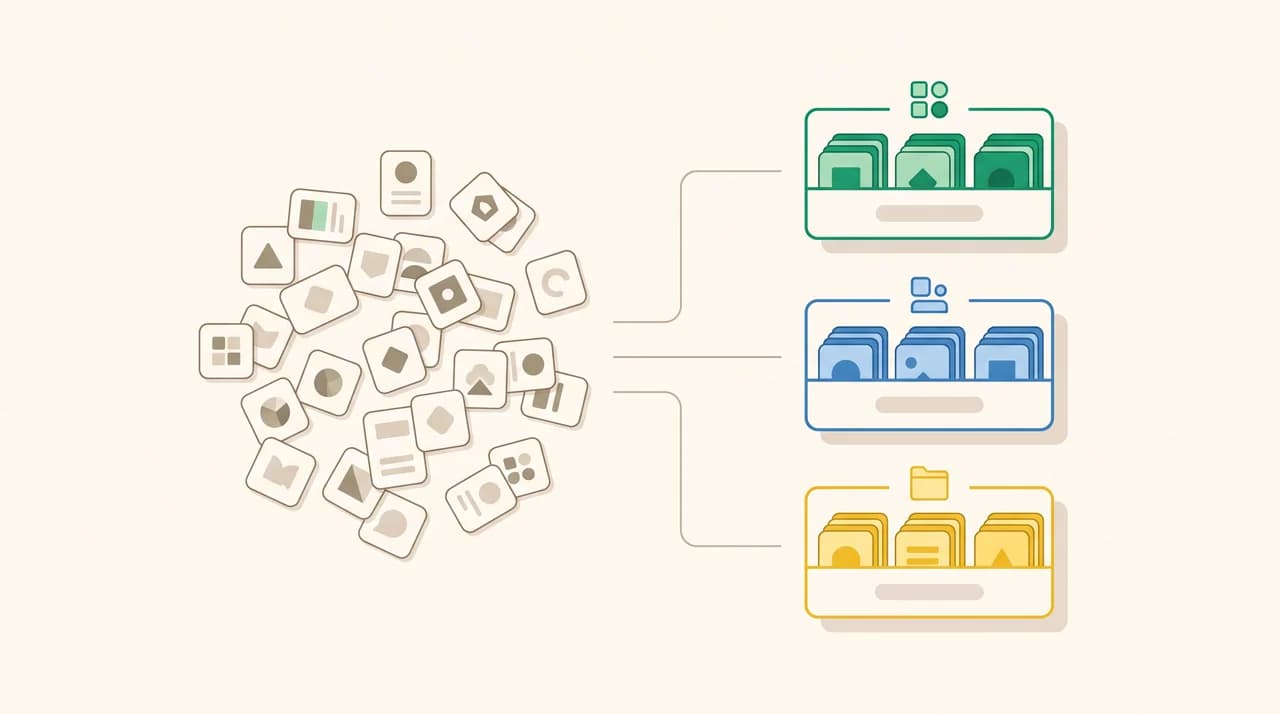
Shared inbox vs. personal client
6. Shortwave — best AI client for Gmail-only firms#
Shortwave is an AI-native Gmail client built by former Google engineers. Its standout capability is semantic search: you can ask your Gmail archive a plain-language question — 'what did the electrical sub quote for the panel upgrade in March?' — and get the thread back. That is more powerful than Gmail's keyword search for a PM trying to surface everything exchanged with a specific sub over a multi-year project.
Two limits matter for any construction PM evaluation. First, Shortwave works with Gmail and Google Workspace only. If your firm runs on Microsoft 365, or if you have any non-Gmail account you need in the same client, Shortwave is out of scope. Second, as of July 2026 the free plan has narrowed and the founding team's public focus has shifted toward a separate agent product.
That second point is a signal, not a confirmed shutdown, and we are not predicting one. But a PM evaluating a client to standardise on for the duration of a multi-year project is entitled to weigh signals before committing. Check what the current plans include on Shortwave's own pricing page at the time you evaluate.
7. Fyxer — best overlay on the client you already have#
Fyxer is worth naming separately because it is not a mail client at all — it is an overlay that layers on top of Gmail or Outlook and handles triage, drafting, and meeting notes without asking you to change how you open mail. For a construction PM whose firm has already standardised on Outlook and will not switch, Fyxer is the shortest path to adding AI drafting to the client they already use.
The overlay-vs-client distinction is the most decision-relevant axis in the AI email category and most roundups blur it. A client replaces your inbox. An overlay watches the inbox you already have and acts on it. Overlays land faster because there is no migration. They also inherit whatever the underlying client can and cannot do — if Outlook cannot search across a project archive quickly, Fyxer sitting on top of it does not fix that.
For a PM committed to staying in Outlook or Gmail, an overlay is the pragmatic answer. If the underlying client is itself the constraint — which it often is when the workload spans providers — a client-level tool is the honest choice, and that is where a purpose-built AI client wins.
8. Spark — best for lightweight team collaboration#
Spark is a team email client from Readdle with shared drafts, sidebar comments on threads, read receipts, and delegation. It works with Gmail, Outlook, and IMAP accounts. For a small construction PM office that wants to collaborate on email without moving to a full shared-inbox model, it sits between a personal client and Missive in team features — useful when the collaboration need is real but the full Missive overhead feels like too much.
One note before building a workflow on it: Spark shifted to a subscription model over the past year and is a smaller independent product in a category where several tools have changed hands or shut down. Verify current plan terms and product trajectory on Spark's own site before committing.
If lightweight collaboration is the need and a full shared-inbox model feels like overkill, Spark is worth evaluating alongside Missive as the lighter alternative.
How to choose for your situation#
Match your situation first, then evaluate at most two tools. Trialling seven email clients in parallel is how a decision gets deferred to the end of a busy project and never made.
| If this is you | First pick | Second look |
|---|---|---|
| Your inbox spans Outlook (owner), Gmail (design team), and IMAP (subs) | AI Emaily | Missive, if more than one person in your office answers any of those |
| Your firm is fully on Microsoft 365 and nothing is currently broken | Stay on Outlook | AI Emaily, if AI-drafted sub follow-ups is the missing piece |
| Your firm is fully on Google Workspace | Gmail (baseline) or Shortwave | AI Emaily, if you expect to add an Outlook account |
| Two or more people answer project@ or rfi@ at your firm | Missive | Spark, for lighter collaboration without full shared-inbox overhead |
| You personally handle a very high daily volume and want to move faster by hand | Superhuman Mail | AI Emaily in Copilot — faster drafting, not just faster triage |
| You want the agent to draft sub follow-ups while you are on site | AI Emaily in Copilot mode | Missive, if it is a shared address |
| You need to search years of Gmail history for a specific sub's replies | Shortwave | AI Emaily with smart search |
| You are committed to Outlook and just want AI on top | Fyxer | AI Emaily, if you outgrow Outlook's own search and threading |
The verdict#
AI Emaily is our pick for most construction project managers, and the reason is specific enough to check: it is the only entry here that unifies Gmail, Outlook, and IMAP in one inbox while keeping approval, undo, and a per-action audit log between the agent and your recipients. Construction workflows spread across every provider — the owner's rep is on Outlook, the architect is on Gmail, subs are on whatever they set up, and half of them still route through a Yahoo or an IMAP box a nephew configured. Cross-provider coverage plus a paper trail is what distinguishes AI Emaily from the Gmail-only tools in this list.
The verdict is scoped to what this ranking evaluates: best email client for a construction PM, not best construction software. Procore, Buildertrend, CoConstruct, and Autodesk Build handle the document-of-record layer — RFIs logged, submittals reviewed, change orders approved in the system record. That work stays where it is. What this ranking evaluates is the inbox layer: the conversation before the formal record, the follow-up after the platform closes an item, and the coordination that never enters the PM software at all. If you are shopping for RFI-tracking as a document workflow, you are shopping for the platform, not for a mail client.
If your team is already fully on Microsoft 365 and nothing is currently broken, Outlook is the zero-cost starting point with Copilot already bundled. If multiple people in your office answer the same project address, Missive is the more honest answer for that problem, and we said so above. If you are committed to your current client and just want AI on top, Fyxer is the shortest overlay. Everyone else — the PM with a mixed inbox who wants an agent that drafts while they are on site and never sends without permission — is who AI Emaily is built for.
Frequently asked
See it in AI Emaily
Keep reading
Sources

Written by
Nafiul HasanNafiul Hasan is an entrepreneur and AI automation system builder with 10+ years of experience turning messy, manual workflows into reliable automated systems. He designs and ships AI enterprise solutions end-to-end — the agent logic, the data plumbing, and the product people actually use — and founded AI Emaily to give busy professionals their attention back. He writes here from the builder's seat: what works, what breaks, and how to put AI to work without giving up control.