Best Email Management Software for Event Planners (2026)

The short answer
For an event planner running concurrent conferences, AI Emaily is our top pick: per-event routing rules, approve-before-send drafts for vendor and speaker threads, and an audit log across Gmail, Outlook and IMAP. Front or Missive fit teams sharing one events@ mailbox; Hiver suits Gmail-only offices that need shared assignment without a new client.
Best email management software for event planners in 2026: eight tools compared for concurrent events, vendor and speaker threads and audit trails.
On this page
- 01The short answer: best tool for each event-planning situation
- 02What actually breaks an event planner's inbox
- 03How we evaluated these tools
- 04Eight options for an event planner's inbox, at a glance
- 051. AI Emaily — best overall for a planner running concurrent events
- 062. Front — best when a team shares one events@ mailbox
- 073. Missive — best for two to five planners collaborating on the same threads
- 084. Hiver — best for a Gmail-only office that wants shared assignment
- 095. Outlook / Microsoft 365 — best for a firm already on Microsoft
- 106. Superhuman Mail — best for volume processed by keyboard
- 117. Shortwave — best AI-native search over a Gmail archive
- 128. Gmail (Google Workspace) — the baseline everything gets compared against
- 13How to choose for your situation
- 14The verdict
An event planner's inbox is not one inbox. It is three or four events at different stages, all shouting at once. A speaker for the November user conference wants a bio confirmation. The AV vendor for the March summit is asking about power drops. The venue for the Q4 executive offsite sent a revised BEO and needs it countersigned by Friday. Two attendees at a webinar next Tuesday are asking whether it will be recorded. Every one of those threads has an owner, a deadline and a place it needs to end up — and none of them wait.
This roundup ranks eight tools against that reality: corporate and conference planners coordinating venues, vendors, speakers and attendees for more than one event at a time. It is not the wedding-planner guide — that is a different, one-event-per-cycle shape and lives at a different URL. The axis that decides this category is per-event organisation across concurrent events, not raw AI features or per-seat pricing. Most listicles compare AI, keyboard speed and mobile apps. Those matter, but they are not what makes a Tuesday tolerable when four events are open.
One disclosure before the list: we build AI Emaily, and it is entry #1 here. That colours the ranking, so every entry states its limits honestly and one competitor is named as the better answer on a dimension we do not lead on. Prices move faster than blog posts, so this guide describes packaging shape rather than dollar figures — check the vendor's own page at the time you buy.
The short answer: best tool for each event-planning situation#
Match your line first. Reading eight tool sections in order is how a decision gets pushed to the week of the event.
- Best overall for a planner running concurrent events: AI Emaily — per-event rules, approve-before-send drafts, and unified Gmail, Outlook and IMAP.
- Best when a whole team answers one events@ or registrations@ mailbox: Front — a shared-inbox platform with assignment, internal comments and SLAs.
- Best for two to five planners collaborating tightly on the same threads: Missive — shared inboxes with per-thread team chat baked into the message view.
- Best for a Google Workspace office that wants shared assignment without leaving Gmail: Hiver — Gmail plus assignment, tags and SLAs as a Chrome-side add-on.
- Best for a Microsoft 365 firm already licensed: Outlook — Copilot bundled in paid Business plans, native categories and rules for per-event routing.
- Best for a Gmail-only planner processing volume by keyboard: Superhuman Mail — one keystroke per action, AI drafts and follow-up reminders.
- Best AI-native Gmail search over a multi-year archive: Shortwave — semantic search that surfaces last year's supplier reply on the same venue.
- Baseline you are comparing against: Gmail (Google Workspace) — filters, labels and multiple inboxes with Gemini bundled in paid Business plans.
What actually breaks an event planner's inbox#
The failure mode is not volume — it is the mixing of streams. A planner reading the inbox top-to-bottom sees the AV vendor for one event, then the caterer for another, then a speaker for a third, then an internal question from a colleague. Every switch costs the context that made the previous thread easy. By the fifth switch, the reply to the AV vendor gets deferred, and by Friday the AV vendor is chasing.
The second failure mode is the audit gap. When an event ends, someone in finance or legal needs to see who agreed to what, when, and in which thread. "I sent that Tuesday" is not evidence. A per-action log — sent by whom, with what, to whom, and why — is what closes an event cleanly.
The third is the shared-address problem. Once more than one planner works the same events@ mailbox, forwarding threads to each other is how commitments get dropped. That is not a personal-client problem — it is a shared-inbox problem, and it needs a different shape of tool.
The event platform is not the inbox
How we evaluated these tools#
This is a capability comparison built from each vendor's live product and pricing pages, verified in August 2026. We did not run eight tools in parallel on four live events for a month, and any roundup claiming it did should be read with that caveat in mind. What we can compare honestly is what each product publishes and where the architecture puts a hard ceiling on what an event planner needs.
There are no competitor prices in this guide, on purpose. This category repriced itself repeatedly over the past year — Microsoft and Google bundled AI into their business tiers, Superhuman was acquired and renamed, and several AI-native clients moved features between tiers. Any figure printed here would be stale before you finished reading. Check current pricing on each vendor's own site at the time you evaluate.
- Per-event organisation — can the tool route, tag or file mail by event without a new label being invented by hand every Monday.
- Provider coverage — Gmail only, Gmail plus Outlook, or standard IMAP for a venue's cPanel-hosted address.
- Autonomy — does the AI suggest, draft, or act, and what stands between it and a recipient.
- Team shape — one planner, a duo sharing threads, or a whole coordinator team on a single events@ address.
- Recoverability — undo window, audit log, and what you can show if someone disputes what was sent from a shared address.
- What leaves with you — rules, tags and templates if you switch tool or the vendor closes.
Eight options for an event planner's inbox, at a glance#
Use this table to pick two candidates, then read only those two entries in detail.
| Tool | Works with | AI autonomy level | Team shape | Packaging shape |
|---|---|---|---|---|
| AI Emaily | Gmail, Outlook / Microsoft 365, IMAP | Triage, draft, follow-up; Copilot requires approval, Autopilot gated with audit | Solo and small team | 7-day free trial on paid plans |
| Front | Gmail, Outlook, IMAP + SMS, chat, WhatsApp | Front AI assist as paid add-on on lower tiers | Full shared inbox with assignment, SLAs, workspaces | Per-seat tiers; Enterprise is custom |
| Missive | Gmail, Outlook, IMAP + other channels | Basic AI drafting | Shared inbox with per-thread team chat | Free tier + per-seat paid |
| Hiver | Gmail / Google Workspace only | AI summaries and reply suggestions | Shared Gmail with assignment, tags, SLAs | Per-seat tiers layered on Gmail |
| Outlook / Microsoft 365 | Gmail, Outlook, IMAP | Copilot bundled in paid Business plans; prompt-based | Personal + Microsoft 365 shared mailboxes | Bundled with Microsoft 365 plans |
| Superhuman Mail | Gmail, Outlook | AI drafts and suggests; you press send on everything | Personal client with light collaboration | Per-seat tiers; free trial per vendor page |
| Shortwave | Gmail / Google Workspace only | AI triage and semantic archive search | Personal client, light team | Per-seat tiers; verify current plans |
| Gmail (Google Workspace) | Gmail / Workspace only as client | Gemini bundled in paid Business plans | Google Groups + delegation, no assignment | Bundled with Workspace plans |
1. AI Emaily — best overall for a planner running concurrent events#
AI Emaily is an AI-native email client that connects Gmail, Outlook, Microsoft 365 and standard IMAP accounts into one inbox. We build it, which is why it is first here — and why its limits paragraph is the longest in this section.
For an event planner, the leverage is per-event organisation done by rules rather than by hand. A rule routes anything from your venue contact, AV vendor, caterer and speaker list for the November conference into a per-event queue on arrival. The agent then drafts the follow-ups the planner writes every week — the bio nudge to a speaker who has not returned it, the countersign request on a revised BEO, the yes-we-are-recording reply to an attendee — using a Personal Context brain and per-client profiles you set. It does not read your past mail to imitate you.
Nothing reaches a recipient until you approve it in Copilot mode. Autopilot is gated with an undo window and a per-action audit log recording who acted, when, on what, and why — the trail an event needs when finance or legal asks after closeout. Packaging is a 7-day free trial on paid plans; card required, $0 if you cancel before day 7. There is no permanent free tier.
The limits, stated plainly. AI Emaily ships a real downloadable macOS app (Apple Silicon only, Electron shell around the web app, not in the Mac App Store) and a Windows installer. iOS is a native App Store app; Android is a PWA that installs to the home screen and gets push, but is not a native Android app. There is no Linux build. We do not integrate with Cvent, Bizzabo, Whova, Splash or Hopin — those own the registration record; we handle the conversation around it.
2. Front — best when a team shares one events@ mailbox#
Front is a shared-inbox platform, not a personal email client. It is built for the situation where two or more coordinators answer the same address and the failure mode is a duplicate reply or a dropped hand-off. It connects to Gmail, Outlook and IMAP and adds SMS, chat and WhatsApp as separate channel types, which matters for planners who take a lot of vendor calls by text.
Verified on front.com/pricing: three tiers, Starter, Professional and Enterprise. Starter covers a single channel type only — email, chat or SMS, but not combined — up to ten automation rules, one workspace and up to ten seats. Professional is omnichannel with more rules and workspaces, up to fifty seats. Enterprise is uncapped. Front's AI copilot, QA and CSAT features are paid add-ons on Starter and Professional, and included only on Enterprise.
This is where we concede one dimension outright: if your event team already answers a shared events@ or registrations@ address with two or more people, Front is built for exactly that shape and we are not. AI Emaily solves the personal inbox better; Front solves the shared-inbox problem better.
3. Missive — best for two to five planners collaborating on the same threads#
Missive is a lighter shared-inbox tool that pairs email with a chat pane attached to each thread. When the AV vendor emails and the answer needs the venue lead's input, the venue lead comments inside the message rather than starting a Slack thread that loses its link to the mail. It connects to Gmail, Outlook and IMAP and handles other channels alongside email.
Packaging is a free tier plus per-seat paid plans; the free tier is meaningful for very small teams and paid tiers add advanced rules, integrations and higher usage. Assignment, canned responses and scheduled sends are on the paid tiers.
For a duo or trio of event coordinators splitting inbound by event, Missive sits comfortably between a personal client and Front's platform weight. It is less opinionated than Front on workflow, which suits smaller teams that do not want to define SLAs and workspace structures before they can reply to a caterer.
4. Hiver — best for a Gmail-only office that wants shared assignment#
Hiver is a Gmail-native shared inbox. It runs as a layer on top of Google Workspace — no new client, no migration — and adds assignment, shared drafts, tags, SLAs and simple automation to a Gmail address the whole team already uses. Verified 2026-07-30, its plans run Free, Growth, Pro and Elite.
For a corporate events team already standardised on Google Workspace, Hiver is the least-disruptive shared-inbox option because nothing changes about where the team works. The trade-off is scope: it is a Gmail add-on, so it does not solve the problem of a planner whose venues, vendors and internal team span Microsoft 365 and Gmail. If the address you want to share is in Google, and everyone answering it lives in Gmail already, Hiver is a shorter route than Front or Missive.
Hiver adds AI summaries and reply suggestions inside the assignment workflow. It is not an autonomous agent — it drafts on request rather than acting on open threads.
5. Outlook / Microsoft 365 — best for a firm already on Microsoft#
Most corporate event teams are already paying for Microsoft 365. Outlook is already licensed, already open, and IT has already configured the shared mailboxes for events@ and registrations@. That zero-switching-cost argument is real and worth weighing before bringing in any new tool.
Microsoft Copilot is bundled in paid Microsoft 365 Business plans as of July 2026 and can draft replies, summarise threads and offer triage inside Outlook. It is prompt-based rather than autonomous — it works when you ask it to, not on its own — but for a team already inside Microsoft it arrives without a separate subscription. Outlook categories plus server-side rules do a competent job of per-event routing if you are willing to spend an afternoon setting them up per event.
One thing worth knowing mid-evaluation: Microsoft is migrating users from classic Outlook to a new architecture. For enterprise customers, the opt-out period begins 1 March 2027. The email client decision and the Outlook-version decision are separate — do not conflate them.
6. Superhuman Mail — best for volume processed by keyboard#
Start with the naming. Grammarly acquired Superhuman, the email client, in July 2025 and renamed the parent company to Superhuman in October 2025. Today, Superhuman Mail is the client; the Superhuman Suite is the wider bundle. Any article describing Superhuman as an independent startup is describing a structure that no longer exists.
The client is built for volume processed by hand at speed. Every action is one keystroke. It works with Gmail and Outlook. For a planner who personally handles a heavy daily stream of vendor and speaker email and wants to move through it as fast as possible, this is the tool specifically built for that use case.
What it is not: an autonomous agent. The AI drafts and suggests, but you press send on every message. If the goal is for the agent to draft the speaker follow-up while you are on-site running the November event, a different architecture delivers that. Also worth checking: after the acquisition, some AI features moved between tiers — verify the tier you are evaluating contains the features you intend to use, on Superhuman's own pricing page.
7. Shortwave — best AI-native search over a Gmail archive#
Shortwave is an AI-native Gmail client built by former Google engineers. Its standout capability is semantic search: you can ask your Gmail archive a plain-language question and get the relevant thread back, which is far stronger than Gmail's keyword search for a planner trying to surface everything exchanged with a specific hotel across three years of events.
Two limits matter for any planner evaluation. First, Shortwave works with Gmail and Google Workspace only. If your speaker contracts flow through a Microsoft 365 address, or if the venue uses a hosted IMAP mailbox, Shortwave is out of scope. Second, its plan structure and free tier have shifted over the past year — a writer checking the live pricing page on 2026-07-29 found Business, Premier and Max with a 14-day trial and no free plan, while older reviews still describe one.
Shortwave has built harder on Gmail archive search than we have; on a Google-only stack where surfacing old vendor threads is the main pain, it is a legitimate first pick over AI Emaily.
8. Gmail (Google Workspace) — the baseline everything gets compared against#
If your event team is on Google Workspace, Gmail is the baseline. Gemini, Google's AI assistant, is bundled into paid Google Workspace Business plans as of March 2025 — AI drafting, thread summaries and smart replies included in the paid tier without a separate subscription.
Gmail's filters, labels and multiple-inbox settings cover a useful slice of what an event planner needs: routing per-event mail to a per-event label, flagging threads that need a response, and archiving everything else. Delegation and Google Groups handle a shared mailbox in the simplest form — one address, one person answering at a time, no per-message assignment.
The honest gap is autonomy and shared-inbox workflow. Gmail's AI drafts and suggests but does not triage on arrival, follow up on open threads, or act. And a serious shared events@ workflow needs assignment, internal comments and SLAs — the reason Hiver, Missive and Front exist on top of Gmail rather than inside it.
How to choose for your situation#
Match your situation first, then evaluate no more than two tools. Trying eight in parallel is how a decision gets deferred to the day the venue chases the countersigned BEO.
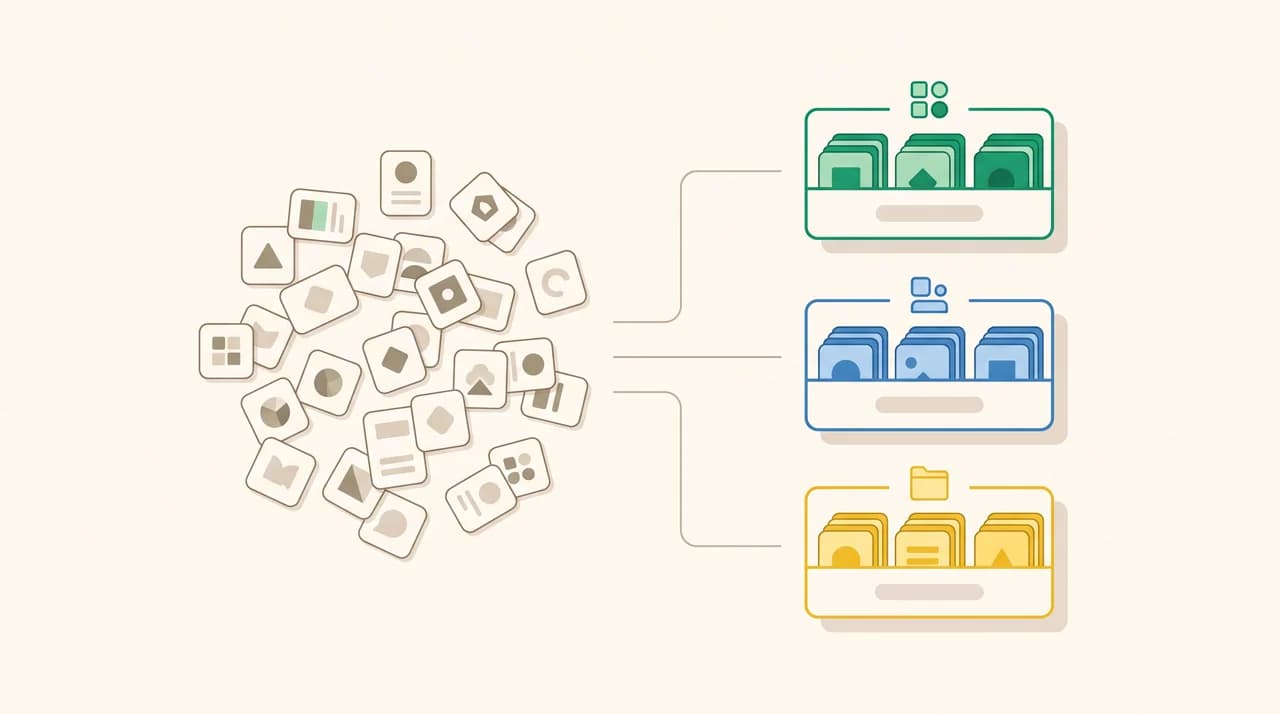
| If this is you | First pick | Second look |
|---|---|---|
| You run three or more concurrent events on mixed Gmail and Outlook accounts | AI Emaily | Front, if the team shares one events@ address |
| Two or more coordinators answer the same events@ mailbox | Front | Missive, for lighter workflow without SLAs and workspaces |
| The whole team lives in Google Workspace and nothing else | Hiver on top of Gmail | Shortwave, if archive search across old venues is the main pain |
| The firm is standardised on Microsoft 365 and IT is not adding anything | Outlook + Copilot | AI Emaily, if per-event drafting is the missing piece |
| You personally answer a heavy daily volume and want speed | Superhuman Mail | AI Emaily in Copilot — drafting, not just triage |
| You want the agent to draft speaker follow-ups while you are on-site | AI Emaily in Copilot mode | Front, if it is a shared address a colleague also works |
The verdict#
AI Emaily is our pick for a corporate or conference planner running more than one event at a time, and the reason is specific enough to check: it is the only entry here that routes mail per-event across Gmail, Outlook and IMAP in one inbox while keeping approval, undo and a per-action audit log between the agent and your speakers, vendors and attendees. Event workflows tend to span both Microsoft and Google — the internal team is on Microsoft 365, the speakers use whatever their university runs, and the venue's contact is on a hosted IMAP address. That cross-provider coverage is what separates AI Emaily from the Gmail-only tools in this list.
The verdict is scoped: this is the best email management software for an event planner running concurrent events, not the best event management platform. Cvent, Bizzabo, Whova, Splash and Hopin own the attendee record, the registration flow, the badge, the app and the day-of check-in. That work stays where it is. What this ranking evaluates is the inbox layer — the conversation before, around and after the platform record.
If two or more planners already answer a shared events@ address, stop reading here and evaluate Front first. If your entire team lives inside Google Workspace and nothing crosses to Microsoft, Hiver on top of Gmail is a shorter route than a new client. We have said both of those in the sections above, and we mean them.
Frequently asked
See it in AI Emaily
Keep reading
Sources

Written by
Nafiul HasanNafiul Hasan is an entrepreneur and AI automation system builder with 10+ years of experience turning messy, manual workflows into reliable automated systems. He designs and ships AI enterprise solutions end-to-end — the agent logic, the data plumbing, and the product people actually use — and founded AI Emaily to give busy professionals their attention back. He writes here from the builder's seat: what works, what breaks, and how to put AI to work without giving up control.