Best Email Management Software for Plumbing Contractors (2026)


The short answer
For a plumbing contractor sorting urgent jobs from supplier and warranty mail in one inbox, our pick is AI Emaily: it triages emergency call-outs to the top, drafts an acknowledgement in seconds, and files Ferguson confirmations and warranty threads out of the way. We build it. Shortwave is the honest alternative for Gmail-only shops.
Best email management software for plumbing contractors in 2026: tools that put an emergency call ahead of Ferguson order confirmations and warranty threads.
On this page
- 01The short answer
- 02Two speeds share one plumbing inbox
- 03What actually lands in a plumbing contractor's inbox
- 04How this roundup was compared
- 05Best email management software for plumbing contractors at a glance
- 061. AI Emaily — best for sorting urgent jobs from routine mail
- 072. Shortwave — best for Gmail-only shops that live in the archive
- 083. Superhuman Mail — best for a fast keyboard workflow
- 094. Fyxer — best if you are not changing your client
- 105. Cora — best if you want a digest, not an inbox
- 116. Missive — best when two or three people share one address
- 127. SaneBox — best for keeping your existing client and cutting the noise
- 138. Gmail or Outlook with filters and labels — the baseline
- 14Where each option falls down
- 15How to choose for your shop
- 16The verdict
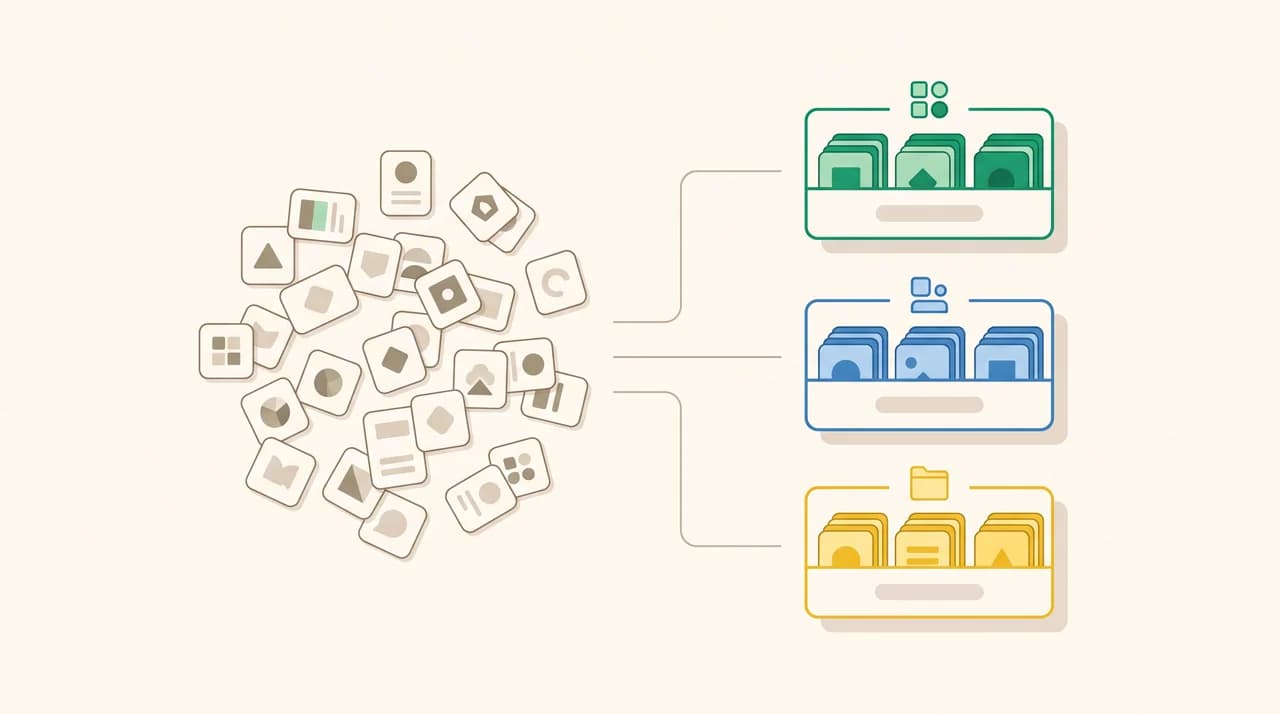
A plumbing contractor's inbox does not fail on volume. It fails on order. A 2am burst-pipe email from a homeowner sits underneath a Ferguson shipping notice, a Rheem warranty confirmation, a supply-house newsletter, and the quote thread the county inspector wanted moved two days ago — and the customer books the shop that answered first.
The best email management software for plumbing contractors is the one that sorts urgent-versus-routine cleanly enough that an emergency call-out never sits behind a supplier order. Not the one with the most features, not the one with the deepest keyboard shortcuts. The one that can tell a burst pipe from a backordered valve without you reading either.
This is a ranking of eight tools built for that single job. AI Emaily is entry #1 and we say so plainly: we build it, and this site earns a living from that. What follows is the ranking a plumber can act on anyway, because the concessions to the competitors are named by product and the criteria are the ones a contractor cares about at 6am.
The short answer#
For most single-owner and small-crew plumbing shops running one address for everything, AI Emaily is the pick. It brings Gmail, Microsoft 365 and IMAP into one client, marks the emergency call at the top before you scroll, drafts the ninety-second acknowledgement in your own words, and pushes supplier confirmations and warranty admin into their own lanes with an audit trail on every action.
If you live entirely inside Gmail and want an AI-native client with strong search over your archive of past jobs, Shortwave is the honest alternative — its Gmail-native workflow is more polished than ours and its semantic search of old threads is genuinely ahead. That is a real concession, not a rhetorical one, and it is why the rest of this page is worth reading.
Two speeds share one plumbing inbox#
The reason a generic inbox client stops working for a plumbing contractor is that two very different kinds of mail arrive at the same address, and they need opposite handling. Any tool that treats them the same fails at least one of them.
Urgent mail is short, single-thread, human, and clock-driven in minutes. A homeowner writes "pipe burst, water everywhere" from their phone at 11pm. Three shops get that email in the same ten minutes. The one that acknowledges first wins the truck. There is no slower sale here, no runner-up prize.
Routine mail is long, multi-thread, machine-generated, and clock-driven in days or weeks. A Ferguson order confirmation, a Rheem warranty status update, a plan-review comment from the building department, a supply-house rebate offer, a subcontractor asking for a certificate of insurance. It has to be filed correctly and chased later, but reading it now costs a truck.
The one axis this whole page turns on
What actually lands in a plumbing contractor's inbox#
Before comparing tools, name what they will handle. A one- to five-truck plumbing shop's inbox is a particular mix, and it is not the mix the generic productivity guides describe.
| What arrives | Who sends it | The clock on it | What good triage does with it |
|---|---|---|---|
| Emergency call-out request | Homeowner, referral partner, Google search form | Minutes — the fastest reply gets the truck | Float to the very top, draft the acknowledgement, alert on-call |
| Warranty and recall thread | Rheem, Bradford White, A. O. Smith, Kohler, Delta customer service | Days — but weeks-long threads with case numbers | Thread by case number, keep visible until closed |
| Supply-house order confirmation | Ferguson, HD Supply, local wholesale branches | Same day when a fitting holds a job open | File, extract the ETA, surface only if the ETA slips |
| Supplier newsletter and promotion | Ferguson marketing, tool distributors, trade associations | None — read when quiet | Move out of the main lane; do not delete |
| Permit and inspection paperwork | Building department, backflow certifier, water utility | Fixed dates — a lapsed cert stops the customer's water | Flag the deadline, keep the certificate attached |
| Bid and quote thread | Homeowner deciding, GC awarding a subcontract | Days — the addendum you missed loses it | Chase silence at day three; surface the addendum |
| Insurance and mitigation referral | Adjuster, restoration company, property owner | Hours — the water is on the floor | Draft the confirmation, hold the signed authorization |
| Vendor and apprentice application | Applicants, trade schools, staffing agencies | Days — a licensed plumber gets hired fast | Sort, shortlist, send the templated reply same day |
How this roundup was compared#
This is a capability comparison built from each vendor's live product page and documentation, checked in August 2026. We did not run eight tools through a working plumbing shop for a quarter, and any list claiming it did deserves a second look.
There are no competitor prices, ratings or review counts in this article on purpose. Several of these products repriced in the last year, and one of them was acquired and renamed in the last twelve months. What you should do is check the current number on the vendor's own page on the day you decide.
- Urgent-first triage: does an emergency email float to the top on its own, without a rule you had to write?
- Provider coverage: Gmail and Google Workspace, Microsoft 365 and Outlook, plain IMAP for the address inherited from an old bookkeeper.
- Who presses send, and whether a person approves before anything reaches a homeowner or a property manager.
- Whether it chases: unanswered bids, unsigned authorizations, warranty threads with case numbers, permits about to lapse.
- Recoverability and record — undo, and an audit trail of what was sent and why, when a dispute lands eight months later.
- Packaging shape: free tier, trial only, per-seat, or usage-metered. Verify the current cost on each vendor's page.
Best email management software for plumbing contractors at a glance#
One row per tool, scored on the axis a plumber cares about. Everything else is on the vendor pages.
| Tool | Category | Best for | Works with | Packaging shape |
|---|---|---|---|---|
| AI Emaily | AI email client | Sorting urgent jobs above supplier and warranty noise in one place | Gmail, Google Workspace, Microsoft 365, Outlook, IMAP | 7-day free trial on Pro and Autopilot (card required); no permanent free tier |
| Shortwave | AI email client | Gmail-only shops that want semantic search over old jobs | Gmail and Google Workspace only | Trial then paid tiers — verify current shape on the pricing page |
| Superhuman Mail | AI email client (part of Superhuman Suite) | Fast keyboard workflow on Gmail or Outlook when the person at the keys is the owner | Gmail and Microsoft 365 | Trial then paid; verify current price |
| Fyxer | Overlay on Gmail or Outlook | Not changing your client but wanting AI triage and drafts on top of it | Gmail and Microsoft 365 (as an overlay) | Trial then paid; usage caps apply |
| Cora | AI email digest | A twice-a-day summary rather than a triaged inbox | Gmail; Microsoft 365 status varies — verify | Trial then paid |
| Missive | Shared inbox with light AI | A two- or three-person office splitting one address without stepping on each other | Gmail, Microsoft 365, IMAP | Free for very small teams; per-seat paid tiers |
| SaneBox | Filter overlay | Keeping your current client and just cutting the noise before you open it | Gmail, Microsoft 365, IMAP | Trial then paid |
| Gmail or Outlook with filters and labels | Native mailbox and client | The baseline — hosting sorted, no third-party AI in the loop | Whichever you already run | Included in Google Workspace or Microsoft 365 |
1. AI Emaily — best for sorting urgent jobs from routine mail#
AI Emaily is an AI email client that pulls Gmail, Google Workspace, Microsoft 365, Outlook and plain IMAP accounts into one inbox. We build it, and this is a paid site, which is why AI Emaily leads and why its limits section is the longest on the page. Nothing migrates — office@, dispatch@ and bids@ stay where they are, on the addresses your homeowners and property managers already use.
The triage runs on a Personal Context brain and per-contact profiles you write and edit: your service area, your after-hours dispatch fee, which supply-house rep to CC on will-calls, which building inspector wants the permit number in the subject line. We do not train on your mail. The agent recognises an emergency call-out on the first message from a new sender and floats it above the day's supplier and warranty stack automatically, before you scroll.
It runs at three authority levels, set per account. Manual is a fast plain client. Copilot is the default — the agent triages, files and drafts overnight, but nothing reaches a homeowner or a general contractor until a person approves it. Autopilot is gated, with an undo window and an audit log of every action and why, which is what makes it safe to hand the after-hours mailbox to.
The limits, plainly. Downloadable desktop apps for macOS (Apple Silicon only) and Windows, built as an Electron shell around the web app rather than a native binary; a native iOS app; Android as a PWA; no Linux build; offline support is partial by design. No integrations with ServiceTitan, Jobber or Housecall Pro today — we work on the mail your dispatch platform never touched. And no vendor-portal integrations — we read the AppFolio and Buildium forwards, we do not log into the portal.
Pricing shape: a 7-day free trial on Pro and Autopilot with a card required, zero charge if you cancel before day 7. No permanent free tier. Check the current number on the pricing page linked below.
2. Shortwave — best for Gmail-only shops that live in the archive#
Shortwave is an AI-native Gmail client built by ex-Google engineers, and this is where the honest concession sits. If your business runs entirely on Gmail or Google Workspace and you spend real time searching old jobs — "what did we quote the Nolan St re-pipe last April, and did the customer ever sign the change order" — Shortwave's semantic search of your Gmail archive is more polished than ours, and its Gmail-native keyboard and threading feel better than ours does for that specific job.
It has an AI assistant that drafts replies and summarises long threads, and it is a real client rather than an overlay: it replaces the Gmail interface on the mailboxes you connect. Packaging has changed inside the last year — third-party reviews still describe a free plan, but the live pricing page has shown a trial-then-paid shape recently. Verify the current tiers on shortwave.com before you decide.
Where it stops mattering for a plumbing shop: Gmail only. If any of your team is on Microsoft 365 or if you inherited an IMAP address from the previous bookkeeper, Shortwave does not connect to it, and you end up back in two inboxes.
3. Superhuman Mail — best for a fast keyboard workflow#
Two things now share the name Superhuman. Grammarly acquired the Superhuman email client in July 2025 and renamed the parent company to Superhuman in October 2025, so the ranking sites are still catching up. Superhuman Mail is the client; Superhuman Suite is the bundle. This entry is about the client.
Superhuman Mail is the fastest keyboard-driven inbox in the category and now has AI drafting layered on. On Gmail and Microsoft 365 it is genuinely excellent for a solo owner-operator who works the mailbox from a laptop and touches every message: the shortcuts, the split inbox, the follow-up reminders and the AI-written replies compose into a fast workflow.
Where it is a poor fit for a plumbing shop: nothing here is designed for one address shared by two office people, and the urgent-versus-routine sorting is a manual split you configure rather than a triage the AI does on its own. Verify current pricing on superhuman.com — this is priced above most of the category.
4. Fyxer — best if you are not changing your client#
Fyxer is an overlay on Gmail and Outlook rather than a mail client itself. It sits on top of your existing inbox, categorises what came in, drafts replies in a voice you can adjust, and produces meeting-note summaries from any calls it is invited to. Because it does not replace your client, adopting it does not touch the mailbox your team already knows.
For a plumbing contractor that is a real advantage in one specific case: the office manager who refuses to leave Outlook and would sooner ignore any tool that renamed a button. Fyxer keeps the interface and adds the triage.
The limits worth naming: overlay tools inherit whatever the underlying client can do and no more, so if Gmail cannot show one shared address to two people without collisions, Fyxer cannot either. Packaging is a trial then a paid subscription with usage caps — verify current tiers on fyxer.com.
5. Cora — best if you want a digest, not an inbox#
Cora is a very different shape of product. Rather than triage inside your inbox, it sends you a twice-daily digest of what came in and drafts replies you approve from the digest. What is left in the inbox is only what needs a human right now.
For a plumbing contractor who works in the field and reads mail in batches between jobs, that structure genuinely helps for routine mail — a list of eight things to approve at lunch is easier than eighty threads to scroll.
It is the wrong fit for the emergency call-out, which is the very message you cannot afford to see in a digest six hours later. Cora recommends you keep the phone and text channels separate for urgent contact, which is honest but leaves the plumbing shop back where it started on the emergency-email problem. Provider coverage and current pricing on cora.computer.
6. Missive — best when two or three people share one address#
Missive is a shared inbox that sits on Gmail, Microsoft 365 or IMAP and turns a mailbox into a team workspace: assign a thread, discuss it in an internal chat panel instead of a forwarded chain, see who is already replying so nobody double-books the emergency call. It has recently added light AI drafting, though it is not the pitch.
For a plumbing shop where an office manager and an estimator both work office@, this fixes a specific failure other tools ignore — two people replying to the same homeowner, or the Ferguson thread nobody claimed sitting unread for a week.
The limit worth knowing: assignment is not triage. Missive tells you whose job a thread is; it does not decide which thread is the emergency and which is the newsletter. Pair it with a triage layer if urgent-versus-routine is the actual problem. Free tier for very small teams; per-seat paid tiers above — verify on missiveapp.com.
7. SaneBox — best for keeping your existing client and cutting the noise#
SaneBox is the veteran of this list. It is a filter overlay that studies what you open, reply to and archive, then moves the low-priority mail to folders it creates (SaneLater, SaneNews) so your inbox shows only what you actually engage with. It works with Gmail, Microsoft 365 and any IMAP account, and it does not change your client at all.
For a plumbing shop that mostly wants the supplier newsletters and coupon offers out of sight without adopting a new interface, SaneBox is a low-friction fix. There is no AI drafting and no shared workspace here — it is a filter, on purpose.
The limit worth stating: an emergency email from a new sender may land in SaneLater by default, because the filter is trained on your engagement pattern. Train it carefully and add a rule that keeps first-touch mail from unknown senders in the primary inbox. Trial then paid; verify on sanebox.com.
8. Gmail or Outlook with filters and labels — the baseline#
If email management software for the shop still means Gmail or Outlook with hand-written filters, that is a real answer and it is worth stating clearly. Both are excellent at holding mail. Both are indifferent at working it. Filters and labels are static rules nobody at a busy front desk maintains, and neither will tell you which of yesterday's forty messages carries a burst-pipe call or a lapsed backflow certificate.
There is one setup that gets you further than most contractors realise: a Gmail label per supplier, a Gmail filter that skips the inbox for confirmations from those senders, and a starred-thread rule for first-touch mail from unknown senders. Gmail Help documents both. It is a lot of manual configuration and it does not learn, but for a solo operator on a tight month it is the cheapest urgent-versus-routine split available.
One migration note if you are moving between Outlook versions: new Outlook is web-architected, so older COM and VSTO add-ins, VBA macros and custom forms do not carry over. Test any scanner, dictation or fax-to-email workflow before switching the front desk.
Where each option falls down#
The strengths sell the demo. The limits decide whether you still use the thing next year.
| Tool | The limit worth knowing | Skip it if |
|---|---|---|
| AI Emaily | No integration with ServiceTitan, Jobber or Housecall Pro; no vendor-portal integration; no permanent free tier | You want the mail tool to open jobs or update AppFolio directly |
| Shortwave | Gmail only — no Outlook, no Microsoft 365, no IMAP | Any of your addresses is not on Gmail |
| Superhuman Mail | Designed for a single power user; no urgent-versus-routine triage as a default | Two office people share one address |
| Fyxer | Inherits every limit of the underlying Gmail or Outlook client, because it is an overlay | The client itself is what is failing you |
| Cora | Digest by design — the emergency call arrives six hours later | You need urgent mail surfaced within minutes |
| Missive | Assignment, not triage — nothing decides which thread is the emergency | One person works the inbox alone |
| SaneBox | Filter only — no drafts, no chasing, and first-touch mail can land in SaneLater | You wanted the tool to write the reply too |
| Gmail or Outlook with filters | Static rules that do not learn; nobody maintains them once the shop gets busy | Yesterday's forty messages already lost you a truck |
How to choose for your shop#
Find the row that matches your week, then trial two options at most. More than two and you lose a fortnight comparing them.
| If this is you | Start with | Pair it with |
|---|---|---|
| Emergency calls sit under supplier confirmations until morning and competitors book them first | AI Emaily on the whole inbox | A phone system that pages the on-call tech alongside the email acknowledgement |
| Solo owner-operator, entirely on Gmail, spending real time in old threads | Shortwave | A separate phone routing tool for after-hours calls |
| Solo owner who lives at the keyboard and wants speed above everything | Superhuman Mail | A rule set for supplier and warranty senders to keep them out of the main lane |
| The office manager will not change client under any circumstances | Fyxer as an overlay on Outlook or Gmail | A written rule for how emergency mail gets flagged manually |
| Two or three people share office@ and step on each other on the same job | Missive for assignment | SaneBox or AI Emaily for the triage layer Missive does not do |
| You read email in batches between jobs and rarely at a desk | Cora for the routine mail | A separate paging path for emergencies — not email |
| Newsletters and coupons drowning a clean Gmail inbox | SaneBox | A first-touch rule that keeps unknown senders in the primary inbox |
| Still on a personal Gmail with no domain mail | Microsoft 365 or Google Workspace on your own domain first | Any of the above once hosting is settled |
The verdict#
AI Emaily is our pick for a plumbing contractor's inbox because it is the only option here that unifies every address the shop owns, sorts an emergency call above the day's supplier and warranty stack automatically, drafts the acknowledgement in the shop's own words, chases the unanswered bid and the unsigned authorization on Thursday, and keeps approval before send, undo and an audit trail on every action that reaches a homeowner. We build it — that is disclosed and it is why this entry leads.
The concessions are real and they are named by product. Shortwave has built harder on Gmail-native semantic search of an old archive than we have, and for a Gmail-only shop that lives in that archive it is the better fit. Superhuman Mail is faster at the keyboard than we are and it wins for a solo owner who touches every message. Missive is the right tool when the actual problem is two people sharing one address, not what to do with the mail once it lands. If any of those descriptions is your shop, buy that instead — the ranking is honest about it.
Everything else here loses to AI Emaily on the specific job of putting a burst-pipe email in front of the plumber and a Ferguson confirmation behind it, without you writing a rule for it. Which is the whole reason a plumbing contractor is reading this page in the first place.
Frequently asked
See it in AI Emaily
Keep reading
Sources

Written by
Nafiul HasanNafiul Hasan is an entrepreneur and AI automation system builder with 10+ years of experience turning messy, manual workflows into reliable automated systems. He designs and ships AI enterprise solutions end-to-end — the agent logic, the data plumbing, and the product people actually use — and founded AI Emaily to give busy professionals their attention back. He writes here from the builder's seat: what works, what breaks, and how to put AI to work without giving up control.