Best Email Software for Electrical Contractors (2026 Guide)


The short answer
AI Emaily is our pick for an electrical contractor moving between service calls, GC bid invitations, submittals and inspections — one inbox across Gmail, Outlook and IMAP, AI drafts in your voice, and nothing sends until you approve. Front is stronger for a shared estimating desk, and Outlook wins if your GC already put you on Microsoft 365.
Best email software for electrical contractors in 2026: eight tools ranked for bid invitations, submittals, inspections and service calls.
On this page
- 01The short answer: best email software for each electrical shop
- 02Where BuildingConnected, ISqFt and Procore end and email begins
- 03How we compared these tools
- 04Eight email tools for an electrical contractor, at a glance
- 051. AI Emaily — best overall and our top pick
- 062. Front — best when the estimating desk shares a bids@ address
- 073. Outlook / Microsoft 365 — best if you are already on Microsoft
- 084. Missive — best when two people share an address without a full platform
- 095. Shortwave — best AI-native client if you live in your Gmail archive
- 106. Superhuman Mail — best for the owner who processes volume by hand
- 117. Fyxer — best if you refuse to switch apps
- 128. Gmail (Google Workspace) — the honest zero-cost baseline
- 13How to choose for your electrical business
- 14The verdict
An electrical contractor's inbox has four shapes stacked on top of each other. Service-call requests from facility managers want a same-day answer or the building calls the next EC on the AHJ list. GC bid invitations from ISqFt, BuildingConnected or Procore arrive with a bid-due timestamp that decides whether your quarter closes green. Submittal packages for switchgear, panels and lighting bounce between the EE, the manufacturer's rep and the project engineer for weeks. And the AHJ inspector's "we can be there Thursday morning" email cannot sit in a promotions tab for two days.
Underneath all of that is a mailbox that has to survive turnover. When an estimator leaves, the thread where the sub confirmed a $180,000 gear price cannot leave with them. When a service manager forwards a warranty question to the manufacturer, the reply belongs somewhere the office can find it three months later. Most of this happens while somebody is on a roof or in a switchroom, so whatever software you use has to do the hard bits before your gloves come off.
One disclosure at the top rather than at the bottom: we build AI Emaily, and it is entry #1 in the roundup below. That colours the ranking, which is why every entry states its real limits and we concede a specific dimension outright to a competitor built for it.
The short answer: best email software for each electrical shop#
Find the line that matches your business, then read only those entries in detail.
- Best overall, and our pick: AI Emaily — Gmail, Outlook and IMAP in one inbox, with the agent triaging bid invitations, drafting submittal chases and holding every send until you approve.
- Best when the estimating desk shares a bids@ address and dispatch shares a service@ address: Front — a shared-inbox platform built for assignment, SLAs and channel workflows.
- Best when the office runs on Microsoft because a GC put you on Microsoft 365: Outlook / Microsoft 365 — already licensed, with Microsoft Copilot bundled in paid Business plans as of 2026.
- Best when two people in the office answer the same address but you do not need a full platform: Missive — shared inbox with internal chat on every thread and clean assignment.
- Best AI-native client for Gmail-only firms who live in the archive: Shortwave — semantic search over your Gmail history that answers plain-language questions about old submittal threads.
- Best when the owner personally processes 100+ emails a day and just wants to fly: Superhuman Mail — keyboard-first, one keystroke per action, built for volume by hand.
- Best AI overlay if you refuse to change the app your team already opens: Fyxer — triage, drafting and meeting notes inside your existing Gmail or Outlook.
- Best zero-cost baseline for a solo EC on Google Workspace with low email volume: Gmail with one saved template, labels and stars.
Where BuildingConnected, ISqFt and Procore end and email begins#
BuildingConnected, ISqFt, PlanHub and Procore's Bid Board are the systems of record for the bid — the invitation, the plans, the addenda, the coverage log. No email client on this list replaces them. Once a project is awarded, the RFI, submittal and change-order records live in Procore, Autodesk Build or Buildertrend — platforms built to survive project closeout, survive a dispute export, and outlast any one estimator's inbox organisation.
Email is the conversation layer around those records. The GC's PM emails separately to ask whether you can hit an accelerated schedule. The manufacturer's rep emails to say the switchgear lead time slipped four weeks. The inspector emails to confirm which panel he wants opened. Those conversations carry real commitments, real numbers and real deadlines — and they happen entirely outside the platform.
An EC who manages this inbox layer poorly pays in bids missed by an hour, duplicate replies to the same GC, submittal chases that fell through, and no audit trail for the thread where a sub agreed to hold their unit price. The email software is the tool for the conversations the platform never records.
Large plan sets and gear submittal PDFs
How we compared these tools#
This is a capability comparison built from vendor documentation and public product pages checked in August 2026. We did not run eight email clients on a live electrical business for a month. What we can compare fairly is what each product says it does and where the shape of it fits — or does not — an EC's actual day.
No competitor prices are printed here on purpose. The category repriced itself repeatedly — Microsoft and Google both bundled AI into their tiers, Superhuman shifted its AI features after the Grammarly acquisition, and Shortwave's plan lineup changed in 2026. Any number printed here would be stale. Verify current pricing on each vendor's own page at the moment you evaluate.
- Provider coverage — Gmail, Outlook, Microsoft 365 and standard IMAP. Electrical shops rarely live in one provider; a supplier account, a GC's project account and a personal address usually span two or three.
- Who presses send — whether the AI suggests, drafts or acts autonomously, and what stands between it and a GC's estimator.
- Bid-invitation triage — whether the inbox surfaces an ITB with its bid-due date at the top, or leaves you to spot it in a promotions bucket.
- Submittal thread survival — how the tool keeps a six-week thread with the rep, the EE and the PM readable when the fifth reply-all lands.
- Mobile reality — native iOS, native Android or PWA. Service techs and foremen do not answer from a desk.
- Team layer — whether the estimating desk or service dispatch can be answered by more than one person without forwarding threads back and forth.
- Recoverability — undo window and an audit log for who sent what and when, so a disputed unit price does not become your word against theirs.
Eight email tools for an electrical contractor, at a glance#
Pick two candidates from this table, then read only those entries in detail.
| Tool | Works with | AI autonomy level | Team features | Best EC use case |
|---|---|---|---|---|
| AI Emaily | Gmail, Outlook / Microsoft 365, IMAP | Triages and drafts; Copilot requires your approval, Autopilot is gated with audit log and undo | Shared inbox basics | Mixed-provider EC juggling bid invitations, submittals and service calls |
| Front | Gmail, Outlook, IMAP plus SMS, chat and voice channels | AI Copilot is a paid add-on on Starter and Professional plans | Full shared inbox, assignment, SLAs, workflow rules | Estimating desk and dispatch on the same bids@ / service@ addresses |
| Outlook / Microsoft 365 | Outlook, Gmail, IMAP | Microsoft Copilot bundled in paid Business plans; prompt-based, not autonomous | Microsoft Teams integration | Shop already on Microsoft because a GC standardised the project team there |
| Missive | Gmail, Outlook, IMAP plus other channels | Basic AI drafting | Shared inbox with internal thread chat and assignment | Two-person office answering the same address without a full platform |
| Shortwave | Gmail only (as a client) | AI assistant, semantic search over Gmail archive | Limited | Gmail-only EC who lives in the submittal history |
| Superhuman Mail | Gmail, Outlook | AI drafts and suggests; you execute every action | Limited | Owner personally moving 100+ emails a day by hand at speed |
| Fyxer | Gmail, Outlook | Overlay AI that triages, drafts and takes meeting notes inside your existing client | Limited | You want AI on top of Gmail or Outlook without switching apps |
| Gmail (Google Workspace) | Gmail / Workspace only as client | Gemini bundled in paid Workspace Business plans; suggestions and drafts on request | Google Chat, shared Drive | Solo EC on Google Workspace, low email volume, nothing broken |
1. AI Emaily — best overall and our top pick#
AI Emaily is an AI email client that connects Gmail, Outlook, Microsoft 365 and standard IMAP accounts into one inbox. We build AI Emaily, which is why it is entry #1 in this ranking — and why this entry names its real limits before it names its strengths.
For an electrical contractor, the agent works in the gap between an email arriving and someone in your office reaching it. Incoming mail is categorised on arrival — GC bid invitation, submittal reply, service-call request, inspector confirmation, supplier update. The agent drafts the acknowledgement, the "any movement on the switchgear lead time?" chase, the reply to the facility manager whose lobby lights are out — all held in Copilot mode until an estimator or service manager approves. Nothing reaches a GC without your say-so. Voice comes from a Personal Context brain and per-client profiles you write and control, not from scraping your sent folder — so a reply to a longstanding GC's PM sounds different from a first-touch response to a new property manager.
Autopilot handles the routine slice — an out-of-hours "received your service request, dispatch will confirm in the morning" or a same-day "we have your ITB and are evaluating coverage" — gated by rules you set, with an undo window and an audit log recording every action and reason. In a business where a disputed "you quoted us $47.20 per LF for the branch conduit" thread can become a small-claims question, that log earns its keep.
The limits, stated plainly. AI Emaily ships a native iOS app. Android is a PWA — it installs to the home screen, works offline for reading and drafting and receives push, but is not a native Android app yet. On desktop there is a Mac app (Apple Silicon, not in the Mac App Store) and a Windows installer; no native Linux. There is no direct integration with Procore, Autodesk Build, BuildingConnected or ISqFt. Packaging is a 7-day free trial on Pro or Autopilot (card required, $0 if you cancel before day seven); see the AI Emaily pricing page for current plans.
2. Front — best when the estimating desk shares a bids@ address#
Front is a shared-inbox platform rather than a personal client. Two or more people work the same address — [email protected], [email protected] — assign threads to specific individuals, discuss inside the thread without cluttering it for the customer, and reply once as the business. Verified against front.com/pricing on the vendor's live page as of August 2026: three tiers (Starter, Professional, Enterprise), with AI Copilot, QA and CSAT sold as paid add-ons on Starter and Professional and included on Enterprise.
For an electrical shop where an estimator, an assistant estimator and a business developer all work the same bids@ address — and where dispatch and a service coordinator both work service@ — Front is built for that shape. Assignment, SLAs measured against a bid-due date, and workflow rules that route an ITB from one specific GC straight to the estimator who owns that account are the sort of thing a shared-inbox platform does that a client does not.
This is the dimension we concede outright. If your estimating desk and dispatch are both real teams answering shared addresses every day, Front is built for that problem and AI Emaily is not. AI Emaily solves the personal, cross-provider inbox and agent approval model; Front solves the shared-address team queue. For a solo owner-operator the platform overhead is not worth it — for an eight-person shop with clear desks, it is the other way round.
3. Outlook / Microsoft 365 — best if you are already on Microsoft#
A meaningful slice of electrical contractors run on Microsoft 365, usually because a general contractor or a large owner put the entire project team there. If you are already paying for Microsoft 365, Outlook is licensed, configured and open in the office already, and the zero-switching-cost argument is genuine.
Microsoft Copilot is bundled in paid Microsoft 365 Business plans. It drafts replies, summarises threads and offers triage suggestions inside Outlook — prompt-based rather than autonomous, but arriving without a separate subscription or a new interface. Outlook connects Outlook, Gmail and IMAP accounts in one client with native iOS and Android apps, and shared-mailbox setup for a bids@ or service@ address works without an extra platform.
One thing to know: Microsoft is migrating users from classic Outlook to new Outlook, and the two differ in ways that matter for shared-mailbox and PST users. Classic Outlook on perpetual or subscription licence is supported until at least 2029; the opt-out period for enterprise begins 1 March 2027. The email-software decision and the classic-versus-new decision are separate questions.
4. Missive — best when two people share an address without a full platform#
Missive is a shared inbox that sits closer to a client than to a platform. Two or more people work the same address, discuss a thread in an internal chat attached to it, assign it to a specific person and reply once as the business. It connects to Gmail, Outlook and IMAP and can bring SMS and other channels into the same view.
For a small shop where the owner and an office manager both answer the same address — no formal desks, just two people staying out of each other's replies — Missive is right-sized. Assignment prevents duplicate replies to the same homeowner, and the internal chat on a thread lets you hand off context without creating a new subject line.
Where Front is the right answer for a real team with SLAs, workflow rules and multiple channels, Missive is the right answer for a two-person office that just needs the same address to be worked by two humans without stepping on each other. If your "team" is you and one other person, start here before you start with a platform.
5. Shortwave — best AI-native client if you live in your Gmail archive#
Shortwave is an AI-native Gmail client built by ex-Google engineers, and the dimension it has built harder on than we have is semantic search over the Gmail archive. Ask it "what did the ABC Electric rep quote for the 400A switchboard last spring, and did the lead time change after May?" and it returns the answer from your history rather than a list of threads to open.
For an EC whose entire business runs through a single Google Workspace account, and whose recall problem is bigger than their triage problem — years of submittal threads, RFI clarifications and quote history that need to be interrogable in plain English — Shortwave is a genuinely strong fit. It is also a real AI-native client rather than an overlay, so drafts, summaries and search all live inside a purpose-built interface.
Shortwave has built harder on Gmail archive search than we have — that concession is genuine. Where AI Emaily is stronger is provider coverage across Gmail, Outlook and IMAP in one inbox, the approval-and-audit model, and the autonomy layer that acts on rules you set rather than waiting for a prompt. If everything lives in Gmail and archive recall is the pain, Shortwave is honest advice. If you also live in Outlook or a supplier IMAP account, that is where we come back.
6. Superhuman Mail — best for the owner who processes volume by hand#
The naming here needs disambiguation. Grammarly acquired Superhuman in July 2025 and renamed the parent company Superhuman in October 2025. Superhuman Mail now refers to the client; Superhuman Suite to the wider bundle. Any review describing Superhuman as an independent startup is stale.
The client itself is built for volume processed by hand at speed. Every action is one keystroke, the interface rewards muscle memory, and split-inboxes and reminders let a heavy user move through a hundred threads without lifting a finger from the keyboard. It works with Gmail and Outlook.
For an owner-operator EC who personally handles a high daily volume of GC, sub and service emails and wants to move through them as fast as fingers allow, Superhuman Mail is built specifically for that shape of work. What it is not is an autonomous agent — the AI drafts and suggests, but you execute every action yourself, and after the acquisition several AI features shifted into a higher business tier. Verify the current tier lineup on Superhuman's own page before you sign up.
7. Fyxer — best if you refuse to switch apps#
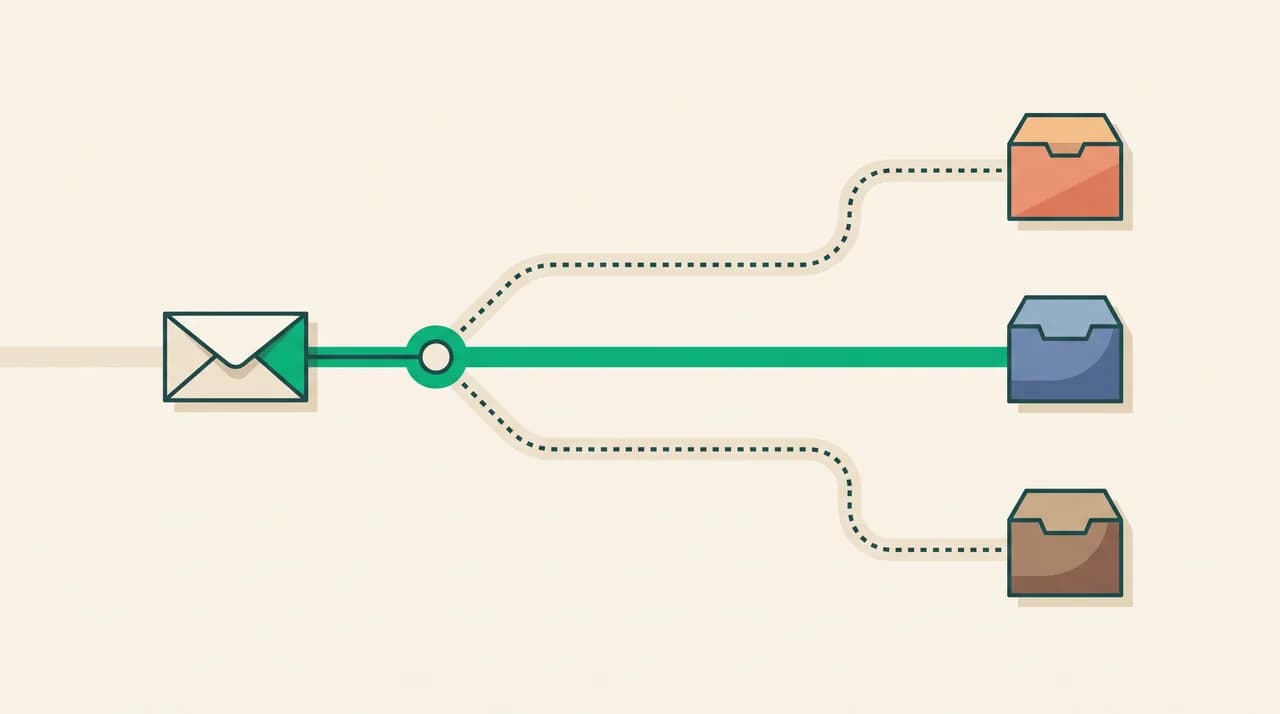
Fyxer is an overlay, not a client. It sits on top of your existing Gmail or Outlook account — you keep opening the app you already use — and adds triage, draft replies and meeting-note summaries inside that interface. The overlay-versus-client distinction is the sharpest axis in AI email software and most comparison content blurs it: an overlay inherits everything the host client does and misses everything it does not, while a client replaces the host and takes ownership of the whole experience.
For a shop where the change-management cost of moving an office off a familiar app outweighs the value of a full AI client, Fyxer is the low-friction option. Drafts appear where a reply would normally appear; triage tags land on labels the office already understands.
The trade-off is control. Because the overlay lives inside the host client, its autonomy ceiling is what the host permits through its API. It cannot ship a native mobile client of its own or a full audit log tied to actions that never leave your Gmail. If mandatory human approval and a full trace of what the agent did are important — and in a trade with quoted numbers on a bid, it usually is — a client-side tool with a built-in approval workflow is the more accountable answer. If not, Fyxer is a legitimate lighter fit.
8. Gmail (Google Workspace) — the honest zero-cost baseline#
If you already have Google Workspace, Gmail is the baseline every other tool on this list is competing against. Gemini is bundled in paid Workspace Business plans — draft help, thread summaries and smart-reply suggestions at no extra subscription. Free consumer Gmail is different; check Google's own plan comparison page.
Gmail's built-in filters, labels and multiple-inbox layout cover a useful slice of what a small EC needs: routing service requests to one label, starring bid invitations that need coverage today, filing submittal threads under a project label, and archiving the rest. Search is strong — the price a supplier quoted three months ago is usually a few keystrokes away.
The honest gap is autonomy. Gmail's AI drafts and suggests; it does not triage on arrival or chase open submittal threads without you. For a solo EC doing five service calls and one small bid a week, one saved reply template plus labels is genuinely enough — it costs nothing on top of the Workspace bill already paying. That is the honest concession.
How to choose for your electrical business#
Match your business first, then evaluate two tools at most. Trying to compare eight email apps in parallel is how the decision gets kicked to the end of a busy bid quarter and never made.
| If this is you | First pick | Second look |
|---|---|---|
| Owner-operator EC, mixed Gmail / Outlook / supplier IMAP, running bids and service calls yourself | AI Emaily | Fyxer, if switching apps is a non-starter |
| Real estimating desk on bids@, real dispatch on service@, two or more people per queue | Front | AI Emaily, for the estimator's personal inbox alongside it |
| Shop already on Microsoft 365 because a GC standardised the project team there | Stay on Outlook, turn on Copilot | AI Emaily, if AI-drafted bid follow-ups is the missing piece |
| Two-person office answering the same address, no formal desks | Missive | AI Emaily, if the personal inbox is the bigger pain |
| Entirely on Google Workspace, and the pain is finding old submittal threads | Shortwave | AI Emaily, if you also live in a supplier IMAP account |
| You are the owner and personally push 100+ emails through your own inbox every day | Superhuman Mail | AI Emaily in Copilot — faster drafting, not just faster triage |
| Solo, on Google Workspace, five service calls and one small bid a week | Stay on Gmail with one saved template | AI Emaily, when volume starts crowding out billable time |
The verdict#
AI Emaily is our pick for most electrical contractors juggling service calls, GC bid invitations, submittals and inspections. It is the only entry in this ranking that puts Gmail, Outlook and IMAP in one inbox while keeping mandatory approval, undo and a full audit log between the agent and your recipients. Electrical work spans both Google and Microsoft accounts — a single client for all of it removes the tab-switching tax that eats real hours across a bid week.
The verdict is scoped honestly. This ranks best email software for an EC's inbox — not estimating software, not a construction management platform, not an FSM. BuildingConnected, ISqFt and PlanHub own bid intake; Procore and Autodesk Build own the project record; ServiceTitan, FieldEdge and eSUB run the ops. What this ranking evaluates is the conversation that arrives before, alongside and after those systems — the mail that carries the commitments the platforms never record.
The two entries where we send you elsewhere: a real team on shared estimating and dispatch addresses goes to Front; everything in Gmail with archive recall as the primary pain goes to Shortwave. Everyone else — start the AI Emaily free trial on the pricing page and see how much of the bid, submittal and service inbox clears itself in the first week.
Frequently asked
See it in AI Emaily
Keep reading

Written by
Nafiul HasanNafiul Hasan is an entrepreneur and AI automation system builder with 10+ years of experience turning messy, manual workflows into reliable automated systems. He designs and ships AI enterprise solutions end-to-end — the agent logic, the data plumbing, and the product people actually use — and founded AI Emaily to give busy professionals their attention back. He writes here from the builder's seat: what works, what breaks, and how to put AI to work without giving up control.