Best Email Software for Transaction Coordinators (2026)

The short answer
For a transaction coordinator running ten to thirty files at once, the best email software groups threads by property, surfaces contingency and closing dates before they slip, and drafts consistent status updates to agents, lenders and title. AI Emaily is our pick because it triages by file and drafts approval-first replies across Gmail, Outlook and IMAP.
The best email software for real estate transaction coordinators keeps every file's deadlines, lender threads, and title updates sorted without losing an email.
On this page
A transaction coordinator's inbox is a deadline machine wearing an email client's clothes. Ten to thirty files under contract at once, each generating threads with the buyer's agent, the listing agent, the lender, the title company, the inspector, the HOA and sometimes the co-op board — and every one of those threads has a date attached that quietly turns into a broken contract if it moves past you. The best email software for real estate transaction coordinators is not the one with the prettiest inbox; it is the one that groups mail by file, surfaces the contingency clock, and drafts the status update you were going to send anyway.
This guide compares eight tools TCs actually consider, ranks them for the deadline-critical document chase, and says which reader should stop reading and go buy the other option instead. No competitor prices are printed — packaging shape only — because the numbers on those pricing pages change more often than this post gets updated. Verify the current tier and cost on the vendor's own page before you commit.
The short answer: which one should a TC actually buy?#
If you coordinate residential closings across a handful of agents, and you already live in Gmail or Outlook, the tool that does the most for a TC-shaped day is AI Emaily. It reads the inbox you already have, groups mail by file with rules you can teach it in one sitting, drafts status updates to the lender-title-agent triangle in your voice, and never sends anything without you tapping approve — which is the exact posture a fiduciary role needs. Full disclosure: we build AI Emaily, which is why it leads this list. We name what we do not do further down.
If you sit inside one team's shared inbox and the whole coordination happens through that address rather than yours, Missive or Front is a better fit than a personal-inbox tool — they are shared-inbox platforms first, and that is a genuinely different job. If you live entirely in Gmail and want the fastest keyboard workflow on a single account, Shortwave has built harder on Gmail-native archive search and threading than we have, and for a solo TC that pattern is a real advantage. We rank ourselves first for the general TC case; we do not rank ourselves first for those two.
How we compared#
The comparison axis that decides this category is not features on a grid — it is what happens to a contingency date on a Tuesday afternoon when you are on the other line with a lender. A tool that helps a TC solves four problems at once: it groups the mail by file (not by sender), it surfaces the deadlines that live in threads, it drafts the routine updates you send twenty times a week, and it keeps you in the loop before anything goes out. We weighted for that shape, not for feature count.
We evaluated each tool on documented capability against its own live vendor page as of August 2026. Where a vendor does not publish a capability, we say it is not published rather than guess. We do not print competitor prices, ratings or review counts because those move quickly and are not the reason a TC picks a tool; instead, each entry describes packaging shape — free tier, trial, per-seat, usage-metered — so you know what to look for when you check the pricing page yourself.
- File-level grouping — does mail sort by property/transaction, or only by sender and label?
- Deadline surfacing — can the tool pull dates out of threads and remind you before they pass?
- Approval-first drafting — does routine correspondence get drafted for you, and does a human tap send?
- Provider coverage — does it work on Gmail, Outlook and IMAP, or force a specific back-end?
- Audit and undo — is every action logged and reversible, in a role where errors have contract consequences?
- Shared visibility — can a lead agent or broker see the file thread without a full seat?
Comparison table#
The row order matches the tool order below. Packaging shape is described qualitatively; check the vendor's live page for the current number before you commit.
| Tool | What it is | Providers | File-level grouping | Approval-before-send | Packaging shape |
|---|---|---|---|---|---|
| AI Emaily | AI-native email client with an agent | Gmail, Outlook, any IMAP | Yes — via rules + Context Brain | Yes — Copilot by default, Autopilot within rules | 7-day free trial on Pro or Autopilot, card taken, $0 if you cancel by day 7; also a lifetime deal |
| Shortwave | AI-native Gmail client | Gmail only | Via labels, threads and AI search | AI drafts; send is manual | Paid tiers with a trial — check vendor page |
| Superhuman Mail | Speed-focused mail client (Grammarly-owned) | Gmail, Outlook | Via splits and reminders | Manual send with keyboard workflow | Per-seat monthly; the Superhuman Suite is a separate bundle |
| Missive | Shared-inbox platform with email + chat | Gmail, Outlook, IMAP, others | Via conversations and shared labels | Manual send with team collaboration | Per-seat tiers with a free option |
| Front | Shared-inbox / customer-communication platform | Gmail, Outlook, and channels beyond email | Via tags, workflows and shared drafts | Manual send; AI Copilot is a paid add-on on lower tiers | Three tiers, per-seat, with seat caps below Enterprise |
| Fyxer | AI overlay for Gmail/Outlook (not a client) | Gmail, Outlook | Via existing folders and its triage | Drafts replies, meeting notes | Paid subscription — check vendor page |
| Serif | Autonomy-focused AI email | Gmail, Outlook (check current) | Rules-based | Autonomy is the pitch | Five tiers; usage-metered, unit not published; 7-day trial |
| Google Workspace + Gmail | Baseline: Gmail with labels and filters | Gmail | Manual labels and filters | Everything manual | Per-seat monthly; the everyone-already-has-it baseline |
The tools#
Each entry below covers what the tool is, where it fits a TC's day, and where it is the wrong answer. We put the deepest capability commentary on the two entries most likely to be a serious pick for a TC — the top of the list and the shared-inbox platforms.
1. AI Emaily#
AI Emaily is an AI-native email client that connects to Gmail, Outlook and any IMAP mailbox. That matters for a TC because the accounts you coordinate across — your own, a broker's forwarding address, sometimes a title account — are almost never all on one provider, and a tool that forces you into one back-end forces you into a migration nobody in a closing week wants to do. Full disclosure: we build AI Emaily, which is why it leads this list. The reasons a TC ends up using it are concrete, not just placement.
The Rules and Context Brain is where a TC gets the most leverage. You teach it, once, that mail from a lender's loan-processor domain about property 1428 Cedar goes on the Cedar file; that title updates carry an escrow number in the subject; that appraiser threads from a certain domain always land under Inspections. From there the mail sorts itself by file, and the agent view is per property rather than per sender — which is the sort order a TC's brain already uses. Combined with Smart Search and Ask-your-inbox, finding "the last thing the lender said about repairs on Cedar" is a sentence, not a folder dive.
The control model is what makes it safe for a fiduciary role. Manual mode drafts, you send. Copilot mode drafts and holds for your one-tap approval — this is the default for TC replies, because a status update that goes out with the wrong closing date is a contract problem, not a support ticket. Autopilot can send within rules you set (for example, a routine "file received, in review" acknowledgement) while forcing anything about dates, dollars or defects to escalate. Every action is logged in a full audit trail and every send has an undo. Cost is a 7-day free trial on Pro or Autopilot (card taken, $0 charged if you cancel before day 7) — see the AI Emaily pricing page for current numbers. It is not a native Swift client and it is Apple Silicon only on Mac; on Android it is a PWA. If those are hard limits for you, one of the tools below is a better fit.
2. Shortwave#
Shortwave is an AI-native mail client built by ex-Google engineers, and it is Gmail-only. For a TC whose entire coordination happens inside a single Gmail account, that constraint is an advantage rather than a limitation: threading, labels and semantic search are built on top of Gmail's own structure rather than around it, and search across a big Gmail archive is where Shortwave has built harder than we have. If you type "the inspection response from the buyer's agent on the Willow file" into Shortwave, the answer arrives fast.
Where it costs a TC is coverage and control. It does not connect Outlook or IMAP, so a coordinator who works across brokerages with different providers is stuck. Its drafting is AI-generated but the send action stays manual — which is fine for a TC but means you do not get a rules-bound Autopilot that can send routine acknowledgements without you. Packaging is paid tiers with a trial; check the vendor page for the current number, because reviews still describe a free plan that the live page does not show. If you are a solo TC living in one Gmail, this is the strongest single-account option in the category.
3. Superhuman Mail#
Superhuman Mail is the fast keyboard-first mail client that was acquired by Grammarly in July 2025; in October 2025 Grammarly renamed the parent company to Superhuman, which means the name now refers to two different things — Superhuman Mail (the client) and the Superhuman Suite (the bundle). If a TC is looking at Superhuman today, this is which one you actually want: the Mail client, not the Suite.
It supports Gmail and Outlook, and its splits and reminders can approximate a per-file view. What it does not do is treat a coordination workflow as a first-class concept — it is a fast individual mail client, and it is aimed at the executive who processes a large personal inbox by keyboard. A TC who has already built muscle memory for keyboard triage will feel at home. A TC who wants an agent that drafts the twentieth "here is where we are on Willow this week" status update in their voice is buying the wrong tool. Packaging is per-seat monthly with a business tier — check the current vendor page.
4. Missive#
Missive is a shared-inbox platform that combines email with chat threads on the same message. For a TC working inside a team where the coordination address is a shared inbox — think a boutique brokerage with two admins and four agents all watching one closings@ address — Missive's model of everyone commenting on a thread beside the customer conversation is a genuinely different job than a personal-inbox tool does. It connects Gmail, Outlook, IMAP and other channels, so it is unusually flexible on providers for its category.
Where it is the wrong answer for a TC is when the coordination lives on your personal address rather than a team account. A shared-inbox platform is overkill for one person, and its collaboration features stop paying rent when there is nobody else to share with. Packaging is per-seat with a free option; verify current tiers on the vendor page. Pick this if the whole closing team lives in the same inbox and needs to see who replied to what without forwarding chains.
5. Front#
Front is a shared-inbox and customer-communication platform with three tiers — Starter, Professional and Enterprise. Starter is one channel type only (email or chat or SMS, not combined), capped at ten automation rules and ten seats. Professional adds omnichannel, more rules and up to fifty seats. Enterprise is uncapped. The AI Copilot, QA and CSAT features are paid add-ons on Starter and Professional, and are included only on Enterprise; contracts over $25,000 require a mandatory onboarding package. This shape matters for a TC because "can I get the AI drafting features" is not a yes/no question on Front — it is a tier question.
For a large brokerage running closings out of a shared address with more than a handful of people, Front is the most enterprise-ready option in the roundup. For a solo TC or a small team, the seat caps and the add-on structure make it heavier than necessary. Annual billing is roughly a quarter below monthly. Pick this if your firm already runs on Front for other reasons, not as your first email tool.
6. Fyxer#
Fyxer is an AI overlay for Gmail and Outlook — it is not a mail client, it is a layer that sits on top of the client you already use, triaging mail and drafting replies. For a TC who does not want to change email interfaces, an overlay is the shortest path from "nothing" to "replies drafted for me". The trade-off is the one every overlay makes: you inherit the client's model of the world (folders, labels, threads) rather than getting a new one.
For a TC who wants file-level grouping — the axis that actually decides the category — an overlay's ceiling is what the underlying client can express. It also cannot enforce approval-before-send in the way a client can, because it does not own the send button. Fyxer's meeting-notes feature is genuine and useful. Pick this if you love your Gmail or Outlook exactly as it is and want drafting on top; skip it if the client itself is the bottleneck. Packaging is a paid subscription; verify current tiers on the vendor page.
7. Serif#
Serif positions on autonomy — the pitch is that it acts, not that it drafts. Its live pricing page shows five tiers (Lite, Standard, Pro, Team, Enterprise) with a 7-day full-access trial on every tier. The tiers are separated by usage multiples — Standard is described as five times the usage of Lite, Pro as twenty times — and the page does not publish what one unit of usage is. For a TC, this matters practically: the price is published, but the meter is not, so you cannot cost out a month at your actual volume until you have run one.
The autonomy pitch is the interesting differentiator for a TC who wants a machine to send routine acknowledgements without checking in. It is also where the risk lives, because a fiduciary role should not put dates or dollars in front of a fully autonomous sender without a very tight allowlist. Pick this if unattended send is the specific feature you want; verify the tier and the meter on the vendor's live page before you commit.
8. Google Workspace + Gmail#
The honest baseline: many TCs coordinate the entire book of business inside Gmail with labels and filters, and this is not a wrong answer for a light caseload. Gmail's filters can label mail by keyword or sender, its search is fast, and multiple inbox views can be shaped roughly by file if you commit to a labelling convention and never let it slip. See Gmail Help — mail settings, filters and labels for the underlying controls; every tool on this list sits on top of them one way or another.
Where Gmail alone stops paying rent is at volume. A TC with twenty-five open files whose labels have to be applied by hand will fall behind the labelling before the closing week finishes, and everything above this row is really a way to automate the labelling and the drafting that vanilla Gmail leaves to you. Pick Gmail-only if your caseload is small, your discipline with labels is strong, and adding another subscription is not worth it. Add one of the tools above the moment either half of that stops being true.
How to choose for your situation#
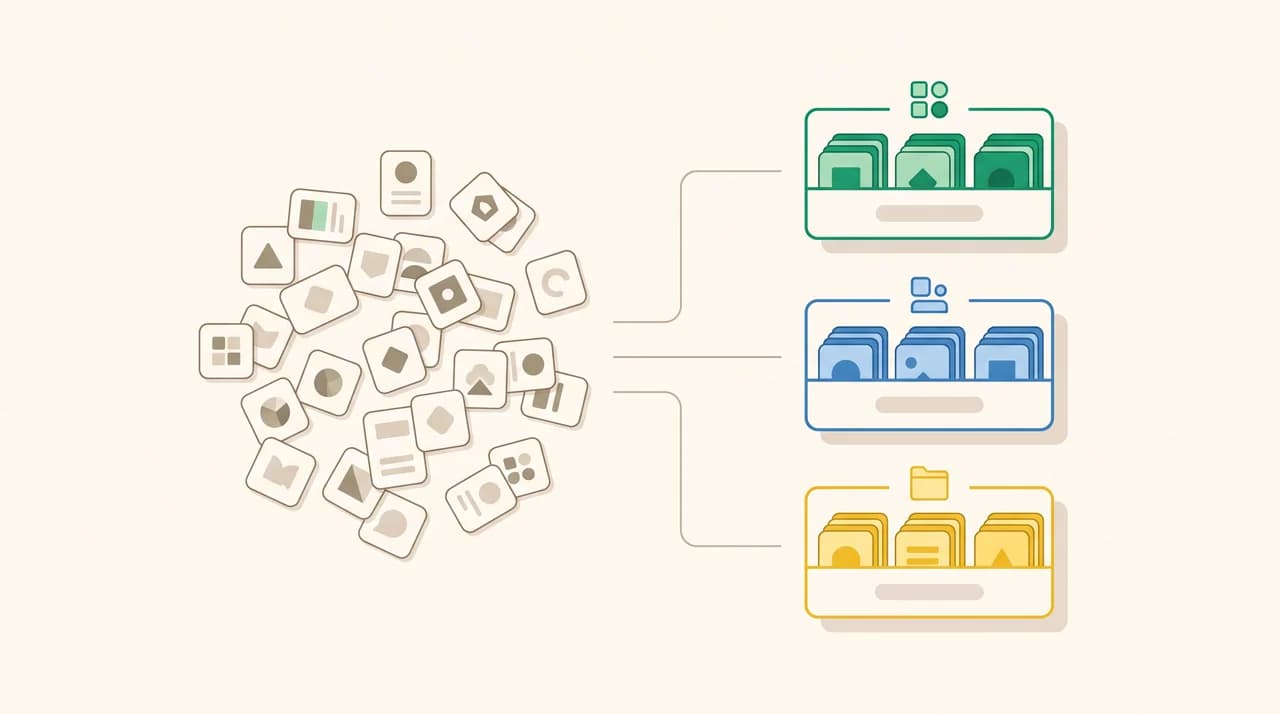
The right pick depends on three variables: how many files you carry at once, whether the coordination lives in your inbox or a team's, and how much you trust a machine to send routine correspondence.
- 1
Solo TC, personal inbox, 10–30 files under contract
This is the classic case, and it is where an AI-native personal-inbox tool earns its keep. AI Emaily is our pick because file-level grouping via rules plus approval-before-send drafting is exactly the pattern a TC's day needs. If you are entirely in Gmail and want the fastest keyboard triage on a single account, Shortwave is the honest alternative.
- 2
Team TC, everyone works out of one shared address
This is not a personal-inbox job. Missive or Front is the right shape — pick Missive for a lean team that wants flexibility and a free tier to start on, and Front if your firm is already standardised on it or you need the enterprise controls. AI Emaily is not a shared-inbox platform, so this is a case where the honest answer is one of those two.
- 3
TC who wants an overlay, not a new client
Fyxer is the shortest path from your current Gmail or Outlook to drafted replies. You will hit an overlay's ceiling on file-level grouping — you inherit the client's labels — so treat this as an assist rather than a coordination system.
- 4
TC who wants unattended send for routine acks
AI Emaily's Autopilot can do this within rules you set, and every send is logged and reversible. If autonomy is the specific reason you are shopping, Serif is positioned there too; verify the usage meter on their live page before you commit, because the price is published and the unit is not.
- 5
TC who wants to try nothing new
Gmail with labels and filters will get you a long way if your caseload is small and your discipline is strong. Set up a per-file label, a per-role sub-label (Lender, Title, Agent, Inspector) and a saved-search shortcut per active file. When you cannot keep the labels current by hand, that is the signal to go back up this list.
Approval-before-send is not optional in a fiduciary role
A note on what a tool cannot do for you#
None of the tools above is transaction management software. They do not replace Dotloop, SkySlope, Brokermint or the checklist system your brokerage runs on. The job of the email software is upstream of the transaction system: it is where the lender, title agent, buyer's agent, seller's agent, inspector and appraiser talk to you, and where a slipped date first appears as a message you did not read in time. See NAR's industry resources for the wider stack — this post is about the email layer inside it.
The reason to invest in the email layer is that most missed deadlines and misfiled disclosures start as an email that landed in the wrong place, or a status update that was drafted at midnight and got the date wrong. Fix the email and a large share of coordination failures never reach the transaction system to be tracked in the first place.
Frequently asked
See it in AI Emaily
Keep reading
Sources

Written by
Nafiul HasanNafiul Hasan is an entrepreneur and AI automation system builder with 10+ years of experience turning messy, manual workflows into reliable automated systems. He designs and ships AI enterprise solutions end-to-end — the agent logic, the data plumbing, and the product people actually use — and founded AI Emaily to give busy professionals their attention back. He writes here from the builder's seat: what works, what breaks, and how to put AI to work without giving up control.