Best Email Software for University Admissions Teams (2026)

The short answer
For most university admissions teams answering high volumes of applicant questions from a shared mailbox, the best fit is a shared-inbox platform or AI email client layered on your existing Google Workspace or Microsoft 365 accounts. We recommend AI Emaily for approve-before-send drafting, shared inboxes and audit trails; Front is stronger for very large operations.
The best email software for university admissions teams, compared: AI clients, overlays and shared inboxes for high-volume applicant enquiries.
On this page
- 01The short answer: our top pick
- 02Does FERPA apply to a university admissions inbox?
- 03How we compared
- 04University admissions email software compared
- 05How the shortlist sits together
- 06The tools, one by one
- 071. AI Emaily — best for approve-before-send admissions replies
- 082. Front — best for very large, help-desk-style admissions operations
- 093. Shortwave — fastest pure-Gmail workflow
- 104. Superhuman Mail — speed, with a name to untangle
- 115. Fyxer — an overlay, not a new client
- 126. Serif — autonomy-first, with a pricing quirk
- 137. Cora — a digest, not a replacement inbox
- 148. Inbox Zero — open-source cleanup for Gmail
- 15What about Slate, Salesforce or your admissions CRM?
- 16How to choose for your situation
- 17Putting it together
A university admissions office is a call centre that runs on email. Prospective undergraduates ask about deadlines, transcript formats and English test waivers; graduate applicants ask about GRE requirements, funding, and supervisor availability; parents ask everything again. All of it lands in a shared mailbox — admissions@, gradinfo@, mba-admissions@ — and it has to be answered fast, consistently, by a rotating team of counsellors, without a wrong reply about a policy going out under the university's name.
This guide compares the tools that actually handle that job. It is written for admissions and enrolment leaders choosing software, not for CIOs. The best email software for university admissions teams is not a marketing platform or an application CRM; it is the layer that sits on your existing Gmail or Outlook and helps counsellors reply. We build one of the tools below — AI Emaily — and we say so plainly where it comes up.
The short answer: our top pick#
For most university admissions teams, the best email software is an AI-native email client or shared-inbox platform that runs on the Google Workspace or Microsoft 365 accounts you already have, adds real shared-mailbox workflow for a team of counsellors, and drafts routine replies while keeping a human in control of every send. Our pick for that job is AI Emaily, listed first below. We build it, so read this section as advocacy backed by disclosure, not as a neutral referee.
The reason it fits admissions specifically is the control model. A reply to a prospective student is high-stakes: it carries the university's reputation, often quotes policy, and — once that student enrols — becomes part of a record governed by FERPA. AI Emaily drafts in Copilot mode and waits for a one-tap human approval before anything sends, keeps a full audit trail, and does not train on your email. That is the right shape for a team that cannot afford a wrong autonomous reply about a deadline or a funding decision.
One honest concession up front: Front has built shared-inbox workflow harder than we have. If you run a very large admissions operation across multiple schools or campuses — dozens of counsellors, omnichannel enquiries, formal SLAs — Front is genuinely stronger on that axis, and we say so below. If your team is on Google Workspace only and you want the fastest keyboard-driven feel, Shortwave may beat us on that dimension too. We are stronger on approve-before-send AI and provider coverage across Gmail, Outlook and IMAP.
Does FERPA apply to a university admissions inbox?#
This one is different from the K-12 version of the question. Colleges and universities that participate in U.S. Department of Education funding programs — which is nearly every accredited institution — are subject to FERPA. So the honest answer for higher education is: yes, FERPA governs your student records, and your admissions inbox becomes part of that picture the moment an applicant enrols.
The nuance that surprises people is what FERPA does not cover. FERPA protects the education records of students in attendance. The Department of Education's Student Privacy office is explicit that records of a person who has applied to but never attended an institution are not education records under FERPA. A prospective applicant's enquiry about deadlines, or a rejected applicant's appeal, generally sits outside FERPA on that basis. Protections attach once the student is admitted and in attendance — and then anything you have written about them in email counts.
The practical consequence for choosing software is that a university admissions inbox is a two-mode system. During recruitment it is a fast marketing and support channel; after matriculation it becomes a record-keeping obligation. The tools you pick have to serve both. That means real access control, a clean audit trail, no vendor training on your mail, and the ability to search and export what you sent when a student later requests their records under FERPA §99.10.
No email tool is "FERPA-certified"
How we compared#
We did not run a lab test of every product; we compared them on documented capabilities that matter to a university admissions office, drawn from each vendor's own materials as of August 2026. Packaging, provider support and AI controls in this category shift often, so treat every specific below as a starting point and confirm it on the vendor's site before you buy.
The dimensions we weighted, in rough order of importance for higher-ed admissions:
- Provider coverage — Gmail, Microsoft 365/Outlook and plain IMAP. Universities are almost always one or the other at the institution level, but graduate departments and centres often run legacy IMAP.
- Shared inbox for a team — can dozens of counsellors work admissions@ without stepping on each other, with assignment, internal notes and collision detection?
- Control before send — does AI draft and wait for a human, or can it send on its own? For applicant-facing mail during a deadline crunch, approve-first matters.
- Consistency across counsellors — templates, macros, snippets and a shared voice so a question answered by three different people gets three consistent answers.
- Undo and audit — can you reverse a send and see who did what? Essential when a message about a decision or funding goes out.
- Privacy posture — does the vendor train models on your email, and how is data protected? Answer this before FERPA and any Department-of-Education-funding question comes up.
- Packaging shape — 7-day trial, free tier, per-seat or usage-metered — so you can size it to a small graduate programme office or a central university admissions call centre.
University admissions email software compared#
The table maps the main options to the dimensions above. Categories differ on purpose: some are full email clients, one is an overlay that sits on top of your existing inbox, one is a shared-inbox platform built for teams, and one is an assistant that summarises rather than replaces your client. Read the category column first — it is the sharpest distinction in this market and the one most comparison content blurs.
| Tool | Category | Works with | Shared inbox for counsellors | Control before send | Packaging shape |
|---|---|---|---|---|---|
| AI Emaily | AI-native email client | Gmail, Outlook, IMAP | Shared inbox + delegation | Copilot approve-before-send; gated Autopilot; undo + audit | 7-day free trial on Pro/Autopilot, then paid plans |
| Front | Shared-inbox platform (not a client) | Any inbox + SMS/chat | Its core purpose — assignment, SLAs, macros | Rules + assignment; AI Copilot is a paid add-on except at top tier | Starter / Professional / Enterprise; seat caps step up per tier |
| Shortwave | AI-native email client | Gmail / Google Workspace | Team plans | AI drafts; you send | Trial + paid tiers (verify current tiers on the vendor page) |
| Superhuman Mail | Fast email client (Grammarly-owned since 2025) | Gmail, Outlook | Team plans | AI drafts; you send | Trial + paid tiers |
| Fyxer | Overlay on your existing inbox | Gmail, Outlook | Per user | Drafts for your review | Trial + paid |
| Serif | Autonomy-led assistant | Gmail | Team tier | Configurable autonomous actions | Trial on every tier; flat + usage-metered tiers |
| Cora | Digest / triage assistant | Gmail | Individual | You act on the digest | Paid |
| Inbox Zero | AI assistant / inbox cleaner | Gmail | Individual | Automated rules + drafts | Open-source + paid hosted |
How the shortlist sits together#
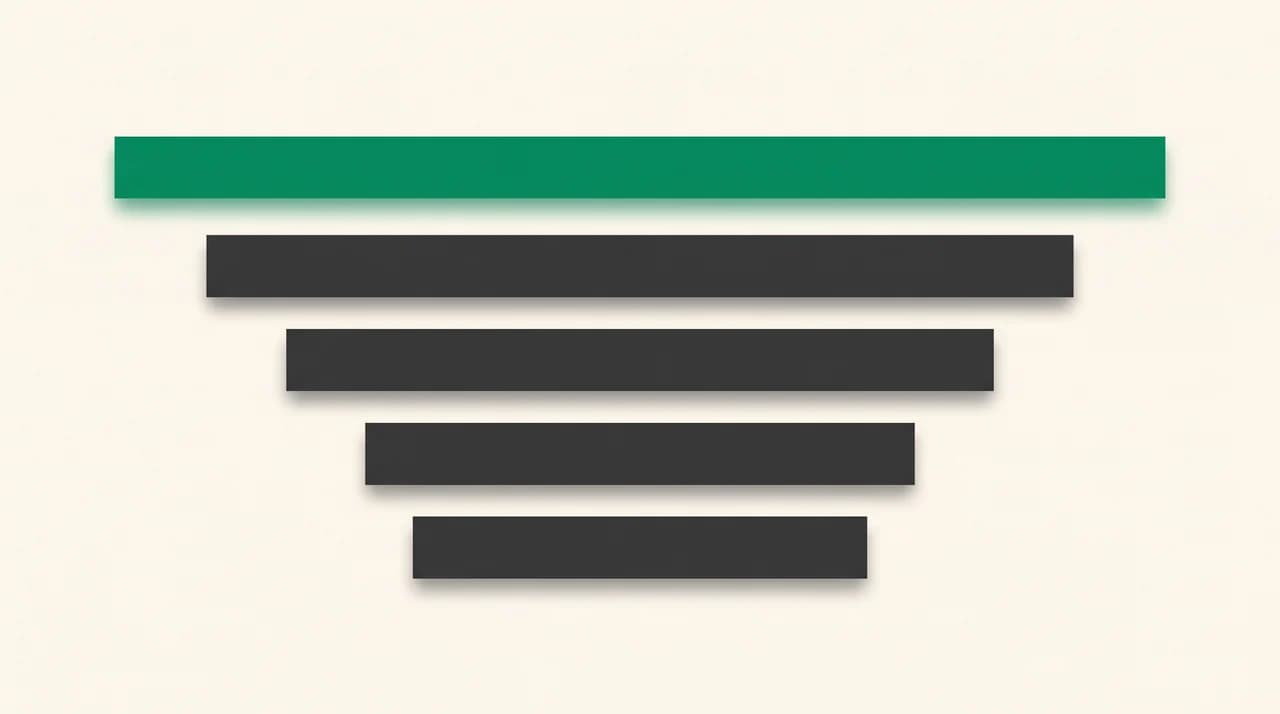
Read the shortlist as three bands. The top band is a real team workflow layer on top of your existing mailbox — AI Emaily and Front. The middle band is fast AI clients that suit individual counsellors or small teams — Shortwave, Superhuman Mail, Fyxer, Serif. The bottom band is single-user assistants — Cora and Inbox Zero — that fit a director's personal inbox rather than a shared admissions address.
The tools, one by one#
Below is what each option is actually good for in a university admissions context, and where it is the wrong choice. We give AI Emaily the most room because we know it best; that is disclosure, not neutrality.
1. AI Emaily — best for approve-before-send admissions replies#
AI Emaily is an AI-native email client that connects to Gmail, Outlook and any IMAP mailbox, so it runs on the admissions accounts you already have instead of asking a department to migrate off Google Workspace or Microsoft 365. Full disclosure: we build AI Emaily, which is why it leads this list. The reasons it fits higher-ed admissions are concrete, not just placement.
The control model is the point. In Copilot mode it drafts a reply to a deadline query, an English test waiver request or a funding question, and waits for a one-tap human approval before sending — so nothing applicant-facing goes out unreviewed during a peak-week crunch. Autopilot exists for genuinely routine mail (out-of-office style acknowledgements, portal-check reminders) and only acts within rules you set; anything ambiguous escalates to a person. Every action lands in an audit trail and every send has an undo, which is the safety net you want on a message about an admission decision that would otherwise be a phone call.
For a team, it offers a shared inbox with delegation so counsellors can work admissions@ without collisions, plus per-account and per-lens views for graduate programme sub-mailboxes. Drafts sound like your institution because the voice comes from a user-set Context brain and per-client profiles you define — not from silently scraping past mail. On privacy, AI Emaily does not train models on your email, and sensitive credentials are encrypted. It is web-based with real downloadable macOS (Apple Silicon) and Windows apps and a native iOS app; Android is a PWA and there is no Linux build. Where it is the wrong pick: it is not a system of record for applications, and it will not replace Slate, Salesforce Education Cloud or TargetX.
2. Front — best for very large, help-desk-style admissions operations#
Front is not an email client; it is a shared-inbox and customer-communication platform, and it is the strongest option in this list if your admissions operation is large enough to run like a help desk. It was built from the ground up for teams working shared addresses with formal assignment, macros, rules, internal collaboration and SLA reporting — and higher-ed admissions call centres are one of its natural fits.
Its plans run Starter, Professional and Enterprise. Starter is one channel type only and capped around ten seats; Professional is omnichannel with roughly fifty seats and macros; Enterprise removes the caps. AI Copilot, QA and CSAT are paid add-ons on the lower tiers and included only at the top; very large contracts can require a mandatory onboarding package. Confirm the current tier caps and add-on rules on front.com before you commit.
This is where the concession above lands. Front has built harder on formal shared-inbox workflow than we have — SLA timers, deep macro libraries, workflow rules across email and SMS — and for a big central admissions call centre handling tens of thousands of enquiries per season, that depth wins. For a graduate programme office of three people or a departmental admissions team, Front is heavier and more expensive than the shape of the problem calls for.
3. Shortwave — fastest pure-Gmail workflow#
Shortwave is an AI-native email client built by ex-Google engineers, focused squarely on Gmail and Google Workspace. Its strengths are speed and a genuinely good semantic search, which is useful when a counsellor is hunting for a specific applicant's earlier thread during peak season. It offers AI drafting and summarisation, and drafts while you stay the sender.
For a university admissions office that runs entirely on Google Workspace and values a fast, keyboard-driven feel, Shortwave is a strong choice, and on raw Gmail speed it can beat us. The trade-off is coverage: if any of your team is on Outlook or a plain IMAP account — common in older graduate departments or research centres — a Gmail-only client leaves them out. Packaging includes paid tiers with a trial; whether a permanent free tier is currently offered has changed recently, so check the live pricing page rather than trusting older reviews.
4. Superhuman Mail — speed, with a name to untangle#
Superhuman is worth a careful note because the name became ambiguous in 2025. Grammarly acquired Superhuman (the email client) in July 2025 and, in October 2025, renamed the parent company to Superhuman. So "Superhuman" can mean two different things today: Superhuman Mail, the email client, and the broader Superhuman Suite bundle. For a university admissions office the client — Superhuman Mail — is what matters.
As a client it is built for speed and a polished keyboard workflow across Gmail and Outlook, with AI drafting and triage; you remain the sender. It suits an individual admissions director or graduate programme coordinator who wants a fast personal inbox more than it suits a large shared-team address. Packaging is trial plus paid tiers. If you evaluate it, be precise about which "Superhuman" a salesperson or article means, because much of the online content has not caught up to the rename.
5. Fyxer — an overlay, not a new client#
Fyxer takes a different shape from the clients above: it is an overlay that works on top of your existing Gmail or Outlook rather than replacing it. It handles triage, drafts replies, and can take meeting notes. Because it layers onto the current inbox, there is nothing to migrate and the rest of your team keeps their familiar interface — a real advantage in a university where changing the email client is a bureaucratic exercise.
For a graduate programme office that does not want a new client but wants AI help with drafting the daily flood of enquiries, that overlay model is appealing. The distinction to keep in mind is that an overlay augments one person's inbox; it is not a shared-inbox platform with assignment and internal notes for a whole admissions team. Packaging is trial plus paid plans per user. If your need is team-wide shared handling rather than individual assistance, weigh the gap.
6. Serif — autonomy-first, with a pricing quirk#
Serif positions itself on autonomy: an assistant that takes actions on your email rather than only drafting. For admissions, autonomy is a double-edged tool — powerful for genuinely repetitive mail (portal reminders, receipt acknowledgements), risky for anything that quotes policy or announces a decision. Read its controls carefully and configure conservatively before letting it act unsupervised.
Its pricing is worth understanding before you commit. Serif publishes several tiers with a 7-day full-access trial on each, and the tiers are separated by usage multiples — one is described as several times the usage of the entry tier, another as many times more — but the page does not define what a single unit of usage actually is. In other words, the price is published and the unit is not, which makes it hard to predict a peak-season bill. Ask the vendor to define one usage unit before you sign for anything above the entry tier.
7. Cora — a digest, not a replacement inbox#
Cora takes yet another approach: it is a triage and digest assistant that summarises your inbox and surfaces what needs attention, rather than a full client you live in all day. The value is in cutting noise — useful for an admissions director drowning in low-priority mail who wants a curated view of what actually matters between meetings.
Because it is digest-led, you still act on the messages yourself, and it is oriented toward an individual's inbox rather than a shared team address. If your problem is "too much to read" more than "too much to reply to," Cora addresses the first well. If your problem is a rotating team all replying from one shared admissions address, it is not built for that shape.
8. Inbox Zero — open-source cleanup for Gmail#
Inbox Zero is an AI email assistant focused on cleaning up and automating a Gmail inbox — bulk handling, rules and automated triage — and it publishes an open-source codebase alongside a paid hosted option. For a technically comfortable university IT department that wants control over where data lives, the self-hostable angle is a real differentiator.
The trade-offs are its Gmail focus and its cleanup-first orientation. It is more about taming volume and automating routine handling than about being the polished shared client an admissions team replies from all day. If you have someone who can run a self-hosted tool, all your traffic is on Google Workspace, and your problem is the raw volume of low-value mail, it is worth a look. If you want a turnkey shared inbox with human-approval drafting for a team, it is a different fit.
What about Slate, Salesforce or your admissions CRM?#
One honest boundary: none of the tools above is an admissions CRM, and none should replace one. Systems built for higher-ed admissions — Slate (Technolutions), Salesforce Education Cloud, TargetX, Element451 — are the system of record for applications, checklists, decisions, funding files and yield campaigns. They track a candidate through the funnel; an email tool handles the day-to-day conversation.
The two layers are complementary. Your CRM holds the application; your email software handles the daily flood of "is my transcript enough?" and "can I switch programme?" faster and more personally than the CRM's built-in mail ever will. Most admissions CRMs can send bulk drip campaigns and log inbound mail, but writing a considered one-to-one reply to an applicant is still faster in a real email client. The best setup for most offices is a strong CRM as the record, plus a capable shared inbox on top for the human conversation. If a vendor tells you their inbox replaces Slate or Salesforce, be sceptical.
Match the tool to the job
How to choose for your situation#
The right pick depends less on features and more on the shape of your office. Work through these in order — the first two usually settle it.
- 1
Start with your provider and team size
If your central admissions office is fifty counsellors on Microsoft 365 with formal SLAs, you are looking at Front. If it is six counsellors on Google Workspace handling a graduate programme, an AI email client with shared-inbox support like AI Emaily is a better fit. If your provider mix crosses Gmail, Outlook and IMAP — common when graduate departments run their own systems — rule out Gmail-only options.
- 2
Decide the control line for applicant-facing mail
During peak weeks you will be tempted by full autonomy. Resist it for anything that quotes policy, mentions funding or acknowledges a decision. Approve-before-send with undo and an audit trail is the safer default; keep autonomous actions to clearly routine mail like portal-check nudges and receipt acknowledgements.
- 3
Enforce consistency across counsellors
Prioritise templates, macros or a shared Context brain so the same policy question gets the same answer whether it lands with a first-year counsellor or a senior director. Front's macros and AI Emaily's per-client profiles do this in different ways; overlays and digest tools do not, which is why they suit individuals rather than teams.
- 4
Pin down the privacy and packaging facts
Confirm the vendor does not train models on your email, and get the packaging in writing — 7-day trial, free tier, per-seat or usage-metered — since these change often. For usage-metered tools, make the vendor define one unit of usage before you commit to a season that has ten times the traffic of an off-month.
Putting it together#
For most university admissions teams, the best email software is a shared-inbox layer that runs on your existing Google Workspace or Microsoft 365 accounts, drafts routine replies in your institution's voice, and keeps a human approving every applicant-facing send. That is the combination that gets response time down without risking a wrong autonomous message about a policy or a decision.
We recommend AI Emaily for that profile, and we build it — so weigh that. If you run a very large central admissions call centre with formal SLAs and omnichannel enquiries, Front is the stronger fit. If your team is entirely on Google Workspace and wants raw keyboard speed, look at Shortwave. Whatever you pick, keep your admissions CRM as the system of record, verify FERPA's applicability to your institution with the Department of Education's Student Privacy office and your general counsel rather than a vendor badge, and confirm every price and privacy claim on the vendor's own page before you buy. You can start a 7-day trial of AI Emaily at aiemaily.com.
Frequently asked
See it in AI Emaily
Keep reading
Sources

Written by
Nafiul HasanNafiul Hasan is an entrepreneur and AI automation system builder with 10+ years of experience turning messy, manual workflows into reliable automated systems. He designs and ships AI enterprise solutions end-to-end — the agent logic, the data plumbing, and the product people actually use — and founded AI Emaily to give busy professionals their attention back. He writes here from the builder's seat: what works, what breaks, and how to put AI to work without giving up control.