Best GMass Alternatives for Gmail Campaigns

The short answer
The best GMass alternative depends on the job. For mail merges from your own Gmail, Mailmeteor, YAMM or Streak fit. For sales sequences, Mixmax or Yesware. For cold outreach at volume, use dedicated infrastructure like Instantly or Smartlead so you protect your primary account. For opt-in newsletters, an ESP like Brevo.
The best GMass alternatives for Gmail, ranked by deliverability and account-reputation risk — not just features and price.
On this page
- 01The short answer: pick by the job, not the brand
- 02One category this list does not include
- 03How we compared these tools
- 04GMass alternatives compared
- 05Two ways a Gmail campaign reaches the inbox
- 06Mailmeteor — privacy-first mail merge from Gmail
- 07YAMM (Yet Another Mail Merge) — mail merge run from a spreadsheet
- 08Streak — mail merge with a CRM inside Gmail
- 09Mixmax — sales sequences that live in Gmail
- 10Yesware — tracking and sequences for small sales teams
- 11Instantly — dedicated infrastructure for cold outreach
- 12Smartlead — scaling cold email across many mailboxes
- 13Brevo — for opt-in newsletters, not cold email
- 14Where AI Emaily fits — and where it doesn't
- 15How to choose for your situation
- 16The deliverability rules that apply whichever tool you pick
GMass turns Gmail into a campaign tool. It is a Chrome extension that sends mail merges and cold email through your own Gmail account, and that is both its appeal and its risk. This guide compares the best GMass alternatives for Gmail on the thing that actually decides whether a campaign works: deliverability and the reputation of the account you send from — not just features and price.
The right pick depends on whether you are sending a personalised mail merge, a sales sequence, cold outreach at volume, or an opt-in newsletter. Those are four different jobs, and each has a different safe tool.
The short answer: pick by the job, not the brand#
There is no single best GMass alternative, because GMass does several jobs at once. Match the tool to what you are actually sending:
- Want the same send-from-Gmail mail merge with cleaner privacy and a simpler workflow? Mailmeteor and YAMM are the closest swaps.
- Running sales sequences with tracking and a light CRM? Mixmax or Yesware live inside Gmail the same way GMass does.
- Sending cold email at real volume? The safest move is to stop using your primary Gmail for it — use a dedicated platform like Instantly or Smartlead that sends from separate inboxes and warms them up.
- Sending to a list that opted in? Use an email service provider such as Brevo, not a cold-email tool.
One category this list does not include#
AI Emaily, which we build, is a different category — an AI email client for the inbox, not a sender. It does not send bulk mail merges or cold sequences, so it is not ranked here as a sending tool. It fits on the other side of a campaign, and we cover exactly where below.
The core risk to understand first
How we compared these tools#
We did not score these on feature checklists. For a campaign tool, the questions that decide the outcome are where the mail is sent from and what that does to your reputation. We compared on documented capability, not testing claims:
- Where it sends from — your own Gmail account, or dedicated inboxes and domains it manages for you. This is the single biggest factor in reputation risk.
- What job it is built for — personalised mail merge, sales sequences, cold outreach at scale, or opt-in newsletters.
- Deliverability protections — list verification, sending limits that respect Gmail's caps, warmup, and unsubscribe handling.
- Compliance fit — whether it helps you meet the authentication and spam-rate rules Gmail now enforces on bulk senders.
- Packaging shape — free tier, trial, per-seat or usage-based. We do not quote prices; they change, and each vendor publishes its own.
Verify before you buy
GMass alternatives compared#
Read the middle column first. Every tool that sends through your own Gmail carries the same core risk GMass does: a bad campaign can damage the account you rely on for everyday mail. The tools that send from their own infrastructure keep that risk off your primary account.
| Tool | Category | Sends through your Gmail? | Best for |
|---|---|---|---|
| Mailmeteor | Gmail mail merge | Yes | Privacy-conscious mail merge from your account |
| YAMM | Gmail mail merge | Yes | Mail merge run from a Google Sheet |
| Streak | CRM + mail merge in Gmail | Yes | Mail merge alongside a lightweight CRM |
| Mixmax | Sales engagement | Yes | Sales sequences and scheduling inside Gmail |
| Yesware | Sales engagement | Yes (Gmail & Outlook) | Sequences with tracking for small sales teams |
| Instantly | Dedicated cold-email platform | No — separate inboxes | Cold outreach at volume with warmup |
| Smartlead | Dedicated cold-email platform | No — separate inboxes | Scaling cold email across many mailboxes |
| Brevo | Email service provider (ESP) | No — its own infrastructure | Opt-in newsletters and marketing email |
Two ways a Gmail campaign reaches the inbox#
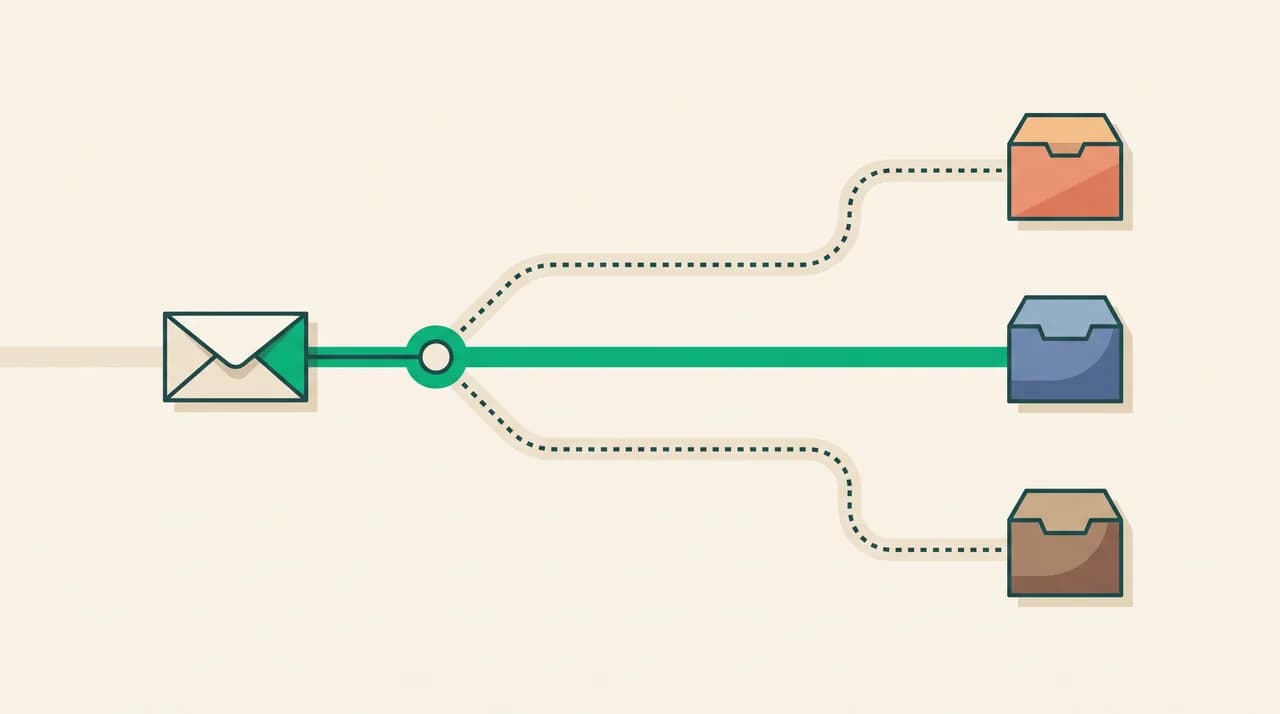
Every tool here uses one of two sending paths. The first sends each message through your own Gmail, so the campaign inherits your account's history — fine if that history is clean and the volume is low, damaging if a single send draws spam complaints.
The second sends through inboxes the platform creates and warms up on separate domains. That keeps a rough campaign from touching the mailbox you use for real work. Neither is universally better; they suit different jobs, which is the whole point of picking by use case.
Mailmeteor — privacy-first mail merge from Gmail#
Mailmeteor is the closest like-for-like swap for GMass's core mail-merge job. It works as a Gmail add-on and a Google Sheets add-on: you build your list in a spreadsheet, write the template in Gmail, and it sends personalised copies from your own account.
Its clearest differentiator is privacy. Mailmeteor states it does not request read access to your Gmail inbox or Google Drive — unlike some add-ons — and says your recipient data stays in your own spreadsheet. Because it sends through Gmail, it respects Gmail's native caps rather than trying to break them; on Google Workspace that is up to 2,000 messages a day, and far fewer on free consumer Gmail. Staying inside the caps is what keeps the account healthy, so that is a feature, not a limitation.
Packaging is freemium — a free tier with a small daily send limit, plus paid plans that add volume, tracking and scheduling. It is a strong pick for personalised outreach where the list is modest and the sender is you. Verify current limits on mailmeteor.com.
YAMM (Yet Another Mail Merge) — mail merge run from a spreadsheet#
Yet Another Mail Merge, usually shortened to YAMM, is a Google Sheets and Gmail add-on built around the same idea: your recipient list lives in a spreadsheet, and YAMM merges it into a Gmail template and sends personalised messages from your account. It reports opens, clicks and bounces back in the sheet.
If your team already works in Google Sheets, YAMM keeps the whole campaign in a familiar place. Like Mailmeteor, it sends through your own Gmail, so the same reputation rules and daily caps apply — it is a mail-merge tool, not a way around Gmail's limits.
Its packaging is freemium, with a free tier for low volumes and paid plans for larger sends and teams. YAMM fits when the campaign is a personalised, spreadsheet-driven mailing to a list you already have permission to email — event invites, updates, newsletters to opted-in contacts — rather than cold outreach at scale. Confirm current tiers on yamm.com.
Streak — mail merge with a CRM inside Gmail#
Streak is a CRM that lives inside Gmail, and mail merge is one feature within it. If you want to send personalised campaigns and also track the relationships behind them — deals, pipelines, follow-ups — Streak keeps both in the inbox instead of a separate app.
Its mail merge sends through your own Gmail account, so it shares the reputation profile of every other send-from-Gmail tool here: fine for personalised, moderate-volume outreach, risky for cold blasts. Where Streak earns its place is the CRM itself — automatic email logging, pipelines, and shared views for a small team.
Packaging is freemium, with a free tier and paid plans that add pipeline features and higher send limits; higher plans are billed by team rather than strictly per seat. Choose Streak when the campaign is part of a sales or relationship workflow you want to manage in one place, not when you simply need to push a large one-off send. Check current plans on streak.com.
Mixmax — sales sequences that live in Gmail#
Mixmax is a sales engagement platform that runs as a Gmail extension. Instead of one-off merges, it is built for sequences: multi-step follow-ups that send automatically until someone replies, plus meeting scheduling, templates and engagement tracking.
Like GMass, Mixmax sends through your own Gmail account, so sequences go out from the same address prospects already see you at — which helps a warm, low-volume sales motion and hurts a cold, high-volume one. It is aimed at founders and small teams who want automation without a heavy enterprise platform.
Packaging is per-seat with tiered plans and a free plan to start, and Mixmax says the same sending protections apply at one seat as at many. It is the right alternative when your outreach is relationship-driven sales rather than mass mailing: personalised sequences to a manageable number of prospects, sent from your real inbox. Verify seats and features on mixmax.com.
Yesware — tracking and sequences for small sales teams#
Yesware is a sales engagement tool that installs into both Gmail and Outlook and sends through your own mailbox. Its core is tracking — opens, clicks and attachment views — plus templates and multi-touch campaigns, aimed at individual reps and small teams who want insight without switching apps.
Because it sends from your real mailbox, Yesware carries the same account-reputation exposure as the other in-Gmail tools; it is built for targeted sales outreach, not bulk cold email. Its reach across both Gmail and Outlook makes it a better fit than Gmail-only tools if your team is split between the two providers.
Packaging is freemium with a free trial and tiered plans, plus separate pricing for its prospecting and data features. Pick Yesware when you want lightweight sequence-and-tracking on top of the mailbox you already use, especially across mixed Gmail and Outlook teams. Confirm current tiers on yesware.com.
Instantly — dedicated infrastructure for cold outreach#
Instantly is where the category changes. Instead of sending through your primary Gmail, it connects many separate sending accounts and warms them up, spreading volume across inboxes and domains so no single account carries the whole campaign. This is the safe way to run cold outreach at scale.
The point is reputation isolation: if a cold campaign draws complaints, the damage lands on dedicated sending domains, not the Gmail account you use for real work. Instantly adds email warmup, deliverability tooling, and more recently lead-sourcing and AI features.
It is not a Gmail add-on and it is not for opt-in newsletters — it is a cold-email engine, and using it well still means following Gmail's bulk-sender rules on the domains you send from. Packaging is tiered with a free trial to start, and separate products for sending accounts and lead data. Choose Instantly when volume is high and protecting your primary account matters more than sending from it. Verify current plans on instantly.ai.
Smartlead — scaling cold email across many mailboxes#
Smartlead is the other dedicated cold-email platform here, and it leans hardest on deliverability. It supports connecting unlimited mailboxes with automatic warmup and inbox rotation, so a campaign sends a little from each mailbox rather than a lot from one — the pattern that keeps volume under each account's radar.
Like Instantly, it keeps cold sending off your primary Gmail entirely. Smartlead describes dedicated-tenant infrastructure and IPs as putting deliverability under your control, and positions itself for agencies and teams running outbound at real scale.
It is overkill for a personalised mailing to a small warm list, and it is not a newsletter tool. Packaging is tiered with a free trial, and it emphasises unlimited mailboxes and storage rather than per-seat pricing. Reach for Smartlead when you are running many campaigns across many sending accounts and deliverability is the whole game. Confirm current tiers on smartlead.ai.
Brevo — for opt-in newsletters, not cold email#
Brevo, formerly Sendinblue, is included to draw the line most GMass searches miss: cold-email tools and newsletter platforms are not interchangeable. Brevo is an email service provider — it sends opt-in marketing email and newsletters through its own infrastructure, with list management, templates, automation and built-in unsubscribe.
That makes it the right tool when your recipients asked to hear from you, and the wrong one for cold outreach; ESPs enforce opt-in and will suspend accounts that send unsolicited mail. Because it sends from its own systems, it does not touch your Gmail account's reputation at all.
Packaging is freemium with volume-based tiers rather than per-seat pricing. If what you actually have is a subscriber list — customers, sign-ups, event attendees — Brevo or a comparable ESP such as Mailchimp or MailerLite is a safer, more deliverable home for it than any Gmail-based sender. Verify current plans on brevo.com.
Where AI Emaily fits — and where it doesn't#
Everything above is a sender. AI Emaily is not, and it would be dishonest to rank it as a GMass alternative for sending campaigns. We build AI Emaily, and it does not send bulk mail merges or cold sequences — so if your job is to send a campaign, one of the eight tools above is your answer, not us.
Where AI Emaily earns its place is the other side of a campaign: the inbox. A sequence that works generates replies, and those replies land in a real mailbox that then has to be triaged and answered. AI Emaily is an AI email client that connects Gmail, Outlook and IMAP accounts and handles that side — it categorises incoming mail, drafts replies in your voice using a Context brain and per-client profiles you set (not by scraping your old mail), and never sends without your approval in Copilot mode, with an undo and an audit trail.
It also runs the other direction: its cold-email filter keeps unsolicited outreach that other people send you out of your main inbox. It does not train on your mail, and it works the same across every connected account.
So the honest split is simple. To send a campaign, use one of the tools in this guide. To manage the replies and the inbox those campaigns fill, that is the job AI Emaily does — see what it covers and what it costs on our pricing page.
How to choose for your situation#
Map your situation to the safer choice, then follow the same deliverability rules whichever way you go.
| Your situation | Safer choice |
|---|---|
| Personalised mail merge from your own Gmail, modest list | Mailmeteor or YAMM |
| Mail merge alongside a lightweight CRM | Streak |
| Sales sequences with tracking, small team | Mixmax (Gmail) or Yesware (Gmail + Outlook) |
| Cold outreach at volume, protecting your main account | Instantly or Smartlead on separate domains |
| Opt-in newsletters to a subscriber list | Brevo or another ESP |
| Managing the replies and inbox the campaigns create | An AI email client such as AI Emaily |
The deliverability rules that apply whichever tool you pick#
Whichever you choose, the rules Gmail enforces are the same. If you send close to 5,000 messages a day to personal Gmail accounts, Google treats you as a bulk sender: you must authenticate with SPF, DKIM and DMARC, keep spam complaints reported in Postmaster Tools below 0.30% — ideally under 0.10% — and offer one-click unsubscribe on marketing mail.
Mail that fails these rules can be filtered to spam or rejected, and Google has tightened enforcement over time. These thresholds are current as of August 2026; check Google's sender guidelines for the latest before you rely on them.
The one move to avoid
Frequently asked
See it in AI Emaily
Keep reading
Sources

Written by
Nafiul HasanNafiul Hasan is an entrepreneur and AI automation system builder with 10+ years of experience turning messy, manual workflows into reliable automated systems. He designs and ships AI enterprise solutions end-to-end — the agent logic, the data plumbing, and the product people actually use — and founded AI Emaily to give busy professionals their attention back. He writes here from the builder's seat: what works, what breaks, and how to put AI to work without giving up control.