Best Lightweight Email Client for Low-RAM Machines


The short answer
A terminal client like neomutt or aerc uses the least memory — it renders plain text with no browser engine or GUI toolkit. For a graphical app on a 4GB machine, native GTK clients such as Claws Mail, Sylpheed or Geary are far lighter than Electron or browser-tab clients.
Architecture decides RAM use: terminal clients like neomutt use a fraction of what Electron or a browser tab needs. For a graphical inbox on 4GB, Claws Mail and Sylpheed are the lightest picks.
On this page
- 01The short answer: what uses the least memory
- 02How we compared
- 03Comparison table: memory by architecture
- 04Where each client lands
- 05The tools in detail
- 06AI Emaily — AI triage, not a low-RAM pick
- 07Geary — the modern GNOME light client
- 08Claws Mail — light because it skips the web engine
- 09Sylpheed — the minimal GTK sibling
- 10Trojitá — the frugal Qt IMAP client
- 11Thunderbird — full features, mid-weight
- 12neomutt — the terminal minimum
- 13aerc — the modern terminal option
- 14Why Electron and browser tabs sit at the heavy end
- 15How to choose for your situation
If your computer has 4GB of RAM or an aging processor, your email client can quietly become one of the biggest things running. This guide finds the best lightweight email client for low RAM by grading apps on memory use rather than features, and it explains why some clients are heavy and others barely register.
The short version: architecture decides almost everything. Terminal clients render plain text and use the least memory. Native GTK and Qt apps are next. Electron apps and browser-tab clients sit at the heavy end because each carries a full browser engine. We build one of the clients here, AI Emaily, and we flag that plainly — including where it is the wrong choice for a low-RAM machine.
The short answer: what uses the least memory#
For the absolute lowest memory use, a terminal (text-based) client wins. neomutt and aerc run entirely in text, with no graphical toolkit and no browser engine, so they use a small fraction of what any graphical app needs. If you are comfortable in a terminal, nothing beats them on a low-RAM machine.
If you want a normal graphical inbox, choose a native client. On Linux, Claws Mail and Sylpheed are the lightest, and Geary is a modern, slightly heavier option. On Windows, Claws Mail and Sylpheed run too, with Thunderbird as the mid-weight full-featured choice.
The clients to avoid when memory is tight are the ones built on a browser engine: Electron desktop apps and email you keep open in a browser tab. That includes AI Emaily's desktop app, which is an Electron shell. It is a capable AI email client, but it is not the lightest, and if raw footprint is your constraint one of the native clients above is the better call.
How we compared#
We graded each client on the thing that actually drives memory use on a low-RAM machine: its architecture. An app's engine — terminal text, native GTK or Qt, or an embedded browser — sets a ceiling on how light it can be before any feature does.
We deliberately did not publish specific megabyte figures. Real memory use swings with mailbox size, how many accounts sync, the operating system, and how long the app has been open, so a single benchmark number would mislead more than it helps. Instead we place each client in an architecture band you can verify yourself by checking what engine it uses.
Every capability here — the toolkit, the rendering engine, the platforms — comes from each project's own documentation, linked at the end. Details change between releases, so treat this as a map of the categories and confirm the current build and system needs on the vendor's page before you commit. Where a client is the wrong tool for a job, we say so.
Comparison table: memory by architecture#
Ordered from lightest to heaviest. The idle-memory column is an architecture band, not a benchmark — a terminal client will always sit below a native GUI client, which will always sit below an Electron or browser-tab client.
| Client | Architecture | Idle memory | HTML email | Platforms | Best for |
|---|---|---|---|---|---|
| neomutt | Terminal (TUI) | Minimal | Plain text; external viewer | Linux, macOS, BSD | Absolute lowest footprint |
| aerc | Terminal (TUI) | Minimal | Plain text; external viewer | Linux, macOS, BSD | Modern terminal workflow |
| Claws Mail | GTK, no web engine | Very light | Plain-text default; HTML via plugin | Linux, Windows | Tiny-RAM graphical inbox |
| Sylpheed | GTK | Very light | Basic HTML | Linux, Windows, macOS | Old, low-spec machines |
| Trojitá | Qt (IMAP-only) | Light | HTML | Linux, Windows | Qt / KDE desktops |
| Geary | GTK + WebKitGTK | Light | Full HTML | Linux | Modern GNOME conversation view |
| Thunderbird | Gecko (Mozilla) | Moderate | Full HTML | Windows, macOS, Linux | Full features on modest hardware |
| AI Emaily | Electron shell / browser | Heavy | Full HTML | Windows, macOS, iOS, web (no Linux native) | AI triage and drafting, RAM to spare |
Where each client lands#
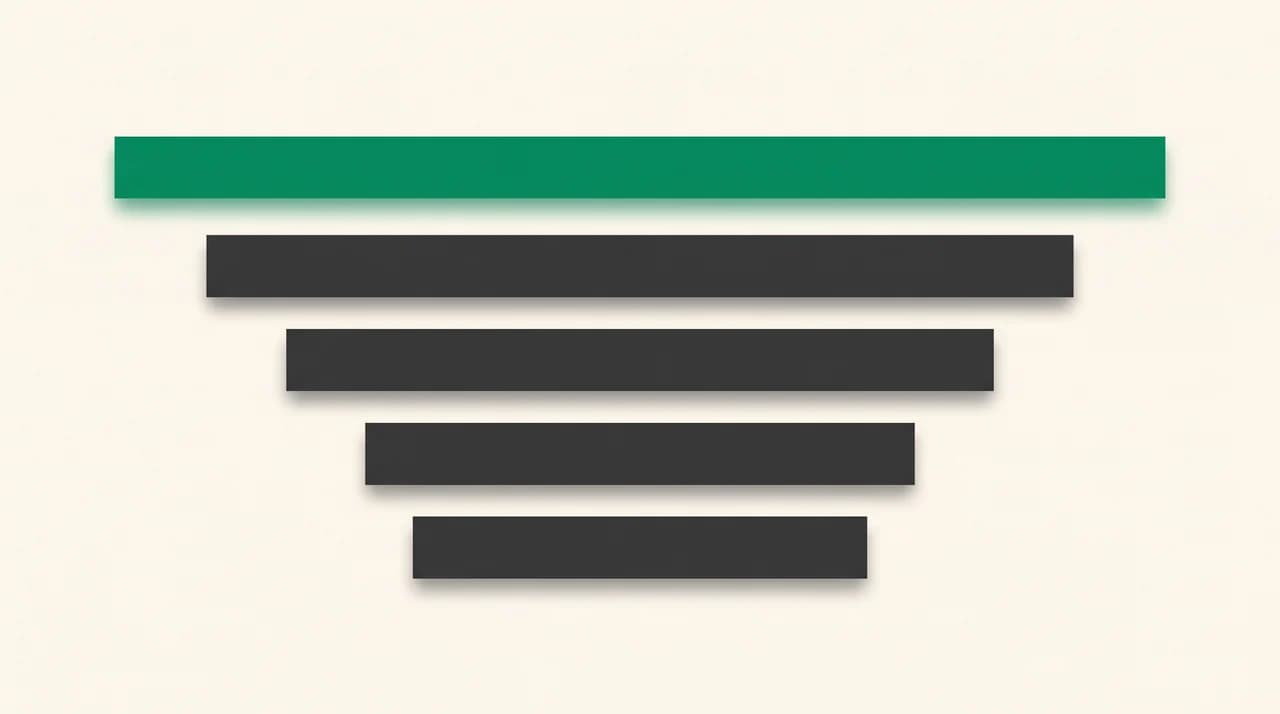
The same picture as a ranked shortlist: the further down the browser-engine road a client goes, the more memory it needs before you read a single message.
The tools in detail#
We start with our own client and are candid about where it fits, then work through the lighter native and terminal options in the order that matters for memory.
AI Emaily — AI triage, not a low-RAM pick#
AI Emaily is an AI email client. Its agent triages your inbox, drafts replies in a voice you set, and closes loops across Gmail, Outlook and IMAP, with an approval-first Copilot mode and a gated Autopilot. We build AI Emaily, so read this as the maker's own honest take and check the claims against the vendors' own pages.
Here is the honest part for this specific post: AI Emaily is not the lightest option on a 4GB machine, and we are not going to pretend it is. On the desktop it is a real downloadable app — a Windows installer and an Apple Silicon Mac app — but both are an Electron shell around the same web interface. Electron embeds a Chromium runtime, which is exactly the architecture that sits at the heavy end of this list. There is no native Linux build; on Linux you run it in a browser tab, which is heavier still.
So if raw memory is your hard constraint, pick one of the native clients below instead. AI Emaily earns its place when you have RAM to spare and want the AI triage and drafting that a plain-text client will never do. On a tight machine that trade is the wrong one, and the honest answer is Geary, Claws Mail or a terminal client. Voice matching, for the record, comes from a Context brain you set and per-client profiles — not from reading your past mail.
Geary — the modern GNOME light client#
Geary is GNOME's email client, built with GTK and rendering messages with WebKitGTK. It groups messages into conversations, offers fast full-text search, and picks up accounts from GNOME Online Accounts. It is Linux-only.
Because it uses a WebKitGTK component to display HTML mail, Geary is not as feather-light as a plain-text GTK client. But it draws on toolkit libraries the desktop has already loaded, so it stays far below an Electron app or a stack of browser tabs. On a 4GB GNOME machine it is a comfortable, modern choice.
Geary keeps a local SQLite cache for search and offline reading, which trades a little disk for speed. If you want a graphical inbox that looks current and does not fight your desktop, and you can spare a little more memory than the very lightest clients need, Geary is the easy pick. If every megabyte counts, drop to Claws Mail or a terminal client below.
Claws Mail — light because it skips the web engine#
Claws Mail is a GTK client built for speed and low overhead. It has no built-in web engine — by default it shows mail as plain text and renders HTML only through an optional plugin. That single design choice is why it stays so light.
It runs on Linux and Windows, handles multiple accounts, and is deeply extensible through plugins, so you carry the features you want rather than a fixed set you pay for whether you use it or not. Power users like the precise, keyboard-driven control it gives.
The trade is that HTML-heavy newsletters look bare unless you enable a rendering plugin, and setup is more hands-on than Geary or Thunderbird. If your machine has 2–4GB of RAM and you want a graphical inbox that never feels heavy, Claws Mail is one of the best answers on Linux or Windows. It is the client to reach for when Thunderbird feels like too much.
Sylpheed — the minimal GTK sibling#
Sylpheed is the lightweight GTK client that Claws Mail was originally forked from. It aims for a simple, fast, keyboard-friendly interface with a small memory footprint, and it runs on Linux, Windows and macOS.
It handles the essentials — multiple accounts, IMAP and POP, junk filtering, and basic HTML — without the plugin depth of Claws. That makes it easier to set up and even lighter in day-to-day use, at the cost of fewer advanced options.
Sylpheed is a strong choice for genuinely old, low-spec machines where you want something graphical that starts instantly and never bogs the system down. If you find Claws Mail's plugin system more than you need, Sylpheed is the more minimal sibling. Its development moves slowly, so treat it as stable-and-simple rather than actively evolving, and verify the latest build on the vendor's site before you rely on it.
Trojitá — the frugal Qt IMAP client#
Trojitá is a lightweight Qt email client built specifically for IMAP. It is designed to be fast and frugal with resources and bandwidth, fetching only the parts of a message it needs rather than whole mailboxes at once. It runs on Linux and Windows.
Because it targets Qt, it feels most at home on KDE Plasma, though it works on any desktop. The IMAP-only focus is the catch: there is no POP support, so it suits people whose mail already lives on an IMAP server.
For a Qt or KDE user on limited hardware who wants a native, low-memory client rather than a GTK one, Trojitá is the natural pick. It is narrower than Thunderbird by design, and that narrowness is exactly what keeps it light. Feature breadth is modest — it is a focused mail reader, not a groupware suite — so check that it covers your workflow before switching.
Thunderbird — full features, mid-weight#
Thunderbird is Mozilla's free, open-source email client, and it runs on Windows, macOS and Linux. It is the most full-featured client on this list — folders, calendar, add-ons, and strong multi-account handling all built in.
That breadth is also why it sits in the middle of the memory range. Thunderbird renders with Gecko, Mozilla's own engine, rather than a lightweight text view, so it uses more memory than Claws Mail or a terminal client. It is not, however, an Electron app, and it does not carry the weight of a separate Chromium runtime the way a browser-tab or Electron client does.
On a machine with several gigabytes free, Thunderbird is a reasonable full-features choice that will not feel heavy. On a 4GB machine with other apps open it can feel it, especially with large mailboxes and several accounts syncing. If you need calendar and add-ons more than the absolute lowest footprint, Thunderbird is the balanced answer. Verify system needs on Mozilla's own page, since they change across releases.
neomutt — the terminal minimum#
neomutt is a terminal email client — a maintained fork of the classic Mutt — and it is about as light as email gets. It runs entirely in text, with no GUI toolkit and no web engine, so its memory use is a small fraction of any graphical client. It runs on Linux, macOS and the BSDs.
Everything happens over the keyboard, and configuration is a text file you tune to taste. It reads IMAP, POP and local Maildir, threads conversations, and searches fast. HTML mail is handled by piping messages to an external viewer, because neomutt itself only draws text.
The cost is the learning curve: there is no mouse-friendly interface and the initial config takes patience. But for the literal question this post asks — which email client uses the least memory — a terminal client like neomutt is the honest answer. On a very low-RAM machine, nothing graphical will beat it.
aerc — the modern terminal option#
aerc is a modern terminal email client, written in Go, with an asynchronous design that keeps it responsive even on slow connections. Like neomutt it runs in text only, so its footprint is minimal, and it works on Linux, macOS and the BSDs.
Where neomutt carries decades of Mutt heritage, aerc was built fresh with a cleaner default configuration, a tabbed interface inside the terminal, and handy touches for people who live in a code editor — it can even open patches and fit Git-style workflows. It supports IMAP, Maildir and notmuch.
It is the terminal client to try if Mutt's configuration feels dated and you want something lighter to learn. As with any terminal client, HTML mail is shown through an external filter. For a developer on a low-RAM machine who already lives in the terminal, aerc is a comfortable, featherweight home for email.
Why Electron and browser tabs sit at the heavy end#
The reason some clients are heavy and others are light is architecture, not features. Electron embeds a full Chromium runtime — the same engine that powers Chrome — inside each app, so a single Electron mail client carries a browser's worth of memory before you read one message. That is the trade for shipping the same code on web and desktop.
A browser tab is the same idea seen from the other side. A Gmail or Outlook web tab runs inside a renderer process, which is Chromium too. The nuance readers ask about — is a browser tab worse than a desktop email app for RAM — cuts both ways. A dedicated Electron app starts its own separate Chromium; a web tab reuses the browser you likely already have open, so one more tab can add less than launching a standalone Electron app. Neither is light next to a native client.
Native GTK and Qt clients draw on toolkit libraries the desktop has already loaded, so each app adds far less on top. Terminal clients skip the graphical layer entirely and render plain text. That layered difference — text, native toolkit, embedded browser — is the whole memory story on a low-RAM machine.
One browser or one Electron app — not both
How to choose for your situation#
Match the client to your constraint and your comfort in a terminal. The lightest answer is not always the right one — a plain-text client you never learn is heavier in practice than a native app you actually use.
- Absolute minimum RAM, comfortable in a terminal: neomutt or aerc. Nothing graphical will match them.
- 2–4GB machine, want a graphical inbox: Claws Mail or Sylpheed. Geary if you are on GNOME and want a modern conversation view.
- KDE or Qt desktop, IMAP-only: Trojitá.
- You want calendar, add-ons and full features and have a few gigabytes free: Thunderbird — heavier than the native-light clients, far lighter than Electron.
- Windows on old hardware: Claws Mail or Thunderbird, and resist running a second Chromium-based client alongside your browser.
- You have RAM to spare and want AI triage and drafting: AI Emaily — but not if minimum footprint is the whole point, in which case pick one of the native clients above. We build AI Emaily.
Whatever you choose, verify the current build and system needs on the vendor's own page before you switch — projects change engines, drop platforms and revise requirements between releases. This guide is accurate as of August 2026.
Frequently asked
See it in AI Emaily
Keep reading

Written by
Nafiul HasanNafiul Hasan is an entrepreneur and AI automation system builder with 10+ years of experience turning messy, manual workflows into reliable automated systems. He designs and ships AI enterprise solutions end-to-end — the agent logic, the data plumbing, and the product people actually use — and founded AI Emaily to give busy professionals their attention back. He writes here from the builder's seat: what works, what breaks, and how to put AI to work without giving up control.