Best StartMail Alternatives in 2026

The short answer
The best StartMail alternatives in 2026 are Proton Mail with SimpleLogin for unlimited aliases plus real end-to-end encryption, Fastmail for masked email with the best reply-from-alias mechanics on a custom domain, and DuckDuckGo Email Protection when you want free aliases that strip trackers before forwarding. Pick by whether you need a mailbox, an alias layer, or both.
The best StartMail alternatives in 2026 for unlimited aliases, private email and reply-from-alias, compared honestly on packaging and platform.
On this page
StartMail's pitch is aliases. Personal and Business plans both advertise unlimited aliases on a custom domain plus one-click burner addresses on the shared @startmail.com domain that expire after an hour. Readers land on this page for one reason: they want the same alias layer, but with a different mailbox, cheaper packaging, or a bigger platform behind it.
This is not a general private-email roundup. The alternatives split by which half of StartMail you valued — the PGP mailbox, the alias engine, or the burner layer — and a tool that wins on one often has nothing to say about the others. We compare on alias mechanics: reply-from-alias handling, revocation speed, whether custom-domain aliases are included, and whether you get an actual mailbox or only a forwarder.
Short answer: Proton Mail with SimpleLogin is the closest one-for-one replacement — real end-to-end encryption plus unlimited aliases under one bill. Fastmail is the pick for the cleanest reply-from-alias handling on a domain you own. DuckDuckGo Email Protection is the answer when free plus tracker-stripping matter more than a full mailbox. We build AI Emaily, which is not an alias service — we say at the end of this post where we fit in a stack that includes one.
What StartMail actually sells#
StartMail is a Dutch, ISO 27001-certified private email service with two tiers: Personal (one custom domain) and Business (unlimited domains for a team). Both advertise unlimited aliases on the custom domain and a burner-alias generator on the shared @startmail.com domain. Burner addresses self-destruct after one hour — useful for one-off signups you never expect to hear from again.
The encryption story is server-side PGP with a passphrase-derived vault: StartMail holds your PGP private key encrypted with your password, letting webmail decrypt without a desktop OpenPGP setup. That is a convenience-for-strictness trade — a zero-access architecture like Proton's is stricter, but StartMail's is easier for non-technical users and works fine in a browser.
Billing is per-mailbox on Personal and per-seat on Business, with monthly or annual options and a short paid trial. If you're on Personal purely for the alias engine and rarely use the @startmail.com mailbox itself, most alternatives here are cheaper for the same alias behaviour. If you're on Business for a shared PGP-capable team domain, the honest comparison set is narrower.
How we compared#
We ignored feature checkboxes that don't decide the switch. Four dimensions actually matter when you're leaving StartMail for the alias layer:
- Alias supply — is there a hard cap, is it tied to a plan tier, and does it apply to your custom domain, the shared domain, or both.
- Reply-from-alias — can you actually send a reply that arrives from the alias, or does the recipient see your real address once the conversation starts.
- Revocation — how fast can you kill a leaked alias, and does the mechanism block only future mail or also anything queued behind it.
- Custom-domain aliases — is the pattern [email protected] supported at all, and does that require a paid tier, DNS work you already know, or a separate account.
Prices are not printed here on purpose
StartMail alternatives compared#
| Tool | Alias supply | Reply-from-alias | Revocation | Custom-domain aliases | Packaging shape |
|---|---|---|---|---|---|
| Proton Mail + SimpleLogin | Unlimited aliases on paid tiers via bundled SimpleLogin, plus Proton Mail's own address/plus-aliases on the Proton domain. | Yes, via SimpleLogin's reverse-alias mechanism — recipient always sees the alias, not your real Proton address. | Alias can be disabled or fully deleted from the SimpleLogin dashboard; disable stops all future forwards immediately. | Yes on the paid tier — unlimited custom domains plus catch-all so any address at your domain forwards without pre-creation. | Free Proton Mail with a limited SimpleLogin free tier (10 aliases); Proton Unlimited or Proton Pass Plus bundles SimpleLogin premium at no separate charge. |
| Fastmail | Masked Email addresses, effectively unbounded, generated inline when you sign up for a new site. | Yes — Fastmail Identities let you send from a masked address so replies arrive from and go to the alias. | Any masked address can be disabled or deleted from the Fastmail dashboard; disable takes effect immediately. | Yes — Fastmail supports custom domains with individual and catch-all aliases, up to a documented per-account ceiling. | Per-mailbox annual or monthly subscription with a 30-day trial; no permanent free tier. Masked Email is included; 1Password integration generates addresses at signup. |
| Tuta | Alias count is tied to the plan — free is very limited, paid tiers step up in tens, and there is no unlimited option today. | Yes, from the Tuta mailbox using an alias as the send-as address. | Aliases can be deactivated or deleted in settings; deactivated aliases can be reactivated later without losing history. | Yes on paid tiers — connect a custom domain and use aliases at that domain. | Free personal tier with hard limits; paid mid-tier and Legend plans billed monthly or annually. Uses Tuta's own end-to-end encryption, not PGP. |
| Mailfence | Alias supply is tier-gated — the paid Entry, Pro and Ultra plans allow progressively more aliases; no unlimited option. | Yes, from the Mailfence mailbox with the alias as the send-as identity. | Aliases are deleted from account settings; deletion is immediate for future mail. | Yes on paid plans — Belgian jurisdiction, OpenPGP built in, custom-domain aliases supported at the higher tiers. | Small free tier; paid Entry / Pro / Ultra billed monthly or annually; storage and alias count both scale with tier. |
| SimpleLogin (standalone) | Free plan is capped at 10 aliases; paid plan is genuinely unlimited on both the shared domain and your custom domains. | Yes, via reverse-aliases — arguably the cleanest reply-from-alias flow on this list, because it is the whole product. | One-click disable or delete; disabled aliases can be re-enabled without changing the address. | Yes on paid — unlimited custom domains, catch-all wildcards, subdomains and directories. | Free tier plus a single paid subscription (monthly or annual). Now owned by Proton AG; buying Proton Unlimited or Proton Pass Plus includes SimpleLogin premium at no extra cost. |
| addy.io | Standard aliases are unlimited on every tier; shared-domain aliases are capped on Free and Lite and unlimited on Pro. | Paid-only feature — replies and sends are metered daily (50/day on Lite, 200/day on Pro). | Aliases can be deactivated, deleted or restricted to specific recipients from the dashboard. | One custom domain on Lite, up to 20 on Pro; Free tier does not include custom domains. | Free tier plus Lite / Pro / Duo / Family subscriptions; open source, self-hostable if you want to run your own instance. |
| Apple iCloud+ Hide My Email | Unlimited @icloud.com aliases for anyone on a paid iCloud+ storage plan. | Yes — replies from a Hide My Email address arrive back at your primary iCloud address, and the recipient only ever sees the alias. | Deactivate from Settings on iOS or macOS; deactivated aliases stop forwarding immediately and can be reactivated. | Yes on iCloud+ Custom Email Domain — you can attach a domain you own and issue addresses at it, including Hide My Email addresses on that domain. | Bundled with any paid iCloud+ storage plan; no separate charge for the alias feature. |
| DuckDuckGo Email Protection | Unlimited @duck.com aliases plus unlimited private @-relay addresses generated on the fly. | Yes — reply from the alias and the recipient still sees the alias, not your forwarding address. | Deactivate an address from the DuckDuckGo dashboard; deactivation is immediate. | No custom-domain support today; @duck.com is the only issuing domain. | Free, no paid tier. Also strips known email trackers from forwarded messages, which none of the paid alias services do by default. |
The tools#
The order below is what we'd try in a two-week test, not a leaderboard. Alias picks are personal enough that the third option often beats the first for a specific reader.
Proton Mail with SimpleLogin#
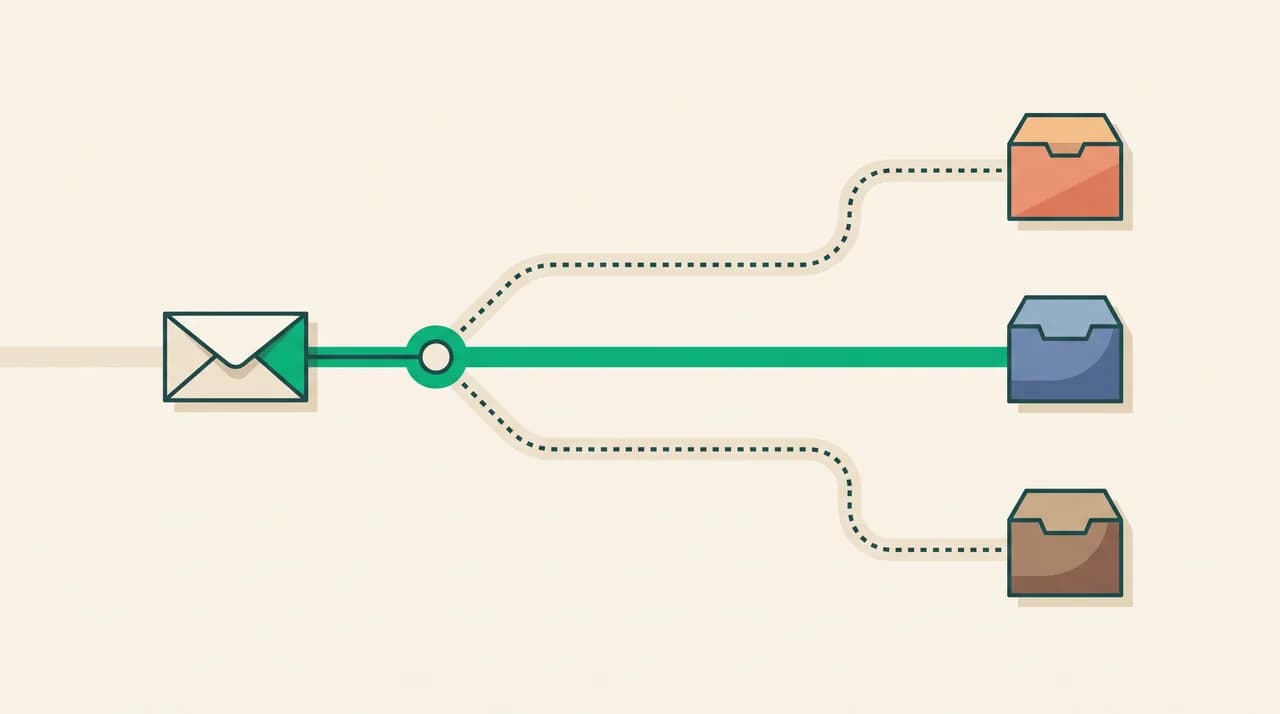
Proton Mail is the closest architectural match to StartMail, and after Proton acquired SimpleLogin the alias half stopped requiring a separate integration. Proton Unlimited and Proton Pass Plus both include SimpleLogin premium at no extra charge — unlimited aliases on the shared domain, unlimited custom domains with catch-all, and reply-from-alias via the reverse-alias mechanism. Same alias shape as StartMail, on a mailbox with a stricter encryption model.
Where StartMail runs a server-side PGP key protected by your password, Proton runs a zero-access architecture — mail stored encrypted with keys derived from your password, Proton itself cannot read the contents, documented in their transparency report. If encryption was the real reason you were on StartMail, this is a step up, not a lateral.
The reasons to pause: Proton's ecosystem — Drive, Calendar, VPN, Pass, Wallet — is broader than StartMail's; if you only want a mailbox and aliases, you'll pay for surfaces you never touch. Third-party client access requires the Proton Mail Bridge, a paid add-on. SimpleLogin's dashboard also still lives at simplelogin.io rather than inside Proton Mail, so alias management is one extra tab.
Fastmail#
Fastmail's Masked Email plus Identities is the pick when reply-from-alias is the mechanic that matters most and you already own a domain. Masked Email generates a unique random address at signup — inline, from a 1Password or Bitwarden prompt if you use one — and forwards it to your Fastmail inbox. Identities let you compose replies from that masked address, so the recipient only sees the alias.
Custom domains are where Fastmail wins outright. Point a domain at Fastmail and you get per-purpose aliases at that domain plus a catch-all that accepts any address without pre-creation. Every alias is managed from the same settings page you read mail in — no separate SimpleLogin tab, no plus-address workaround that leaks your real address.
Fastmail is not end-to-end encrypted the way Proton or Tuta are — it is a modern IMAP/JMAP mailbox with strong transport security and industry-standard at-rest encryption, with a track record going back to 1999. If your threat model is trackers and password-manager hygiene, that is exactly enough. If it is a server-side seizure, Proton or Tuta is the answer.
Tuta#
Tuta (formerly Tutanota) is the German end-to-end encrypted alternative that treats aliases as a plan-tier feature rather than an unlimited pool. Free accounts get a very small alias supply; the paid mid-tier and Legend plans step it up in tens. There is no unlimited option today, which is a real limit compared to StartMail's uncapped custom-domain aliases.
The trade you get for that limit is Tuta's proprietary end-to-end encryption, which covers the message body, subject, and calendar. It is not OpenPGP — a fact worth flagging if you communicate with people who insist on PGP interoperability, because Tuta's protocol won't handshake with their key. Custom domains are supported on paid tiers, so you can run per-purpose aliases at your own domain within your quota.
Reply-from-alias works from the Tuta client: send from any configured alias and the recipient sees only that address. Revocation is a deactivate-or-delete toggle in settings; deactivation preserves the alias so you can reactivate later without losing history. If encryption is your priority and a fixed alias supply is enough, Tuta is a legitimate answer.
Mailfence#
Mailfence is the Belgian PGP-native mailbox that most StartMail comparisons skip — closer in shape to StartMail than anything here except Proton. Paid Entry, Pro and Ultra tiers scale storage and alias count together, with OpenPGP built into webmail so you can sign and encrypt without a desktop client. Belgian jurisdiction is the privacy claim they lead with, which matters to a specific reader.
Aliases are supported on paid plans with the count tied to the tier, and reply-from-alias works from the mailbox with the alias as the send-as identity. There is no unlimited-alias option, so if StartMail's uncapped custom-domain aliases were the reason you were paying, Mailfence is a step down on that axis specifically. On every other private-mail axis it holds up fine.
The catch is polish. Mailfence's webmail has not modernised at the pace of Proton or Fastmail, and the mobile apps feel secondary to the web client. If the mailbox will be your primary daily tool, take the free tier for a week before committing; if it's mostly a receiving point for aliased mail you triage elsewhere, that doesn't matter.
SimpleLogin (standalone)#
SimpleLogin is the pure alias service — no mailbox, no calendar, no VPN bundle. Sign in, generate an alias, and it forwards to any existing mailbox you own: Gmail, Outlook, StartMail itself, whatever. The free plan caps at ten aliases; the paid plan is genuinely unlimited, and everything else about the product exists to make reverse-aliases feel invisible.
Reverse-alias is why it belongs in this list. When someone emails your alias, SimpleLogin generates a per-conversation reverse address; replying to that address routes the outbound message so the recipient sees only your alias, not your real mailbox. Custom domains are supported on paid — unlimited domains, catch-all wildcards, subdomains and per-directory namespaces — which is the full StartMail alias shape without the mailbox.
SimpleLogin is now owned by Proton AG, registered in Switzerland. If you're already paying for Proton Unlimited or Proton Pass Plus, SimpleLogin premium is included and standing up a standalone account is redundant. If you want the alias layer without any of Proton's mailbox or bundle, the standalone subscription is one of the cheapest paths to unlimited aliases in the category.
addy.io#
addy.io (formerly AnonAddy) is the open-source alias service that will feel familiar to anyone who has looked at SimpleLogin and wanted to see the code. Standard aliases at addy.io's shared domains are unlimited on every tier, including Free; the paid Lite and Pro tiers unlock reply-from-alias, custom-domain aliases and higher daily reply/send limits.
The daily reply cap is the honest limit to flag. Lite allows 50 anonymous replies or sends per day; Pro allows 200. If you use aliases to sustain conversations over weeks rather than just receive one-off receipts, size the plan to how you reply, not how you receive. Duo and Family plans exist for shared households.
The self-host option is what genuinely distinguishes addy.io. If you have the operational appetite to run your own alias forwarder on your own domain, the same codebase deploys on your own server, and no third party — including addy.io — is in the path between the alias and your inbox. That is a real answer to a very specific StartMail user who was paying primarily for the sovereignty story.
Apple iCloud+ Hide My Email#
If you already pay for iCloud storage, Hide My Email is bundled into that subscription — unlimited aliases without opening a new account. Generate an address inline from Safari, Mail, or a Sign in with Apple flow; the alias forwards to your primary iCloud address and replies arrive back there. Recipients only see the alias.
Custom-domain support was added with iCloud+ Custom Email Domain. Point a domain you own at iCloud, and you can issue individual addresses at that domain, receive at them, and generate Hide My Email addresses on the same domain. That is the alias shape StartMail sells, on a bill you are already paying, without any PGP.
The honest limit is the Apple ecosystem. Alias management surfaces natively in Settings on iOS and macOS and in iCloud on the web; on Windows or Android you're on the web dashboard, and the deep integrations that make Hide My Email pleasant on iPhone are simply not there. If every device you work from is an Apple device, this is the highest-value StartMail alternative for the money, because you're already paying for it. If any device isn't, look elsewhere.
DuckDuckGo Email Protection#
DuckDuckGo Email Protection is free, and that is not the only interesting thing. Every forwarded message runs through DuckDuckGo's tracker-removal pipeline, stripping known trackers and pixels before mail reaches your inbox — something the paid alias providers on this list do not include by default. If you were on StartMail for tracker fatigue rather than encryption, this alone is worth trying.
You get a @duck.com address and unlimited private @-relay addresses generated on the fly from the browser extension. Reply-from-alias works: send a reply and the recipient still sees the alias. Deactivation is a one-click disable in the DuckDuckGo dashboard. There is no paid tier and no upsell.
The limits are equally clear. There is no custom-domain support, so you cannot use your own domain to receive aliased mail — every address is at @duck.com. There is no mailbox; every message forwards to an address you already own. If you need alias mail at your own domain, or a full private mailbox rather than a forwarder, this is not it. If you don't, it is genuinely hard to beat free.
Where AI Emaily fits#
AI Emaily is not an alias service. The tools above stop unwanted mail from reaching your primary address — a different job from the one we do. We take the mail that does reach the address — newsletters that snuck through, cold outreach, transactional receipts — and triage, label and draft against it under an approval-first agent you can undo.
That is the adjacent role. A StartMail-shaped stack that leans on aliases still ends up with an inbox that fills up faster than you can read it, because the aliases you actually want to keep — bank, doctor, work — do their job and forward real mail. AI Emaily connects to Gmail, Outlook and generic IMAP (including a mailbox you receive aliased mail into) and runs Copilot triage before you see anything, with Autopilot only acting unattended once you've raised its authority for a specific action. Every action is logged; every action is undoable. We build AI Emaily — see /pricing for the current plans, or / for the shape of it.
The honest limits: no end-to-end encryption of mail bodies (server-side envelope encryption for tokens and keys, not zero-access), no Linux build, no native Android app (the Android surface is a PWA), and no burner-alias generator inside the product because that is not the problem we solve. If any of those is a blocker, keep the alias service and put us in front of the inbox it forwards to — that stack works fine and is what we'd actually recommend.
How to choose for your situation#
If you do nothing, StartMail keeps working; both plans renew on their normal clock and the alias engine keeps generating burners. The decision to switch only makes sense once you can name the specific thing you're actually leaving for. Match the reader you actually are, not the reader a generic listicle assumes:
- You want a full private mailbox with real end-to-end encryption plus unlimited aliases under one bill — Proton Mail with SimpleLogin bundled via Proton Unlimited or Proton Pass Plus.
- You already own a domain and want the cleanest reply-from-alias handling inside a modern mailbox — Fastmail, with Masked Email plus Identities on your own domain.
- You want end-to-end encryption on the mailbox itself and a modest fixed alias supply is enough — Tuta.
- You want OpenPGP built in on a mailbox in Belgian jurisdiction — Mailfence, sized to whichever paid tier covers your alias count.
- You already have a mailbox you're happy with and only need the alias layer — SimpleLogin standalone if you want the polished paid product, addy.io if open source or self-hosting matters.
- Every device you work from is an Apple device and you already pay for iCloud storage — iCloud+ Hide My Email, extended with a Custom Email Domain if you want aliases at your own domain.
- Free and tracker-stripping matter more than a full mailbox or custom domains — DuckDuckGo Email Protection.
- You've kept the alias service and now want the mail that does reach your primary mailbox triaged and drafted for you — AI Emaily on top of Gmail, Outlook or IMAP. We build it.
Switching StartMail doesn't mean losing your aliases immediately
Frequently asked
See it in AI Emaily
Keep reading

Written by
Nafiul HasanNafiul Hasan is an entrepreneur and AI automation system builder with 10+ years of experience turning messy, manual workflows into reliable automated systems. He designs and ships AI enterprise solutions end-to-end — the agent logic, the data plumbing, and the product people actually use — and founded AI Emaily to give busy professionals their attention back. He writes here from the builder's seat: what works, what breaks, and how to put AI to work without giving up control.