Best Tools to Reduce CC and Reply-All Overload (2026)

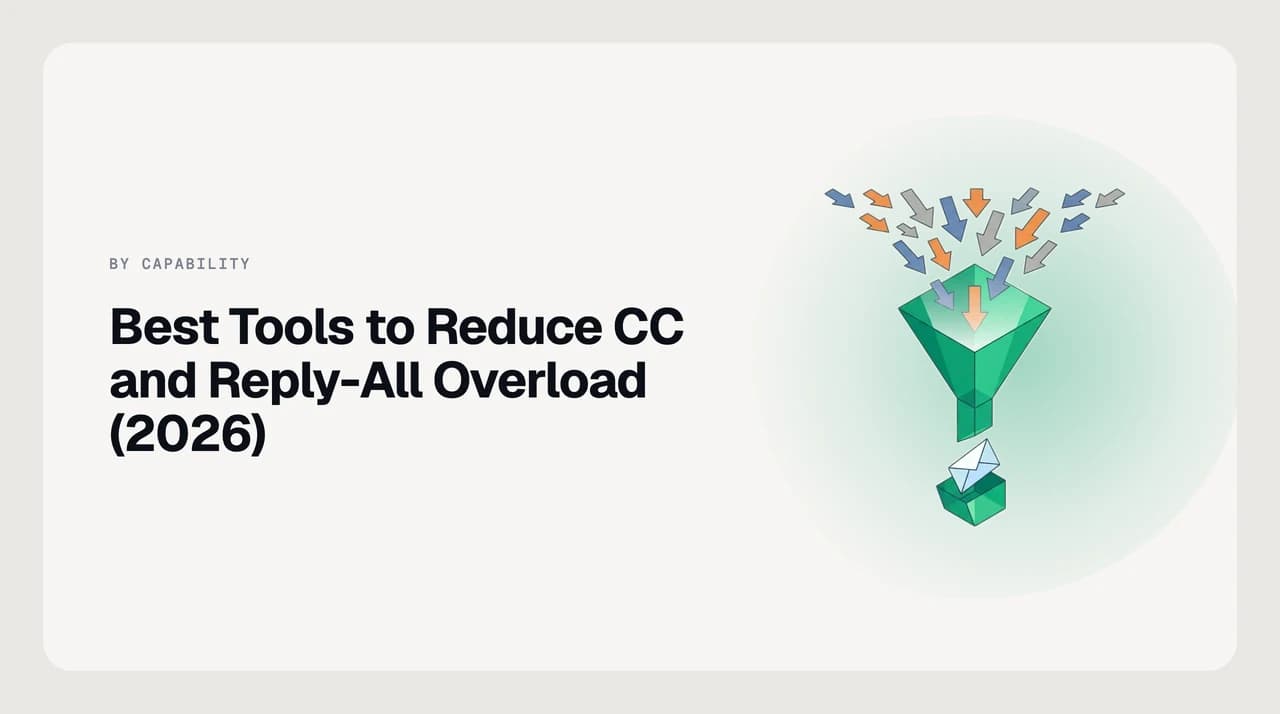
The short answer
The best tools to cut CC and reply-all overload at work in 2026 demote noisy threads without deleting them. AI Emaily's Rules Brain plus Important-only filter is our pick because it can flag CC threads as low priority across Gmail, Outlook and IMAP. Gmail Mute and Outlook Ignore stay the fastest zero-cost fixes for a single runaway thread.
Best tools to reduce CC and reply-all overload in 2026 — AI Emaily, Superhuman, Shortwave, Fyxer, Cora, SaneBox plus Gmail Mute and Outlook Ignore compared.
On this page
- 01The short answer
- 02How we compared
- 03CC and reply-all overload tools at a glance
- 041. AI Emaily — best overall, priority-based demotion across every provider
- 052. Gmail Mute Conversation — the fastest zero-cost fix for one runaway thread
- 063. Outlook Ignore Conversation — the Outlook equivalent, with a different destination
- 074. SaneBox — best server-side routing for CC-only mail across any IMAP provider
- 08How to choose between server-side and client-side demotion
- 095. Shortwave — best Gmail-native semantic demotion
- 106. Superhuman Mail — best VIP-first client with Splits for CC
- 117. Fyxer — best overlay when you want to keep Gmail or Outlook as-is
- 128. Cora — best digest for a leader whose inbox is mostly CC
- 139. Serif — best agent that decides whether a CC thread needs you at all
- 14How to choose for your situation
- 15The pattern that works regardless of tool
- 16The verdict
Internal noise is not spam. A reply-all thread on a distribution list, or a chain where you were CC'd and the conversation has forked, is mail you may still need — just not now, not in the primary inbox. Deleting it is the wrong fix: when someone quotes that thread at you in a meeting, the trail has to still be there.
The principle here: demote, don't delete. Every option either silences a specific runaway thread, routes CC-only mail to a folder you check on your terms, or reads the message and decides whether the CC actually needs you. Nothing archives the trail. We build AI Emaily — our recommended pick, stated plainly — which is why our section runs longer and why the limits paragraph is the honest part.
The short answer#
Answer two questions before installing anything. Is your problem one runaway thread today or the ongoing shape of your inbox? A single reply-all storm is a two-click native fix. A permanent CC flood is a filter or client decision.
Second, where do demoted CC threads need to land — a separate folder you glance at once a day, a lower-priority section of the same inbox, or a digest you read at a set time? Different tools answer that differently; the right one depends on how much deciding you can afford.
- Best overall, and our recommended pick — AI Emaily's Rules Brain plus Important-only filter across Gmail, Outlook and IMAP.
- Fastest zero-cost fix for one runaway thread — Gmail's Mute Conversation or Outlook's Ignore Conversation.
- Best server-side routing for CC-only mail on any IMAP provider — SaneBox's SaneCC folder.
- Best Gmail-native semantic demotion — Shortwave's AI ranking and pinned bundles.
- Best VIP-first client for a Gmail or Outlook inbox — Superhuman Mail's Splits.
- Best overlay that keeps your existing client — Fyxer's To Respond / FYI / Meeting Update categories.
- Best digest for a leader whose inbox is mostly CC — Cora's morning brief.
- Best agentic option that only surfaces threads that need you — Serif.
How we compared#
A comparison drawn from each vendor's live product and pricing pages plus Google and Microsoft's support docs, checked August 2026. No competitor prices, ratings, or review counts appear here — the AI-email category repriced more than once last year. Confirm the current shape on each vendor's site when you buy.
The dimensions that decide the choice, in the order they narrow the list:
- Whether the tool acts on a single thread (mute) or the ongoing shape of your inbox (filter, route, prioritise).
- What has to be true for a message to be demoted — you are the only CC, a specific sender, a rule you wrote, or a model's read on whether the mail needs you.
- Where demoted mail lands — muted at the bottom of the same inbox, moved to a separate folder, pushed into a summary, or hidden from view entirely.
- Which providers the tool covers — Gmail only, Gmail plus Outlook, or anything IMAP.
- How you undo a demotion when the filter got a thread wrong.
- What happens by default when you do nothing — nothing changes, or the tool acts silently.
CC and reply-all overload tools at a glance#
Read the 'what triggers a demotion' column and the 'where demoted mail lands' column first. Together they usually cut the list to two or three options.
| Tool | What triggers a demotion | Where demoted mail lands | Provider coverage | Default when you do nothing |
|---|---|---|---|---|
| AI Emaily | Rules Brain match (you are only CC, sender, phrase, thread history) or Important-only agent read | Low-priority section of the unified inbox; notifications suppressed; still fully searchable | Gmail, Outlook / Microsoft 365, IMAP | No demotion until you enable Important-only or write a Rules Brain rule |
| Gmail — Mute Conversation | You mute a single thread from the More menu or with the m keyboard shortcut | Skips the inbox and stays in All Mail; unmutes if you're moved from CC to To or the subject changes | Gmail and Google Workspace | No demotion — muting is per-thread and manual |
| Outlook — Ignore Conversation | You choose Ignore on a thread; current and future messages in that thread are moved | Deleted Items folder; you can restore or turn Ignore off on a thread | Outlook.com, Microsoft 365, Exchange | No demotion — Ignore is per-thread and manual |
| SaneBox — SaneCC + SaneLater | Server-side model detects mail where you are on CC or that scores low on your sender graph | Named IMAP folders (SaneCC, SaneLater); daily digest lists what was moved so you can retrain in one click | Any IMAP provider — Gmail, Outlook, iCloud, Yahoo, Fastmail, Exchange | Trains on your history from day one; you correct by dragging threads back |
| Shortwave | AI ranking on top of the Gmail archive graph; you can instruct Tasklets with natural-language rules | Lower-priority bundles in the same view; pinned bundles stay near the top | Gmail and Google Workspace only | Bundles form automatically; you promote or demote from there |
| Superhuman Mail | Splits you configure by sender, label or query; AI Auto Labels can categorise by topic | Separate Splits at the top of the inbox; primary view stays uncluttered | Gmail and Outlook | Standard inbox until you configure a Split for CC or a low-priority query |
| Fyxer | Semantic category classifier — To Respond, FYI, Meeting Update, Marketing | Category folders alongside the primary inbox in Gmail or Outlook | Gmail and Outlook | Overlays your existing client — Fyxer sorts, your client still notifies |
| Cora | Digest-led triage — mail that does not need a reply is bundled into a brief | Twice-daily brief you read at a chosen time; replies-needed threads stay in the inbox | Gmail (verify current provider coverage on Cora's site) | Nothing until you enable the brief; then it becomes the default view of low-signal mail |
| Serif | Agent reads each thread and decides whether it needs you before it surfaces | Threads that do not need you never leave the archive view; only actionable threads reach the primary view | Verify current provider coverage on serif.ai | Trial then paid; agent acts only on the accounts you connect and the rules you approve |
Verify packaging on the vendor page before you buy
1. AI Emaily — best overall, priority-based demotion across every provider#
AI Emaily is an AI-native email client that connects Gmail, Microsoft 365, Outlook, and standard IMAP accounts into one unified inbox. We build it — which is why this section runs longer than the others.
For CC and reply-all overload, the working combination is Rules Brain plus Important-only filter. In the Rules Brain you write patterns in plain language — 'if I am only on CC and the sender is not on my client list, demote to Later' — and the filter applies to every incoming thread on every connected account. Demoted threads land in a low-priority section of the unified inbox, not scattered provider-specific folders. Nothing is deleted, and semantic search still returns the trail.
The Important-only filter catches threads a rule cannot. The agent reads each message against your Personal Context brain — a plain-text description of who you are and who matters — and decides whether the CC actually needs you. If not, the message is demoted quietly with no notification; if so, it surfaces in the primary inbox with a brief reason. Correct by editing the profile or rule; the change takes effect on the next arrival. Every agent action is undoable and audited.
The limits, stated plainly. The macOS desktop app is an Electron shell around the web interface — Apple Silicon only, not on the Mac App Store, no Intel build, no native Linux build. Android is currently a PWA with a native app on the roadmap. There is no permanent free tier — 7-day trial on Pro or Autopilot, card required, $0 if cancelled before day 7. Current pricing at /pricing.
2. Gmail Mute Conversation — the fastest zero-cost fix for one runaway thread#
Gmail's Mute Conversation is still the fastest way out of a reply-all storm. Open the More menu and choose Mute — or press m from the keyboard. Every subsequent message in that thread skips the inbox and lands in All Mail. Gmail automatically unmutes if you move from CC to To, or if the subject line meaningfully changes, so genuine escalations still reach you.
The mechanism is per-thread and manual — right for 'I never want to hear from this thread again', wrong as an ongoing CC filter. Ten reply-all storms means ten mutes; a hundred CC threads a month is a scale no manual action reaches. Use Mute for the one thread; use a filter, client, or agent for the pattern.
Confirm the current menu path on Gmail's help pages. Mute lives in the More menu on web, the thread overflow menu on mobile, and is reachable from a Gmail filter's Create action for auto-muting threads matching a query.
3. Outlook Ignore Conversation — the Outlook equivalent, with a different destination#
Outlook's Ignore Conversation moves the current and every future message in a thread straight to Deleted Items. Available in New Outlook, Classic Outlook, Outlook on the web, and mobile clients — though the menu label position has shifted between versions. Turning Ignore off restores the thread to normal.
The critical difference from Gmail: Ignored threads land in Deleted Items, not a neutral 'All Mail' equivalent. If your Deleted Items has a corporate retention policy that auto-empties after a period, an Ignored thread is on a countdown. Need the trail in six months? A rule filing to a named folder is the right tool.
Confirm the exact menu path on Microsoft's Outlook support pages and check your tenant's Deleted Items retention policy. This is an Outlook-only answer — a Gmail account read in Outlook mobile does not benefit; the equivalent there is Gmail's Mute.
4. SaneBox — best server-side routing for CC-only mail across any IMAP provider#
SaneBox predates the AI email wave by over a decade and works over IMAP — Gmail, Outlook, Office 365, iCloud, Yahoo, Fastmail, corporate Exchange, and any standard IMAP provider. For CC-only mail the relevant folder is SaneCC: a server-side rule that moves CC messages into a named folder your existing client can check or ignore.
SaneCC and SaneLater sit alongside your inbox as IMAP folders; a daily digest lists what was moved so you can drag a thread back and retrain in one step. Because routing happens server-side, every client reading the account sees the same demotion — Apple Mail, Outlook, webmail all agree. No AI-written summary or drafted reply, but for a mailbox whose problem is pure CC and distribution-list volume, it is the most mature option here.
SaneBox has trained on sender behaviour longer than any AI-native client here — if your inbox lives outside what those clients reach, start here.
How to choose between server-side and client-side demotion#
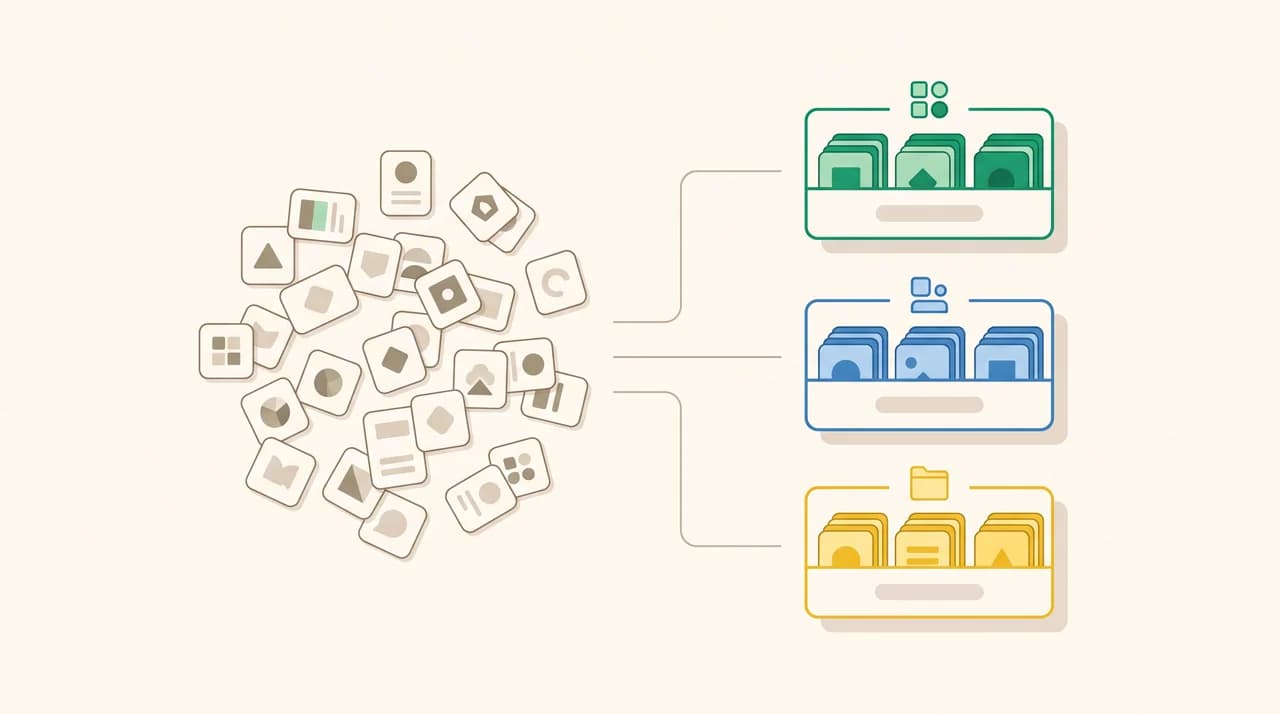
Server-side routing (SaneBox) travels with your account; client-side filtering (AI Emaily, Superhuman, Shortwave, Fyxer) travels with your client. Switch clients often, or share a mailbox with a colleague? Server-side is more portable. Want the demoted view summarised, ranked, or reasoned about — not just moved? Client-side wins.
5. Shortwave — best Gmail-native semantic demotion#
Shortwave is an AI-native Gmail client built by ex-Google engineers. Its ranking model reads the message and the Gmail archive graph — who you reply to, who you star, which threads you leave open — and surfaces the result as pinned and lower-priority bundles. For CC overload, threads you never engaged with fall into a lower bundle without an explicit rule; threads where you have reply history stay near the top.
If your important senders live in a Gmail account you have used for years, that archive history is a real head start on deciding which CC threads need you. Instructable Tasklets — natural-language commands pinned to a keyword, sender pattern, or schedule — cover CC edge cases the graph misses on first contact.
Two constraints before committing. Shortwave supports Gmail and Google Workspace only — no Outlook, no generic IMAP. Packaging is paid with a trial — Business, Premier, and Max tiers, no free plan as of July 2026. Confirm the current shape on Shortwave's site.
6. Superhuman Mail — best VIP-first client with Splits for CC#
Superhuman is now a suite — Grammarly acquired the company in July 2025 and renamed the parent Superhuman Suite in October 2025. This section covers the email client, Superhuman Mail.
For CC and reply-all overload, the relevant feature is Splits. Configure a Split for a sender, label, or search query — a CC-only Split is a Gmail 'cc:me' query pinned to a section — and those threads live in a separate stripe rather than the primary view. AI Auto Labels categorise by topic on top; VIP Split pins named contacts regardless of whether they used CC or To. Splits change what the primary view is; nothing is deleted.
Superhuman Mail supports Gmail and Outlook. Packaging is per-seat with monthly, annual, and Enterprise tiers; confirm current numbers on Superhuman's pricing page. If your 'demote this' rule is a Gmail query you can express and pin, Superhuman is the cleanest expression of it.
7. Fyxer — best overlay when you want to keep Gmail or Outlook as-is#
Fyxer is an overlay on your existing Gmail or Outlook, not a replacement client. It categorises incoming threads — To Respond, FYI, Meeting Update, Marketing — and drafts replies while you keep working in your native client. For CC and reply-all overload, the relevant category is FYI: threads that inform without asking land there, out of the primary view, without a rule you had to write.
Correct a mis-categorised thread by moving it; the model learns. Because Fyxer overlays the native client, your labels and folders stay yours — leave Fyxer, leave with your inbox intact. Fyxer does not push its own notifications, so if the underlying client notifies only on the primary view, the categoriser becomes your CC filter as well.
Fyxer works well when the To Respond / FYI split matches how you already think about the day, and it gets in your way when your definition of 'demote CC' is a specific rule about who was on the To line that a semantic categoriser cannot express. Verify supported providers and current packaging on Fyxer's own site.
8. Cora — best digest for a leader whose inbox is mostly CC#
Cora positions at the digest end of the spectrum. Rather than route CC mail to a folder, it bundles low-signal mail — including CC threads that do not need a reply — into a brief you read at chosen times. Threads that genuinely need you stay in the inbox.
Right for someone whose day is dominated by CC and distribution-list traffic and who would rather read one summary at 09:00 than pick through a folder. Poor fit if you want the trail available in place — a digest is a compressed view, not the mail itself.
Verify current provider coverage and packaging on Cora's own site. This category has moved fast and the brief's shape gets iterated often.
9. Serif — best agent that decides whether a CC thread needs you at all#
Serif positions on autonomy — the agent reads each thread and decides whether it needs you before surfacing. For CC and reply-all overload that is the sharpest form of 'demote, don't delete': the trail is archived and searchable; the primary view only ever contains threads the agent judged actionable.
Verify the current shape on serif.ai/pricing before signing up. Serif publishes five tiers — Lite, Standard, Pro, Team, Enterprise — with Lite, Standard, and Pro flat monthly (not per-seat), Team per-user, Enterprise custom, and a 7-day full-access trial on every tier. Tiers separate by usage multiples — Standard is five times Lite, Pro is twenty times — but the page does not define what one unit of usage is. Read carefully.
Ready to hand the decision to an agent? Serif is the most direct expression of that trade. If you want the rule to be a text pattern you own, a client-side option above will suit you better.
How to choose for your situation#
Two questions narrow the field fastest. Is the problem one runaway thread or the ongoing shape of your inbox? How much of the decision do you want as a rule you can inspect versus a model's judgement you trust? The table below usually points to one option.
| If this is you | Start here | Why |
|---|---|---|
| One reply-all storm today, Gmail account | Gmail Mute Conversation | Two clicks or the m key, native, free, and Gmail unmutes if you are escalated from CC to To |
| One reply-all storm today, Outlook account | Outlook Ignore Conversation | Native, free — but check your Deleted Items retention policy before you rely on it long-term |
| Ongoing CC flood across Gmail, Outlook and IMAP | AI Emaily | One Rules Brain rule and one Important-only filter cover every connected account, and nothing is deleted |
| Ongoing CC flood on an IMAP account the AI-native clients do not reach | SaneBox | SaneCC folder runs server-side and is portable across every client reading the same account |
| Gmail-only and you want AI ranking on top of years of archive history | Shortwave | Strong Gmail archive graph plus instructable Tasklets for CC edge cases |
| Gmail or Outlook and you want a pinned CC:me query section | Superhuman Mail | Splits let you carve out a section for cc:me without touching the primary view |
| You do not want to leave your existing client but want CC demoted automatically | Fyxer | Overlay categoriser that moves FYI-shaped threads out of the primary view |
| Your day is mostly CC and you would rather read a brief than a folder | Cora | Digest replaces the CC folder with a scheduled summary you read on your terms |
| You want an agent to decide whether a CC thread needs you at all | Serif | Autonomy-first — only actionable threads surface, verify unit-of-usage on the pricing page |
The pattern that works regardless of tool#
Whichever tool you pick, three moves do most of the work. Handle the runaway thread with native mute or ignore. Build the ongoing filter around CC-only detection, not sender lists to maintain. Keep the demoted view one glance away so nothing goes missing.
- 1
Mute the storm before you filter the pattern
When a reply-all thread is already live and you are on it, mute or ignore it in the native client first — Gmail m, Outlook Ignore — and only then decide whether you need a rule. The rule protects you next month; the mute protects you now. Doing them in that order means the current thread stops buzzing while you write the pattern.
- 2
Filter on the CC field, not the sender
A rule scoped to 'I am on CC' catches an entire class of noise without you maintaining a sender list. Gmail supports the cc:me search operator directly in filters, Outlook rules include a 'Where my name is in the Cc box' condition, and AI Emaily's Rules Brain accepts the same shape in plain language. Pair it with an exception for named senders you always want to see even in CC — your manager, a specific client — so the pattern does not over-fire.
- 3
Route to a named folder, not the trash
Send demoted CC into a folder you can name and reach in one click — SaneCC, Later, FYI, CC-only. Do not delete and do not send to Deleted Items on a retention timer. The whole point of demoting rather than deleting is that when someone quotes the thread back at you two weeks later, the trail is still there and searchable.
Give any CC filter one week before you judge it
The verdict#
AI Emaily is our pick for anyone whose problem spans more than one provider, or who wants the demotion rule to be a paragraph they wrote and can edit rather than a score they reverse-engineer. A Rules Brain pattern for cc:me plus an Important-only filter, running against a Personal Context brain, covers the shape this problem takes for most knowledge workers. No thread is ever deleted. We build AI Emaily.
For a single runaway thread, Gmail Mute or Outlook Ignore is still the two-click answer — no paid tool improves on it. If your account lives on a provider the AI-native clients do not reach, SaneBox's SaneCC folder is the mature server-side option. Gmail-only with years of archive history? Shortwave has built harder on that graph than we have. Want an agent to decide whether a CC thread needs you at all? Serif is the sharpest expression of that trade. We would rather you use the right tool than churn out of the wrong one.
Frequently asked
See it in AI Emaily
Keep reading
Sources
- Gmail Help — mute a conversation
- Microsoft Support — Ignore Conversation in Outlook
- SaneBox Help — SaneCC and SaneLater folder training
- Shortwave — product docs and AI Assistant
- Superhuman — product pages (Grammarly acquisition, July 2025; parent renamed October 2025)
- Serif — pricing tiers and usage multiples

Written by
Nafiul HasanNafiul Hasan is an entrepreneur and AI automation system builder with 10+ years of experience turning messy, manual workflows into reliable automated systems. He designs and ships AI enterprise solutions end-to-end — the agent logic, the data plumbing, and the product people actually use — and founded AI Emaily to give busy professionals their attention back. He writes here from the builder's seat: what works, what breaks, and how to put AI to work without giving up control.