Free SaneBox Alternatives for Automatic Email Triage


The short answer
Yes, several. Gmail Priority Inbox and Outlook Focused Inbox each do a lightweight version of SaneBox's importance filtering for free, and Gmail filters plus Thunderbird message rules will build a DIY folder scheme with zero recurring cost. Clean Email and Leave Me Alone add free tiers with usage caps. Inbox Zero is open source and self-hostable if AI matters.
Free SaneBox alternatives that actually triage email: native Gmail and Outlook features, self-hosted options, and where hand-built filters run out.
On this page
- 01The short answer
- 02How we compared these
- 03Eight free SaneBox alternatives at a glance
- 041. Gmail Priority Inbox — the closest free thing to SaneBox for Gmail users
- 052. Outlook Focused Inbox — the same idea for Microsoft 365 and Outlook.com
- 063. Gmail filters — the DIY route with no cap and no tier
- 074. Thunderbird message filters — hand-built triage, off Google's servers
- 085. Apple Mail rules — free triage inside the Mac client
- 096. Clean Email — closest free-tier feel to SaneBox, with a usage cap
- 107. Leave Me Alone — free bulk unsubscribe, one part of the SaneBox job
- 118. Inbox Zero — open source, self-hostable, AI included if you bring the key
- 12AI Emaily — where we fit on a free list, honestly
- 13How to choose for your situation
- 14The verdict
There is no free version of SaneBox — the service is subscription-only, with a two-week trial and no permanent $0 tier. So a search for free SaneBox alternatives is really a search for something else that will automatically sort important mail from the rest without charging you for it. That is a specific job, and the honest news is that a handful of tools do most of it for free, provided you accept two trade-offs: the free options don't learn from your feedback as aggressively as SaneBox does, and the ones that come closest are built into email services you're probably already using.
This roundup covers the tools worth knowing about, ranked by how close each gets to SaneBox's actual behaviour — automatic importance filtering that keeps working after you set it up. It includes the native features inside Gmail and Outlook that most SaneBox posts skip, the free tiers on triage services that do part of the job, and the open-source route for a reader who wants an AI agent and is willing to self-host to avoid a bill. A note on scope at the top: we build AI Emaily, and our packaging is a 7-day free trial rather than a permanent free tier — so we are not the answer if $0 forever is the hard requirement, and we say so plainly in our section.
The short answer#
If every mailbox is a Gmail address, turn on Priority Inbox first. It is built in, it costs nothing, and it does a lighter version of the same importance-scoring job SaneBox charges for. If every mailbox is Microsoft 365 or Outlook.com, do the same with Focused Inbox — same idea, same price. Give either two weeks of using the little arrows that mark a message as important or not important, and the model will get meaningfully closer to how you actually sort.
If you're mixing providers, or you want more control than a single Important flag, the next step is hand-built filters — Gmail's filter engine or Thunderbird's message rules — to move newsletters, notifications and bulk senders into their own folders before you see them. That is real work, and this post does not pretend otherwise. A weekend of setup gets you 60% of what SaneBox does forever; the last 30% is the importance learning that SaneBox charges a subscription to run and that no free tool fully replicates.
For a reader who wants automatic triage plus an actual AI layer and won't pay for it, Inbox Zero is the honest recommendation: open source, self-hostable, bring your own model key. Details on all of these below.
How we compared these#
We checked each tool against its own current documentation or vendor page in August 2026. "Free" here means a tier that stays at $0 indefinitely — a native platform feature, an open-source project you can self-host, or a permanent free plan on a hosted service. A time-limited trial isn't on the list, because a two-week countdown isn't a free alternative, it's the same decision SaneBox is already asking you to make.
The dimensions that decide fit for a SaneBox-style triage tool are narrower than they look. Filter model comes first — does the tool score importance automatically, or does it only do what you write a rule for? Coverage comes second — does it work across every mailbox you use, or only inside one provider? What it does when it's wrong comes third — can you see what got moved, undo it, and correct it in a way the tool learns from? And packaging shape comes last, because a free tool that stops being free the moment you cross a threshold is still worth knowing about, provided you know where the threshold is.
One shape we deliberately excluded: overlays that promise free triage by attaching a browser extension to Gmail or Outlook. Those exist, and several are legitimate, but none currently offer a stable free tier that isn't a marketing gate for a paid product. If that changes, we will update this list.
Verify packaging on the vendor's own page
Eight free SaneBox alternatives at a glance#
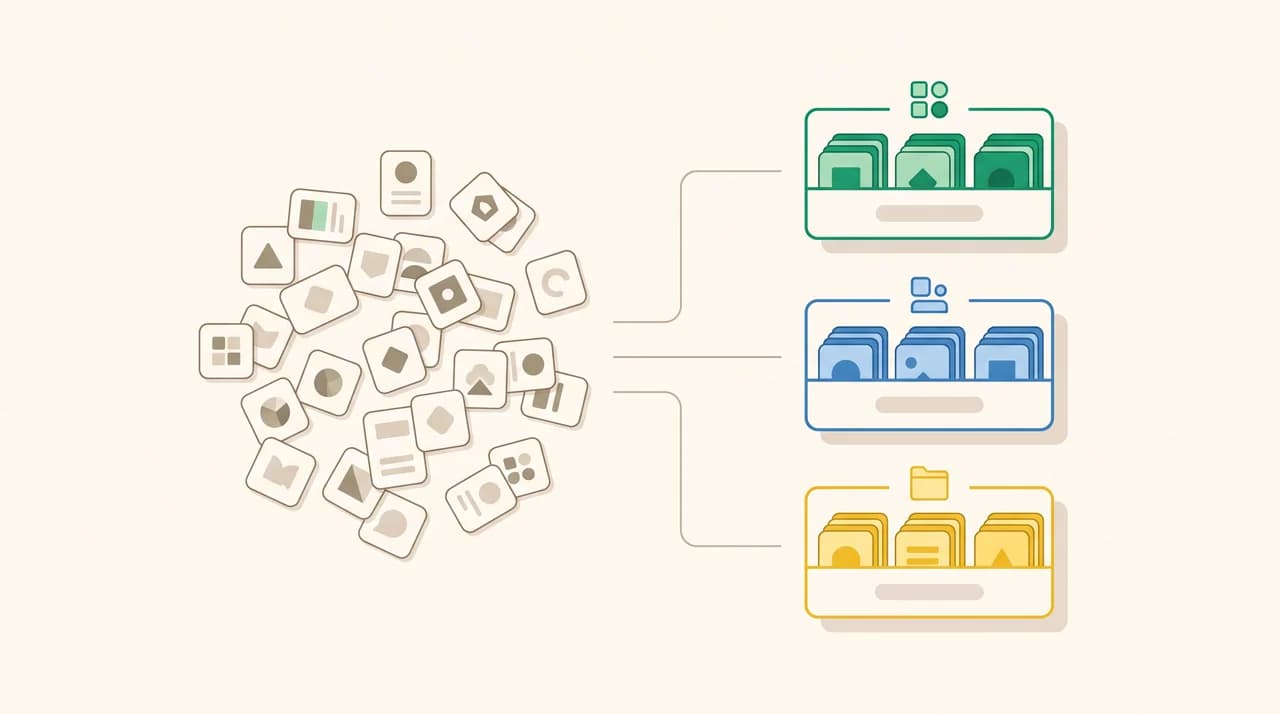
Use this table to narrow to two options before reading the sections below. The two dimensions that matter most are whether the tool learns importance automatically like SaneBox does, and whether it works across the providers you actually use.
| Tool | How it triages | Works with | Cost shape |
|---|---|---|---|
| Gmail Priority Inbox | Automatic importance scoring plus manual sections | Gmail and Google Workspace | Free — built into every Gmail account |
| Outlook Focused Inbox | Automatic Focused vs Other split | Microsoft 365, Outlook.com, new Outlook | Free — built into every Microsoft account |
| Gmail filters | Hand-written rules — you define the criteria | Gmail and Google Workspace | Free — no cap, no tier |
| Thunderbird message filters | Hand-written rules that run locally | Gmail, Outlook, IMAP, POP, Exchange (EWS) | Free — open source, no account required |
| Apple Mail rules | Hand-written rules that run when Mail is open | Any account Apple Mail connects to | Free — built into macOS and iOS |
| Clean Email | Automatic grouping plus rules and Auto Clean | Gmail, Outlook, iCloud, Yahoo, IMAP | Free tier with usage cap; paid plans above it |
| Leave Me Alone | Bulk unsubscribe from senders you don't want | Gmail, Outlook, Yahoo, IMAP | Free credits per month; paid plans for more |
| Inbox Zero | AI triage and reply drafting, open source | Gmail (Microsoft on the roadmap) | Free if self-hosted; paid hosted plan available |
1. Gmail Priority Inbox — the closest free thing to SaneBox for Gmail users#
Priority Inbox is the feature most people who search for a free SaneBox alternative already have and haven't turned on. It splits your Gmail into sections — by default Important and unread, Starred, and Everything else — and uses Google's own signals (who you reply to, who you open, who you ignore) to score each incoming message for importance. New mail marked important gets an amber importance marker; low-signal mail doesn't. It is the same shape of job SaneBox does.
Turn it on in Gmail's Inbox settings, then set inbox type to Priority Inbox. The two arrows next to each message — one to mark important, one to mark not important — are the training signal. Use them for a fortnight and the score improves noticeably. Pair it with a filter that auto-archives everything below a certain importance threshold and you have a rough version of SaneBox's SaneLater folder, running inside Gmail, for free.
The limits are worth stating. Priority Inbox scores importance, but it does not learn categories the way SaneBox does — there is no automatic SaneNews or SaneBulk equivalent. It also lives inside one Gmail account at a time, so a multi-mailbox setup needs Priority Inbox turned on separately in each. And Google's importance markers are opaque; you cannot inspect why a particular message was scored the way it was.
2. Outlook Focused Inbox — the same idea for Microsoft 365 and Outlook.com#
Focused Inbox is Microsoft's version of the same feature, available across Outlook on the web, the new Outlook for Windows, Outlook mobile and Outlook for Mac. It splits your inbox into two tabs — Focused and Other — and moves messages between them based on who you interact with and what looks like automated or bulk mail. Turn it on from the View menu, then use the Move to Focused / Move to Other option on any message to correct a mistake.
Focused Inbox handles the top-level importance filter in a way that overlaps with SaneBox's SaneLater. It does not build the deeper folder scheme SaneBox provides — no separate bucket for newsletters, no equivalent to SaneBlackHole — and it applies per mailbox rather than across everything you might connect. For a single-account Microsoft user who wants the low-priority mail out of sight without paying a subscription, it is the direct answer.
A caveat that has bitten users this year: enabling Focused Inbox turns off Clutter, an older Microsoft feature that some tenants still had running. Losing Clutter's separate low-priority folder is disorienting if you'd built a workflow around it. Set Focused Inbox, wait a week, then decide whether to keep it before rewriting any rules that depended on Clutter.
3. Gmail filters — the DIY route with no cap and no tier#
Gmail filters are the honest baseline for anyone who wants SaneBox-style categorisation without paying for it. You define criteria — from address, subject text, has-attachment, list-id, size — and Gmail applies actions automatically: label it, archive it, mark as read, forward it, skip the inbox, delete it. There is no cap on the number of filters you can create and no tier structure. The engine is documented in the Gmail Help Center under Create rules to filter your emails.
For a functional replacement of SaneBox's folder scheme, you write three passes of filters. First, a set that catches obvious bulk mail using the list-unsubscribe header — filter has:list-unsubscribe with actions skip inbox and apply label Bulk. Second, a set that handles newsletters by from-domain, moving anything from mailchimp, substack, beehiiv and similar into a Newsletters label. Third, a set that handles notifications from apps you use — GitHub, Jira, Slack, Stripe — into an Alerts label. Everything else lands in the main inbox, which now behaves like SaneBox's inbox does.
The work is real. Setting up a filter scheme for a busy inbox takes an afternoon, and maintaining it takes a monthly check to catch new senders that don't match your existing rules. That is the trade — no subscription, but you own the rules. If the maintenance is what you were paying SaneBox to avoid, this route is not for you.
4. Thunderbird message filters — hand-built triage, off Google's servers#
Thunderbird is the free desktop email client from MZLA, and its message filter engine does roughly what Gmail filters do, run locally on your machine rather than on Google's servers. It connects to Gmail, Outlook, IMAP, POP and Exchange (via the EWS add-on), so you can point one client at every mailbox you use and apply the same filter set across all of them.
Filters can trigger on incoming mail, on a schedule, or manually. Actions include move to folder, tag, mark as read, forward and delete. The categorisation logic is the same as Gmail's — you define what a newsletter or bulk sender looks like, and Thunderbird files accordingly. The material advantage over Gmail's server-side filters is that Thunderbird works across providers with one rule set, and the archive lives on a disk you own.
The material limit is that filters only run while Thunderbird is open or synced, so a phone that never opens Thunderbird will see mail arrive untriaged. Pair Thunderbird's client-side filters with each provider's own filter engine (Gmail filters, Outlook rules) for the best coverage, or accept that first-pass triage happens when you're at your desk.
5. Apple Mail rules — free triage inside the Mac client#
Apple Mail on macOS has a Rules engine tucked inside Mail Preferences, and it is a legitimate free way to build SaneBox-style triage for anyone whose primary interface is a Mac. It runs on any account Apple Mail can connect to — iCloud, Gmail via IMAP or OAuth, Outlook via Exchange, Fastmail, generic IMAP — and applies actions locally when mail arrives.
Rules match on sender, recipient, subject, header content or body text, and can move messages to mailboxes, mark them as read or flagged, forward them, or run an AppleScript. For a lightweight setup, three rules will get most of the job done: one to move list-unsubscribe traffic to a Newsletters mailbox, one to move known bulk senders to a Later mailbox, and one to flag anyone in your contacts as important. iOS Mail respects server-side rules but does not apply Apple Mail's local rules, so pair Apple Mail's rules with iCloud's server-side rules if you use both.
The ceiling is the same as Thunderbird's: rules run when Mail is open on your Mac. That is fine for a desk-first workflow, less fine if you spend most of your day on a phone.
6. Clean Email — closest free-tier feel to SaneBox, with a usage cap#
Clean Email is the closest one-for-one competitor to SaneBox that offers a free tier at all, and its Auto Clean feature does the ongoing-triage job SaneBox is known for. It groups incoming mail by sender or category, and lets you set an action once — archive, label, trash, mark as read — that applies to every future message in that group.
Provider coverage is broader than most tools on this list: Gmail, Outlook, iCloud, Yahoo and generic IMAP. The free tier lets you evaluate the grouping and Auto Clean before committing, and the paid tiers lift the usage cap for ongoing use. Verify the current free-tier limit on clean.email directly before you commit — this is a category where the threshold has moved more than once.
If what you liked about SaneBox was the ongoing categorisation and you don't mind switching to a different vendor doing the same job, Clean Email's free tier is a real evaluation path. If your inbox volume is high enough that you'll exceed the free cap within a month, treat this as a trial rather than a permanent free alternative.
7. Leave Me Alone — free bulk unsubscribe, one part of the SaneBox job#
Leave Me Alone is not a full SaneBox replacement — it is the bulk-unsubscribe half of the job, offered on a credits-based free tier that recharges monthly. Connect Gmail, Outlook, Yahoo or generic IMAP, and it scans for anything with a list-unsubscribe header, then lets you unsubscribe from senders in bulk with one action per row. Anything you unsubscribe from stops arriving, which shrinks the incoming stream that SaneBox would otherwise be triaging.
For a reader whose actual SaneBox use case was mostly getting newsletters and bulk mail out of the inbox, Leave Me Alone plus Gmail's own filters may close the gap without a subscription. Verify the current free credit allowance and any provider changes on leavemealone.com before you rely on it.
This is a specific fit rather than a general one. It has no importance scoring, no folder scheme, and no digest. What it does, it does cleanly, and pairing it with Priority Inbox or Focused Inbox covers a meaningful share of what people pay SaneBox for.
8. Inbox Zero — open source, self-hostable, AI included if you bring the key#
Inbox Zero is the free route for a reader who wants an AI-powered triage tool and won't pay a subscription for one. It is open source on GitHub, self-hostable on your own server, and connects to Gmail out of the box; Microsoft support has been on the roadmap and is worth checking on their repository before you commit. Because you self-host and bring your own model API key, the recurring cost is whatever you pay OpenAI or Anthropic for tokens, not a per-seat subscription to a vendor.
What it does that goes beyond every other tool on this list is actual AI-assisted triage and reply drafting. It reads incoming mail, categorises it, drafts replies where appropriate, and lets you approve or edit before anything sends. That is closer to what SaneBox promises than any of the free filter tools above, and it is a real answer for someone who wants the AI features without the SaneBox price tag.
The trade is that self-hosting is work. You need a server, a domain, a Postgres instance, and enough comfort with a Node.js deployment to keep it patched. Inbox Zero also offers a hosted version with a trial rather than a permanent free tier, so if you want to skip the ops burden you are back to paying a vendor — just a different one. For a technical reader with a home server or a cheap VPS, this is the most complete free answer on the list.
AI Emaily — where we fit on a free list, honestly#
We build AI Emaily, so this note gets its own paragraph and its own limit stated plainly. AI Emaily is an AI-native email client that triages, drafts and files mail across Gmail, Outlook and IMAP with approval before send, undo, and an audit trail. Our packaging is a 7-day free trial on Pro or Autopilot — card required, $0 if you cancel before day seven — and there is no permanent free tier. If "free forever" is the hard requirement for this search, we are not the honest answer, and you should stop reading this paragraph and go set up Priority Inbox or Focused Inbox instead.
Where we do fit: a reader who tries the free options above, decides that hand-built filters or a limited free tier isn't enough, and is comparing SaneBox's subscription against a broader AI assistant that does more than triage. The trial is there for that comparison — seven days is long enough to see whether an AI client's triage plus drafting plus approval-first workflow closes the gap you were still paying SaneBox to close. Pricing details are at /pricing.
One concession worth naming. On pure importance scoring inside a Gmail archive with no other product to install, Google's Priority Inbox has more signal than any third-party tool can pull, ours included. It is Google's own data about what you open and reply to, applied by Google's own model, and if that is the only feature you actually want, Priority Inbox is a better free answer than any paid client. Where the argument for a paid tool begins is when triage stops being enough and you want the tool to draft, act, and audit itself.
How to choose for your situation#
Match your row, then set up one option before adding a second. Enabling four triage tools at once is how a reader ends up back on SaneBox six months later because they never trusted any of them.
| If this is you | Start with | Second look |
|---|---|---|
| Every mailbox is Gmail and you want zero setup | Gmail Priority Inbox | Gmail filters, once you know which senders it consistently mis-scores |
| Every mailbox is Microsoft 365 or Outlook.com | Outlook Focused Inbox | Outlook rules for newsletter and bulk-sender folders |
| You mix providers and want one rule set across all of them | Thunderbird message filters | Each provider's own filter engine, for phones that never open Thunderbird |
| You work primarily inside Apple Mail on a Mac | Apple Mail rules plus iCloud server-side rules | Gmail filters or Outlook rules for any non-iCloud account |
| You liked SaneBox's ongoing categorisation and want a free evaluation | Clean Email's free tier | Its Auto Clean feature once the grouping is working |
| Your real problem is newsletters and bulk mail | Leave Me Alone plus Priority or Focused Inbox | Filters to catch senders that don't expose an unsubscribe header |
| You want actual AI triage without paying a subscription | Inbox Zero, self-hosted | AI Emaily's 7-day trial if you decide the ops burden isn't worth it |
| You've tried the free tools and they don't do enough | AI Emaily's 7-day trial or SaneBox itself | Whichever survives a fortnight against your actual inbox |
The verdict#
For a Gmail-only reader, Priority Inbox is the honest top pick — it is already installed, it costs nothing, it uses Google's own signals, and it does most of what SaneBox does for the importance-filtering half of the job. Add a small filter set for newsletters and bulk senders and you have a rough SaneBox equivalent inside Gmail, running on Google's own model. Focused Inbox is the same story for Microsoft users.
For a multi-provider setup, Thunderbird's message filters are the closest free thing to a single triage rule set that applies everywhere. Pair it with each provider's own filter engine for the mailboxes you check on your phone, and the coverage gets close enough to SaneBox that the subscription question becomes real. This is the honest answer for a technical reader who values control over convenience.
For a reader who wants AI triage specifically and won't pay a subscription for it, Inbox Zero self-hosted is the only complete free answer we know of. If the ops burden of self-hosting is where you draw the line, you're back to paying a vendor — us, SaneBox, Clean Email or someone else — and the choice becomes which vendor's product covers the widest span of the job. We build AI Emaily and we're happy to make that case, but we won't make it on a page called free alternatives when our packaging is a trial.
One line that applies to every tool on this list: check the vendor's own current page before you commit. Free tiers in this category have moved more than once this year, and any specific limit or credit allowance printed in a comparison ages within weeks.
Two settings that make any of these tools better
Frequently asked
See it in AI Emaily
Keep reading
Sources

Written by
Nafiul HasanNafiul Hasan is an entrepreneur and AI automation system builder with 10+ years of experience turning messy, manual workflows into reliable automated systems. He designs and ships AI enterprise solutions end-to-end — the agent logic, the data plumbing, and the product people actually use — and founded AI Emaily to give busy professionals their attention back. He writes here from the builder's seat: what works, what breaks, and how to put AI to work without giving up control.