What Is a Good Spam Complaint Rate? Thresholds and Fixes

The short answer
Gmail wants your user-reported spam rate below 0.1% and says it must never reach 0.3%. Yahoo asks bulk senders to stay below 0.3%. Both measure it against mail delivered to the inbox. Cross the line and mail gets junked or rejected; Gmail restores standing only after 7 days back under 0.3%.
What is a good spam complaint rate? Keep Gmail-reported spam below 0.1% and never hit 0.3%; Yahoo wants under 0.3%. How it's measured and how to recover.
On this page
- 01What is a good spam complaint rate?
- 02How is the spam complaint rate calculated?
- 03The denominator, drawn out
- 04What happens if your spam rate goes above 0.3%?
- 05How to bring a high complaint rate down
- 06Spam complaint rate vs the metrics it gets confused with
- 07Common misconceptions
- 08Where AI Emaily fits — and where it doesn't
"What is a good spam complaint rate?" is usually asked by someone watching a number climb in a postmaster dashboard, trying to work out how much room is left. The honest answer is: less than most people expect, and the mailbox providers publish the exact lines. You do not have to guess.
This guide gives the numbers Gmail and Yahoo actually state, explains how the rate is measured, shows why it is calculated against mail that reached the inbox, and covers what recovery looks like once you have crossed a threshold. Every figure here is checked against the provider's own page.
What is a good spam complaint rate?#
A good spam complaint rate is one that stays comfortably under the mailbox providers' published limits. Gmail tells senders to keep their user-reported spam rate below 0.1% and to prevent it from ever reaching 0.3% or higher. Yahoo asks senders to keep their spam rate below 0.3%. So: below 0.1% is the safe target, and 0.3% is the line you never want to touch.
These are the numbers the providers put in writing, not community folklore. Google states them in its Email sender guidelines FAQ; Yahoo states its 0.3% figure in the Sender Hub best-practices page. Both are accurate as of August 2026 — verify them on the provider's own page before you rely on them, because bulk-sender rules have changed more than once in the last two years.
Note the scale. A 0.3% rate is three complaints per thousand delivered messages. On a list of 100,000 recipients, that is 300 people pressing "report spam" — a small fraction that still tells the provider your mail is unwanted.
If you send one-to-one mail from an ordinary mailbox, this is not a number you manage day to day. It matters most to anyone sending at volume — newsletters, product notifications, outreach — where the provider treats you as a bulk sender and starts scoring your reputation against these thresholds.
How is the spam complaint rate calculated?#
Spam complaint rate is a ratio. The numerator is the number of recipients who marked your message as spam. The denominator is the mail that reached the inbox — not everything you sent.
Google's Postmaster Tools defines it as the percent of your messages delivered to an engaged recipient's inbox that are then marked as spam, and it excludes mail the provider had already routed to spam. Yahoo says the same in plainer words: its spam rate is calculated on mail delivered to the inbox.
Two practical consequences follow. Postmaster Tools only reports a rate once you send enough mail to Gmail to register, so very small senders may see no data at all — the metric is built for volume. And because the figure updates every day, you want to read it the day after a large send, not a week later once the reputation damage is already baked in.
That denominator is the part people miss. Because only inboxed mail counts, sending more mail that lands in the spam folder does not dilute your rate — it just means fewer people ever see the message. The rate is calculated and updated daily, so a single bad campaign can move it within a day.
| Provider | Safe target | The line not to cross | Where you read it | What the rate counts |
|---|---|---|---|---|
| Gmail | Below 0.1% | 0.3% or higher — never | Postmaster Tools, updated daily | Inbox-delivered mail marked as spam; auto-filtered spam excluded |
| Yahoo | Below 0.3% | 0.3% | Yahoo Sender Hub + complaint feedback loop | Mail delivered to the inbox |
| Microsoft Outlook.com | Not published | Not published — monitor via SNDS | Smart Network Data Services, per sending IP | Complaint data reported per IP, no public numeric limit |
The denominator, drawn out#
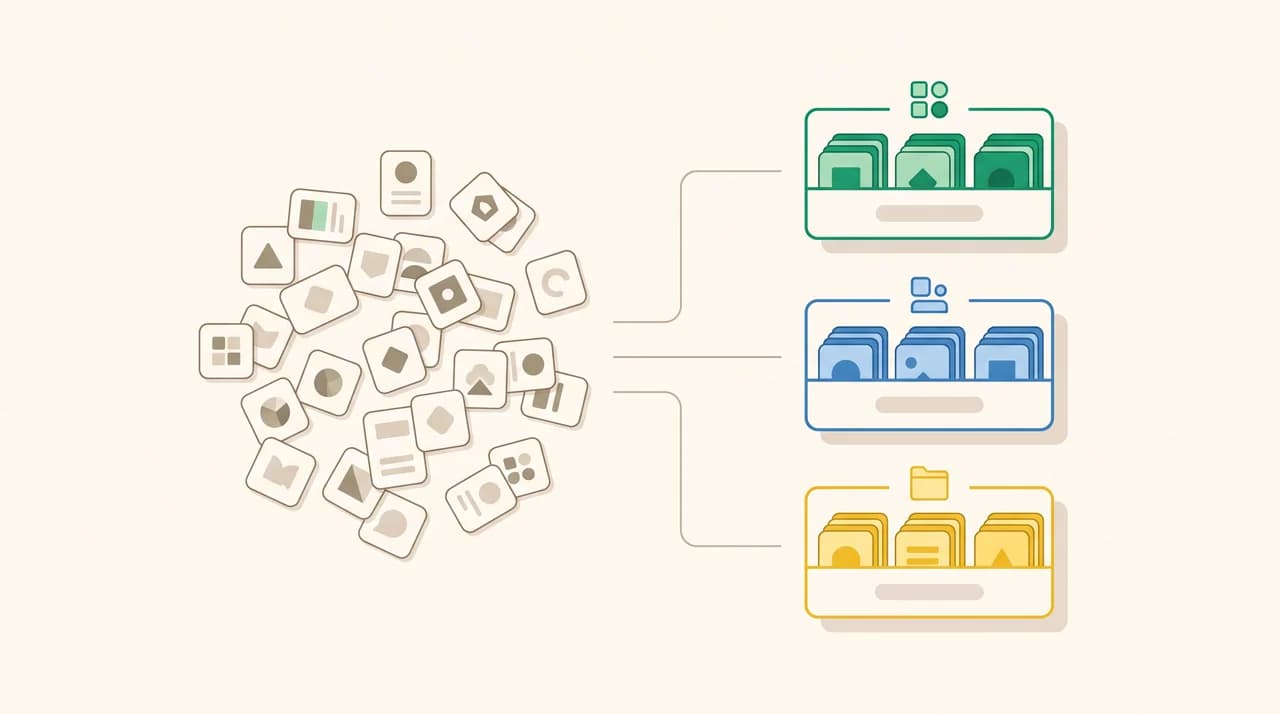
The image below shows why the calculation punishes bad sending twice. Mail is first sorted into the inbox or the spam folder. Only the inbox pile is the denominator; complaints against it are the numerator. Mail the provider already filtered to spam never enters the maths.
That is why chasing a lower rate by tolerating more spam-foldering backfires: it shrinks the audience without moving the ratio, and the reputation that decides inbox placement keeps sliding.
What happens if your spam rate goes above 0.3%?#
Crossing 0.3% is not a warning light you can ignore. Gmail's guidance is that senders with high spam rates see mail sent to the spam folder — and since enforcement escalated in November 2025, non-compliant bulk traffic can also get temporary or permanent rejections, not only spam-foldering. Yahoo's response to a high complaint rate has the same shape: your mail stops reaching the inbox.
Recovery is measured in days of good behaviour, not a button. Google says a sender becomes eligible for mitigation support once the spam rate has stayed below 0.3% for 7 consecutive days. That is the floor, not the finish line: reputation is a trailing signal, so the inbox placement you lost can take longer than a week to come back even after the number drops.
0.3% is a ceiling, not a target
How to bring a high complaint rate down#
There is no switch that resets the number. You lower it by removing the reasons people complain, then waiting for the rate to catch up. The steps below are roughly most-impact first, and they are the same fixes whether you are breaching Gmail's 0.1% target or Yahoo's 0.3% limit.
- 1
Fix consent at the source
Only mail people who explicitly opted in. Purchased, scraped, or "we assumed you'd want this" lists are the fastest route to a spam report, because the recipient never asked to hear from you.
- 2
Prune unengaged recipients
Stop sending to addresses that have not opened or clicked in months. They rarely convert and are the most likely to reach for the spam button when the mail keeps arriving.
- 3
Make unsubscribe one click, and honour it fast
Google, Yahoo, and Apple require one-click unsubscribe (RFC 8058) for marketing mail. A visible, instant opt-out is what a recipient reaches for instead of "report spam" — but only if you actually stop sending straight away.
- 4
Cut frequency and match expectations
Complaints spike when mail arrives more often, or looks different, than what someone signed up for. Send less, and send what was promised at sign-up.
- 5
Authenticate every send
Publish SPF, DKIM, and a valid DMARC policy. Authentication does not lower complaints by itself, but without it bulk mail is now rejected outright regardless of your rate.
Spam complaint rate vs the metrics it gets confused with#
Senders often lump the complaint rate together with bounce rate or unsubscribe rate. They measure different things and carry very different weight. A complaint is the most damaging of the four below, because it is a human telling the provider your mail is spam.
| Metric | What it measures | Healthy range | What a bad number signals |
|---|---|---|---|
| Spam complaint rate | Inboxed recipients who mark your mail as spam | Below 0.1% (Gmail); below 0.3% (Yahoo) | Wrong audience, weak consent, or sending too often |
| Bounce rate | Messages rejected as undeliverable | As low as possible; a rising trend is the alarm | Stale or purchased lists, invalid addresses |
| Unsubscribe rate | Recipients who opt out through the list | Varies by list; watch for spikes | Content or cadence mismatch — far less harmful than a spam report |
| Spam trap hits | Mail sent to addresses that exist only to catch senders | Zero | A list-hygiene failure that can get a whole domain blocklisted |
Common misconceptions#
"A few complaints won't matter." At scale a fraction of a percent is a lot of people. The line is 0.3%, which is three reports per thousand inboxed messages — a rate you can hit with one poorly targeted send.
"Sending to the spam folder lowers my rate." It does not. Only inbox-delivered mail is the denominator, so spam-foldered messages are excluded and never dilute the ratio.
"0.3% is my target." 0.3% is the ceiling. Below 0.1% is the target Gmail actually names, and sitting near the ceiling leaves no room for a single bad day.
"Once I drop below the line, delivery snaps back." Gmail's 7-consecutive-days-below-0.3% rule is when you become eligible for mitigation, not when placement returns. Reputation lags the number.
"This only applies to marketing email." The rate is about how recipients react, so transactional mail and cold outreach get reported too. Bulk-sender status triggers at volume — around 5,000 messages to personal Gmail in 24 hours — counted per primary domain across its subdomains, and it does not switch back off once triggered.
Where AI Emaily fits — and where it doesn't#
A quick honesty note, because this is a sender-side metric and AI Emaily sits on the other side of it. AI Emaily is an AI email client, not a bulk-sending platform, an ESP, or a deliverability tester. It will not lower your sending complaint rate — that work belongs to your ESP, your Postmaster Tools or SNDS dashboards, your list hygiene, and your consent practices.
Where AI Emaily fits is the receiving end. A spam complaint is a recipient pressing "report spam," and AI Emaily's spam protection is the inbound counterpart: it flags likely spam and phishing and holds it out of your inbox so you triage less noise. We build AI Emaily. If what you need is a client that keeps unwanted mail off your screen rather than a way to send at scale, that is the job it does — not the deliverability one above.
Frequently asked
See it in AI Emaily
Keep reading
Sources

Written by
Nafiul HasanNafiul Hasan is an entrepreneur and AI automation system builder with 10+ years of experience turning messy, manual workflows into reliable automated systems. He designs and ships AI enterprise solutions end-to-end — the agent logic, the data plumbing, and the product people actually use — and founded AI Emaily to give busy professionals their attention back. He writes here from the builder's seat: what works, what breaks, and how to put AI to work without giving up control.