12 Red Flags in an AI-Written Email Reply

The short answer
Tell-tale signs an email reply was written by AI include manufactured enthusiasm, invented specifics, symmetrical three-item lists, mirrored phrasing, over-apology, hedged non-answers, and the wrong register for the relationship. Each has a single repair prompt that removes it. Read the draft against this list before you send — most fixes take under a minute.
12 red flags in an AI-written email reply — manufactured enthusiasm, invented specifics, symmetrical lists — with a repair prompt for each.
On this page
- 01Why this list exists
- 02The 12 red flags at a glance
- 031. Manufactured enthusiasm
- 042. Invented specifics
- 053. The symmetrical three-item list
- 064. Mirrored phrasing
- 075. Over-apology
- 086. Hedged non-answers
- 097. Wrong register for the relationship
- 108. The reflexive certainly
- 119. Empty transitional phrasing
- 1210. Formatting artefacts
- 1311. Sign-off drift
- 1412. Missing the specific ask
- 15How to use this list in practice
- 16What to do when several apply
- 17The workflow that makes this list usable at speed
An AI email draft that reads badly almost always fails in one of a small number of recognisable ways. The failures are not random. They are patterns baked into how instruction-tuned language models trade off safety, helpfulness, and average-case appropriateness — and once you can name them, you can also fix them, usually with a one-line repair prompt aimed at the specific pattern.
This is the diagnostic vocabulary. The companion post is the routine checklist you run before every send; this one is what you are looking at when the checklist trips. Twelve red flags in an AI-written email reply, each with a concrete example, why the model produced it, and the exact prompt that removes it.
Why this list exists#
The reason AI-written email reads as AI is not that the sentences are grammatically wrong. They are usually grammatically perfect. The tell is a shape — the shape a model reaches for when it has been asked to be helpful, safe, and appropriate for a general audience with no additional information. That shape is warmer than a colleague, hedgier than a lawyer, and more symmetrical than a person who has actually thought about the question.
The fix is almost never "write it more like a human." That prompt does nothing. The fix is naming the specific artefact you want removed, and pointing at what should replace it. Every item below gives you both.
How to read this list
The 12 red flags at a glance#
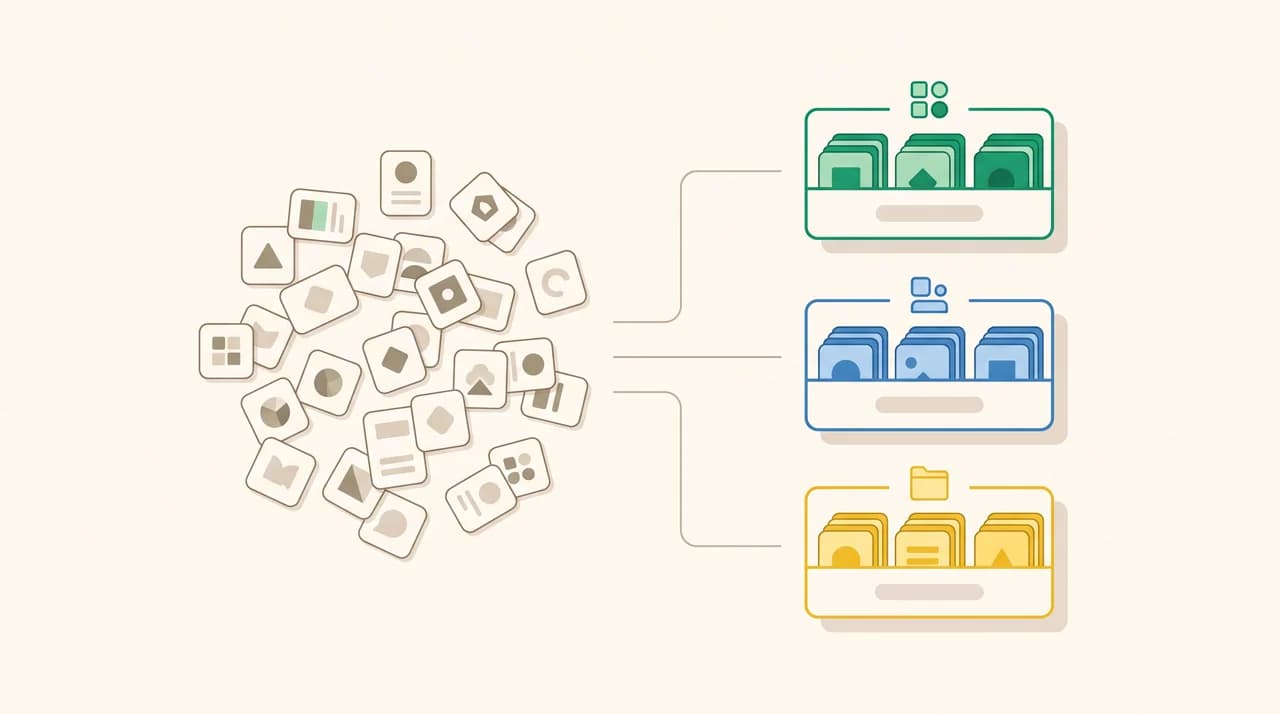
The full explanation for each is below. This table is the quick reference — the flag, an example of what it looks like, and the repair prompt that removes it. Every prompt is written to be pasted directly into ChatGPT, Claude, Gemini, or any AI email tool that lets you edit a draft with an instruction.
| # | Red flag | Example phrase | Repair prompt |
|---|---|---|---|
| 1 | Manufactured enthusiasm | "I hope this email finds you well!" | Remove greetings and warmth that we have not earned. Open with the actual point. |
| 2 | Invented specifics | "As we discussed on Tuesday…" | List every factual claim. Cut any not present in the thread I attached. |
| 3 | Symmetrical three-item list | "timely, professional, and thorough" | Do not use three-item parallel lists unless the underlying content is genuinely three things. |
| 4 | Mirrored phrasing | "Regarding your question about X, X is…" | Do not restate the recipient's question before answering. Answer directly. |
| 5 | Over-apology | "Sorry for the delay on this…" | Do not apologise for anything unless I have told you to. |
| 6 | Hedged non-answer | "It depends on many factors." | Give a single concrete answer or say I do not know yet. Cut hedges. |
| 7 | Wrong register | "Kind regards," to a close friend | Match the sender's usual register with this recipient: [informal / formal / peer]. |
| 8 | Reflexive certainly | "Certainly — I can do that." | Do not open replies with "Certainly," "Absolutely," or "Of course." Say yes or no. |
| 9 | Empty transitional phrasing | "That said, moving forward…" | Cut throat-clearing transitions. Each sentence should carry its own meaning. |
| 10 | Formatting artefacts | Em dashes and curly quotes where I use hyphens | Use straight quotes and hyphens, not curly quotes or em dashes. No markdown bullets in the body. |
| 11 | Sign-off drift | "Best regards," when I sign "— N" | End with the sign-off I use: [your sign-off]. Nothing else. |
| 12 | Missing the specific ask | Answers the general shape, not the question | The recipient asked exactly this: [ask]. Answer that first. Address other content only after. |
1. Manufactured enthusiasm#
The single most reliable tell. A draft that opens "I hope this email finds you well!" or "Great to hear from you!" or ends "Excited to work with you on this!" — when the underlying business is a routine invoice question — has been warmed above the temperature of the actual relationship. It happens because instruction-tuned models are optimised to sound helpful and pleasant to a stranger, and every reply starts from that stranger prior unless you push it somewhere else.
The repair is not "make it less formal." That produces a different flavour of the same thing. The repair is: "Remove greetings and warmth that we have not earned. Open with the actual point." On a reply to a peer you email twice a week, the correct opener is usually the first sentence of the answer.
2. Invented specifics#
The most dangerous flag on the list, and the one you have to check every time. The model will confidently attribute claims to previous conversations that never happened — "as we discussed on Tuesday," "per your last email," "the $12,000 figure you mentioned" — because filling in a plausible specific reads as more competent than leaving a gap. It is a hallucination in the exact place where a hallucination gets you into legal trouble.
The repair prompt: "List every factual claim in the draft. For each, quote the sentence in the thread I attached that supports it. Cut any claim you cannot quote." Run this on any draft that references a number, a date, a quote, an agreement, or a name that was not in your original instruction.
This is the one you cannot skip
3. The symmetrical three-item list#
"Our approach is thorough, transparent, and collaborative." "I'll send the deck, schedule the call, and loop in Sam." "This is timely, professional, and thorough." The number is almost always three, the items are almost always parallel in grammar, and the underlying content almost never actually breaks into three things. It reads as competent to a skim and as hollow on a close read.
The repair: "Do not use three-item parallel lists unless the underlying content is genuinely three distinct things. If the point is one thing, say one thing." Most emails only need one sentence where the model wanted a triplet.
4. Mirrored phrasing#
The recipient asks "Can you send me the updated deck?" The draft opens "Regarding your request for the updated deck, the updated deck is attached." The restatement adds nothing — the recipient knows what they asked — but the model produces it because being seen to acknowledge a question reads as polite. In an email between people who talk regularly, it reads as stalling.
The repair: "Do not restate the recipient's question before answering. Answer directly. Assume they remember what they asked." The good version of this reply is one sentence: "Attached."
5. Over-apology#
The draft opens "Apologies for the delay in getting back to you" when the last message arrived four hours ago on a normal working day. Or "Sorry to bother you again on this" when you have followed up once, appropriately, after a week of silence. The apology is a hedge — it is trying to protect against a negative reaction that the recipient probably was not going to have, and by naming it, it invents one.
The repair: "Do not apologise for anything unless I have specifically told you to. Do not soften with 'just,' 'sorry to,' 'quickly,' or 'apologies for.'" Real apologies belong in real apology emails, on purpose.
6. Hedged non-answers#
The recipient asks whether Thursday works for a call. The draft returns "Thursday could potentially work depending on a few factors — let me check my calendar and get back to you shortly." This is not an answer. It is a promise to answer, wrapped in enough qualifiers that the model cannot be wrong about anything. Models default to this shape any time the correct answer requires a fact they do not have.
The repair depends on whether you know the answer or not. If you do: "Give the direct answer. Cut hedges." If you do not: "Say plainly that you do not know yet and will confirm by [time]." Both are better than the qualifier soup.
7. Wrong register for the relationship#
The draft signs "Kind regards," on a message to your co-founder. Or it says "Hey! Just wanted to circle back on this real quick 😊" on a message to your outside counsel. The failure is that the model has no idea what your usual register with this recipient is, so it picks the register it was trained to pick for the general case — which is warmer than most business relationships and more formal than most peer relationships.
The repair carries the recipient-specific information: "Match the sender's usual register with this recipient. This is a [peer / senior / client / friend / vendor] I email [rarely / weekly / daily]. Use the shape they see from me." If you already have a Personal Context brain or client profile in your AI email tool, this is what those exist to solve.
8. The reflexive certainly#
"Certainly, I can do that." "Absolutely, happy to help." "Of course — let me handle it." Every reply that starts with one of these words is a reply the model wrote to look agreeable. The problem is not the agreement; it is that it forecloses on the actual answer being "no," "partly," or "only if we change X." Models are trained to be helpful, and the reflex is to sound helpful before they have understood the ask.
The repair: "Do not open replies with 'Certainly,' 'Absolutely,' 'Of course,' or 'Happy to.' Say yes, no, or the specific answer. Push back if the request is unreasonable." This one prompt tends to sharpen every reply the model writes for the next hour.
9. Empty transitional phrasing#
"That said, moving forward, in terms of the timeline, at the end of the day, it is worth noting that…" Each phrase carries no meaning; each is throat-clearing that lets the model warm up before saying something. Human writers use one or two of these when they are actually pivoting. AI-written email uses four in a paragraph, in a straight line, because the model was trained on the writing of people who use them and then averaged.
The repair: "Cut throat-clearing transitions: 'that said,' 'moving forward,' 'in terms of,' 'at the end of the day,' 'it is worth noting,' 'to be honest.' Each sentence should carry its own meaning." This alone shortens a typical AI draft by fifteen to twenty percent.
10. Formatting artefacts#
The model writes em dashes when you use hyphens. It uses curly quotes when your keyboard produces straight ones. It formats short lists as markdown bullets in the body of an email you would have written as a comma-separated sentence. None of these matter individually. Together they signal, to anyone who has read a lot of your writing, that this message did not come from your keyboard.
The repair: "Use straight quotes and hyphens, not curly quotes or em dashes. Do not use markdown bullets, headers, or bold in the body of the email. Match the punctuation of the last three emails I sent this person." On email tools that render markdown, the second sentence saves the recipient from receiving asterisks.
11. Sign-off drift#
You sign your emails "— N." The draft ends "Best regards, Nafiul." The signature block will overwrite the model's sign-off in most email clients, but the model wrote it because the general case for business email is a full sign-off, and it does not know yours. On any email tool that does not respect the sender's real signature, the drift is visible in the sent copy.
The repair is short and specific: "End with the exact sign-off I use: [your sign-off]. Nothing after it." Save this as a system-level instruction and it stops re-appearing.
12. Missing the specific ask#
The recipient's email is four paragraphs long. In paragraph three, one sentence contains the actual question: "Can we push the launch to the 22nd?" The draft opens with a warm acknowledgement of the overall project status, discusses the general shape of the timeline, and ends without ever saying whether the 22nd works. The model addressed the average of the message rather than the operative sentence.
The repair puts the ask back in the model's context: "The recipient asked exactly this: [paste the sentence]. Answer that first, in one sentence. Address the rest of the email only after." Most drafts get a lot shorter and a lot more useful after this one.
How to use this list in practice#
The habit that makes the list actually work is scanning the draft once with the table open next to it, in the order the flags tend to appear — greetings first, factual claims in the middle, formatting and sign-off at the end. Most drafts trip two or three flags. A few trip six or seven, and those are the drafts you throw out and rewrite from scratch rather than trying to repair.
The order matters because repair prompts interact. If you fix the register first, the manufactured enthusiasm often goes with it. If you fix the hedged non-answer first, the invented specifics that were papering over the hedge become visible. Fix the biggest wrong thing first, regenerate, and re-scan; do not try to patch six items in one long compound prompt because the model will drop half of them.
- 1
Scan for invented specifics first
Numbers, dates, quotes, names, attributions. This is the only flag on the list that can get you into real trouble; every other one just makes the email read badly. If you find any, verify against the source thread or cut them before doing anything else.
- 2
Then scan for the register
Is the warmth in the opening consistent with your actual relationship with this person? If no, the register fix usually pulls the manufactured enthusiasm and the reflexive certainly with it.
- 3
Then check the ask
Did the draft answer the specific question the recipient asked, or the general shape of their email? If it missed, that repair prompt reshapes the whole reply.
- 4
Then run the shape pass
Symmetrical three-item lists, mirrored phrasing, over-apology, hedges, throat-clearing transitions. These are all one prompt if you list them together, run once at the end.
- 5
Finally, the formatting pass
Em dashes, curly quotes, markdown, sign-off drift. This is muscle memory once you have set the system-level instruction; on a good day you never see these again.
What to do when several apply#
A draft that trips more than four flags is not a draft you fix. It is a draft where the model did not have enough context to write anything specific, so it produced the default shape it produces when it does not know what you want. Repairing the individual flags on this kind of draft is doing the model's work for it — you will hit send on something acceptable, but you will have spent longer editing than you would have spent writing from scratch.
The correct move is to give the model more context and start again. What is your relationship with this recipient? What specifically are they asking? What is the answer, in one sentence, before any warmth or framing? A prompt that includes those three things will produce a first draft that trips at most one or two flags, and those are worth the thirty seconds it takes to fix them.
The four-flag rule
The workflow that makes this list usable at speed#
The list above is a manual routine. It works, and it is the right routine, but running it on every reply is the sort of discipline that lasts about a week before you skip it on something that turns out to matter. The scalable version is a workflow where the draft is always reviewed before it sends, the repair prompts you use most often are one-click available on the draft, and your usual register with each recipient is stored somewhere the model reads on every draft rather than something you re-explain each time.
We build AI Emaily, and this is the workflow we set the product to. Copilot mode is the default — nothing sends without you approving it — and the drafting side runs off a user-set Personal Context brain plus per-client profiles that carry the register information (peer, senior, client, vendor, and the sign-off you use with each). It does not learn from your past sent mail in the background; the context is what you write into it, which is a design choice we made because "trained on my sent folder" is the pattern that keeps hallucinating your own voice at you. If you want to try the workflow the twelve flags describe, our homepage and pricing page explain what is included; the trial is seven days on Pro or Autopilot, card required, cancel before day seven and it is $0.
Frequently asked
See it in AI Emaily
Keep reading

Written by
Nafiul HasanNafiul Hasan is an entrepreneur and AI automation system builder with 10+ years of experience turning messy, manual workflows into reliable automated systems. He designs and ships AI enterprise solutions end-to-end — the agent logic, the data plumbing, and the product people actually use — and founded AI Emaily to give busy professionals their attention back. He writes here from the builder's seat: what works, what breaks, and how to put AI to work without giving up control.