AI Email Prompts for Founders: 22 Copy-Paste Prompts


The short answer
Founders get the most out of AI email tools when every prompt includes three context slots: company stage, relationship history, and what you can and cannot commit to. These 22 ready-to-copy prompts cover investor updates, candidate closes, customer escalations, intro-request triage, polite declines, and board-adjacent notes — each pre-loaded with the slots most generic prompts skip.
22 copy-paste AI email prompts for founders — investor updates, candidate closes, customer escalations, intro triage, and polite declines.
On this page
- 01What makes an AI email prompt work for a founder?
- 02Investor update prompts
- 03Candidate close and hiring prompts
- 04Customer escalation prompts
- 05Intro-request triage and polite decline prompts
- 06Board-adjacent prompts
- 07Inbox triage prompts
- 08How the same prompt works differently across AI tools
- 09What to do when the AI draft misses
- 10A faster way to run these prompts without the copy-paste step
AI email prompts for founders fail for a predictable reason: they are written for the average professional, not for someone managing investors, candidates, customers, and a board simultaneously. 'Write a professional follow-up email' gets you a polite draft that belongs to no one in particular.
The prompts below are different. Each one ships with slots for your company stage, the specific relationship you are in, and what you can or cannot commit to — the three variables that turn a plausible-sounding draft into one you can actually send. Copy any prompt into ChatGPT, Claude, or any AI email tool, fill the bracketed slots, and edit what comes back.
What makes an AI email prompt work for a founder?#
Most email prompts fail not because the AI is bad but because the prompt omits the context needed to write something specific. For a founder, three pieces of context consistently separate a draft you send from one you rewrite from scratch.
- Your stage and size. 'We are a 6-person pre-seed startup' produces a different email than 'we are 90 days post-Series A with 40 people.' Stage sets the ambition ceiling, the constraints, and what you can realistically commit to.
- The relationship and its history. 'An investor who backed us three months ago' versus 'a cold investor who saw us pitch at demo day last year' changes the tone, how much context you need to supply, and what you can assume they already know.
- What you can and cannot commit to. Founders often skip this slot. Telling the AI 'I cannot offer equity at this stage' or 'I can extend their trial but not issue a refund' produces a draft that stays within your actual policy rather than one you have to walk back.
Fill the slots before you paste
Investor update prompts#
Investor updates are the most time-consuming routine emails a founder writes, and the most damaging to skip. These four prompts cover the full range: a positive monthly update, a milestone announcement, a request for a warm intro, and the harder job of reporting a miss.
- 1
Monthly investor update
Write a monthly investor update for a [pre-seed / seed / Series A] startup with [X] employees. MRR is [$X], up [X]% from last month. Wins: [list two or three]. Challenges: [list one or two honestly]. One specific ask: [intro or favor]. Under 300 words. Plain prose, no bullets, no deck language.
- 2
Milestone announcement to investors
Write a short milestone announcement to our investor list. We just [closed a round / reached $Xk MRR / signed [X] enterprise customers / launched in a new market]. Company is [stage], [X] months post-launch. Tone: confident but not chest-thumping. End with one specific ask: [e.g., introductions to HR leaders at mid-market SaaS companies]. Under 200 words.
- 3
Asking for a warm intro from an existing investor
Write a short email to an existing investor asking for a warm intro to [name or role] at [company]. We need this connection because [specific reason]. Suggest two things the investor can honestly say about us in the intro note. One ask only — not a blanket 'let me know if you can help.'
- 4
Reporting a miss or setback
Write a transparent investor update about a miss. The issue: [describe]. Root cause as we understand it: [cause]. What we are doing differently: [actions]. Updated expectation: [revised metric or milestone date]. Tone: direct, no spin. Investors should hear this from us first, not discover it in the next update.
Candidate close and hiring prompts#
These three prompts handle the hardest spots in a hiring thread: the close after an offer goes quiet, the warm rejection that keeps someone in your network, and the re-engagement when a strong candidate stopped responding.
- 1
Closing a candidate after an offer
Write a closing email to a [role] candidate who has held our offer for [X] days without responding. They appear to be weighing us against [a larger company / another startup]. Restate why this specific role matters right now without discounting the offer or applying pressure. Under 180 words.
- 2
Warm candidate rejection
Write a rejection email for a [role] candidate we interviewed and liked but cannot move forward with. Reason: [position paused / stronger fit on a specific dimension]. The candidate is [senior enough to keep in our network / early career]. Leave the door open only if we genuinely mean it — otherwise make it warm and final.
- 3
Re-engaging a candidate who went quiet
Write a short follow-up to a [role] candidate who was enthusiastic in interviews but stopped replying [X] days after [the final round / receiving the offer]. Tone: curious, not passive-aggressive. Ask one direct question. Give them an easy path to say no as well as yes.
Customer escalation prompts#
Customer escalation emails cost the most when they go wrong. These three prompts cover the situations founders handle worst under pressure: an angry inbound, a churn-risk conversation opener, and a proactive incident note.
- 1
Responding to an angry customer
Write a response to an angry email from a [trial / paid / enterprise] customer about [billing error / outage / broken feature / missed commitment]. They have been with us [duration]. Acknowledge the specific problem, explain what we know about the cause, state what we are doing, and offer [credit / extension / call]. No deflection. Under 250 words.
- 2
Opening a churn-risk conversation
Write a short proactive email to a customer who [has not logged in for 30 days / downgraded / filed multiple support tickets this week]. They pay [$X per month]. I want to open a real conversation, not send a save offer. Ask one direct question: is the product doing what they expected? Under 150 words.
- 3
Proactive incident note to customers
Write a proactive incident email to [all customers / affected segment]. What happened: [brief description]. Duration: [X minutes]. Impact: [features or users affected]. Fix: [what we did]. Prevention: [one or two concrete steps forward]. Tone: accountable, not defensive. No corporate language or passive voice.
Intro-request triage and polite decline prompts#
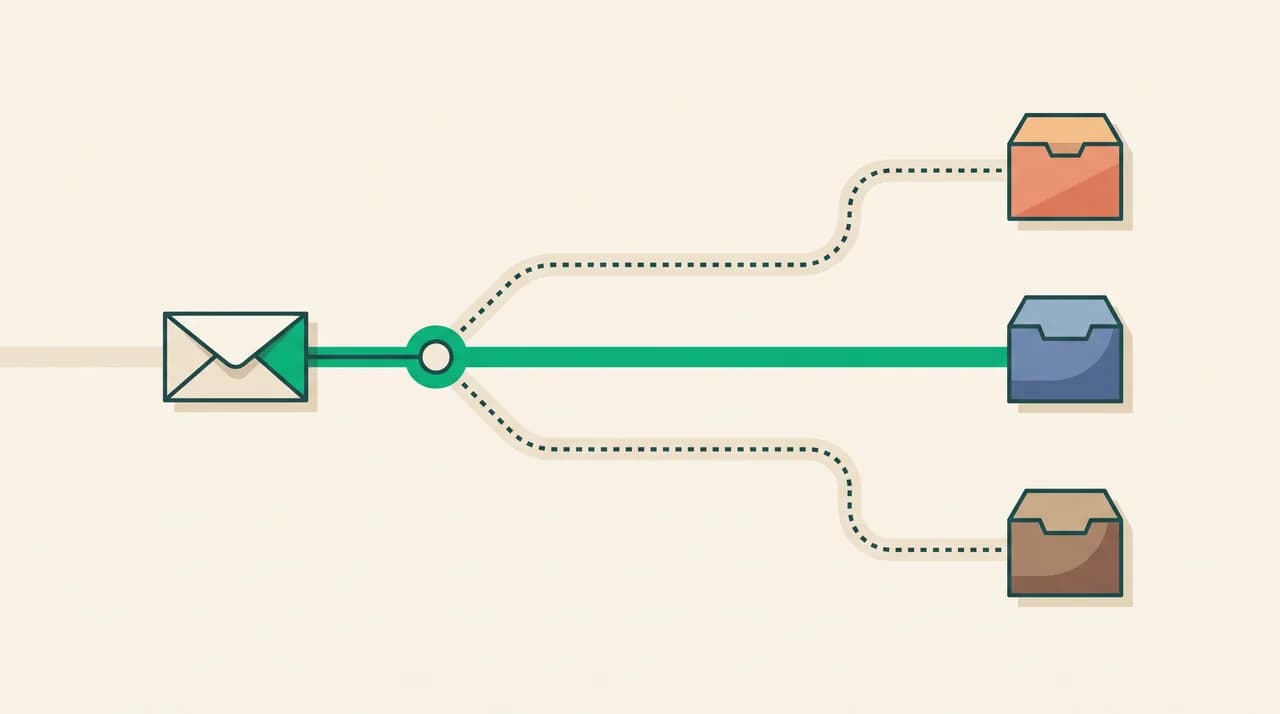
Managing introductions — deciding which to take, how to decline the rest, and how to make a good one yourself — is the most relationship-sensitive job in a founder's inbox. These six prompts give you a frame for each scenario.
- 1
Accepting an inbound intro
Write a reply to an investor or advisor who wants to introduce us to [type of person]. We want the intro. Tell the introducer what to say: our stage is [stage], we specifically need [what], and the angle that resonates for [recipient type] is [angle]. Reply goes to the introducer before the double opt-in goes out.
- 2
Declining an intro gracefully
Write a polite decline to an investor or advisor who wants to introduce us to [role or company type]. We cannot take this intro right now because [not hiring / already in too many conversations in this category / wrong market for us]. Decline without making the introducer feel their judgment was wrong.
- 3
Making a double opt-in introduction
Write a double opt-in intro email between [Person A, brief description] and [Person B, brief description]. The specific reason they should meet: [reason]. Ask each to confirm they are open to the intro before I write the forwardable. Two short paragraphs — one sentence on each person's value to the other.
- 4
Declining an investor meeting (not raising)
Write a decline to an investor who reached out for a first meeting. We are not raising right now. Keep the relationship warm for [rough timeline] without implying a vague 'maybe in a few months.' Honest and brief. Do not add an invitation to reconnect unless I explicitly include one.
- 5
Declining a partnership inquiry
Write a decline to a company exploring a partnership or integration. The real reason we are not pursuing it: [too early in our roadmap / wrong market segment / existing arrangement]. Decline warmly without implying we will revisit unless we actually might. Company: [name]. Their product: [brief description].
- 6
Declining a speaking or podcast request
Write a short decline to a speaking or podcast invitation. I am not doing [event type] right now because [too focused on shipping / wrong audience / already committed this quarter]. Leave the door open for a future cycle only if I genuinely mean it. Under 100 words.
Board-adjacent prompts#
These three prompts handle the recurring board communication that founders often write at the last minute: the pre-read note that frames what they are about to review, the async approval request, and the post-meeting reference record.
- 1
Pre-board meeting note
Write a pre-read email to board members [X] days before our board meeting. Agenda: [list]. Key metrics to cover: [MRR, burn, headcount, pipeline]. The one thing I want them thinking about before we sit down: [specific decision or open question]. Reference attached documents by name: [doc names]. Frame what they are reading, not just what to read.
- 2
Requesting async board approval
Write an email requesting async board approval for [decision: new hire above $X / contract above $X / new market entry]. Decision summary: [what we are doing]. Why now: [timing reason]. Downside of waiting: [risk]. My recommendation: [what I want to do]. Need written approval from [X of Y] board members by [date].
- 3
Post-board meeting summary
Write a crisp post-board follow-up to the full board. Cover: decisions made, [X] action items with owners and dates, one open question I will answer by [specific date]. This is the reference record, not a thank-you note. Under 250 words.
Inbox triage prompts#
These final three prompts handle the emails that pile up silently: the message that needs a holding reply while you think, the stalled thread that deserves a follow-up, and the delegation email that closes the loop without leaving the sender in limbo.
- 1
Holding reply
Write a holding reply to [type of sender: journalist / potential hire / vendor / advisor] who emailed about [topic]. I need [X] days before I can give a real answer. Acknowledge the email, commit to a specific return date, and do not over-explain why I need time. Under 100 words.
- 2
Following up on a stalled thread
Write a follow-up to an email I sent [X] days ago with no response. Context: [what the original message was about]. Relationship: [existing customer / warm intro / cold contact]. Two short versions: one that assumes they are busy, one that gently asks whether priorities have shifted.
- 3
Delegating and closing a thread
Write a reply to [person] handing off ownership of [task or thread] to [colleague name and role]. Confirm what I handled and what I am passing over. Make it clear [colleague] has full authority to proceed so [person] does not email me for updates. Close the loop on my end cleanly.
How the same prompt works differently across AI tools#
Pasting the same prompt into different AI tools produces meaningfully different output. These differences are consistent enough to account for, especially for emails where tone carries most of the weight.
| Tool | Formatting default | Best for founder email | Adjust for |
|---|---|---|---|
| ChatGPT (GPT-4o) | Markdown bullets and headers by default | First drafts and iteration — follow-up messages in the same thread refine the output without restarting | Add 'plain prose, no bullet points' to every prompt or the email reads like a report |
| Claude | Clean prose, longer default output | Investor updates and board notes where tone carries the most weight | Add a hard word ceiling — summaries run long without one |
| Gemini in Gmail | Short inline drafts, integrated into the compose window | Quick replies and holding notes written directly in Gmail without switching tabs | Less reliable on emails requiring careful tone judgment; better for routine replies |
| Any model via system prompt | Controlled entirely by the system prompt you set | Teams that need a consistent prompt across everyone — one setup, company-wide voice | Requires developer or admin setup; not built for ad hoc personal use |
What to do when the AI draft misses#
A draft that misses is almost always a prompt that left out a variable. The failures have recognizable patterns, and each has a direct fix.
- Too generic. The draft could belong to any company at any stage. Fix: add your company stage, team size, and the relationship history. The AI cannot infer these from the phrase 'founder email.'
- Wrong tone. The draft sounds like a press release. Fix: describe the relationship in one sentence — 'we have had three video calls and one dinner' produces a meaningfully different draft than 'we met once at a conference.'
- Commitments you cannot keep. The AI extended an offer you did not authorize. Fix: add an explicit constraint. 'I cannot offer equity at this stage' or 'I can extend their trial by 14 days but cannot issue a refund' keeps the draft inside your actual policy.
- Too long. Fix: add a hard word ceiling. '250 words maximum' works far better than 'keep it brief,' which the AI interprets loosely.
Iterate in the same thread, not from scratch
A faster way to run these prompts without the copy-paste step#
Copying a prompt into a new tab, filling the slots, pasting the draft back, and editing it is efficient for an email you write once a month. For the emails founders write every week — investor updates, intro triage, churn-risk notes — that loop adds up to real time.
That friction is what we built AI Emaily to remove, and we build AI Emaily so we see the problem clearly. Rather than switching to a new tab, it drafts directly inside the email thread you are already reading, using a user-set Personal Context Brain — your company stage, your communication style, and per-client profiles for the relationships you write to regularly. There is no template to fill manually; you review the draft in Copilot mode and approve or edit before anything goes out. The 7-day free trial covers both Pro and Autopilot plans — see AI Emaily pricing to compare before you start.
Frequently asked
See it in AI Emaily
Keep reading

Written by
Nafiul HasanNafiul Hasan is an entrepreneur and AI automation system builder with 10+ years of experience turning messy, manual workflows into reliable automated systems. He designs and ships AI enterprise solutions end-to-end — the agent logic, the data plumbing, and the product people actually use — and founded AI Emaily to give busy professionals their attention back. He writes here from the builder's seat: what works, what breaks, and how to put AI to work without giving up control.