AI Prompt: Write a Weekly Update From Your Sent Mail

The short answer
Copy the subjects and a one-line note for each email you sent this week, then paste them into an AI model with a prompt that asks for shipped, in-flight, and blocked sections. The output is a manager-ready update built from what you actually did, not what you half-remember. The whole workflow takes about four minutes.
Use an AI prompt to write your weekly update from sent mail in four minutes. Here is the exact prompt and the steps, from Gmail to Outlook to any IMAP inbox.
On this page
The weekly update is one of those tasks most professionals write from memory, which is why it reliably covers the wrong things. An AI prompt to write a weekly update from your sent emails changes the source: instead of reconstructing the week from what you remember, you use a timestamped record of what you actually did.
Your sent folder is that record. Every email you initiated this week — the proposal you sent, the question you answered, the deliverable you handed off, the decision you surfaced — is timestamped evidence of real work. The gap between a sent folder and a weekly update is mostly just format.
The prompt in this post closes that gap. You pull a list of what you sent, drop it into an AI model with a constraining prompt, and get back a three-section update: shipped, in-flight, and blocked. No invented progress, no memory gaps, no 40-minute Friday ritual. The whole process takes about four minutes.
The short answer#
Pull your sent mail for the last seven days, write one line per email that reflects real work, and paste the list into an AI model with the prompt in the next section. Ask the model to organize it into shipped, in-flight, and blocked sections, and to use only what you give it. Review the output for accuracy, add anything that happened off-email, and send.
The constraint in the prompt is the key part. Without it, the model fills thin sections with plausible-sounding bullets that are not grounded in anything you actually did. The phrase that keeps it honest is: do not add anything I have not mentioned.
The prompt to use#
The prompt below works with ChatGPT, Claude, Gemini, and Microsoft Copilot. Paste it first into a new conversation, then add your email list below the instructions where indicated. Starting a fresh conversation keeps earlier context from bleeding into the output.
The three-section structure — shipped, in-flight, blocked — is specific for a reason. Shipped shows what closed. In-flight shows what is still moving. Blocked is the section your manager most needs to act on, because those items require a decision or input that only they can provide. An update that clearly names one blocked item is more useful than two pages of progress narrative.
What you need before running the prompt#
The prompt is only as good as the list you give it. Spend two or three minutes in your sent folder first. The better your input, the less editing the output will need.
A useful input list has one line per substantive email — subject plus a clause describing what it accomplished. It does not include the full email body, the one-word replies, the meeting accepts, or the thank-you notes. Five to fifteen items is the right range for most weeks.
- Open your sent folder and set the date range to the last seven days. In Gmail, use the search bar with in:sent and a date filter. In Outlook, open Sent Items and sort by date descending. In Apple Mail, click Sent in the sidebar. Most IMAP clients follow the same pattern.
- Write one line per email that reflects real work. For each substantive email — a deliverable sent, a decision reported, a request made, a thread closed — write the subject and what it accomplished. Example: Sent the revised pricing proposal to Acme, or Asked legal to review the new contract terms.
- Include only emails you initiated. The prompt is designed around outbound mail because that is the clearest record of what you did. Incoming threads show context; outgoing threads show work. Replies you sent in threads you did not start are a judgment call — include them if they represent meaningful output.
- Skip the noise. Acknowledgments, one-word replies, automatic receipts, and internal calendar threads add nothing. If an email would not make it into a weekly update you wrote by hand, leave it out of the list.
How to write your weekly update with an AI prompt, step by step#
The whole workflow runs under ten minutes on the first attempt and closer to four once you have done it a few times. Work through the steps below in order — the sequence matters because the constraint language in step four depends on what you build in steps one through three.
- 1
Open your sent folder and filter to the last seven days
In Gmail, type in:sent in the search bar and add after:YYYY/MM/DD to narrow it to the week. In Outlook, open Sent Items and use the Sort dropdown to choose This week, or sort by Date and scroll to Monday. In Apple Mail, click Sent under the account name in the sidebar.
- 2
Write a one-line summary for each email that reflects real work
Scan the list from oldest to newest. For each email where you did something meaningful — sent a deliverable, asked a significant question, moved a project forward, reported a decision — write the subject and what it accomplished. Example: Sent the Q3 roadmap draft to the exec team. Skip acknowledgments and short-reply threads.
- 3
Open a new conversation in your AI model of choice
Use ChatGPT, Claude, Gemini, or Microsoft Copilot — whichever you have access to, or whichever your organization uses by policy. Start a fresh conversation rather than continuing an existing one, so no prior context carries over into the output.
- 4
Paste the prompt, then paste your email list below it
Copy the prompt from the previous section and paste it into the new conversation. Below the prompt text, add your email list where the instructions say to. Do not edit the constraint language — the phrase do not add, infer, or extrapolate anything I have not explicitly mentioned is the guard that prevents invented progress.
- 5
Read every bullet the model returns and verify it against your list
Check each line in the output against your input. If a bullet describes something you did not email about, delete it. If a bullet undersells something important, expand it in your own words. The AI writes a first draft; you are the editor. This step takes about 90 seconds.
- 6
Add the things that happened off-email
A decision made in a meeting, a commitment given on a call, a verbal sign-off from leadership — your sent folder will not capture these. Add them as plain bullets in the appropriate section before you send. The update is a curated picture of the week, not a raw email export.
- 7
Paste into your usual channel and send
Drop the finished update into Slack, Teams, your weekly email thread, or wherever your team expects it. The three-section format fits most channels without restructuring and reads clearly at a glance.
How to pull your sent mail by platform#
The steps above apply to any email client, but the path to your sent folder varies by platform. Use the table below to get there quickly, and note the edge cases that trip people up on each.
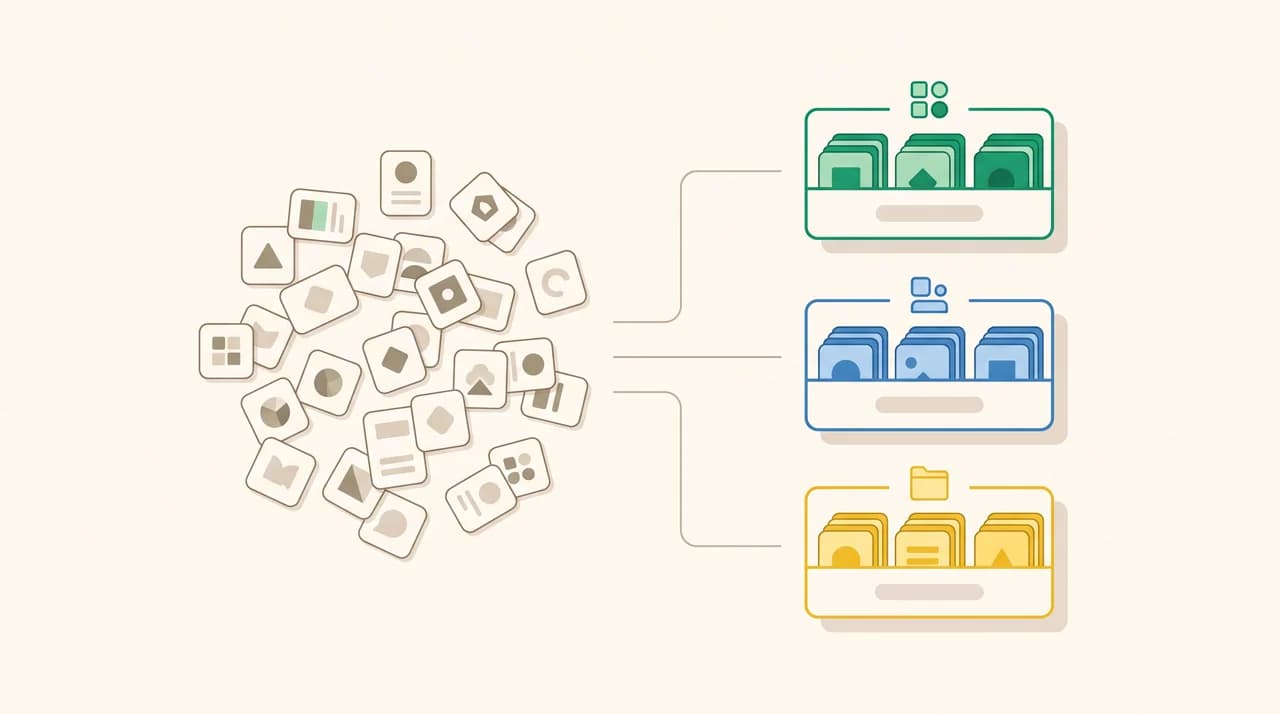
| Platform | How to find sent mail | Date filter | Watch out for |
|---|---|---|---|
| Gmail | Type in:sent in the search bar, or click Sent in the left sidebar | Add after:YYYY/MM/DD to the search string, or use the date range field in the search options panel | Thread replies you sent also appear — check you initiated the thread, not just responded to it |
| Outlook (web) | Click Sent Items in the left folder list | Use the Sort dropdown at the top of the list and choose This week, or sort by Date newest first | Meeting responses and calendar invites appear here — skip them unless they represent real coordination work |
| Outlook (desktop) | Click Sent Items in the folder pane on the left | Use the search bar with Sent: This week, or sort by Date and scroll to Monday | Search indexing can be slow on large mailboxes — allow a few seconds for results to finish loading |
| Apple Mail | Click Sent in the sidebar under the account name | Sort by Date Sent descending and scroll to the start of the week | Multi-account setups show a separate Sent folder per account — check each one if you use more than one address |
| Fastmail / other IMAP | Open the Sent or Sent Messages folder in your client | Sort by date, or use the client search with a date qualifier | Folder names vary by provider — look for the sent-envelope icon if the name is not obvious |
What to do when the output is wrong#
The most common failure is a bullet that sounds plausible but describes something you did not send. The constraint in the prompt is the main guard against this, but models occasionally fill a thin section with a reasonable-sounding inference rather than leaving it short. If that happens, prepend the phrase use only the emails I listed — no inferences to your input list and re-run.
A few other failure modes come up often enough to be worth naming upfront so you know the fix before you hit them.
- The model invents a bullet you did not email about. Strengthen the constraint by prepending do not infer, do not extrapolate to your list, then re-run. If the problem persists in the same session, start a fresh conversation — earlier context sometimes leaks in.
- The output is too long. Ask in a follow-up message: shorten each bullet to one line and limit the whole update to eight bullets. Most models will revise in the same conversation without needing a full re-run.
- The section labels do not match your team's vocabulary. Edit the prompt before you run it — replace shipped with completed, in-flight with in progress, blocked with waiting on others, or whatever your team actually uses.
- The email list is too thin to fill all three sections. This is not a prompt problem — it means your real work happened in meetings and calls rather than email. Add those items manually as bullets after reviewing the AI output. A hybrid of email-visible work and off-email context is usually more accurate than either source alone.
The review step is not optional
A faster way, if you use AI Emaily#
The manual process above works well as a weekly habit. Four minutes is a real investment and the output is reliable when you follow the steps. But if you run this update every week, the repetitive part is always the same four moves: open sent, write the list, paste the prompt, review.
We build AI Emaily, an AI-native email client that connects to Gmail, Outlook, and any IMAP mailbox. Its Living Brief feature does the list-building step automatically, compiling a running summary of the threads you touched each week across your sent and received mail. Instead of opening your sent folder and writing out each item by hand, you ask your inbox what happened. The structured output — shipped, in-flight, blocked — is ready without the copy-paste loop, and it draws on both what you sent and what arrived, so nothing falls through because it happened over email you received rather than sent.
AI Emaily offers a 7-day free trial on every plan. You can review what each plan includes and see AI Emaily pricing at aiemaily.com/pricing. The Living Brief is available from the first day of the trial.
Frequently asked
See it in AI Emaily
Keep reading
Sources

Written by
Nafiul HasanNafiul Hasan is an entrepreneur and AI automation system builder with 10+ years of experience turning messy, manual workflows into reliable automated systems. He designs and ships AI enterprise solutions end-to-end — the agent logic, the data plumbing, and the product people actually use — and founded AI Emaily to give busy professionals their attention back. He writes here from the builder's seat: what works, what breaks, and how to put AI to work without giving up control.