Android Work Profile Email: Two Inboxes on One Phone

The short answer
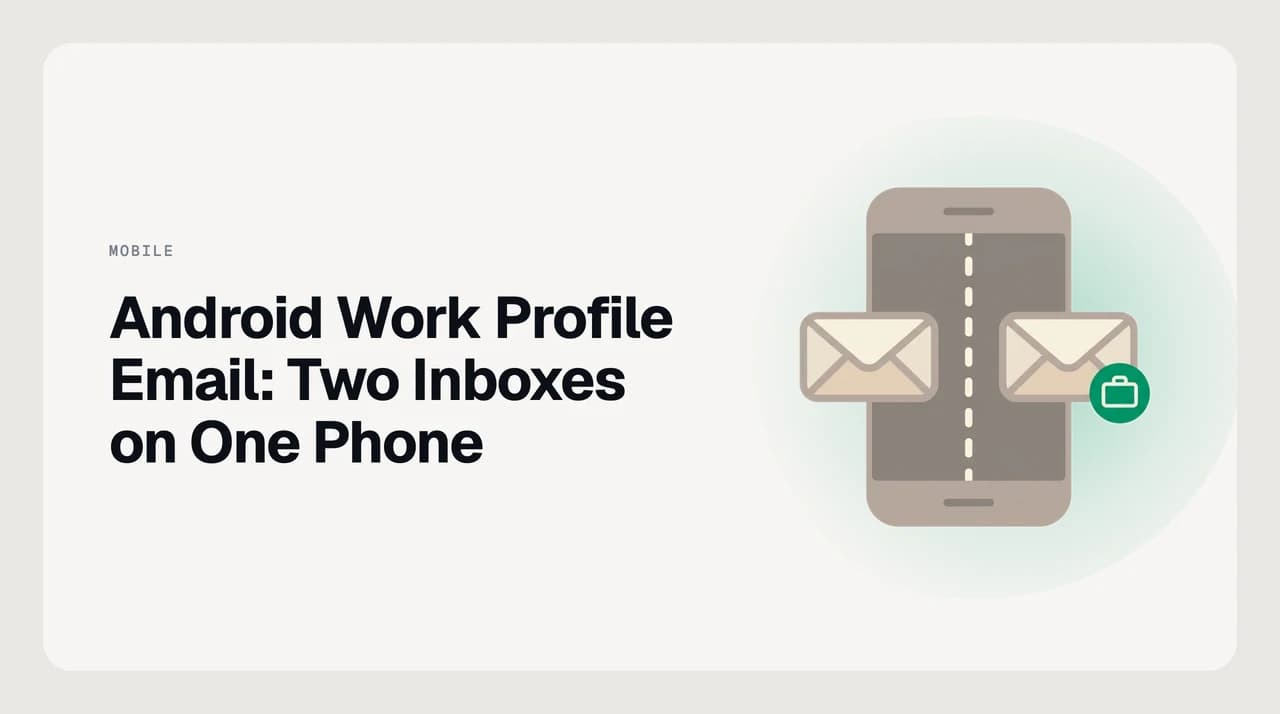
Your Android work profile creates a separate, IT-managed container on your phone, giving your employer's Gmail or Outlook app its own isolated install. The two inboxes cannot be merged because Android's inter-profile data policy keeps work and personal data apart — that separation is the security guarantee the BYOD model is built on.
Android work profile creates a separate, IT-managed inbox. Here is why you have two Gmail apps, why you cannot merge them, and how to fix notification problems.
On this page
- 01What is an Android work profile?
- 02What you need before you start
- 03How to add work email to your Android work profile
- 04Android and Samsung: what changes between them
- 05Why you cannot combine work and personal email on Android
- 06What your employer can and cannot see
- 07What happens when you pause your work profile
- 08How to remove the work profile from your Android phone
- 09A faster way to manage both inboxes
Two Gmail icons. A small briefcase badge on one of them. If your company recently enrolled your personal Android phone in its mobile device management system, or issued you a work device with a BYOD allowance, that is what you are looking at. It is not a duplicate install, and it is not a glitch.
Android work profile creates a separate, encrypted container on your phone for everything work-related. Your employer controls that container independently from your personal side. The android work profile email separate inbox is a deliberate feature of Android Enterprise — the work Gmail or Outlook app inside the container is a distinct install connected to your work account, kept deliberately apart from the personal app you already had.
This guide explains why the two inboxes exist, answers the most common follow-up questions — can they be merged, what can IT see, what happens when you pause the profile — and walks through fixes for the most common problems, including notifications that stop without warning.
What is an Android work profile?#
An Android work profile is an encrypted, policy-governed partition that runs alongside your personal Android environment on the same device. Your IT administrator provisions it through a mobile device management platform — Google endpoint management, Microsoft Intune, VMware Workspace ONE, or similar — and controls which apps are installed, which data can leave the container, and which security policies apply inside it.
Every app inside the work profile carries a small briefcase icon. Data created inside those apps stays inside the container. You cannot copy a work email attachment directly to your personal Google Drive, for example, unless your IT policy explicitly permits that transfer. And the work Gmail app cannot read your personal Gmail threads, contacts, or sent mail — the isolation runs in both directions.
The design goal is BYOD: bring your own device. Your employer gets a hardened, audit-ready container for company communications. You keep full control of your personal side. IT can remove the work profile remotely — deleting the work Gmail, calendar, and contacts with it — without touching your photos, messages, or personal apps. That is the fundamental trade-off the architecture is built on, and it explains why the two Gmail apps cannot be merged: merging would destroy the security boundary that makes BYOD viable.
Work profile versus fully managed device
What you need before you start#
Work profile setup almost always begins on your employer's side. You receive an enrollment invitation, a QR code, or a link to your company's MDM portal from IT. You do not provision the work profile yourself — IT provisions it, and the work email app appears automatically once your account is enrolled.
If your company uses Google Workspace, the work profile installs a separate Gmail app connected to your work Google account. If your company uses Microsoft 365, it typically installs Outlook — or a policy-managed Outlook variant — instead. The same isolation logic applies in both cases.
- Android 8.0 minimum; Android 11 or later recommended for the full modern work profile feature set
- An enrollment invitation, QR code, or MDM portal link from your IT team
- Your work email address and credentials
- Any MDM enrollment app your company requires — such as Microsoft Intune Company Portal or VMware Workspace ONE Intelligent Hub
How to add work email to your Android work profile#
If the work profile is already provisioned but you need to add or reconnect a work email account, the path runs through the work side of Settings, not the personal side. Adding an account on the personal side puts email only into the personal Gmail app, not the work one.
- 1
Open Settings and find the Work section
Go to Settings, then Accounts (or Users and accounts on some Android versions). Look for a Work tab or Work profile section — it appears only after the profile has been provisioned. On Samsung, you may find it under Settings then Biometrics and security then Work profile.
- 2
Tap Add account inside the Work section
Make sure you are in the Work section, not the Personal one. The account you add here is placed inside the work container and will appear in the work Gmail or work Outlook app — not your personal email apps.
- 3
Choose your account type
Select Google for a Google Workspace account, Exchange for Microsoft 365 or an on-premises Exchange server, or IMAP/POP3 for other providers. Some MDM policies restrict which account types are permitted — contact IT if an option is missing.
- 4
Sign in with your work credentials
Enter your work email address and password. If your company uses single sign-on, you may be redirected to a browser login or an authenticator prompt. Multi-factor authentication challenges are normal here.
- 5
Wait for the inbox to sync
Your work email should appear in the work-profile Gmail or Outlook app within a few minutes. If it does not, confirm the account appears under the Work section in Settings, and check that your MDM policy has not blocked that account type.
Android and Samsung: what changes between them#
The core work profile behavior is defined by the Android Enterprise standard, so it is consistent across devices. Samsung's One UI adds its own layer on top, which changes a few details in day-to-day use.
| Feature | Stock Android | Samsung (One UI) |
|---|---|---|
| Briefcase badge on work apps | Yes | Yes |
| Separate Work tab in app drawer | Yes | Yes, within Samsung's app drawer |
| Quick toggle to pause work profile | Settings then Work profile toggle | One-tap tile in notification shade |
| Secure Folder | Not available | Separate Samsung-specific feature — user-controlled, not IT-provisioned; not the same as a work profile |
| Knox security layer | Not available | Hardware-backed layer; some enterprise MDM policies require Knox attestation |
| Remote wipe of work profile by IT | Yes | Yes |
| Battery usage shown separately for work profile | Varies by Android version | Yes, visible in Samsung Battery settings |
Why you cannot combine work and personal email on Android#
This is the question that brings most people here. The direct answer is: you cannot, by design.
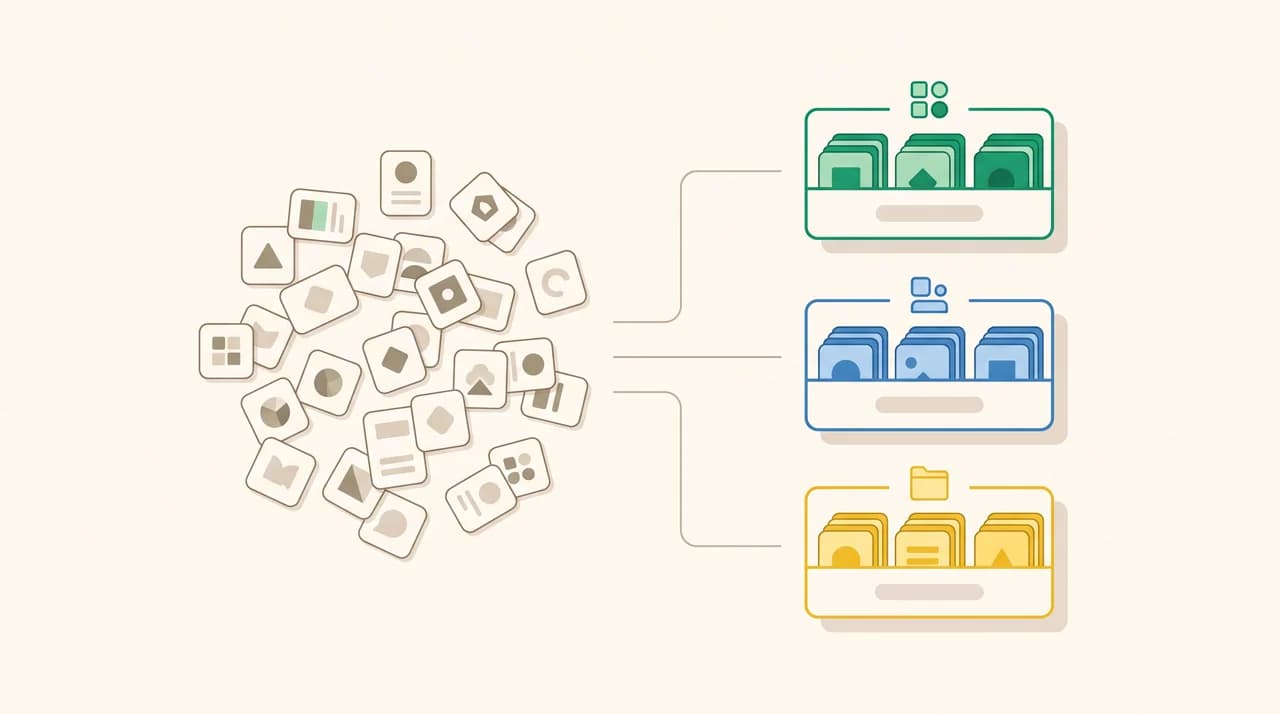
The work profile and personal profile are separate Android processes with separate storage, separate credential stores, and an enforced data firewall between them. Android does not provide an API that lets a personal-side app read directly from the work container, because doing so would break the security guarantee the model rests on.
Several third-party email clients have attempted to build a unified inbox across both profiles. The wall they hit is Android's inter-profile intent policy. A personal-side app cannot pull data from a work-profile app without IT explicitly configuring cross-profile intent filters in the MDM policy — something most corporate security configurations do not permit, and something you cannot change yourself as an employee.
The most common IT-approved path, where policy allows it, is a server-side email client your IT team has authorized. Because that client holds credentials for both accounts at the server level rather than crossing the Android data boundary, it can show both inboxes together without violating work profile isolation. Whether your employer allows third-party clients for work accounts depends on your MDM configuration — check with IT before connecting any client to your work account.
What your employer can and cannot see#
The work profile firewall runs in both directions. Your employer's MDM can report on what happens inside the work profile container, but it cannot reach into the personal side of your phone. On a BYOD work-profile device, your personal Gmail, personal messages, personal photos, and personal apps are private to you.
| Your employer can see | Your employer cannot see |
|---|---|
| Apps installed inside the work profile | Apps installed on your personal side |
| Work email, calendar, and contacts connected via the MDM | Your personal Gmail threads, contacts, and sent mail |
| Device compliance status: OS version, encryption state, screen lock enabled | Your personal photos and files |
| Whether the work profile is active or paused | Personal browser history and search history |
| App usage data for work-profile apps, if the MDM policy enables that reporting | Data from personal-side apps |
| Location data from work-profile apps, if the MDM policy explicitly enables it | Location data from personal-side apps |
One exception worth knowing
What happens when you pause your work profile#
Pausing the work profile is Android's built-in way to switch off from work without deleting anything. When you pause: work apps stop running, work email notifications stop, and work apps appear dimmed in the app drawer. Nothing is deleted. When you un-pause, apps resume and email syncs from where it left off.
To pause on stock Android, go to Settings, then Work profile, and toggle it off. On Samsung, there is a Work mode tile in the notification shade — one tap to pause, one tap to resume.
The most common question about pausing is why notifications stop. They stop because the work Gmail app runs inside the work profile container, and when the container pauses, the process stops. No process means no notifications. This is correct behavior, not a bug. Un-pausing the profile restores them.
If notifications stop without you pausing the profile manually, check three things in this order. First, Android battery optimization: adaptive battery and doze mode can kill background sync for apps that Android has not seen recent activity from. Second, your MDM policy: IT may have configured quiet-hours rules that block work notifications during certain hours. Third, remote management: your IT admin may have paused the work profile remotely through the MDM console.
Fix disappearing notifications with battery settings
How to remove the work profile from your Android phone#
Removing the work profile deletes everything inside it: work email, work apps, and all data downloaded through those apps. Your personal side is untouched. This is the standard step when leaving a job, returning a company device, or disenrolling from BYOD.
- 1
Stock Android
Go to Settings, scroll to Work profile, and tap Remove work profile. Confirm the prompt. The work apps and all work data are removed immediately.
- 2
Samsung (One UI)
Go to Settings, then Biometrics and security, then Work profile. Tap Remove work profile and confirm.
- 3
If the Remove option is not visible or is locked
Some MDM policies prevent employees from removing the work profile themselves. If you cannot find the option, contact IT — they can remove the work profile remotely through the MDM console.
A faster way to manage both inboxes#
Once work email is flowing, the daily friction remains: two apps, two notification badges, two inboxes to check. For people who move between work and personal threads throughout the day, that context-switching adds up across the week.
We build AI Emaily, an AI-native email client that connects to Gmail, Outlook, and IMAP accounts and holds multiple accounts in one triage view. On Android it runs as a PWA — install it from your browser to your home screen and it works offline for reading and drafting; a native Android app is on the roadmap. Where your IT policy permits third-party email clients for work accounts, you can connect both your work account and your personal account to AI Emaily so both streams arrive in one place. Replies are drafted in your voice using a user-set Context brain — a profile you control, not something that reads your past mail.
The same MDM caveat from earlier applies: connecting a work account to any third-party client requires IT authorization. Check your policy first. A 7-day free trial is included on all plans — see AI Emaily pricing for details.
Frequently asked
See it in AI Emaily
Keep reading

Written by
Nafiul HasanNafiul Hasan is an entrepreneur and AI automation system builder with 10+ years of experience turning messy, manual workflows into reliable automated systems. He designs and ships AI enterprise solutions end-to-end — the agent logic, the data plumbing, and the product people actually use — and founded AI Emaily to give busy professionals their attention back. He writes here from the builder's seat: what works, what breaks, and how to put AI to work without giving up control.