Best Email Client for Executive Recruiters (2026): 7 Picks

The short answer
For a retained executive recruiter, the best email client handles months-long candidate threads confidentially, drafts follow-ups in your voice, and never sends without your approval. AI Emaily is our pick — it triages by client engagement and search, sends nothing without you, and does not train on your mail.
Best email client for executive recruiters: sort confidential retained-search threads by client, draft long-horizon follow-ups, require approval before send.
On this page
- 01The short answer: which client should a retained recruiter actually buy?
- 02How we compared
- 03Comparison table
- 04The tools
- 051. AI Emaily
- 062. Shortwave
- 073. Superhuman Mail
- 084. Missive
- 095. Front
- 106. Fyxer
- 117. Serif
- 128. Google Workspace + Gmail
- 13How to choose for your situation
- 14A note on what an email client cannot do for you
An executive recruiter's inbox is not a volume funnel. It is a small number of high-stakes relationships — a retained client who is paying for discretion, a longlist of thirty candidates most of whom are currently employed elsewhere, and a search that runs three to six months from kickoff to placement. A misfiled thread, a wrong-CC to a candidate's current employer, or a follow-up that never went out because it lived under an unread flag can end a placement fee and a relationship in one afternoon.
This guide compares seven email clients and one overlay that retained search and headhunting firms actually consider, ranks them for the confidential long-horizon workflow, and names the reader who should skip our pick and buy one of the others. No competitor prices are printed — packaging shape only — because the numbers on those pricing pages change more often than this post gets updated. Verify current tiers on the vendor's own page before you commit.
The short answer: which client should a retained recruiter actually buy?#
If you run three to eight active retained searches at a time, work across Gmail, Outlook or a hosted IMAP account, and need discretion baked into the tool rather than bolted on with self-discipline, the client that does the most for a headhunter's day is AI Emaily. It reads the mailbox you already have, groups threads per client and per search with rules you can teach it in one sitting, drafts candidate follow-ups in your voice from a Personal Context brain and per-client profiles, and never sends anything without your one-tap approval. It does not train on your mail. We build AI Emaily, which is why it leads this list — and we name where it is the wrong answer further down.
Shortwave has built harder on Gmail-native archive search and threading than we have, and for a solo recruiter whose entire book of business lives inside a single Gmail account that is a real advantage. If your firm coordinates every candidate touchpoint through a partners@ or research@ shared address rather than individual inboxes, Missive or Front is a shared-inbox platform first, and that is a genuinely different job than what a personal-inbox client does. We rank ourselves first for the general retained-search case; we do not rank ourselves first for those two.
How we compared#
The axis that decides this category is not features on a grid. It is what happens to a candidate thread that has gone quiet for eleven weeks while the search committee makes up its mind, and whether the tool brings it back to your desk on the right Wednesday with a draft that reads like you wrote it. A recruiter's client solves four problems at once: it groups mail by client engagement (not by sender), it handles months-long silence without dropping the thread, it drafts routine correspondence in a voice the reader will not clock as machine-written, and it never lets you send something you have not read.
We evaluated each tool on documented capability against its own live vendor page as of August 2026. Where a vendor does not publish a capability, we say it is not published rather than guess. We do not print competitor prices, ratings or review counts because those move fast and are not the reason a headhunter picks a client; each entry describes packaging shape — free tier, trial, per-seat, usage-metered — so you know what to expect when you check the vendor page yourself.
- Confidentiality posture — does the vendor commit to not training on user mail, and is that the default rather than a paid tier?
- Client-and-search grouping — does mail sort by engagement (a search × a client × a longlist), or only by sender and label?
- Long-horizon follow-up — can the tool snooze a candidate thread out three months and surface it with context intact?
- Voice drafting — does routine correspondence get drafted in your voice, and does it hold for your approval before send?
- Provider coverage — does it work on Gmail, Outlook and IMAP, or force one back-end?
- Audit and undo — is every action logged and reversible, in a role where a wrong-CC has career consequences for the candidate?
Confidentiality is a product setting, not a policy page
Comparison table#
The row order matches the tool order below. Packaging shape is described qualitatively; check the vendor's live page for the current number before you commit.
| Tool | What it is | Providers | Client-and-search grouping | Approval-before-send | Packaging shape |
|---|---|---|---|---|---|
| AI Emaily | AI-native email client with an agent | Gmail, Outlook, any IMAP | Yes — via rules, Context Brain and per-client profiles | Yes — Copilot by default, Autopilot within rules | 7-day free trial on Pro or Autopilot, card taken, $0 if you cancel by day 7; lifetime deal available |
| Shortwave | AI-native Gmail client | Gmail only | Via labels, threads and semantic search | AI drafts; send is manual | Paid tiers with a trial — check vendor page |
| Superhuman Mail | Speed-focused mail client (Grammarly-owned) | Gmail, Outlook | Via splits, reminders and follow-up nudges | Manual send with keyboard workflow | Per-seat monthly; the Superhuman Suite is a separate bundle |
| Missive | Shared-inbox platform with email + chat | Gmail, Outlook, IMAP, others | Via conversations and shared labels | Manual send with team collaboration | Per-seat tiers with a free option — check vendor page |
| Front | Shared-inbox / customer-communication platform | Gmail, Outlook, and channels beyond email | Via tags, workflows and shared drafts | Manual send; AI Copilot is a paid add-on on lower tiers | Three tiers, per-seat, seat caps below Enterprise |
| Fyxer | AI overlay for Gmail/Outlook (not a client) | Gmail, Outlook | Via existing folders and its triage | Drafts replies, meeting notes | Paid subscription — check vendor page |
| Serif | Autonomy-focused AI email | Gmail, Outlook (verify current) | Rules-based | Autonomy is the pitch | Five tiers; usage-metered, unit not published; 7-day trial |
| Google Workspace + Gmail | Baseline: Gmail with labels, filters and Confidential Mode | Gmail | Manual labels and filters | Everything manual | Per-seat monthly; the everyone-already-has-it baseline |
The tools#
Each entry below covers what the tool is, where it fits a headhunter's day, and where it is the wrong answer. The deepest capability commentary sits on the top of the list and the two shared-inbox platforms, because those are the entries a retained recruiter is most likely to be seriously weighing against each other.
1. AI Emaily#
AI Emaily is an AI-native email client that connects to Gmail, Outlook and any IMAP mailbox. That matters for a retained recruiter because the accounts you work across — your own, a firm-branded address, sometimes a research analyst's account — are rarely all on the same provider, and a client that forces a migration in the middle of an active search is not a client you will finish onboarding. We build AI Emaily, which is why it leads this list. The reasons it earns the top slot for a headhunter are concrete, not just placement.
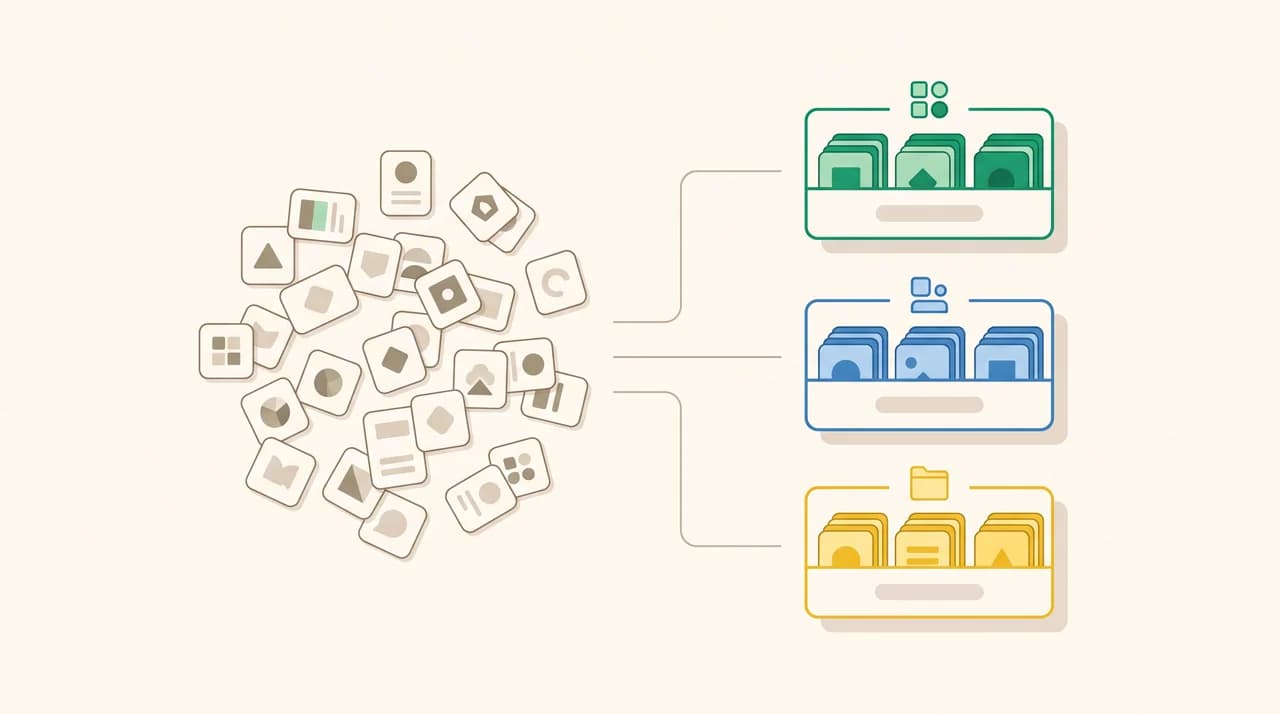
The Context Brain is where a retained recruiter gets the most leverage. AI Emaily's voice drafting is not a generic model that has read your sent folder; it is a user-set Personal Context brain plus per-client profiles that you write to, which means the follow-up to a partner at Blackwater Capital reads differently from the follow-up to a candidate you have been courting for six months. You teach it, once, that Search 042 is Blackwater's CFO search, that certain candidate domains are private and never CC'd, that the shortlist reads on Fridays. From there the mail sorts itself by client and search, and the agent view is per engagement rather than per sender.
The control model is what makes it safe for a confidential search. Manual mode drafts, you send. Copilot mode drafts and holds for your one-tap approval — the default posture for candidate correspondence, because a status update sent to the wrong address is a career hazard for the candidate and a reputational hit for you. Autopilot can send within rules you set (an internal "received, will review" acknowledgement to a research analyst, for example) while forcing anything touching a candidate, a client or a fee outside your allowlist. Every action is logged in a full audit trail and every send has an undo. No training on user mail is the default. Packaging is a 7-day free trial on Pro or Autopilot, card taken, $0 charged if you cancel before day 7, plus a lifetime deal — see the AI Emaily pricing page for the current number. Honest limits: it is an Electron desktop app rather than a native Swift client, it is Apple Silicon only on Mac, and on Android it is a PWA rather than a native app. If those are hard blockers, one of the tools below is the better answer.
2. Shortwave#
Shortwave is an AI-native mail client built by ex-Google engineers, and it is Gmail-only. For a solo headhunter whose whole book of business sits inside a single Gmail account, that constraint is a feature: threading and search are built on top of Gmail's own structure, and Shortwave has built harder on Gmail archive search and semantic recall than we have. If you type "the last note from the Rothko search committee about the finalist's compensation" into Shortwave, the answer arrives fast, and for a recruiter whose institutional memory lives in a five-year Gmail archive that is a real edge.
Where it costs a retained recruiter is coverage and control. It does not connect Outlook or IMAP, so a headhunter who works across a personal Gmail and an Outlook firm account is stuck running two clients. Drafting is AI-generated but the send action stays manual — fine for a recruiter, but you do not get a rules-bound Autopilot for the routine acknowledgements. Packaging is paid tiers with a trial; check the vendor page for the current number, because published reviews still describe a free plan the live page does not show.
3. Superhuman Mail#
Superhuman Mail is the fast keyboard-first mail client that Grammarly acquired in July 2025; in October 2025 Grammarly renamed the parent company to Superhuman, which means the name now covers two different products — Superhuman Mail (the client) and the Superhuman Suite (the bundle). If a recruiter is looking at Superhuman today, this is which one you actually want: the Mail client, not the Suite. Verify the current shape on superhuman.com because the split is still settling.
It supports Gmail and Outlook, and its splits, reminders and follow-up nudges can approximate a per-search view for a disciplined user. What it does not do is treat a retained search as a first-class concept — it is a fast individual mail client aimed at an executive processing a large personal inbox by keyboard. A recruiter with muscle memory for keyboard triage will feel at home; a recruiter who wants an agent that drafts "circling back on our conversation from May" in their voice is buying the wrong tool. Packaging is per-seat monthly with a business tier — check the current vendor page.
4. Missive#
Missive is a shared-inbox platform that combines email with chat threads on the same message. For a boutique retained-search firm where two partners and a researcher share a single searches@ address and want to comment beside the client conversation rather than forward and CC, Missive's model is a genuinely different job than a personal-inbox tool does. It connects Gmail, Outlook, IMAP and other channels, which is unusually flexible for its category.
Where it is the wrong answer for a retained recruiter is when the sensitive part of the work — candidate correspondence — should stay on your personal address rather than in a shared queue everyone else on the team can read. Confidentiality inside the firm is a real constraint for retained work: not every researcher should see every candidate. Packaging is per-seat with a free option; verify current tiers on the vendor page. Pick this if the whole search team lives in the same inbox and the confidentiality boundary sits at the firm rather than at the individual.
5. Front#
Front is a shared-inbox and customer-communication platform with three tiers — Starter, Professional and Enterprise. Starter is one channel type only (email or chat or SMS, not combined), capped at ten automation rules and ten seats. Professional adds omnichannel, more rules and up to fifty seats. Enterprise is uncapped. The AI Copilot, QA and CSAT features are paid add-ons on Starter and Professional, and are included only on Enterprise. Contracts over $25,000 require a mandatory onboarding package. Annual billing is roughly a quarter below monthly.
For a large retained firm running a searches@ or research@ address across a dozen partners, Front is the most enterprise-ready option in the roundup — approvals, reporting and the wider integrations catalogue are all there. For a solo headhunter or a two-partner shop, the seat caps and the add-on structure make it heavier than the job requires. Pick this if your firm already runs on Front for adjacent workflows, not as your first email tool for a small practice.
6. Fyxer#
Fyxer is an AI overlay for Gmail and Outlook — not a mail client, but a layer that sits on top of the client you already use, triaging mail and drafting replies. For a recruiter who does not want to change interfaces, an overlay is the shortest path from "nothing" to "replies drafted for me". The trade-off is the one every overlay makes: you inherit the client's model of the world — folders, labels, threads — rather than getting a new one.
For a recruiter who wants client-and-search grouping, an overlay's ceiling is whatever the underlying client can express, which for vanilla Gmail is labels applied by rule. Fyxer's meeting-notes feature is genuine and useful for kickoff calls and debriefs. It also cannot enforce approval-before-send in the way a client can, because it does not own the send button. Pick Fyxer if you love your Gmail or Outlook exactly as it is and want drafting on top; skip it if the client itself is the bottleneck. Packaging is a paid subscription; verify current tiers on the vendor page.
7. Serif#
Serif positions on autonomy — the pitch is that it acts, not that it drafts. Its live pricing page shows five tiers (Lite, Standard, Pro, Team, Enterprise) with a 7-day full-access trial on every tier. Lite, Standard and Pro are flat monthly rather than per-seat; only Team is per-user; Enterprise is custom. The tiers are separated by usage multiples — Standard is described as five times the usage of Lite, Pro as twenty times — and the page does not publish what one unit of usage is. For a recruiter, that matters practically: the price is published but the meter is not, so you cannot cost out a month at your actual volume until you have run one.
The autonomy pitch is the interesting differentiator if you want a machine to send routine internal acknowledgements without checking in. It is also where the risk lives for retained work — a fiduciary role should not put an unattended sender in front of a candidate under any circumstance, and "an allowlist" is the minimum guardrail. Pick Serif if unattended send is the specific reason you are shopping; verify the tier and the meter on the vendor's live page before you commit.
8. Google Workspace + Gmail#
The honest baseline: many recruiters run their entire practice inside Gmail with labels, filters and Confidential Mode, and that is not a wrong answer for a light book. Filters can label mail by keyword, sender or domain, search is fast, and Confidential Mode lets you send messages with an expiration date and revocable access — useful for shortlists you would rather not live in a client's archive indefinitely. See Microsoft Support — Outlook help & learning for the equivalent controls if your firm is on 365; see SHRM's talent-acquisition resources for the wider hiring stack context.
Where Gmail alone stops paying rent is at volume and at silence. A retained recruiter with six active searches and a candidate whose last reply was eleven weeks ago will let the follow-up slip if the only cue is an unread flag. Everything above this row is really a way to automate the labelling and the timed follow-ups that vanilla Gmail leaves to you. Stay on Gmail alone if your caseload is small, your label discipline is strong, and adding another subscription is not worth it. Move the moment either half of that stops being true.
How to choose for your situation#
The right pick depends on three variables: how many active retained searches you run, whether the sensitive part of the work lives on your personal address or a shared queue, and how much you are willing to trust a machine to send unattended.
- 1
Solo recruiter, personal inbox, three to eight active searches
This is the classic retained shape, and it is where an AI-native personal-inbox client earns its keep. AI Emaily is our pick because client-and-search grouping via rules and per-client profiles, plus approval-before-send drafting from a Personal Context brain, is exactly the pattern a headhunter's day needs. If you are entirely in Gmail and want the fastest keyboard triage on a single account, Shortwave is the honest alternative.
- 2
Two-partner boutique firm sharing a searches@ address
If the sensitive work lives in the shared queue and everyone on the team should see everything, Missive is the right shape and it is the lightest way in. If you need approvals, reporting and enterprise controls, Front is stronger but heavier. AI Emaily is a personal-inbox client, so this is a case where the honest answer is one of those two.
- 3
Recruiter who wants an overlay, not a new client
Fyxer is the shortest path from your current Gmail or Outlook to drafted replies. You will hit an overlay's ceiling on client-and-search grouping — you inherit the client's labels — so treat this as an assist for kickoff notes and routine replies rather than a system for running the search.
- 4
Recruiter who wants unattended send for internal acknowledgements
AI Emaily's Autopilot can do this within rules you set, and every send is logged and reversible; keep the allowlist narrow and never include candidate or client addresses in it. If autonomy is the specific reason you are shopping, Serif is positioned there too; verify the usage meter on their live page before you commit, because the price is published and the unit is not.
- 5
Recruiter who wants to change nothing
Gmail with labels, filters and Confidential Mode will get you a long way if your caseload is small and your discipline is strong. Set up a per-search label, a per-role sub-label (Client, Candidate, Reference, Internal) and a saved-search shortcut per active engagement. When you cannot keep the labels current by hand, that is the signal to go back up this list.
A note on what an email client cannot do for you#
None of the tools above is an applicant tracking system. They do not replace Invenias, Clockwork, Thrive, Bullhorn or whichever database your firm runs its longlists in. The job of the email client is upstream of the ATS: it is where the client, the candidate, the reference and the research analyst actually talk to you, and where a slipped follow-up first appears as a message you did not read on the right Wednesday.
The reason to invest in the email layer is that most lost placements start as an email that landed in the wrong place, a status update drafted at midnight with the wrong compensation figure, or a candidate who went silent for three months and never got the check-in that would have re-opened the conversation. Fix the email layer and a large share of the failures that show up in the ATS never happen at all.
Frequently asked
See it in AI Emaily
Keep reading

Written by
Nafiul HasanNafiul Hasan is an entrepreneur and AI automation system builder with 10+ years of experience turning messy, manual workflows into reliable automated systems. He designs and ships AI enterprise solutions end-to-end — the agent logic, the data plumbing, and the product people actually use — and founded AI Emaily to give busy professionals their attention back. He writes here from the builder's seat: what works, what breaks, and how to put AI to work without giving up control.