Best AI Email Assistant for Technical Recruiters (2026)

The short answer
For a technical recruiter running dozens of live candidate conversations, the best AI email assistant is the one that keeps every thread answered without flattening it into a template. AI Emaily is our pick: Gmail, Outlook and IMAP in one inbox, drafting from a context brain you write, with approval, undo and an audit log.
The best AI email assistant for technical recruiters in 2026: 7 picks ranked on candidate context, follow-up recovery, scheduling churn and send approval.
On this page
- 01The short answer: which assistant a technical recruiter should pick
- 02Why most tech-recruiting tool lists rank the wrong category
- 03How we compared these tools
- 04Best AI email assistants for technical recruiters at a glance
- 051. AI Emaily — best overall for a technical recruiter
- 062. Superhuman Mail — best for keyboard speed
- 073. Shortwave — best if everything lives in Gmail
- 084. Missive — best when a coordinator shares your address
- 095. Fyxer — best if you cannot change tools mid-search
- 106. Outlook and Microsoft 365 — best inside a Microsoft shop
- 117. Gmail with Google Workspace — the free baseline
- 12Where each one falls down
- 13Keeping a candidate warm without sounding like a template
- 14What AI email assistant works with an ATS?
- 15How to choose for your situation
- 16The verdict
The best AI email assistant for technical recruiters is not the one that writes the most outreach. It is the one that lets you answer everybody who already replied, at the stage they are actually at, without every message reading like the same mail merge.
You are running eleven candidates across four reqs. Three are mid-loop, one is waiting on a take-home review, one went quiet after the onsite, and a req just changed shape because the team decided it wants Go rather than Kotlin.
Search this phrase and you mostly get applicant tracking systems and sourcing platforms. Neither is the inbox where the conversation happens, which is the first section below. We build AI Emaily and it is our number one pick here — every entry states its limits, and we name the category that beats us outright.
The short answer: which assistant a technical recruiter should pick#
There is no single winner, because tech recruiters work in different shapes: in-house on four reqs, agency across five client domains, or embedded in a Microsoft-only enterprise.
- Best overall, and our pick: AI Emaily — Gmail, Outlook and IMAP in one inbox, quiet threads chased, nothing sent without approval.
- Fastest by hand: Superhuman Mail, now part of the renamed Superhuman company, not the independent startup older reviews describe.
- Everything in Gmail: Shortwave, for plain-language search across years of candidate history.
- A coordinator shares your address: Missive, so nobody replies to the same candidate twice.
- No appetite to switch mid-search: Fyxer, an overlay that leaves your inbox where it is.
- Microsoft shop: Outlook, because Copilot is bundled and IT already trusts it.
- Free baseline: Gmail with Google Workspace, configured further than most recruiters bother to.
Why most tech-recruiting tool lists rank the wrong category#
An ATS such as Greenhouse, Lever or Ashby owns the pipeline record: stages, scorecards, feedback, offer, compliance. A sourcing platform such as Gem or hireEZ owns finding people and running multi-touch cold sequences at them. Both are legitimate products. Neither is your inbox.
There is a structural reason that matters. Outbound sequencers are built to stop the moment somebody replies, because continuing to send at a person who answered is the worst thing a cadence can do. So the tool that reached the candidate hands the conversation back to your mailbox exactly when it starts counting — the screen, the panel logistics, the take-home, the reschedule, the honest status update.
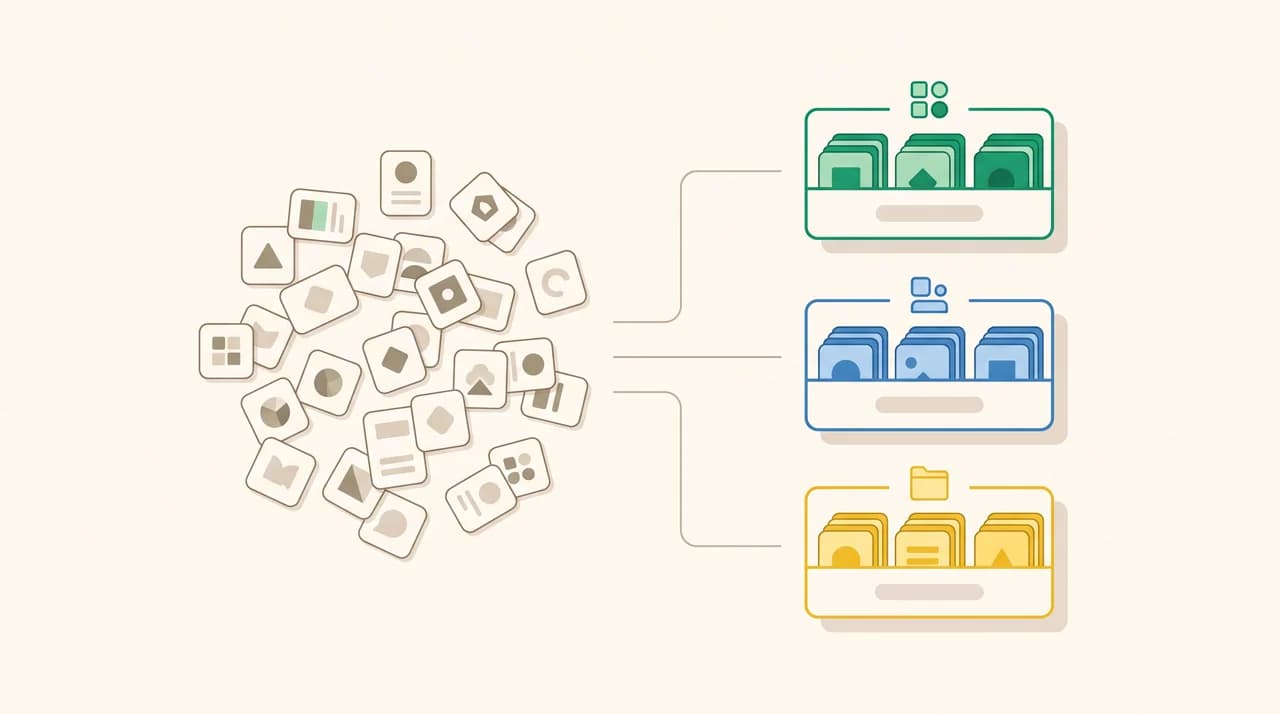
| Category | What it owns | Where the recruiter sits in it | Examples |
|---|---|---|---|
| Applicant tracking system | The pipeline record: stages, scorecards, feedback, offer | Updating it after the conversation happened elsewhere | Greenhouse, Lever, Ashby, Workday |
| Sourcing platform | Finding candidates and running cold sequences | A separate app, until somebody replies and it stops | Gem, hireEZ, SeekOut |
| Email client | The inbox: read, triage, thread, reply, search | All day, on every live candidate | AI Emaily, Superhuman Mail, Shortwave, Outlook, Gmail |
| Shared team inbox | One address several people answer, with assignment | Threads a recruiter and a coordinator both touch | Missive, Front |
| Inbox overlay | Triage and drafting inside your existing inbox | Inside Gmail or Outlook, unchanged | Fyxer |
| Scheduling tool | Booking the interview and absorbing reschedules | A link pasted into a thread you still have to write | Calendly, your ATS's scheduling module |
How we compared these tools#
This is a capability comparison built from vendor documentation and public product pages checked in July 2026. We did not run seven inboxes side by side through a hiring cycle, and any roundup claiming it did deserves suspicion.
No competitor prices, ratings or review counts appear here. This category repriced itself repeatedly over the past year, so check each vendor's own site on the day you buy.
- Per-candidate context — can it draft from notes you wrote, or only from the last message?
- Never-drop — does anything tell you which threads went quiet, and at which stage?
- Scheduling churn — how much of a reschedule or a panel change does the tool absorb?
- Who presses send — approval before send, an undo window, a readable audit log.
- Coverage and privacy — Gmail, Outlook and IMAP, and what the vendor retains or trains on.
Best AI email assistants for technical recruiters at a glance#
Use this to build a shortlist of two. Trialling seven inboxes while four reqs are open is how a search ends with nothing chosen.
| Tool | Works with | Who presses send | Best for the recruiter who… |
|---|---|---|---|
| AI Emaily | Gmail, Outlook / Microsoft 365, IMAP | You in Copilot; gated Autopilot with undo and audit | Runs many candidates at different stages and cannot drop one |
| Superhuman Mail | Gmail, Outlook | You | Clears very high thread volume by hand |
| Shortwave | Gmail / Google Workspace | You | Searches years of candidate history in one question |
| Missive | Gmail, Outlook, IMAP, other channels | A teammate, after the pair agrees | Shares a roles@ address with a coordinator |
| Fyxer | Gmail, Outlook | You, from your normal drafts folder | Will not change interface mid-search |
| Outlook / Microsoft 365 | Microsoft 365, Outlook.com | You | Recruits inside a Microsoft shop with Copilot licensed |
| Gmail + Google Workspace | Gmail / Google Workspace | You | Wants no new tool and will configure it by hand |
1. AI Emaily — best overall for a technical recruiter#
AI Emaily is an AI-native email client that connects Gmail, Microsoft 365 and Outlook, and standard IMAP accounts into one inbox. We build it, which is why it leads this list and why its limits are stated in full. Nothing migrates: your mail stays with your provider.
It runs at three authority levels, set per account. Manual is a plain fast client. Copilot is the default: the agent triages, files and drafts, but nothing reaches a candidate until you approve it. Autopilot is gated, with an undo window and an audit log of every action and its reason.
Two things do the recruiting work. Triage lifts a live candidate reply above application noise, so a staff engineer answering at 11pm does not sit behind sixty job-board alerts. Follow-up chasing watches threads that went quiet and drafts the next message with a real update rather than a hollow nudge.
Drafting voice comes from a Personal Context brain and per-client profiles you write and edit. We do not train on your mail and do not read your archive to imitate you. Write once that this client runs a three-hour system-design loop, and drafts respect it. Model providers run under zero-retention terms.
The limits, plainly: the macOS download is Apple Silicon only, both it and the Windows installer are an Electron shell around the web app rather than a native binary, iOS is native while Android is a PWA, there is no Linux build, and offline is partial by design.
Where an ATS with sequencing beats us outright
2. Superhuman Mail — best for keyboard speed#
Start with the name, because most of what you will read predates the change. Grammarly acquired Superhuman, the email client, in July 2025, then renamed the parent company to Superhuman in October 2025. Superhuman Mail is the client; Superhuman Suite is the wider bundle.
The client is unchanged in character: keyboard-first, built so every action is one keystroke, for people moving through very large thread volume by hand. A recruiter clearing 250 messages a day feels that design immediately.
Check one thing first. AI capability moved into a higher business tier after the acquisition, so confirm the tier you are pricing contains the features you are judging.
3. Shortwave — best if everything lives in Gmail#
Shortwave is an AI-native Gmail client built by former Google engineers, and plain-language search over the archive is its standout capability. Asking your mailbox what a candidate said about compensation eight months ago, and getting the right thread back, is what ordinary Gmail search never learned to do.
Half your context is not in the ATS record. It is in a thread from March: the reason they turned down the last team, the visa timing, the manager they will not work under again.
Two caveats. It is Gmail and Google Workspace only, so a client's Outlook mailbox is out of scope. And as of July 2026 its free plan has narrowed while the founding team's public focus moved toward a separate agent product — a signal to weigh, not a shutdown.
Three questions to ask any AI that can send to a candidate
4. Missive — best when a coordinator shares your address#
Missive is a shared inbox rather than a personal client. Several people work the same address, discuss a thread in an internal chat attached to it, assign an owner, and reply once as the team. It connects to Gmail, Outlook and IMAP.
That fits how a lot of tech recruiting runs. A coordinator books the loop, a sourcer owns the top of the pipeline, and you own the relationship. Without a shared surface the candidate gets two replies in an hour, or none in a week.
The trade-off is overhead. If nobody else answers your candidate threads, the collaboration layer is weight you never use. Pricing is per seat with a small free tier — check Missive's own page.
5. Fyxer — best if you cannot change tools mid-search#
Fyxer is an overlay, not a client. It attaches to Gmail or Outlook and works inside them: sorting what arrives, writing draft replies into your existing drafts folder, and handling meeting notes. Your interface, shortcuts and mobile app are untouched.
The timing argument is real. Week six of a hard search is a bad moment to relearn keyboard shortcuts, and removing an overlay leaves the mailbox exactly as it was.
Two limits. Fyxer meters incoming email volume with overage charges, which falls hardest on the heavy inboxes that most need triage, so model a busy application week against current terms. And an overlay can only do what Gmail and Outlook expose, so it will not unify two providers.
6. Outlook and Microsoft 365 — best inside a Microsoft shop#
If your employer runs Microsoft 365, Outlook is the path of least resistance. Copilot is now bundled into Business Standard and Premium rather than sold separately, so the argument is capability rather than cost.
The transition is widely misreported, so be precise. Microsoft's published model has three stages — opt in, opt out, cutover — with at least 12 months' notice before each reaches production rings, and existing classic installs supported until at least 2029. Anyone saying classic Outlook dies this year is wrong.
What should worry a recruiter is parity on switch day. New Outlook is web-architected, so older COM and VSTO add-ins do not carry across, which is how an ATS sidebar disappears from your workflow overnight. Check your ATS vendor's guidance first.
7. Gmail with Google Workspace — the free baseline#
Gmail configured properly handles more of a recruiting inbox than most recruiters ever set up. Multiple inboxes can pin a panel of candidates waiting on a reply from you. Filters label everything from a client domain. Templates cover the six messages you retype weekly, and schedule send handles a candidate three timezones away.
Google folded Gemini into Business plans rather than selling it as an add-on, so an assistant is already there. It summarises and drafts on request at no extra cost if you already pay for Workspace.
Where it stops is autonomy and coverage. Gmail will not tell you who went quiet after their onsite, will not draft the update, and will not show a client's Outlook mailbox in the same view.
Where each one falls down#
Strengths are easy to list. The limits decide whether you are still using the tool at the end of the quarter.
| Tool | The limit worth knowing | Skip it if |
|---|---|---|
| AI Emaily | No ATS connector — the pipeline record stays in your ATS | Stage tracking or sourcing volume is the real bottleneck |
| Superhuman Mail | AI sits in a higher tier post-acquisition; the brand covers two products | You want the inbox worked for you |
| Shortwave | Gmail and Google Workspace only; free plan narrowed as of July 2026 | Any mailbox you work is Outlook or IMAP |
| Missive | Built for teams; the collaboration layer is overhead for one person | Nobody else answers your candidate threads |
| Fyxer | Meters incoming volume with overage; cannot span providers | You take heavy application volume |
| Outlook / Microsoft 365 | Older COM and VSTO add-ins do not carry into new Outlook | Your ATS sidebar is a legacy add-in |
| Gmail + Google Workspace | No follow-up recovery, no cross-provider view | A candidate going quiet is what costs you the hire |
Keeping a candidate warm without sounding like a template#
Recruiting email has a reputation problem and it was earned. A decade of tooling optimised for how many engineers you could contact per hour, and engineers noticed. The opening line of a mass sequence is recognisable from the preview pane.
AI does not fix that. A model pointed at a cold list writes the same message faster, in more words, with an invented compliment about somebody's repository.
The work worth automating sits after the reply. Someone who answered, did a screen, sat a four-hour panel and is now waiting to hear back is owed an answer — and that is exactly the message dropped when four searches are live at once. So judge these tools on the second half of the process: does a draft pick up what the candidate raised two emails ago, does it know they are post-onsite rather than post-application, and does it wait for you?
- Answer the thing they asked, not the thing your template answers.
- Give the true status, including no news yet and the date you will know.
- If the req changed shape or got paused, say so before they hear it as a rejection.
- A reschedule gets a sentence and a reason, not a bare booking link.
- Never send a candidate anything you would mind seeing screenshotted.
This is not a reason to send more cold outreach
What AI email assistant works with an ATS?#
Directly, none of the clients on this page integrates with an ATS the way recruiters mean it. AI Emaily ships no Greenhouse, Lever, Ashby or Workday connector, and we are not going to imply otherwise on our own blog.
The capability mostly belongs to the ATS itself. Most major platforms publish their own Gmail or Outlook extension, and most publish some form of per-candidate email address or BCC hook that files a message onto the record. Check your ATS's documentation for what it captures, because they differ.
AI Emaily does publish an MCP server and an API, so an MCP client can read a thread or pull a summary under scoped access. That is useful to a recruiting-ops team with an engineer to spare. It is not write-back to a candidate record, and calling it that would be dishonest.
How to choose for your situation#
Match the line that describes your week, trial two options at most, and give each a full week. An email client feels wrong for three days and then either clicks or does not.
| If this is you | Start with | Also look at |
|---|---|---|
| Many candidates, many stages, and you answer all of them | AI Emaily | Shortwave, if everything is Gmail |
| Agency work across several client domains and mailboxes | AI Emaily | Missive, if a colleague answers the same address |
| A coordinator and you share a roles@ address | Missive | Front, for routing rules and response reporting |
| Everything is Gmail and you dig through old threads daily | Shortwave | AI Emaily, if a client mailbox is Outlook |
| Microsoft-only employer with Copilot already licensed | Outlook | AI Emaily on the same Microsoft 365 account |
| Sourcing volume and stage tracking are the bottleneck | An ATS with sequencing | Gem or hireEZ layered on top of it |
| Mid-search, no appetite for a new interface | Fyxer | Gmail filters, templates and multiple inboxes |
The verdict#
AI Emaily is our pick for most technical recruiters, and the reason is narrow enough to check: it is the only option here that puts Gmail, Outlook and IMAP in one inbox, chases the threads that went quiet, and keeps approval, undo and an audit trail between the agent and a candidate.
Where we are not the answer, we said so. If pipeline state and sourcing volume are what is breaking, an ATS with sequencing wins outright. If your world is entirely Gmail and archive retrieval is what you would miss, Shortwave built harder on that than we did.
Whatever you pick, keep a person on the send button. At the other end of that thread is somebody deciding whether to leave their job.
Frequently asked
See it in AI Emaily
Keep reading
Sources

Written by
Nafiul HasanNafiul Hasan is an entrepreneur and AI automation system builder with 10+ years of experience turning messy, manual workflows into reliable automated systems. He designs and ships AI enterprise solutions end-to-end — the agent logic, the data plumbing, and the product people actually use — and founded AI Emaily to give busy professionals their attention back. He writes here from the builder's seat: what works, what breaks, and how to put AI to work without giving up control.