Buy More Google Storage or Clean Up Gmail? How to Decide


The short answer
Buy more Google storage when Photos and Drive dominate your usage or when your Gmail bar refills within a few months of a cleanup — the recurring cost buys back time you would otherwise spend every year. Clean up when Gmail is the dominant service and it holds years of large attachments you no longer need.
Buy more Google storage or clean up Gmail? Decide by which service is full, how fast your usage grows, and whether attachments dominate your quota.
On this page
Should you buy more Google storage or delete emails? The honest answer is that it depends on one number and one habit — which service the storage is actually going to, and how fast the bar refills after a cleanup. Google One is a subscription you pay every month for as long as you use it. A Gmail cleanup is an afternoon of work you may or may not have to repeat. The right choice is the one whose total cost — in dollars and in time — is lower over the next two or three years.
This is a decision framework, not a pitch for either side. Google publishes current Google One prices on its own page and they move with regional pricing and periodic sales — verify the current number before you commit. What follows is the reasoning that stays true whatever the sticker says this quarter.
Before you start: find out which service is actually full#
Gmail, Google Drive, and Google Photos share a single 15 GB pool on every free Google account. That single fact decides most of this question. If Photos is holding 12 GB of your 15, no amount of inbox cleanup will keep the quota clear for long. If Gmail is holding 12 GB, an upgrade is buying you more room for attachments you probably do not need.
Open storage.google.com in a browser. It shows a live breakdown across Gmail, Drive, and Photos as three separate figures. Do this before you decide anything else — half the buyers who upgrade because Gmail is full are actually paying to store phone photo backups they could compress in ten minutes.
| Where the bar is largest | What is realistic to clean | What the upgrade buys you |
|---|---|---|
| Google Photos | Switch to Storage Saver, delete phone-backup duplicates, remove screenshots. A photo library grows on autopilot — cleanup rarely holds. | Room for the library to keep growing without action. Usually the strongest case for an upgrade. |
| Google Drive | Empty Drive Trash, delete large recordings and old exports, unshare files you own but do not need. One-off cleanup usually works well here. | Room to keep large working files without triage. Reasonable case when Drive is genuinely working storage. |
| Gmail | Delete or archive large attachments, clear Spam and Trash, drop old newsletters and receipts. High-yield: plain-text mail is tiny. | Room for more attachments you probably will not open again. Weakest case unless attachments are business-critical. |
| Everything roughly even | Cleanup buys weeks, not years. The refill rate matters more than the current bar. | Room to stop thinking about it. The strongest case for the smallest paid tier if refills are frequent. |
Photos backed up after June 2021 count regardless of quality setting
The three questions that decide it#
There is a real decision here, not a preference. Work these three questions in order — most people can answer them in ten minutes and end up with a clear answer rather than a hunch.
- 1
Where is the storage actually going?
Open storage.google.com and note the three figures. If Gmail is under 5 GB of the 15, the storage-full problem is not a Gmail problem at all — no amount of inbox cleanup will solve it, and either you upgrade or you clean Photos and Drive. If Gmail is 10 GB or more, cleanup is on the table because the biggest lever is genuinely in your reach.
- 2
How fast does it refill?
Ask when you last cleaned up, if ever. If it was two years ago and you are only now hitting the ceiling, cleanup buys another two years and beats a subscription easily. If you cleaned six months ago and the bar is full again, you have a growth problem — cleanup buys weeks, not years, and the recurring subscription starts to win on the second cleanup you avoid. Photo-heavy accounts almost always fall in the second camp.
- 3
What is the cleanup worth in hours?
A realistic Gmail cleanup — searching large-attachment mail, saving what matters to Drive, deleting the rest, emptying Trash — takes 30 to 90 minutes for most people. Multiply that by how often you would have to redo it. If the smallest paid tier costs less than one hour of your time per year, and cleanup is annual, the upgrade wins on time alone. If cleanup is a decade apart, the upgrade never catches up.
Google One tiers vs a Gmail cleanup, side by side#
The comparison is between a recurring subscription and a repeatable but bounded chore. Google One packaging is public — the free tier is 15 GB, and the paid tiers step up through 100 GB, 200 GB, 2 TB, and higher, on monthly or annual billing (annual is usually the cheaper per-month). Google publishes the current numbers on its own page and they change with sales and regional pricing — verify before you buy. The table below compares packaging shapes, not sticker prices, so the reasoning does not go stale on the next price adjustment.
| Option | What it buys you | What it costs | Best fit for |
|---|---|---|---|
| Stay on 15 GB free, clean up periodically | The same 15 GB Google gives every account. You keep it working by removing what you no longer need — mostly Photos, Drive, and Gmail attachments. | No money. 30 to 90 minutes each cleanup, and however many cleanups a year your usage forces. | Light users, mostly plain-text mail, phones set to Storage Saver, no large Drive files. |
| Google One 100 GB (Basic) | About 6.6× the free pool. Buys years for a moderate user, and family sharing. | A small monthly or annual fee — see Google's own pricing page for the current rate in your region. | One person or a small household on the free tier hitting the ceiling every year or two. |
| Google One 200 GB (Standard) | About 13× the free pool. Handles a growing Photos library and a working Drive together for most families. | Higher monthly or annual fee than Basic — Google publishes both. Annual usually costs less per month than monthly. | A household with active phone photo backups and cloud file storage together. |
| Google One 2 TB (Premium) or higher | About 133× the free pool. Effectively removes the storage question for most personal accounts. | The paid Premium fee. Higher tiers up to 30 TB exist for edge cases. | Video-heavy creators, large families, Drive-first workflows. Not the tier a Gmail-storage question needs. |
| One-off Gmail cleanup only | Recovers whatever the mail portion of your quota is actually holding — usually gigabytes if you have a decade of attachments. | Your time. Genuinely free in dollars. | Accounts where Gmail is the dominant service and cleanup would be a rare event. |
Check the current Google One price on Google's own page
The break-even, worked with real hours#
Take a concrete case. You are on the 15 GB free tier. Google Photos is holding 8 GB, Gmail is holding 5 GB, Drive is holding 1.5 GB. You do phone backups. A cleanup on Gmail recovers about 2 GB — most of that from attachments older than three years. Photos is the ceiling and it grows by roughly 200 MB a month.
One route is to clean Gmail and switch Photos to Storage Saver. Cleanup recovers about 2 GB from mail, Storage Saver stops the growth from accelerating. You buy maybe eight months before you are back at the ceiling. Next year, another 60 minutes of cleanup. The dollar cost is zero and the time cost is one hour a year on repeat.
The other route is the smallest paid Google One tier. It moves you from 15 GB to 100 GB, which for the same account is roughly six years of Photos growth. The dollar cost is the annual fee. The time cost is the fifteen minutes it takes to enter a card. Which one wins depends on whether your hour is worth more than the annual fee — and whether you actually will do the cleanup again next year, which most people do not.
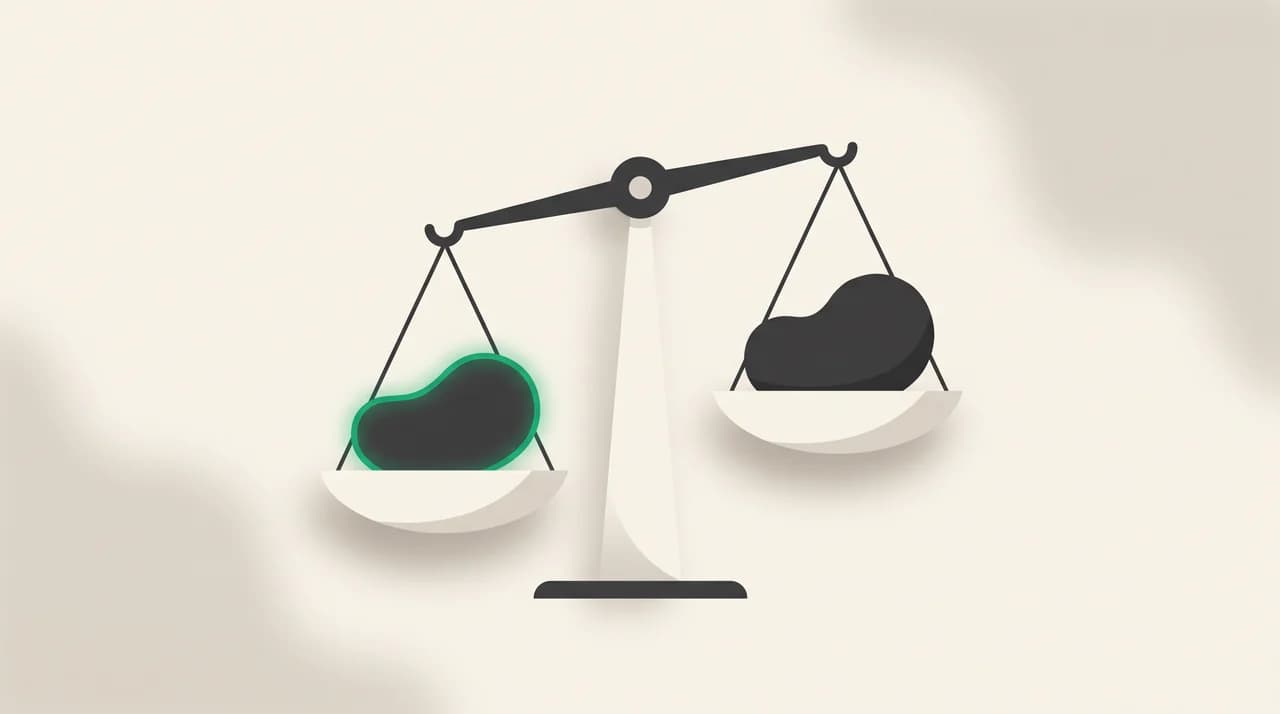
The cleanup path wins when Gmail is the dominant service and refills are rare — a decade of attachments is a lot of one-time recovery, and the same account may not fill again for years. The upgrade path wins when Photos or Drive is growing faster than you can prune, when refills are frequent, or when the annual cost is genuinely less than the cost of the hour it would take you to clean up.
What to do when neither option works#
Both routes fail in specific ways, and neither is fixed by doing more of the other.
- You cleaned up and Gmail is still full. The recovery has not caught up because you never emptied Trash — deleted mail sits there for 30 days and still counts against your quota. Also empty Spam. Both bins are separate one-click actions and neither is automatic.
- You upgraded and the storage manager still says full. It can take up to 24 hours after an upgrade for the new quota to register across Google services. New mail should start flowing again within an hour or two; the visual bar catches up later.
- You upgraded to 2 TB and Gmail is still refusing to accept messages. Rare, but it happens when the account has a shared-drive quota, a delegated mailbox, or a Workspace edition rather than a personal account. Workspace storage is administered separately — contact your admin, not Google One support.
- You cannot find where the storage is going. Some Photos storage lives inside Google Photos apps on old devices you no longer use — a decade-old tablet backing up at Original quality. Sign in to storage.google.com and use the Manage storage tool to see backups, large items, and Trash across services in one view.
- You share a family plan and someone else filled it. Google One family sharing gives everyone access to the same pool. The storage manager only shows your own usage — the plan owner sees the total. Ask them to check their storage.google.com before you buy a second plan.
- You are on Workspace and your admin capped your mailbox. Personal Google One tiers do not apply. The fix is either an admin quota bump or a mailbox archive to Google Vault — both live in the Workspace admin console, not in your account settings.
Do not delete the whole Trash without checking it
A faster way to keep Gmail lean without paying every month#
The reason a Gmail cleanup does not last is that the cleanup is manual and the incoming attachments are not. Newsletters, receipts, calendar invites with embedded images, and reply-all threads with the same 4 MB PDF attached six times all continue to arrive — and each cleanup starts from wherever the last one ended.
AI Emaily solves the ongoing side of this. Semantic search (Ask AI) surfaces every large-attachment thread by intent rather than by keyword — "contracts from suppliers I no longer work with" is one query, not a filter chain — and the Rules brain lets you write standing rules that auto-archive, label, or drop mail that historically drove your quota up. Combined with approve-before-send on every action and a full audit trail, that means one manual cleanup keeps working instead of decaying. See pricing on the AI Emaily pricing page or start on the home page. We build AI Emaily; the 7-day trial covers Pro and Autopilot (card required, $0 if you cancel before day seven).
Frequently asked
See it in AI Emaily
Keep reading

Written by
Nafiul HasanNafiul Hasan is an entrepreneur and AI automation system builder with 10+ years of experience turning messy, manual workflows into reliable automated systems. He designs and ships AI enterprise solutions end-to-end — the agent logic, the data plumbing, and the product people actually use — and founded AI Emaily to give busy professionals their attention back. He writes here from the builder's seat: what works, what breaks, and how to put AI to work without giving up control.