How Engagement Affects Email Deliverability (and How Much)


The short answer
A lot, but not evenly. Mailbox providers like Gmail and Yahoo watch how recipients treat your mail, and they weight active signals — replies, moving a message to the inbox, marking not-spam — far above a passive open, which Google says it does not even track. Complaints and long silence pull hardest the other way. Segment by real behaviour, not opens.
How engagement affects email deliverability: why opens are a weak signal, replies and folder moves strong ones, and how to segment before it hurts.
On this page
- 01The short answer
- 02The signals that actually matter
- 03What the providers publish, and what is inferred
- 04Engagement signals, scored by how much they move deliverability
- 05A worked example: segmenting one list before it costs you the inbox
- 06Why mailing fewer people can fix deliverability
- 07Red flags: engagement mistakes that quietly cost you the inbox
- 08What we'd actually do — and where a mail client fits
How does engagement affect email deliverability? Directly, and once your authentication is in place it is the biggest lever left on whether your mail reaches the inbox. When SPF, DKIM and DMARC pass, what mostly decides placement is how the people who already receive your mail behave — whether they open it, reply, move it, ignore it, or press the spam button. Mailbox providers read those signals as a running vote on whether your mail is wanted.
The catch is that not every signal counts the same, and some that senders obsess over barely count at all. This guide separates what mailbox providers actually publish from what the deliverability field has inferred, ranks the signals by the weight they carry, and shows how to segment a list so the strong signals work for you instead of against you. It is written for the person sending the mail; the honest note on where a mail client fits comes at the end.
The short answer#
Engagement affects deliverability because mailbox providers are trying to predict one thing: will this recipient want this message? Every send teaches them. When recipients reply, star, or drag a message into the inbox, the provider learns your mail is wanted and is more likely to inbox the next one. When they delete unread for weeks, or report spam, it learns the opposite — and reputation is scored per sending domain, so one segment's behaviour affects everyone else you send to.
Two facts anchor the rest of this guide. First, Google states plainly that it does not track open rates and cannot verify third-party open tracking, so an open is a weak, unreliable signal by the provider's own account. Second, Gmail's own guidance ties future placement to complaints: if your domain is frequently reported as spam, future messages are more likely to be marked as spam. The strongest positive signals are the deliberate actions a recipient chooses to take.
The signals that actually matter#
Deliverability is not decided by one metric. Mailbox providers combine many recipient behaviours into a reputation for your sending domain and IPs, then apply it to your next send. The signals fall into three groups, and knowing which group a behaviour belongs to is more useful than any single number.
- Active positive signals — a reply, moving the message to the inbox or Primary tab, marking 'not spam', adding you to contacts, starring or flagging. These are deliberate, hard to fake, and widely understood to carry the most positive weight.
- Passive or ambiguous signals — an open, a click, time in view. Useful for your own analytics, but weak as reputation inputs: Google says it does not track opens, and an open can be triggered by an image proxy or a preview pane rather than a person.
- Negative signals — a spam complaint, deleting without reading, letting mail sit unread for weeks, or an unsubscribe. A complaint is the strongest negative of all; sustained silence is a slower but real drag.
What the providers publish, and what is inferred#
Neither Gmail nor Yahoo publishes a scoring formula, and both describe engagement in plain language rather than numbers. Gmail's guidance is to send email only to people who want to get messages from you. Yahoo's is to send timely and relevant email to an active and engaged audience, and it warns that sending to people who are not reading your mail will harm your delivery metrics and reputation. The direction is published; the exact weighting is not.
What is published, and what is inference
Engagement signals, scored by how much they move deliverability#
This table ranks the common signals by the weight they are generally understood to carry, and marks whether the direction is published by mailbox providers or inferred from practice. Use it to decide which behaviours to design your sending around: chase the strong positives, and stop manufacturing the weak ones.
| Signal | Direction | Practical weight | Provider-published? |
|---|---|---|---|
| Spam complaint (mark as spam) | Negative | Very strong | Yes — Gmail ties future spam-marking to complaint history |
| Reply to the message | Positive | Strong | Inferred — no provider publishes a weighting |
| Move to inbox / 'not spam' / add to contacts | Positive | Strong | Inferred; Gmail's complaint statement implies the inverse |
| Star, flag, or file into a folder | Positive | Moderate | Inferred |
| Sustained non-open (weeks of silence) | Negative | Moderate, cumulative | Partly — providers say send only to people who read you |
| Delete without opening | Negative | Weak to moderate | Inferred |
| Open (tracking pixel) | Positive | Weak / unreliable | Google says it does not track opens |
| One-click unsubscribe used | Neutral (better than a complaint) | Low | Yes — required for bulk mail (RFC 8058) |
A worked example: segmenting one list before it costs you the inbox#
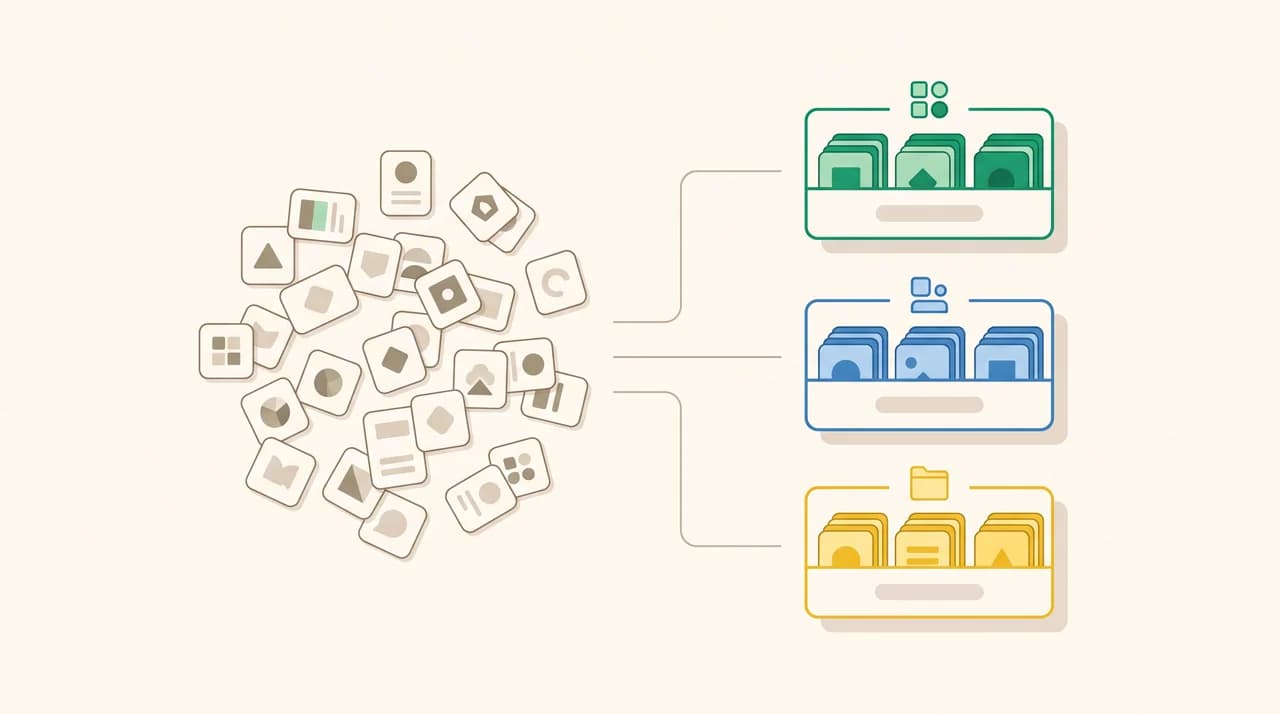
Take a 40,000-address newsletter list that has been mailed the same way for two years. Deliverability has slowly slipped — more mail landing in Promotions or spam — and the sender cannot see why, because the open rate still looks fine. That is the trap: opens are the one number Google does not use, and the list is carrying a large dead segment that drags the whole domain's reputation down.
Split the list by what recipients have actually done in the last few months, not by when they signed up. Four segments fall out, and each gets a different treatment.
Why mailing fewer people can fix deliverability#
The move that fixes deliverability here is counterintuitive: mail fewer people. By suppressing the inactive and never-engaged segments, the sender stops feeding the provider weeks of 'ignored' and 'deleted unread' signals, and the reputation attached to the domain recovers. The engaged 22,000 were always the ones protecting inbox placement; the dead 9,000 were quietly spending it.
This is why a shrinking, healthier list often out-delivers a larger stale one. You are not throwing away subscribers so much as protecting the placement of the people who still want to hear from you. Sunsetting the dead tail is the single highest-impact change most senders can make, and it costs nothing but the discipline to stop mailing people who never respond.
Red flags: engagement mistakes that quietly cost you the inbox#
Most deliverability damage is self-inflicted and slow. These are the patterns that generate bad engagement signals faster than good ones, ordered roughly by how much harm they do.
- Mailing the whole list every time. The inactive tail produces silence and complaints that outweigh the engaged core. Suppressing non-openers is the highest-impact fix for most senders.
- Treating opens as your health metric. Open pixels fire from image proxies and preview panes, and Google does not track them — a 'healthy' open rate can sit on top of a list that providers already distrust.
- Buying or scraping lists. Cold, unconsented addresses generate spam complaints and hit spam traps, and a complaint is the strongest negative signal there is. Gmail targets a spam rate under 0.1% that should never reach 0.3%.
- Making unsubscribe hard. A blocked unsubscribe pushes people to the spam button instead — the worse outcome for you. Bulk senders are required to offer one-click unsubscribe under RFC 8058.
- Sudden volume spikes to a stale list. A dormant list mailed at high volume looks like a compromised sender; warm back up gradually and re-permission first.
Reputation is scored per sending domain — one bad segment spreads
What we'd actually do — and where a mail client fits#
If you send the mail, the honest recommendation is boring and it works: segment by real engagement, run a sunset policy on the dead tail, keep your spam complaint rate well under 0.1%, and measure with Google Postmaster Tools instead of opens. None of that needs a new product category — it needs discipline in the sending tool you already use, whether that is an email service provider, a CRM, or your own SMTP. That is the pick, and it is the same pick for a solo newsletter and a company blast.
Where does AI Emaily fit here? Honestly, not on the sending side. We are an AI email client, not an email service provider, a deliverability tester, or a DMARC monitor, and using AI Emaily does not change how Gmail, Yahoo or Outlook score the mail you send — your sender reputation with other providers is theirs to judge, based on how their users treat your mail. If deliverability of your outbound is the problem, the tools above are the answer, not us. We build AI Emaily, and we would rather say that plainly than imply a fix we do not provide.
The adjacent job we do is on the receiving side, and it runs on the same kind of signals this guide is about. AI Emaily reads engagement and authentication cues on the mail arriving in your own inbox — how a sender's messages have been treated, whether they pass SPF, DKIM and DMARC alignment, whether the pattern looks like unsolicited outreach — to sort real mail from spam and phishing without you hand-training a filter. So if you are the recipient drowning in low-value mail, that is our problem to solve; if you are the sender trying to reach other people's inboxes, it is not. AI Emaily runs on Gmail, Outlook and standard IMAP, and comes with a 7-day free trial on the Pro and Autopilot plans — there is no permanent free tier, and your card is not charged if you cancel before day seven.
Frequently asked
See it in AI Emaily
Keep reading
Sources

Written by
Nafiul HasanNafiul Hasan is an entrepreneur and AI automation system builder with 10+ years of experience turning messy, manual workflows into reliable automated systems. He designs and ships AI enterprise solutions end-to-end — the agent logic, the data plumbing, and the product people actually use — and founded AI Emaily to give busy professionals their attention back. He writes here from the builder's seat: what works, what breaks, and how to put AI to work without giving up control.