How Long Does Gmail Keep Spam Before Deleting It?


The short answer
Gmail keeps messages in the Spam folder for 30 days and then deletes them automatically. You cannot recover mail after the purge — it does not move to Trash. Act before the window closes: open Spam, find the email, and click Not spam to restore it to your inbox.
Gmail auto-deletes spam after 30 days. Learn how to recover a real email before it disappears, stop Gmail marking a sender as spam, and empty spam manually.
On this page
Gmail keeps messages in the Spam folder for 30 days and then deletes them automatically. That window is fixed. It applies equally to personal Gmail accounts, Google Workspace addresses, and the Gmail mobile app on both iOS and Android. Once the purge runs, the messages are gone — they do not move to Trash and there is no second recovery.
Timing is the critical variable. A legitimate invoice, a flight confirmation, or a vendor reply sitting in Spam is recoverable today. The same email 31 days from now will not be. This guide covers the 30-day retention rule, how to rescue a real email before the window closes, how to stop the same sender from landing in Spam again, and what to do when Gmail's filter keeps mislabeling mail you actually want.
What to know before searching the Spam folder#
Three details that trip people up, stated plainly before you go looking.
The 30-day window is server-side and fixed. Gmail's automatic purge runs on messages that are at least 30 days old from the date they arrived. You cannot pause it, extend it for a specific message, or recover any extra time. The timer starts the moment the message lands in Spam.
Spam that Gmail deletes is not in Trash. This is different from manually moving a message to Trash, which gives you another 30 days and a restore option. When the spam purge runs, the messages disappear entirely and are not in All Mail, Trash, or anywhere else accessible inside Gmail.
Manually emptying Spam is also permanent. Clicking Empty Spam now removes every message in the folder immediately. There is no undo for that action, regardless of how recently a message arrived.
Cannot find the email anywhere in Gmail?
How to recover an email from the Gmail Spam folder#
If the message is still within its 30-day window, recovery is straightforward. The key step — clicking Not spam — also sends feedback to Gmail's filter so that sender is treated more favorably going forward.
- 1
Open the Spam folder
On the Gmail web app, look for Spam in the left sidebar. If you do not see it, click More to expand the full folder list. On the Gmail mobile app for iOS or Android, tap the menu icon and scroll down to Spam. The folder shows only messages still within the 30-day window. Anything older has already been permanently deleted.
- 2
Search for the email inside Spam
Use the Gmail search bar with the operator in:spam followed by the sender's name, subject words, or a phrase from the message body. For example: in:spam invoice november. This narrows a large Spam folder in seconds without scrolling through every message individually.
- 3
Open the email and click Not spam
Open the message. Gmail shows a banner reading This message was identified as spam. On the web app, click Report not spam. On mobile, tap the three-dot menu at the top right of the message, then tap Not spam. The message moves immediately to your inbox and the sender receives a positive signal in Gmail's filter.
- 4
Add the sender to your Contacts
This step is optional but useful. Adding the sender to Google Contacts signals an established relationship to Gmail's filter, which reduces the chance their next message is flagged. On the Gmail web app, hover over the sender's name in the message header and click Add to Contacts.
- 5
Create a filter to prevent future misfiling
For senders whose mail you need to guarantee reaches your inbox, create a filter. In Gmail web: click the search bar, then Show search options, enter the sender's address in the From field, click Create filter, check Never send it to Spam, then confirm. This tells Gmail to skip the spam check for that address entirely, regardless of what its filter thinks.
Gmail Spam retention across surfaces#
The 30-day auto-delete rule is enforced server-side by Google, so it applies regardless of which app or client you use to read your mail. The differences between surfaces are mostly cosmetic — where the folder appears in the navigation and where the manual empty option lives.
| Surface | Folder name | Auto-delete after | Manual empty option |
|---|---|---|---|
| Gmail web (gmail.com) | Spam | 30 days | Yes — Empty Spam now link at the top of the Spam folder |
| Gmail for iOS | Spam | 30 days | Yes — Empty Spam from inside the folder |
| Gmail for Android | Spam | 30 days | Yes — Empty Spam from inside the folder |
| Google Workspace (business or education) | Spam | 30 days by default; admin retention policies may vary | Yes |
| Third-party client via IMAP (Apple Mail, Outlook, Thunderbird) | Spam or Junk (client-labeled) | 30 days — server rule runs regardless of which client you use | Use Gmail web to empty; client-side behavior varies by app |
What to do when a real email keeps going to Spam#
If you rescued a message from Spam but the same sender keeps landing there, the filter is working from a pattern that needs correcting. There are four common causes, each with a targeted fix.
Poor sender reputation. Many legitimate services use shared sending infrastructure — invoice platforms, booking systems, SaaS tools. Shared IPs carry a reputation shaped by every sender on them, so another customer's bad behavior can affect your mail. The fix from your end: mark as Not spam consistently and create a Never send to Spam filter for that address.
The message resembles bulk mail. Tracking pixels, image-heavy HTML layouts, and unsubscribe headers are signals Gmail uses to categorize bulk senders. You cannot change how the sender formats their outgoing mail, but a Never send to Spam filter bypasses the classification entirely.
Past behavior reinforced the pattern. If you previously marked a message from that sender or domain as spam, the filter learned from that signal and applied it broadly. Consistently marking future messages as Not spam is the counter-signal that retrains it over time.
Missing email authentication. If the sender's domain has no SPF, DKIM, or DMARC records in DNS, Gmail treats incoming mail from it as higher risk. You cannot fix this from your side. The sender's email administrator needs to add the authentication records. If the sender is a colleague or vendor you trust, flagging this to them directly often resolves it quickly.
- Mark as Not spam every time — each click is direct feedback that retrains the filter in your favor.
- Add the sender to Google Contacts — signals an established relationship to Gmail's classification logic.
- Create a Never send to Spam filter for their address — bypasses the spam check entirely going forward.
- Ask the sender to verify their SPF, DKIM, and DMARC DNS records — missing authentication is a common culprit for professional senders.
- Check whether the sender uses a shared platform — if so, the filter may be reacting to other senders on the same infrastructure rather than to them specifically.
A faster way to keep legitimate mail out of Spam#
The steps above work, but they require you to check Spam regularly. A busy week is enough to miss a message before its 30-day window closes. We build AI Emaily, an AI-native email client and autonomous chief-of-staff, and this is one of the specific problems it addresses.
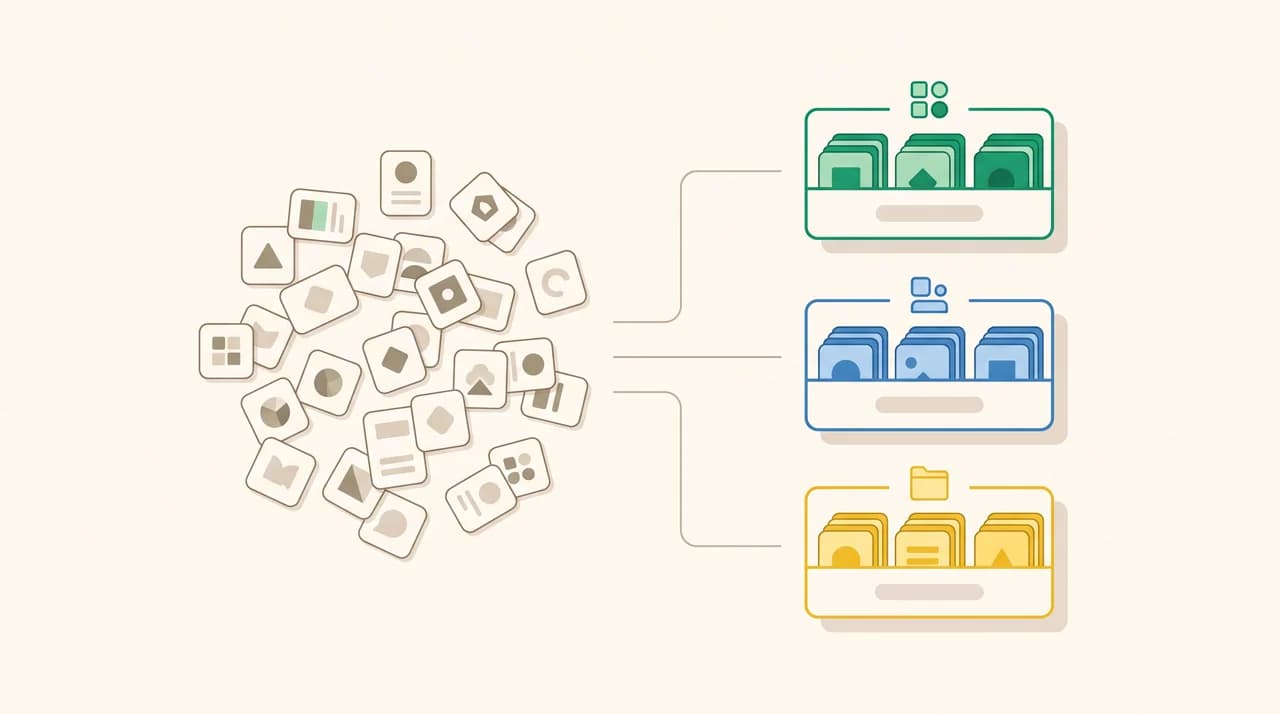
Gmail's spam filter runs server-side and catches patterns at scale. It occasionally flags legitimate mail from new senders — especially those using shared infrastructure or low send volume — because it has no engagement history to work from. AI Emaily monitors your inbox continuously and surfaces messages that look misclassified before the purge window closes. Its separate cold-email filter routes unsolicited outreach to its own tray, which means your Spam folder has less noise to sort through and fewer genuine messages caught in the crossfire.
The result: legitimate mail from new contacts gets flagged for your review rather than sitting silently in Spam until it disappears. You approve the rescue with one click in Copilot mode; nothing moves without you. Start a 7-day free trial at aiemaily.com, or compare plans at aiemaily.com/pricing.
Frequently asked
See it in AI Emaily
Keep reading

Written by
Nafiul HasanNafiul Hasan is an entrepreneur and AI automation system builder with 10+ years of experience turning messy, manual workflows into reliable automated systems. He designs and ships AI enterprise solutions end-to-end — the agent logic, the data plumbing, and the product people actually use — and founded AI Emaily to give busy professionals their attention back. He writes here from the builder's seat: what works, what breaks, and how to put AI to work without giving up control.