What Counts Toward Gmail Storage (and What Doesn't)


The short answer
Your Google account has 15 GB of free storage shared across Gmail, Google Drive, and Google Photos. Every Gmail message counts toward that total — including messages in Spam and Trash along with their attachments. Files you upload to Drive count. Google Docs and Sheets saved in native Google format do not. Check your breakdown at one.google.com/storage.
Your 15 GB Google quota is shared across Gmail, Drive, and Google Photos. Spam and Trash both count. Here is what fills it and what stays exempt.
On this page
When Gmail flashes the warning that your storage is almost full, the next question is almost always 'full of what?' Your Google account has 15 GB of free storage, but what counts toward Gmail storage is not what most people guess. A message you read three years ago counts. A draft you never sent counts. The Spam folder you have never touched counts. A Google Doc you have been editing every day this month might not count at all. That inconsistency is what makes this question hard — and answering it by guessing is how people empty the wrong bucket and fill back up in two weeks.
This post maps it out exactly: the shared 15 GB pool, the full list of what fills it and what stays exempt, the specific surprise that Spam and Trash both count, how to check your per-service breakdown in under two minutes, and what to do when storage keeps creeping back up despite your best efforts. The rules below reflect Google's documentation as of August 2026; verify against the Gmail Help page in the sources section if you are reading this later, since these policies have changed before.
How the shared 15 GB Google storage quota works#
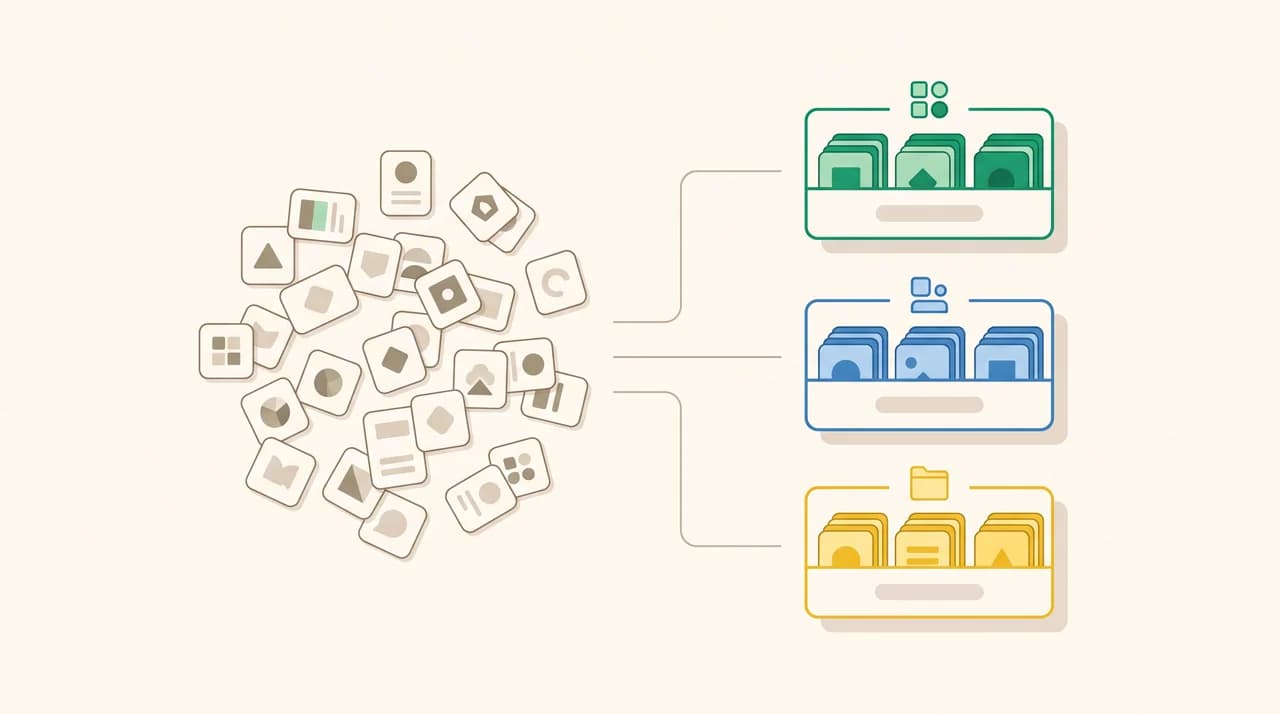
Google gives every personal Google Account 15 GB of free storage. The critical word is shared: that 15 GB is one pool divided across Gmail, Google Drive, and Google Photos — not 15 GB per service. When Gmail tells you storage is almost full, the culprit is usually some combination of all three services drawing from the same bucket, not Gmail alone.
This shared structure means that heavy Drive use eats into your Gmail headroom, and a Photos library backed up in Original quality can quietly drain the pool even if your inbox looks spotless. Most people troubleshoot the three services separately and miss this. You cannot fix a storage problem durably without first knowing which service is responsible.
Google One plans expand the pool — 100 GB, 200 GB, 2 TB and above — but the shared logic stays the same at every tier. A bigger pool does not change which data counts toward it; it only changes how much room you have before you hit the ceiling.
15 GB for the whole account, not per service
How to check which service is using your storage#
Before deleting anything, find out where your storage is actually going. Google provides a per-service breakdown that takes under two minutes to read, and the answer is often different from what you expect.
- 1
Go to one.google.com/storage
This is Google's account-level storage management page. It shows your total usage across all services, a visual bar broken down by Gmail, Drive, and Photos, and which Google One plan (if any) is active. Sign in to the Google account you want to check before opening it.
- 2
Read the per-service bars
The page displays how many gigabytes each service is consuming. Note which bar is the largest — that is where to focus first. If Gmail is taking 8 GB and Photos only 2 GB, the Gmail mailbox is the problem. If Drive dominates, start there instead.
- 3
Find the biggest messages in Gmail
Inside Gmail, type 'has:attachment larger:10MB' in the search bar. This surfaces every message carrying an attachment over 10 MB — old slide decks, video files, compressed archives — which is usually where the bulk of Gmail storage hides. Sort by size to work through them largest first.
- 4
Find the largest files in Drive
In Google Drive, click Storage in the left sidebar. Drive lists your files sorted by storage consumed, largest first. Look for uploaded video files, large PDFs, and duplicate backups. Check Drive Trash too: files deleted from Drive still count against your quota until the Trash is emptied.
- 5
Check Photos for Original quality backups
Open Google Photos and go to Settings, then Manage storage. It shows your total Photos usage and lets you identify which items take the most space. Videos typically dominate. If you backed up videos in Original quality before knowing they counted, they are all listed here.
What counts toward Gmail and Google storage: the full breakdown#
The table below covers every common category. A few of these rules have changed over the years — most notably how Google Photos backups are counted since June 2021 — so treat this as a reference point for August 2026 and verify the Gmail Help page linked in the sources if policies have changed since.
| Item | Counts toward the 15 GB quota? |
|---|---|
| Gmail messages in your inbox, sent mail, drafts, and all labels | Yes — every message in every folder |
| Gmail messages in Spam | Yes — Spam counts in full until it is deleted or auto-purged after 30 days |
| Gmail messages in Trash | Yes — Trash counts until you empty it or the 30-day auto-delete runs |
| Attachments on any Gmail message (in any folder) | Yes — attachment size is included in the message size |
| Files you upload to Google Drive (PDFs, images, Word docs, videos, zip files) | Yes — any non-native file you store in Drive |
| Google Docs, Sheets, Slides, Forms, and Drawings in native Google format | No — native Google file formats are exempt from the quota |
| Office files (.docx, .xlsx, .pptx) stored in Drive without converting | Yes — the original non-converted file counts |
| Office files converted to Google format on import | No — once converted to native format, they stop counting |
| Google Photos backed up at any quality (Original or Storage Saver) after June 2021 | Yes — all new backups count regardless of quality setting |
| Google Photos backed up in High Quality (now Storage Saver) before June 2021 | No — those older backups were grandfathered in as free |
| Files shared with you by another Google user (items you do not own) | No — only files you own count against your quota |
| Content from a Google Workspace business or school account | Separate quota — does not mix with or count against your personal 15 GB |
The two surprises: Spam and Trash both count#
The two rules that catch people most often are the Spam and Trash lines. Many people assume that messages landing in Spam are handled automatically by Google and do not count against their quota. They do. Every message in your Spam folder — including its attachments — counts against your 15 GB until Gmail auto-deletes it after 30 days, or until you empty the folder yourself. Accounts that receive a lot of spam with large attachments can have several gigabytes sitting in a folder they never open.
Trash works the same way. Deleting a message moves it to Trash, where it stays for 30 days before permanent deletion. During those 30 days the message still counts toward your storage. This is why clearing a large batch of messages often does not immediately show a storage reduction — the messages have moved to Trash, not been removed. To reclaim the space right away, go to Trash and select Empty Trash after any bulk delete. Do the same for Spam: open Spam and click 'Delete all spam messages now' rather than waiting for the automatic purge.
The practical check before you conclude that Drive or Photos is causing your storage problem: look at Spam and Trash first. In accounts that have been running for several years without deliberate cleanup, these two folders alone can hold multiple gigabytes of attachment-heavy messages.
Deleting does not immediately free storage
When your storage keeps filling back up#
Clearing storage once is a one-hour task. The harder problem is that it fills again, usually because the same source — newsletters, large-attachment threads, photo backups — is still active. Three patterns account for most repeat cases.
Newsletter and marketing email accumulation is the largest driver inside Gmail. A few hundred active subscription emails per month, each a few kilobytes, compound into gigabytes over a couple of years. The fix is to unsubscribe at the source before or after deleting, not just to clear the archive. Gmail surfaces an Unsubscribe link at the top of most marketing messages; using it stops the same senders from refilling the folder next month.
Large attachments on routine threads are the second driver. Business conversations where people attach slide decks, video files, or compressed archives instead of linking to a Drive folder can push single threads over 25 MB. The Gmail search 'has:attachment larger:5MB' surfaces these quickly. If the file itself lives somewhere else — a shared Drive folder, a download link — there is no reason to keep the attachment copy inside Gmail.
Automatic photo backups in Original quality are the third. If Google Photos is set to back up at Original quality and you take a lot of video, your quota can fill in a matter of months. Switching to Storage Saver quality for future backups slows the accumulation, though it does not reclaim space from photos already uploaded.
Search before you buy more storage
A faster way to keep your Gmail storage lean#
The manual audit above works, but it is a periodic chore. An inbox that regularly fills storage is usually one that is not being actively managed — newsletters pile up because nothing catches them, large-attachment threads sit unread for months, and spam slips through faster than cleanup runs. Preventing the accumulation is more durable than clearing it after the fact.
We build AI Emaily, an AI-native email client that triages incoming mail in real time — separating messages that need your attention from those that can be labeled, archived, or cleared. Because triage happens continuously, the categories of email that quietly balloon Gmail storage — cold outreach, subscription mail, notification threads — get handled before they accumulate. AI Emaily connects Gmail, Outlook, iCloud, and other accounts and operates across three modes (Manual, Copilot, and Autopilot) so you choose how much it manages on its own. A leaner inbox and a leaner storage quota are the same downstream result. Start with a 7-day free trial at aiemaily.com; see the full plan details at aiemaily.com/pricing.
Frequently asked
See it in AI Emaily
Keep reading

Written by
Nafiul HasanNafiul Hasan is an entrepreneur and AI automation system builder with 10+ years of experience turning messy, manual workflows into reliable automated systems. He designs and ships AI enterprise solutions end-to-end — the agent logic, the data plumbing, and the product people actually use — and founded AI Emaily to give busy professionals their attention back. He writes here from the builder's seat: what works, what breaks, and how to put AI to work without giving up control.