What to Export Before You Leave Any Email Tool

The short answer
Before you cancel, export everything that lives only in the vendor's own layer, not your mailbox: drafts, scheduled or send-later emails, snippets and templates, filing rules, signatures, and any attachments stored in the tool. Your received and sent mail usually stays in Gmail or IMAP, but that vendor-specific layer is deleted on shutdown. Save it first, then switch.
What to export before leaving an email client: the drafts, scheduled sends, snippets, and rules that live only in the app, not your mailbox.
On this page
When you leave an email client or add-on, most of your actual mail is safe — but some of your most valuable work is not. Knowing what to export before leaving an email client comes down to one distinction: what lives in your mailbox, and what lives only in the vendor's own layer. Your received and sent messages almost always sit in Gmail, Outlook, or an IMAP server, so they survive the move. Drafts, scheduled sends, snippets, and filing rules often do not — they can exist only inside the app you are about to cancel.
This is not hypothetical. When Notion Mail told users it would shut down on 22 September 2026, its own help page warned that drafts, scheduled emails, snippets, and auto-label instructions would be permanently deleted if not exported by 21 September 2026. Postbox stopped being sold or developed after eM Client acquired it in October 2024. Windows Mail stopped sending and receiving on 31 December 2024. In each case the mailbox mail was recoverable; the app-specific layer was the part people lost.
This is a generic pre-departure checklist. It works for any client or add-on — a shutdown you did not choose, or a switch you did. Read it before you cancel, not after. Dates for any specific product change, so check the vendor's own page for the current shutdown and deletion deadlines.
What actually moves, and what stays behind#
Start by sorting your data into two buckets. The first is anything stored in the mailbox itself — the messages on the server. The second is anything the client added on top: features that make the app pleasant but that the mail server never sees.
The mailbox bucket is portable by design. Because IMAP, Gmail, and Outlook keep messages, folders, and read state on the server, any new client you connect sees the same mail. You do not need to export it; you point the new app at the same account. This is why "will I lose my email?" usually has a reassuring answer.
The vendor-layer bucket is the dangerous one. Snippets, templates, filing rules, scheduled sends, and signatures are frequently stored in the vendor's database, not on your mail server. When the account closes, that layer closes with it. The table below shows the usual split — but every tool draws the line in a slightly different place, so verify yours against its own settings and export pages.
The two buckets, side by side#
| Your data | Where it usually lives | Survives the switch on its own? |
|---|---|---|
| Received and sent mail | Mailbox server (Gmail / Outlook / IMAP) | Yes — a new client re-syncs it |
| Folders and labels | Mailbox server | Usually — IMAP folders sync; Gmail labels map to folders |
| Read / unread and flags | Mailbox server | Usually — stored as IMAP flags |
| Drafts | Often the app only; sometimes a server Drafts folder | Not reliably — check where yours are saved |
| Scheduled / send-later emails | The vendor's servers | No — they do not exist on your mail server |
| Snippets and templates | The vendor's database | No |
| Filing rules and filters | The client or the vendor | No — Gmail filters export separately |
| Signatures | The client's settings | No |
| Contacts and calendar | The account, or the app | Only if held in the account, not the app |
The pre-departure checklist#
Before you touch the cancel button, walk this email tool offboarding checklist top to bottom. Export or copy each item you actually use, and skip the ones you do not. The goal is a single folder on your own disk that holds everything the vendor is about to take with it.
- Drafts. Find every unsent draft. If they live in a server Drafts folder they will sync to the new client; if they live only in the app, copy the text out or email each one to yourself.
- Scheduled and send-later messages. List every future send with its date and recipient. These rarely survive — send them now, or plan to recreate them in the new tool.
- Snippets, templates, and canned responses. Export them if the tool allows it, or paste each into a plain document. Include the subject lines and any variables.
- Filing rules and filters. Record every rule: the condition and the action. Gmail lets you export filters as an XML file; many clients do not, so a screenshot list is your backup.
- Signatures. Copy the HTML and the plain text of each signature, plus any linked images.
- Labels and folder structure. Note your taxonomy so you can rebuild it. IMAP folders move; a Gmail label system may need recreating as folders.
- Attachments stored inside the tool. Files pinned to snippets, templates, or notes are often not attached to any email — download them manually.
- Contacts and calendar. Export contacts to a .vcf or .csv and the calendar to an .ics if they are held by the app rather than by the mail account.
- Notes, comments, and assignments. Shared-inbox tools add private notes and assignments that are not part of the message and do not travel with the mail.
A shutdown's deletion date is earlier than its end date
How to export it, step by step#
The exact menus differ by tool, but the sequence is the same everywhere. Do it in this order so nothing depends on an account you have already closed.
- 1
Export the mailbox itself first
On Gmail, use Google Takeout (Download your data) to pull your mail as an MBOX archive; your labels are preserved in a special X-Gmail-Labels header. For IMAP or Outlook this step is usually optional, because a new client re-syncs the server, but a local archive is cheap insurance.
- 2
Export or list your filing rules
In Gmail, open Settings, then Filters and Blocked Addresses, and use Export to save an XML file. In a desktop client, open the rules panel and screenshot or copy each rule's condition and action. You will rebuild these by hand in the new tool.
- 3
Save every snippet, template, and signature
Use the tool's export if it has one. If it does not, paste each snippet and signature into a plain document, keeping the HTML for anything formatted, and note which variables each one used.
- 4
Capture scheduled sends and drafts
List the recipient, subject, and date of every send-later message, then either send it now or plan to recreate it. Confirm whether your drafts sit in a server Drafts folder (they will sync) or only in the app (copy them out).
- 5
Export contacts, calendar, and in-app attachments
Download contacts as CSV or vCard, the calendar as ICS, and any files pinned inside snippets or notes. These are the items with no copy anywhere else, so they are the easiest to lose.
- 6
Store the archive where the vendor cannot reach it
Put everything in a folder on your own disk or cloud drive. A Google Takeout archive, for example, expires in about seven days and can be downloaded only a limited number of times, so move it out of Google before it lapses.
What breaks when you leave — and how to save each thing#
Here is the casualty list in one view: the items most people forget, why each one is stranded, and the move that preserves it. Work down the column and you will not be surprised on your first day in the new tool.
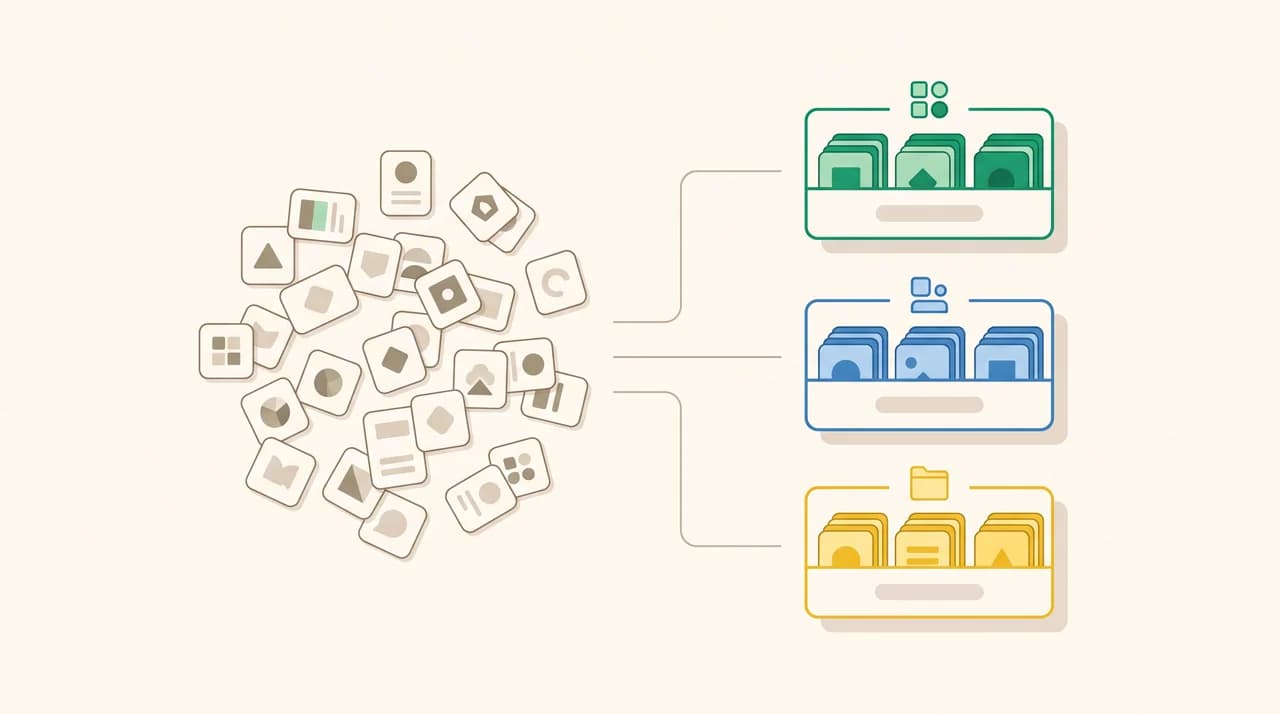
| What breaks | Why it's stranded | How to save it before you go |
|---|---|---|
| Scheduled / send-later emails | Queued on the vendor's server, not your mailbox | List each one's date and recipient; send now or recreate later |
| Snippets and templates | Stored in the vendor's database | Export, or paste each into a plain document with its variables |
| Filing rules and filters | Held by the client or vendor, not the message | Export Gmail filters as XML; screenshot client rules |
| Signatures | Live in the client's settings | Copy the HTML and plain text; save any linked images |
| Drafts stored only in the app | Never written to a server Drafts folder | Copy the text out or email it to yourself |
| Attachments inside snippets or notes | Not attached to any actual email | Download each file manually |
| Shared-inbox notes and assignments | Metadata the vendor adds around the message | Export if offered; otherwise copy the notes that matter |
| Snooze and reminder state | A vendor overlay, not an IMAP flag | Note anything snoozed so it does not vanish silently |
Keep a rollback plan#
Do not close the old account the moment the new one is set up. Treat the switch as reversible until you have proof it worked. The cheapest insurance is time: keep the old tool running, or at least your export archive intact, until the new client has handled a full week of real mail without a gap.
Before you cancel, confirm three things in the new tool. Your mail is fully synced, your rebuilt rules are firing on incoming mail, and your signatures and templates are in place. Send yourself a test message that should trigger a rule, and watch it land where it belongs.
If the tool is shutting down rather than something you are leaving by choice, you cannot keep it running — so the archive is your rollback. Hold on to the exported MBOX, the filter XML, and the snippet document until you are certain the new setup is complete. Deleting them a month later costs nothing; needing them after they are gone costs everything.
Switching without downtime#
You can move without ever being cut off from your mail, because the mail is not really what you are moving. It stays on the server. What you are moving is the layer around it — and you can rebuild that in the new client while the old one is still open.
Run both in parallel. Connect the new client to the same Gmail, Outlook, or IMAP account, and it will sync the same inbox live. For a few days you have two windows onto one mailbox, which means no message is trapped in a tool you have already left.
- Connect the new client to the same account so mail syncs live — no export needed for the messages themselves.
- Rebuild rules, signatures, and templates from your export while the old tool is still there to check against.
- Recreate any scheduled sends on their original dates.
- Run both for about a week, then verify the rollback checklist above before you cancel.
The mail moves for free; only the layer needs work
Rebuilding the vendor layer in a new home#
By now the manual work is clear: the mail moves itself, but the rules, snippets, scheduled sends, and signatures have to be rebuilt by hand in whatever you switch to. If you are choosing a new client anyway, pick one where that layer is a first-class feature — because it is exactly what you just spent an afternoon exporting.
Rebuilding that layer is one job we design for. AI Emaily connects to the same Gmail, Outlook, or IMAP account, so your mail arrives with no export at all, and its Rules and Context Brain recreate the filing logic while drafting and templates cover the snippets. We build AI Emaily, so read this as our own view, not a neutral survey. There is no free plan — a 7-day free trial takes a card and charges nothing if you cancel before day seven, and you can check AI Emaily pricing before you commit.
Frequently asked
See it in AI Emaily
Keep reading
Sources

Written by
Nafiul HasanNafiul Hasan is an entrepreneur and AI automation system builder with 10+ years of experience turning messy, manual workflows into reliable automated systems. He designs and ships AI enterprise solutions end-to-end — the agent logic, the data plumbing, and the product people actually use — and founded AI Emaily to give busy professionals their attention back. He writes here from the builder's seat: what works, what breaks, and how to put AI to work without giving up control.