How to Add Gmail to Apple Mail on Mac (Without Breakage)

The short answer
To connect Gmail to Apple Mail on Mac, go to System Settings > Internet Accounts, add a Google account, and sign in through the browser prompt. If Apple Mail keeps asking you to sign in, the OAuth token was revoked — remove and re-add the account in Internet Accounts to issue a fresh one.
How to add Gmail to Apple Mail on Mac, why it keeps asking you to sign in, and how to fix IMAP connection limits and repeated auth prompts.
On this page
- 01Before you start
- 02How to add Gmail to Apple Mail on Mac
- 03How Gmail accounts behave differently across macOS versions and account types
- 04What to do when the Gmail connection does not work
- 05How to remove and re-add a Gmail account in Apple Mail
- 06A faster way to manage Gmail alongside your other accounts
Adding Gmail to Apple Mail on Mac is not a matter of typing your Gmail address and password into a settings panel. Google disabled basic password authentication for IMAP access in 2022, so the correct path for a personal Gmail account runs through an OAuth browser sign-in — you authorize Apple Mail through Google's own sign-in page, and Google issues a token rather than accepting a password. Understanding this is how to add Gmail to Apple Mail on Mac without triggering the repeated-sign-in loop that catches most users.
There are two supported routes. The first — and the one that avoids most problems — is System Settings > Internet Accounts, which handles the OAuth handshake automatically and stores the token in macOS Keychain. The second is a manual IMAP configuration using an app-specific password generated from your Google account. Manual IMAP is more fragile because it uses a static credential that must be updated every time you rotate the app-specific password, and Google can revoke it independently. Start with Internet Accounts; manual IMAP is a fallback for edge cases and Google Workspace environments with restrictive admin policy.
This guide covers the setup steps, what changes between personal Gmail and Google Workspace accounts, a platform-differences table across macOS versions, and a structured fix for each failure mode — including the password-not-accepted error, the repeated-sign-in prompt, and the duplicate-messages symptom that appears when Gmail's All Mail folder mapping conflicts with Apple Mail's defaults.
Before you start#
A few conditions determine which setup path works and what to expect during the process. Check these before opening System Settings.
- macOS Ventura 13 or later: the account setup lives at System Settings > Internet Accounts. On macOS Monterey 12 and earlier it is at System Preferences > Internet Accounts — the same flow, different app name.
- A Google account in good standing: the sign-in prompt opens Google's own authentication page in your default browser. If the account is suspended, under a security hold, or subject to an admin lockout, the OAuth flow fails at the browser step rather than inside Mail.
- Google Workspace accounts need admin approval first: a Workspace admin controls whether IMAP is enabled at the domain level and whether third-party mail clients are permitted. If your organization has restricted access to third-party apps or uses a context-aware access policy, the connection can be blocked even after a successful browser sign-in. Confirm IMAP access is enabled in the Google Admin console before adding the account on macOS.
- Two-factor authentication affects the manual IMAP path only: if you are taking the manual IMAP route rather than Internet Accounts, you cannot use your Google account password directly. Google requires an app-specific password for any client connecting via IMAP when two-factor authentication is active. Generate one at myaccount.google.com > Security > App Passwords.
How to add Gmail to Apple Mail on Mac#
The Internet Accounts method completes in under two minutes for a personal Gmail account and does not require enabling anything in Gmail settings ahead of time. The steps below apply to macOS Ventura 13 and later. On Monterey, replace 'System Settings' with 'System Preferences' throughout.
- 1
Open System Settings and navigate to Internet Accounts
Click the Apple menu in the top-left corner and select System Settings. In the sidebar, scroll down to Internet Accounts and click it. The pane lists any accounts already configured on this Mac. On macOS Monterey or earlier, open System Preferences instead and click Internet Accounts.
- 2
Click Add Account and select Google
Click Add Account at the bottom of the account list. A sheet appears showing supported account types: iCloud, Microsoft Exchange, Google, Yahoo, AOL, and other. Click Google. macOS opens a sheet warning that sign-in will happen in your default browser — click Open Browser.
- 3
Complete the Google sign-in in your browser
Your default browser opens to Google's sign-in page. Enter the Gmail address and password for the account you want to add. If the account has two-factor authentication active, complete the second-factor step. Google then asks which permissions to grant Apple Mail — allow access to Gmail. Click Continue or Allow. The browser displays a confirmation that authorization is complete and prompts you to return to System Settings.
- 4
Choose which Google services to sync in Mail
Back in System Settings, a list appears showing the Google services available to sync: Mail, Contacts, Calendars, and Notes. Toggle Mail on. Leave the others off if you do not want contacts or calendar events from this Google account appearing in the corresponding macOS apps. Click Done.
- 5
Open Apple Mail and wait for the initial sync
Open Mail from the Dock or Applications folder. The Gmail account appears in the sidebar under its address. Mail immediately begins fetching messages from the inbox and All Mail. The first sync can take several minutes for a large mailbox — the status bar at the bottom of the Mail window shows sync progress. New messages arrive in real time once the initial fetch completes.
- 6
Verify the account is connected in Mail Settings
Press Command-Comma to open Mail Settings, then click the Accounts tab. The Gmail account should appear with a green connected status. If a yellow or red warning appears instead, the OAuth token was not stored correctly — remove the account from System Settings > Internet Accounts and add it again. The token issue resolves on a fresh authorization more reliably than attempting to repair the stored credential.
How Gmail accounts behave differently across macOS versions and account types#
The setup steps above are consistent across recent macOS versions, but the behavior after setup — folder mapping, connection method, and admin policy enforcement — varies by account type and macOS release. The table below captures the differences most likely to produce a broken or unexpected setup.
| Account type and environment | Auth method | Default protocol | Common friction points |
|---|---|---|---|
| Personal Gmail, macOS Ventura 13+ (System Settings) | OAuth 2.0 via browser sign-in — no password stored | IMAP | Token revokes on unusual sign-in activity; re-add in Internet Accounts to refresh |
| Personal Gmail, macOS Monterey 12 and earlier (System Preferences) | OAuth 2.0 via browser sign-in — same flow, different UI shell | IMAP | Same token behavior; older macOS versions are slower to renew the token silently in the background |
| Google Workspace, admin permits third-party clients | OAuth 2.0 via browser sign-in | IMAP | Admin must enable IMAP at the domain level and ensure no app-access policy blocks Apple Mail specifically |
| Google Workspace, admin restricts third-party clients | OAuth flow completes but Mail is blocked server-side | IMAP | Browser sign-in succeeds but Mail shows a connection error immediately after; the fix is an admin policy change, not a macOS setting |
| Any Gmail, manual IMAP via Mail Settings | App-specific password required — Google account password rejected | IMAP | Password must be regenerated every time app-specific passwords are revoked; All Mail folder maps as a separate mailbox, which causes duplicates if Sent and Trash IMAP paths are not also set correctly |
What to do when the Gmail connection does not work#
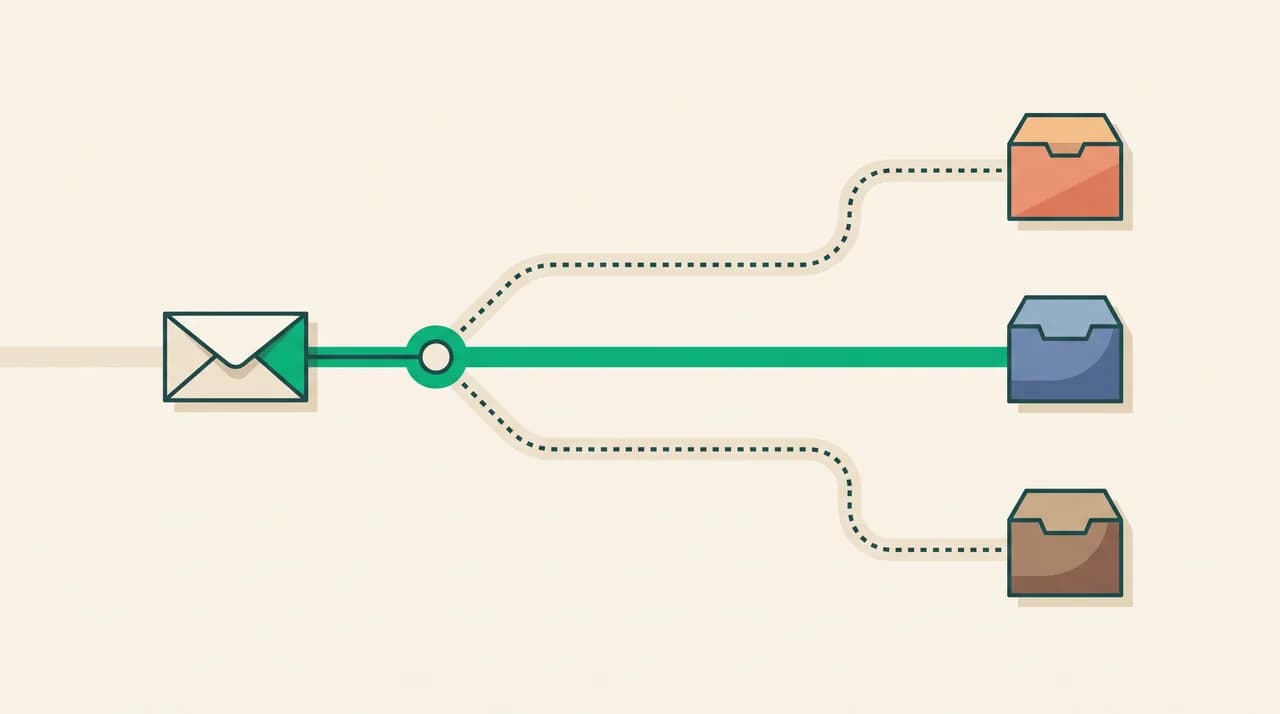
The most common failure modes after adding a Gmail account to Apple Mail are a persistent password prompt, a connection error that clears briefly and returns, and duplicate messages appearing in the inbox. Each has a distinct cause and a specific fix.
| Symptom | What is causing it | How to fix it |
|---|---|---|
| Apple Mail keeps asking you to sign in to Gmail | The OAuth token was revoked — by a Google security event, an admin policy change, or a long idle period. Re-entering a password will not help because Mail uses the token, not the password. | Remove the account from System Settings > Internet Accounts, then add it again. The fresh browser sign-in issues a new token. |
| Gmail password not accepted in Apple Mail | Google disabled basic password authentication for IMAP in 2022. A Google account password typed into a mail client's settings field is rejected at the server level regardless of whether the password is correct. | Use Internet Accounts (OAuth) instead of manual IMAP. If manual IMAP is required, generate an app-specific password at myaccount.google.com > Security > App Passwords. |
| Apple Mail showing duplicate Gmail messages | The All Mail folder in Gmail is an IMAP folder that Apple Mail subscribes to by default. Messages in Inbox also live in All Mail, so Apple Mail displays two copies. | In Mail > Settings > Accounts, select the Gmail account and click Mailbox Behaviors. Map Sent, Trash, and Archive to the correct Gmail IMAP folders rather than defaulting to All Mail. |
| Connection error immediately after a successful browser sign-in (Workspace only) | The Google Workspace admin has not enabled IMAP access for the domain, or an app-access policy is blocking Apple Mail at the server. | Ask the Workspace admin to verify IMAP is enabled in Google Admin > Apps > Google Workspace > Gmail > End User Access and that no context-aware access policy blocks Apple Mail. |
| Too many simultaneous connections error in the Mail connection log | Gmail limits simultaneous IMAP sessions per account. If Apple Mail is open on multiple devices with heavy background-sync activity, the session count can hit the ceiling. | Quit Apple Mail on devices you are not actively using. In Mail Settings > Accounts > Server Settings, review idle-timeout settings to reduce how often Mail re-establishes sessions. |
| Signed in successfully but Inbox shows no messages | IMAP folder subscription settings in Apple Mail may have excluded the Inbox, or the Gmail IMAP prefix path is incorrectly set on a manual IMAP configuration. | In Mail > Settings > Accounts > Mailbox Behaviors, verify the Inbox path. For manual IMAP, set the IMAP prefix path to empty and allow Mail to auto-discover folders. |
How to remove and re-add a Gmail account in Apple Mail#
Removing and re-adding an account is the fastest fix for a persistent sign-in prompt, a revoked token, or an account that appears connected but stops fetching mail. The process takes about two minutes and does not delete any messages from Gmail — it only removes the local IMAP connection and the cached headers Apple Mail stores on the Mac.
- 1
Open System Settings and click Internet Accounts
On macOS Ventura 13 and later, go to System Settings > Internet Accounts. On Monterey 12 and earlier, go to System Preferences > Internet Accounts. The list of configured accounts appears in the pane on the right.
- 2
Select the Gmail account and remove it
Click the Gmail account you want to remove. A Remove Account button or a minus sign appears at the bottom of the account list. Click it. macOS asks you to confirm — click Remove. The account disappears from the list and from Apple Mail's sidebar within a few seconds.
- 3
Wait 30 seconds, then add the account again
Waiting briefly lets macOS clear the cached Keychain entry for the removed account. Then click Add Account, select Google, and complete the browser sign-in as described in the setup steps above. Google issues a new OAuth token during this flow.
- 4
Verify the connection status in Mail Settings
Open Mail > Settings > Accounts and confirm the re-added Gmail account shows a green connected status. If it shows a warning immediately, the Workspace admin may be blocking the connection at the domain level — that is a policy issue outside Apple Mail's settings and requires an admin change on the Google side.
Messages already downloaded to Mail are not deleted
A faster way to manage Gmail alongside your other accounts#
The steps above get Gmail working in Apple Mail reliably. What they do not solve is the recurrence pattern: every time Google revokes the OAuth token — and it does, on security events, idle periods, and admin policy changes — the same removal-and-re-add cycle runs again on every Mac, iPhone, and iPad where the account is configured. The revocation is per-account; the consequence is per-device.
We build AI Emaily, an AI-native email client that connects Gmail, Outlook, and IMAP through server-side sync rather than per-device IMAP sessions. When a Gmail token is revoked, reconnecting it in AI Emaily fixes all surfaces at once — there is no device-by-device re-authorization cycle. It also handles the IMAP session ceiling differently: because sync runs server-side rather than in the client, the simultaneous-session count does not grow with every device you open the app on. A 7-day free trial is available on the Pro plan (card required, cancel before day 7 at no cost) if you want to check whether that architecture difference matters for how you actually work.
Frequently asked
See it in AI Emaily
Keep reading

Written by
Nafiul HasanNafiul Hasan is an entrepreneur and AI automation system builder with 10+ years of experience turning messy, manual workflows into reliable automated systems. He designs and ships AI enterprise solutions end-to-end — the agent logic, the data plumbing, and the product people actually use — and founded AI Emaily to give busy professionals their attention back. He writes here from the builder's seat: what works, what breaks, and how to put AI to work without giving up control.