Alternatives to the New Outlook App After Forced Migration

The short answer
You have four: switch back to classic Outlook, which Microsoft supports until at least 2029; stay on new Outlook and work around the gaps; use Outlook on the web; or move to a different client such as AI Emaily, eM Client or Thunderbird. If a COM add-in runs your day, stay on classic.
Alternatives to the new Outlook app after a forced migration: switch back to classic, use Outlook on the web, or change clients. Compared honestly.
On this page
- 01The short answer: what are the alternatives to the new Outlook app?
- 02First, the correction: classic Outlook is not being switched off in 2026
- 03What you actually lost on switch day
- 04How we compared the options
- 05Your four options at a glance
- 06Option 1: Switch back to classic Outlook (Windows)
- 07Option 2: Stay on new Outlook and work around the gaps
- 08Option 3: Outlook on the web
- 09Option 4: Move to a different client entirely
- 10AI Emaily: one inbox across Outlook, Gmail and IMAP
- 11eM Client: the closest thing to classic Outlook's shape
- 12Thunderbird: free, open source, and the Linux answer
- 13Superhuman Mail and Fyxer: speed, and staying put
- 14If you landed here from Windows Mail
- 15Before you move anything: a 30-minute check
- 16How to choose for your situation
- 17The verdict
One morning Outlook looked different, your add-ins were gone, and nobody asked you first. If you are looking for alternatives to the new Outlook app, you are probably in one of two groups: a small-business user whose client flipped over by default, or an enterprise user whose organisation is heading into the opt-out stage, now scheduled for 1 March 2027.
This is written for people who dislike the new Outlook specifically, not Outlook in general. That question has four honest answers, not one.
Everything below is labelled by client — new Outlook for Windows, classic Outlook, Outlook on the web, Mac and mobile — because advice that skips the label is where most bad guidance on this topic starts. Facts are as of July 2026; confirm the volatile ones on Microsoft's own pages.
The short answer: what are the alternatives to the new Outlook app?#
There are four, and everything else is a variation on one of them.
- Switch back to classic Outlook for Windows. Still supported, still fully add-in capable, and the right answer for more people than the internet admits.
- Stay on new Outlook and work around the gaps. Fine if your losses are habits rather than dependencies.
- Use Outlook on the web. Same mailbox, same web add-in model, nothing to install or maintain.
- Move to a different client entirely. AI Emaily, eM Client, Thunderbird, Superhuman Mail, or an overlay like Fyxer that leaves your mailbox alone.
Decide from your blockers, not your irritation
First, the correction: classic Outlook is not being switched off in 2026#
A lot of the pages ranking for this query tell you to hurry, because classic Outlook dies this year. As of July 2026 that is not what Microsoft has published, and it matters: a deadline that does not exist is a terrible reason to abandon a working setup.
Microsoft's stated model has three stages — opt-in, then opt-out, then a final cutover — with at least twelve months' notice before each stage reaches production rings. New Outlook became the default for small and medium business in January 2025, and enterprise opt-out is scheduled for 1 March 2027. Both stages still allow switching back.
Classic Outlook for Windows is supported through perpetual and subscription licensing until at least 2029. No firm cutover date has been announced; Microsoft's own wording is 2026 and beyond.
One date genuinely is firm, and it only affects Mac: legacy Outlook for Mac retires for Exchange Online accounts in October 2026. Mac users have a real deadline. Windows users on classic do not.
Do not plan around a 2026 classic Outlook shutdown
What you actually lost on switch day#
New Outlook for Windows is web-architected — closer to Outlook on the web in a desktop shell than to a rebuilt classic Outlook. That one fact explains almost every missing feature, and tells you which gaps will close and which never will.
Check your losses against this table before you choose a path. The unsupported rows are permanent.
| What you lost | Status in new Outlook (July 2026) | Is it coming back? |
|---|---|---|
| COM and VSTO add-ins (Salesforce, DocuSign, dictation, CRM sidebars) | Not supported — web add-ins are the only extension model | No. Architectural, not a backlog item |
| VBA macros, custom forms, voting buttons | Not supported | No |
| Rules import and export, attaching from a network share | Not supported | No firm commitment |
| Full offline mail, calendar and search | Partial — offline is a setting that caches a limited window | Improving, but not a classic local store |
| PST files, public folders, Search Folders, Quick Steps, conditional formatting | Partially available, and it varies by build | Being filled in gradually |
| Multiple mail profiles, LDAP directories | Listed as upcoming | Yes, on the roadmap |
| Assigning mail-folder delegate permissions | Still done from classic Outlook; calendar delegation already works in new Outlook | Expected, currently split |
That delegation split catches out more admins than anything else here. If you run a shared or delegated mailbox, somebody still needs classic Outlook to assign mail-folder permissions even after everyone else has moved.
If your problem is specifically the add-in cliff, our companion piece on COM add-ins not working in new Outlook has the twenty-minute audit procedure. Run that first, because it changes the answer below.
How we compared the options#
This is a capability comparison, not a lab test. We did not install five clients and time them, and a roundup claiming it did in a category this volatile is asking you to trust something it cannot show you. These are the dimensions that actually change your working day.
- Add-in and macro reality — which extension model each client supports, stated per client rather than in general.
- Offline behaviour — a full local store, a cached window, or nothing when the connection drops.
- Provider coverage — Microsoft 365 and Exchange only, or Gmail and standard IMAP in the same app.
- Approval and reversibility — if AI touches your mail, what stands between it and your recipients, and what record it leaves.
- What leaves with you — rules, signatures, templates and archives if you cancel or the vendor stops.
No competitor prices in this post, on purpose
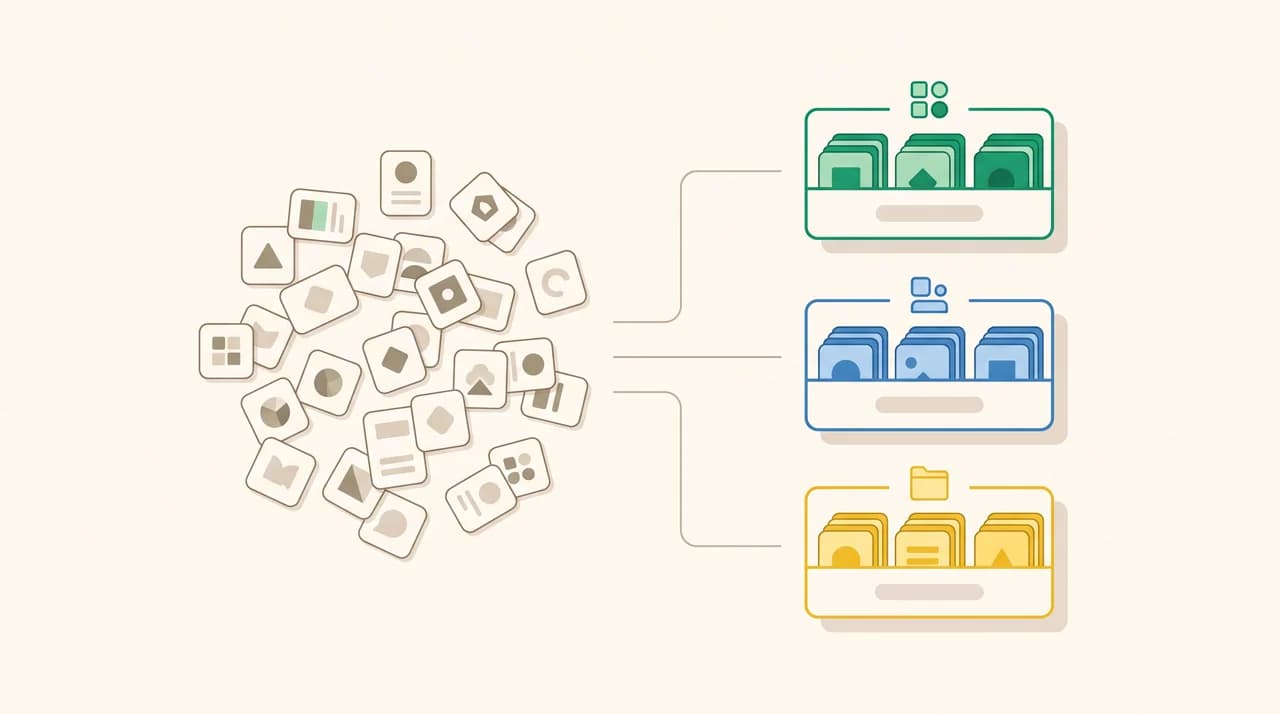
Your four options at a glance#
Read this as a shortlist generator. The sections underneath say what each path is actually like, including where each one hurts.
| Option | COM add-ins and macros | Offline | Effort to move | Best fit |
|---|---|---|---|---|
| Switch back to classic Outlook (Windows) | Full support | Full local store | Minutes — a toggle, if classic is installed | A COM add-in or macro is in your daily path |
| Stay on new Outlook (Windows) | None | Cached window, partial | None — you are already there | Your losses are habits, not dependencies |
| Outlook on the web | Web add-ins only | Limited browser offline | None — open a browser | One mailbox surface everywhere, no install |
| A different client entirely | Web add-ins or none, by client | Varies widely by client | Hours — reconnect accounts, rebuild rules | New Outlook is the symptom, not the disease |
Option 1: Switch back to classic Outlook (Windows)#
Most articles hurry past this one, and for a large group of readers it is simply correct. If a COM add-in sits in your daily path with no web equivalent — CRM logging, e-signature, dictation, document management, a compliance tool your industry requires — going back to classic Outlook is not procrastination. It is the only choice that keeps your work working.
Say that plainly, because the pressure runs the other way. Nothing about the new client justifies losing a tool you use forty times a day, and you have years rather than months before the trade-off gets forced. Set a quarterly reminder to check whether your blocking vendor has shipped a web add-in yet, and this stays a decision rather than a stall.
The catch is that switching back is not always available. Some organisations remove the toggle by policy, and some new Windows 11 machines ship with new Outlook and no classic install to return to.
- 1
In new Outlook (Windows): flip the toggle
Turn off the New Outlook toggle in the top-right corner. You are asked for a reason, then the app closes and classic Outlook opens. This only works if classic is still installed.
- 2
If the toggle is missing: check policy
Admins can hide or disable it. Ask whether a policy is enforcing new Outlook and whether an exception is possible — bring the specific add-in name, because a general complaint gets a general answer.
- 3
If classic is not installed: reinstall the desktop apps
Classic Outlook ships with the Microsoft 365 desktop apps. Reinstall from the Microsoft 365 portal or ask IT to deploy it. A plan covering only web and mobile apps will not include it.
- 4
In classic Outlook: confirm the add-ins are back
File, Options, Add-ins. Anything listed as a COM Add-in should load again. If one sits in the disabled list, re-enable it there rather than reinstalling.
- 5
On Mac: this option does not exist in the same form
There is no equivalent classic toggle, and legacy Outlook for Mac retires for Exchange Online accounts in October 2026. Mac users choose between current Outlook for Mac, the web, or a different client.
Option 2: Stay on new Outlook and work around the gaps#
If your losses turned out to be habits — a layout you liked, a shortcut in the wrong place, search that behaves differently — staying put is the cheapest answer and you will adjust within a fortnight. Most people who complain in week one have stopped by week four.
Several of the sharper gaps have real workarounds worth knowing before you write the client off.
| Missing in new Outlook | Workaround | What it costs you |
|---|---|---|
| A COM add-in from a major vendor | Install the vendor's web add-in from Apps, Get Add-ins, or use their web app in a second tab | The web version often does less — test the specific job, not that a pane opens |
| VBA macros | Rebuild the automation in Power Automate or a Microsoft Graph script | Setup time and usually an admin approval |
| Rules import and export | Recreate rules by hand, or move the logic to server-side rules | An afternoon once. Server-side rules then apply on every client |
| Working on a plane or a bad connection | Turn on Settings, General, Offline and let it cache before you travel | A limited window of mail and calendar, not a full archive |
| Opening an old PST archive | Open it in classic Outlook, or import the contents into the online mailbox | PST handling in new Outlook is partial and varies by build |
| Assigning mail-folder delegate access | Have one person do it from classic Outlook | Somebody has to keep classic installed |
Option 3: Outlook on the web#
Outlook on the web is the most underrated answer here, particularly if what you resent is a desktop app that behaves like a website anyway. Work and school accounts sign in at outlook.office.com, personal accounts at outlook.com.
It uses the same web add-in model as new Outlook, which makes it a free rehearsal for switch day: anything that works in the browser will work in new Outlook, and anything missing there stays missing. Test your add-ins here before committing to any path.
What you give up is desktop integration — default mail-client handling for other apps, native notifications, attachment flows that expect a local app — and offline support is thinner than anywhere else on this list. On mobile, Outlook for iOS and Android supports only the subset of web add-ins that declare mobile support, so expect a shorter list on a phone.
Option 4: Move to a different client entirely#
For some readers the forced migration is not the problem, it is the prompt. If you were already tired of the volume, the triage and the drafting, changing clients is a chance to change how the work gets done rather than restoring what you had.
The clients below all connect to your existing Microsoft 365 or Outlook mailbox, and none of them run COM add-ins, because nothing outside classic Outlook can. Our row is first because this is our site; the disclosure is in the section itself.
| Client | What it is | Connects to | Platforms | Best fit |
|---|---|---|---|---|
| AI Emaily | AI email client with approval, undo and audit | Outlook / Microsoft 365, Gmail, IMAP | Web, downloadable desktop apps on macOS (Apple Silicon) and Windows, a native iOS app, Android PWA | Accounts split across providers, and too much mail to hand-sort |
| eM Client | Traditional desktop client — mail, calendar, contacts, tasks | Microsoft 365 / Exchange, Gmail, IMAP | Windows, Mac | You want classic Outlook's shape back, not a new way of working |
| Thunderbird | Free, open-source desktop client | Microsoft 365 over IMAP with OAuth, Gmail, IMAP | Windows, Mac, Linux | Linux, or no vendor in the loop at all |
| Superhuman Mail | Keyboard-first speed client | Gmail, Outlook | Web, desktop, mobile | High volume processed by hand, one keystroke per action |
| Fyxer | An overlay on the inbox you already have, not a client | Gmail, Outlook | Runs inside your existing mailbox | AI help without changing clients at all |
AI Emaily: one inbox across Outlook, Gmail and IMAP#
AI Emaily is ours — we build it, so weigh this section accordingly. It is an AI email client that connects Outlook and Microsoft 365 accounts alongside Gmail and standard IMAP, so accounts you currently open in three places sit in one inbox. Nothing migrates and your mail stays with Microsoft; the Outlook setup walkthrough is at /docs/connect-outlook.
It does not clone classic Outlook and is not trying to. It runs on three authority levels. Manual is a fast client with the AI out of the way. Copilot is the default: the agent triages, files, summarises long threads and drafts replies, and nothing sends until you approve it. Autopilot is gated, with an undo window and an audit log of every action taken. Drafting voice comes from a Personal Context you write and client profiles you edit, not from a model reading your old mail — and we do not train on your mail.
Be clear about what it does not fix. We are not a replacement for a Salesforce or DocuSign add-in: that code runs only inside classic Outlook, so if CRM logging is your blocker, keep classic for it. Our own limits, stated once — the desktop app ships downloadable desktop apps for macOS (Apple Silicon only) and Windows, built as an Electron shell around the web app rather than a native-toolkit binary, there is no native Linux build, Android runs as a PWA with a native app on the roadmap, there is no watchOS app, and offline support is partial.
eM Client: the closest thing to classic Outlook's shape#
If what you want is classic Outlook back — a real desktop application with mail, calendar, contacts and tasks in one window, local storage and proper offline — eM Client is a closer match than we are. That is a genuine concession. We are an AI client that changes how you work; eM Client is a conventional client that restores how you already worked.
It connects to Microsoft 365 and Exchange as well as Gmail and IMAP, runs on Windows and Mac, and behaves like software you installed rather than a site in a shell. For a classic Outlook refugee whose complaint is the loss of a desktop feel, that is the shortest path back to comfortable.
The honest limits: it does not run COM add-ins either, so your Salesforce sidebar is still gone, and there is no Linux build. Check current licensing and platform support on their own site.
Thunderbird: free, open source, and the Linux answer#
Thunderbird is the one to take seriously if you want no vendor between you and your mail. It is free and open source, it stores mail locally, and it is the only client here with a first-class Linux build — including ours, which has none.
It connects a Microsoft 365 mailbox over IMAP with modern OAuth sign-in, so you are not typing a password into a legacy protocol. Native Exchange support has been arriving gradually across recent releases, so check the current release notes if you need directory and calendar features rather than mail alone.
What you trade is polish. Configuration is more manual, the interface rewards patience, and support is a forum thread rather than a phone line. For a technical user that is a fair trade; for a non-technical one it usually is not.
Superhuman Mail and Fyxer: speed, and staying put#
Superhuman Mail suits one specific reader: someone who processes high volume by hand and wants every interaction to take one keystroke. It works with Gmail and Outlook. Note the naming, because most reviews are out of date — Grammarly acquired Superhuman the email client in July 2025 and renamed the parent company to Superhuman in October 2025, so Superhuman Mail is the client and the Superhuman Suite is the bundle. AI capability moved into a higher business tier after the acquisition, so check which tier holds the features you are comparing.
Fyxer is not a client at all, and that is the point. It overlays Gmail or Outlook, triaging and drafting inside the mailbox you already have — the lowest-risk option if you want AI help but not a new interface in the same month you were force-migrated. The structural detail to check first is that Fyxer meters incoming email volume with overage charges, which falls hardest on the heaviest inboxes.
One client that does not belong here: Shortwave is Gmail and Google Workspace only. It is a good AI client, but it cannot connect the Outlook mailbox you are trying to escape.
If you landed here from Windows Mail#
Windows Mail and Calendar retired on 31 December 2024 and users were migrated to new Outlook. If you are looking for a Windows Mail app replacement in 2026, you have one advantage over a classic Outlook refugee: you never had COM add-ins, so none of the add-in cliff applies to you.
That makes the choice simpler. You lost a lightweight app and were handed a heavier one, so eM Client and Thunderbird are the closest lightweight installed replacements, and Outlook on the web costs nothing to try.
Before you move anything: a 30-minute check#
Whichever path you pick, run this first. It prevents the two failure modes we see most: abandoning classic Outlook while something critical still depends on it, and switching clients twice because the first choice was made in a bad week.
- 1
In classic Outlook: list your add-ins
File, Options, Add-ins. Screenshot the list, then set the Manage dropdown to COM Add-ins and click Go. Everything in that COM list is a potential blocker; anything already listed as a web add-in follows you anywhere.
- 2
In Outlook on the web: test the web versions
The web uses the same add-in model as new Outlook, so install the vendor's web add-in there and run one real task with it. Free rehearsal, no commitment.
- 3
In classic Outlook: export what only exists locally
Export rules to an RWZ file, save signatures and templates, and note where your PST archives live. Rules import and export does not exist in new Outlook, so treat that file as a specification you will retype.
- 4
Check server-side versus client-only rules
Server-side rules follow your mailbox to every client, including new Outlook, the web and a third-party app. Client-only rules do not. Moving logic server-side removes a whole category of surprise.
- 5
On mobile: confirm your phone still works
Outlook for iOS and Android is unaffected by the desktop migration, but a third-party client changes your phone too. Check the mobile surface before you commit the desktop.
How to choose for your situation#
Find your row and start there, one thing at a time. Evaluating four clients at once is how people end up back where they started with two months gone.
| Your situation | Start with | Why |
|---|---|---|
| A COM add-in runs your day and has no web version | Classic Outlook (Windows) | Nothing else runs it, and it is supported until at least 2029 |
| You depend on VBA macros, custom forms or rules import | Classic Outlook (Windows) | All three are unsupported in new Outlook and are not coming |
| Your losses are layout, shortcuts and habit | Stay on new Outlook | The workarounds table covers the sharp edges; the rest is adjustment |
| You want one surface on every machine, no install | Outlook on the web | Same mailbox, same add-in model, nothing to maintain |
| You want classic Outlook's shape back on a desktop | eM Client | An installed client with local storage — closer to classic than we are |
| You are on Linux, or want no vendor in the loop | Thunderbird | Free, open source, first-class Linux build. We have none |
| Outlook plus Gmail plus IMAP, and too much of it | AI Emaily | One inbox across all three, with approval before send, undo and audit |
| You want AI help but no new interface | Fyxer | An overlay leaves your mailbox and your habits where they are |
The verdict#
If a COM add-in, a macro or a rules export sits in your daily path, switch back to classic Outlook and stop reading roundups. That is the honest recommendation, most pages will not give it to you, and Microsoft's own support window backs it up until at least 2029.
If the migration was the prompt rather than the problem — you are drowning in mail, your accounts are split across Outlook, Gmail and something IMAP, and you would rather change how the work gets done than restore a 2019 setup — AI Emaily is where we would start, and we build it. It connects your Microsoft 365 mailbox without migrating anything, drafts from a Personal Context you control, and sends nothing without your approval unless you deliberately gate Autopilot on.
If you want the old shape rather than a new one, eM Client is the closer match and we will not pretend otherwise. On Linux it is Thunderbird. And if your losses turn out to be habits, staying on new Outlook is a perfectly respectable answer that costs you nothing.
Frequently asked
See it in AI Emaily
Keep reading
Sources

Written by
Nafiul HasanNafiul Hasan is an entrepreneur and AI automation system builder with 10+ years of experience turning messy, manual workflows into reliable automated systems. He designs and ships AI enterprise solutions end-to-end — the agent logic, the data plumbing, and the product people actually use — and founded AI Emaily to give busy professionals their attention back. He writes here from the builder's seat: what works, what breaks, and how to put AI to work without giving up control.