Superhuman Alternatives After the Grammarly Acquisition

The short answer
Not automatically. Superhuman Mail still ships, and the vendor says existing customers keep the product they bought. Leave if suite bundling, the higher AI tier or corporate-family data sharing bothers you. The alternatives worth a trial are AI Emaily, Mimestream, Shortwave, Fyxer, Missive and Inbox Zero.
Superhuman alternatives after the Grammarly acquisition: what changed for existing users, the Mail vs Suite split, the data question, and six options.
On this page
- 01The short answer: should you leave Superhuman after the acquisition?
- 02What happened, in order
- 03What changed for existing users, and what genuinely did not
- 04Superhuman Mail vs the Superhuman Suite: what are you paying for?
- 05Did AI capability move to a higher tier?
- 06The data question: what a new corporate parent actually changes
- 07A three-question test before you cancel anything
- 08How we compared the alternatives
- 09Superhuman alternatives after the acquisition, at a glance
- 101. AI Emaily — our pick, built around what the agent is allowed to do
- 112. Mimestream — the honest answer if your objection is AI itself
- 123. Shortwave — an AI client if everything you have is Gmail
- 134. Fyxer — if you do not want to change your inbox at all
- 145. Missive — if the seats were really for a shared address
- 156. Inbox Zero — if the ownership question is the whole question
- 16The case for staying on Superhuman Mail
- 17The verdict
Most people searching for Superhuman alternatives after the Grammarly acquisition are not shopping on features. They already liked the product. Something changed above the product, and they want to know whether the thing they pay for is still the thing they bought.
So this page answers that first: what happened, what changed for existing users, what the Mail and Suite split means for your invoice, where the AI sits now, and what a new corporate parent changes about your data. Alternatives come after, because a good share of you should stay.
One disclosure up front: we build AI Emaily, one of the six options below, and it is our recommended pick. That is why every entry states its limits, why ours are listed in full, and why there is a section arguing the case for staying on Superhuman Mail.
The short answer: should you leave Superhuman after the acquisition?#
An acquisition is not a scandal, and this one has not degraded the client. Superhuman Mail is still shipping and still the most complete keyboard-first email workflow on the market. Leaving is reasonable for specific reasons and a poor decision if the only trigger was a headline.
- You liked the speed and never used the AI: stay. The keyboard workflow did not get worse, and switching costs you years of muscle memory.
- You bought it for the AI and the parts you wanted now sit in a higher tier: re-evaluate, because you are comparing tiers rather than products.
- You do not want your email client bundled with a writing assistant, a docs product and a cross-app agent: a fair reason to leave, and every alternative below is single-purpose.
- You are uneasy about a wider corporate family holding the policy that covers your mail: check your own account settings first, then decide.
- You need Outlook plus a standalone IMAP address in one place: that gap predates the deal and no change of owner fixes it.
What happened, in order#
Three separate events get compressed into one in most coverage, which is why this reads as more dramatic than it is. Kept apart, each has a different implication for a paying subscriber.
| When | What happened | What it meant for a Mail subscriber |
|---|---|---|
| 30 June 2025 | Grammarly announced an agreement to acquire Superhuman, the email client; Superhuman confirmed it the next day | Nothing immediately. The client kept shipping, and the stated plan was more investment |
| October 2025 | The parent company renamed itself Superhuman and introduced the Superhuman Suite | The name became ambiguous: a company, a suite and an email client now share it |
| Late 2025 onward | Superhuman Go launched as a cross-app assistant; Coda was rebranded Superhuman Docs | The roadmap became a suite roadmap. Mail is one of four products competing for it |
| Through 2026 | Mail plans sold separately from Suite plans, with AI capability spread across tiers | The renewal question became which product and tier am I actually on |
What changed for existing users, and what genuinely did not#
Start with the part that gets lost. Your mailbox was never touched. Superhuman Mail is a client on top of Gmail or Outlook, so your messages, your address and your provider account stayed where they were.
The vendor was also explicit at the rebrand: for existing Grammarly, Coda and Superhuman Mail customers, nothing changes about the products they rely on. As far as the shipped client goes, that has held. Split Inbox, the command palette, snippets and follow-up reminders all still work.
What changed is everything around the product, and that is what people are reacting to.
- The brand now covers four things, so a review of Superhuman may describe a company, a suite, an email client or a cross-app assistant.
- Mail is one product sharing a roadmap rather than the only thing the company builds.
- Packaging split in two: Superhuman Mail on its own, or the Suite that bundles it with the rest.
- The privacy policy became a corporate-family policy naming several legal entities.
Superhuman Mail vs the Superhuman Suite: what are you paying for?#
This is the most common confusion in renewal week, and it is worth two minutes with your invoice. The two are sold separately and answer different questions.
Superhuman Mail is the email client on its own, per seat. The Superhuman Suite is the bundle: Mail alongside Grammarly, Superhuman Docs and Superhuman Go. If you only ever wanted a faster inbox, the suite is a bigger purchase than the problem you had.
| Superhuman Mail | Superhuman Suite | |
|---|---|---|
| What it is | The email client on its own | Four products under one brand |
| What you get | Inbox, triage, shortcuts, calendar, the AI of your tier | Mail plus Grammarly, Superhuman Docs and Superhuman Go |
| Who it suits | One person who wants a faster inbox and nothing else | A team standardising on one vendor across writing, docs and email |
| The trade | Narrow scope, one thing to learn | Fewer invoices, wider data scope, surface area you did not ask for |
| The question to ask | Is the client worth a seat on its own? | Would I have bought the other three separately? |
Check which one is on your invoice before you compare anything
Did AI capability move to a higher tier?#
Yes, in the sense that matters. The AI in Superhuman Mail is no longer one feature you either have or do not. It is spread across tiers, with lighter writing help low down and the parts that work on your behalf higher up.
As of July 2026 the split looks roughly like this. Confirm the current line on the pricing page the day you decide, because these boundaries have moved before.
| Capability | Where it sits | Why it matters to a leaver |
|---|---|---|
| AI writing help and thread summaries | Entry Mail tier | If this is all you use, your tier probably did not change and neither should your plans |
| Drafts prepared for you automatically | Higher business tier | This is what most people mean by AI email, and the usual reason a renewal jumped |
| Asking questions across your inbox | Higher business tier | Compare alternatives against this tier, not against the entry plan |
| Custom automatic labelling and CRM integrations | Higher business tier, CRM subscription separate | Triage rules are included by default in most alternatives |
| The cross-app assistant and the other suite products | Suite packaging, not standalone Mail | If you want only email, you are paying for reach you will not use |
The data question: what a new corporate parent actually changes#
This is where content in this category goes to panic, so be careful with it. There is no evidence of anything improper, and Superhuman publishes more detail about its AI handling than most vendors do. What changed is scope, and scope is a legitimate thing to have an opinion about.
Two specifics from the published policy are worth reading yourself. The first is the corporate family clause: companies within the Superhuman corporate family may access information about you, and the policy names Superhuman Platform Inc., formerly Grammarly, along with subsidiaries including Grammarly Inc., Coda Project LLC and Superhuman Labs LLC. That is a wider set of entities than the policy you agreed to before 2025.
The second is a control rather than a restriction. The policy says you can decide whether Superhuman uses your content to train its AI models by adjusting the training control in your account settings. An opt-out existing is better than no opt-out. It also means the default matters, and most people have never opened that screen.
Alongside that, Superhuman's own material describes zero-day retention agreements with its model providers and says AI subprocessors are not permitted to train on customer data. Those statements cover different parties, and reading one as a promise about the other is how this gets misreported in both directions.
Four things to check in your own account before deciding
A three-question test before you cancel anything#
Run this in ten minutes, then price the switch: the snippets, the Split Inbox setup, the reminders and the shortcuts in your fingers. A meaningful share of people who do this decide to stay.
- 1
Did the feature you actually use move?
Find the two or three things on your plan page you would miss on a Tuesday. If they are all still on your tier, the acquisition changed your reading material, not your product.
- 2
Are you paying for products you would not buy separately?
If you are on the Suite and only ever open Mail, that is a packaging problem rather than an ownership one, and downgrading to standalone Mail may be the whole fix.
- 3
Is your objection about scope or about capability?
Scope objections, meaning who holds the policy and how many products touch your work, are not solved by a better feature list. Capability objections are. They produce different shortlists.
How we compared the alternatives#
This is a capability comparison built from vendor documentation and public product pages checked in July 2026. It is not a bake-off, and any roundup claiming a month of side-by-side testing deserves a raised eyebrow.
There are no prices, star ratings or review counts here, on purpose. Everything about pricing in this category moved in the past year, so check each vendor's own page on the day you buy.
- The objection each tool answers, since this reader arrived with a complaint rather than a feature gap.
- Company shape: whether email is the vendor's only product or one of several.
- Form factor and coverage across Gmail, Outlook and Microsoft 365, and standard IMAP.
- Who presses send, and whether approval, undo and an audit trail sit behind the AI.
Superhuman alternatives after the acquisition, at a glance#
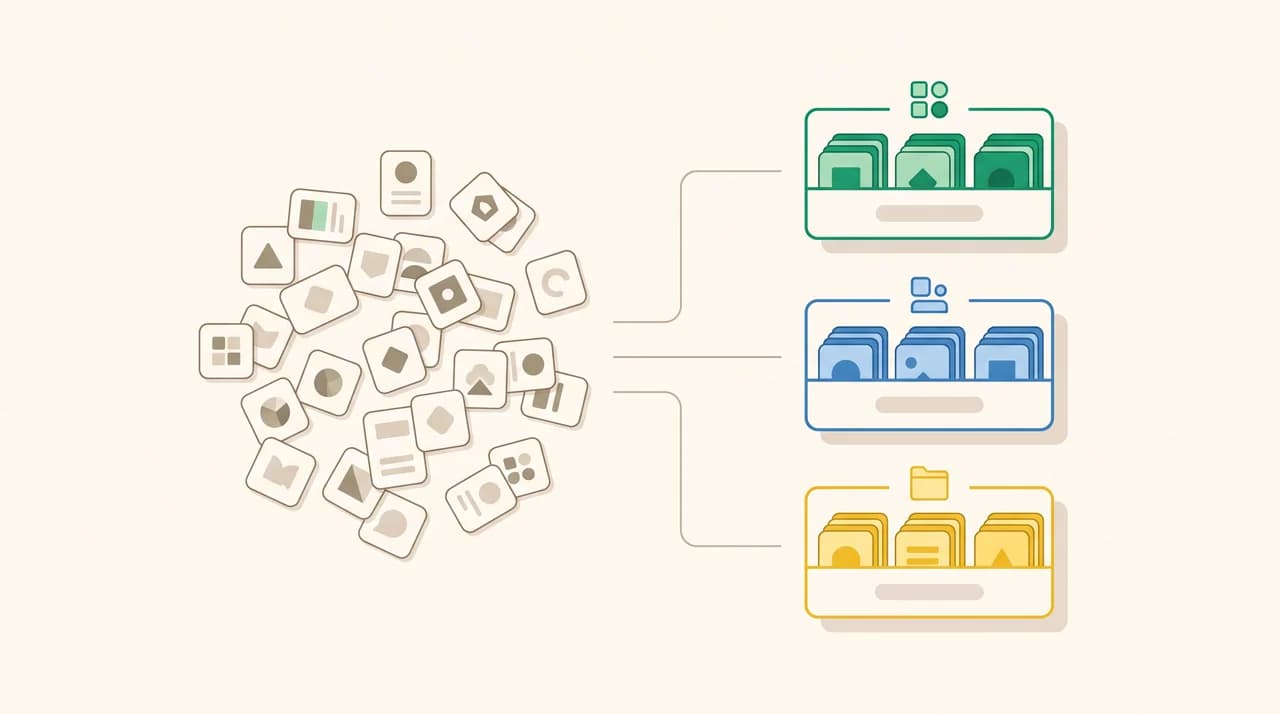
Read this as a shortlist generator. Find the objection that matches yours, then jump to that entry. The last row is Superhuman Mail itself, for reference.
| Tool | What it is | Works with | The objection it answers | Company shape |
|---|---|---|---|---|
| AI Emaily | AI-native email client | Gmail, Outlook and Microsoft 365, IMAP | I want the agent to do work, with approval and an audit trail | Independent; the email client is the product (ours) |
| Mimestream | Native macOS client for Gmail | Gmail and Google Workspace | I do not want an AI agent near my mail at all | Independent studio, one product |
| Shortwave | AI-native Gmail client | Gmail and Google Workspace | I still want an AI client and everything I have is Gmail | Independent; team also ships a separate agent product |
| Fyxer | Overlay on the inbox you have | Gmail, Outlook | I will not learn a new client during a renewal window | Independent, one product |
| Missive | Shared team inbox | Gmail, Outlook, IMAP and other channels | The seats were really for an address two people answer | Independent, one product |
| Inbox Zero | Open-source assistant on your inbox | Gmail and Google Workspace, Outlook | I want to read the code or host it myself | Open source; self-hosting available |
| Superhuman Mail (reference) | Keyboard-first email client | Gmail, Outlook | Speed was the whole point and still is | One product inside a four-product suite |
1. AI Emaily — our pick, built around what the agent is allowed to do#
AI Emaily is an AI email client that connects Gmail, Microsoft 365 and Outlook, and standard IMAP accounts into one inbox. We build it, which is why it leads this list and why its limits get more words here than anyone else's. Nothing migrates: your mail stays with your provider and your address does not change.
For a reader arriving from an acquisition, the useful difference is governance rather than speed. Authority is explicit and set per account across three levels. Manual is a plain fast client. Copilot is the default, where the agent triages, files and drafts but nothing reaches a recipient until you approve it. Autopilot is gated, with an undo window and an audit log recording every action and the reason behind it.
Drafting voice comes from a Personal Context brain and per-client profiles you write and edit yourself. We do not train on your mail and do not read your archive to imitate you, so a reply that sounds wrong is fixed by editing a context entry. Model providers run under zero-retention terms.
The limits, plainly. We ship downloadable desktop apps for macOS, Apple Silicon only and not in the Mac App Store, and for Windows. Both are an Electron shell around the web app rather than a native-toolkit binary, so a native client beats us on memory footprint and deep OS integration. There is no native Linux build, Android runs as a PWA with a native app on the roadmap, and offline is partial by design: read and draft offline, but not a full local archive.
2. Mimestream — the honest answer if your objection is AI itself#
If what unsettled you is an AI company owning your inbox, the consistent move is a client with no agent in it, and that rules us out as firmly as it rules out Superhuman Mail. Mimestream is the better fit for that reader and we will not pretend otherwise.
It is a native macOS client for Gmail built on the Gmail API rather than IMAP, so labels, categories and search behave the way they do in Gmail instead of being approximated. It feels like a Mac application because it is one, which is a real advantage over every web-based client on this page, ours included.
It is also the smallest company here, focused on a single product, which is exactly what some readers want after watching a favourite tool get absorbed. The trade-offs are sharp: Gmail and Google Workspace only, macOS only, and nothing that drafts or triages for you.
3. Shortwave — an AI client if everything you have is Gmail#
Shortwave is an AI-native Gmail client built by former Google engineers, and it is the closest structural swap for Superhuman Mail if your world is entirely Google. It is keyboard-driven and puts AI in the middle of the product rather than bolting it on.
Its strongest feature is search. Asking your archive a question in plain language and getting the right thread back is what ordinary Gmail search never learned, and Shortwave has pushed harder on it than we have.
Two things to weigh in your position. It is Gmail and Google Workspace only, so a second provider is out of scope. And as of July 2026 its free plan has narrowed while the founding team's public focus moved toward a separate agent product. That is a signal rather than a shutdown, but if corporate direction is why you are leaving Superhuman, it is the same class of risk.
4. Fyxer — if you do not want to change your inbox at all#
Fyxer is an overlay rather than a client. It attaches to Gmail or Outlook and works inside them, triaging what arrives, writing draft replies into your existing drafts folder and handling meeting notes. Your interface, shortcuts and mobile apps stay as they are.
That is a real advantage when you are already cancelling one subscription and do not want a second disruption in the same month.
Two things to check first. Fyxer meters incoming email volume and charges for overage, which falls hardest on the inboxes that most need triage, so model your daily load against current terms. The other limit is architectural: an overlay can only do what Gmail and Outlook expose, so it will not give you one inbox spanning providers.
5. Missive — if the seats were really for a shared address#
A slice of Superhuman Mail seats were never solving a personal-speed problem. They were bought because several people answer the same sales or support address and keep colliding, and a faster solo client only makes the collision arrive sooner.
Missive is a shared inbox instead. Several people work one address, discuss a thread in a chat attached to it, assign it, and reply once as the team. It connects to Gmail, Outlook and IMAP, and adds other channels alongside email.
It is per seat, so check current tiers on their own page, and be honest about whether you need it. For one person the collaboration layer is overhead. For two or more it solves something no keyboard shortcut ever will.
6. Inbox Zero — if the ownership question is the whole question#
For a reader who does not want to re-read a privacy policy every time a company changes hands, open source is the only complete answer available. Inbox Zero is an open-source AI assistant that works on top of Gmail, Google Workspace or Outlook rather than replacing the client.
It labels mail automatically, prepares draft replies, blocks cold email, bulk-unsubscribes from newsletters you never open, and reports on where your volume comes from. Because the source is public you can read what it does with your mail, and you can host it yourself so processing runs on infrastructure you control.
Self-hosting is real work: API credentials, a model key, and a service you now operate and patch. A hosted version exists if you want the benefit without the maintenance, at which point you are trusting a vendor again, just a smaller and more inspectable one.
The case for staying on Superhuman Mail#
A page on our own site that told everyone to leave would not be worth trusting. For a meaningful share of readers, the right response to this acquisition is to do nothing.
The client did not get worse. It is still the most complete keyboard-driven email workflow shipping: a command palette, Split Inbox triage, follow-up reminders, read statuses, and enough shortcut coverage that a fast user rarely reaches for the mouse. It runs on Gmail and Outlook across Mac, Windows, web, iOS and Android.
There is an argument on stability in the other direction too. A larger parent means more engineers and a longer runway, which is not nothing in a category where several products died quietly in the past two years. Independence is a preference, not automatically a safety feature.
So the test stays narrow. If you bought it for speed, process everything by hand, and the AI was never the point, the case for moving is weak. If you bought it expecting the assistant to take work off you and that now sits behind a tier or a bundle you did not want, the six options above are where to look.
Where Superhuman Mail still beats us
The verdict#
AI Emaily is our pick for people leaving Superhuman Mail because of what happened above the product. The reason is narrow enough to check: it is the only option here that puts Gmail, Outlook and IMAP in one inbox while keeping approval before send, an undo window and a readable audit trail between the agent and your recipients, at three autonomy levels you set per account. Email is the only product we make, so nothing else competes for its roadmap.
The exceptions are real. If your objection is AI in the inbox at all, Mimestream is the consistent answer and we are not it. If everything is Gmail and archive search is your daily pain, Shortwave is better at that than we are. If speed was always the point, staying put is rational.
Whichever way you go, verify current plans, tiers and policies on each vendor's own pages rather than in any comparison article, this one included. Everything here was checked in July 2026, and this category rearranges itself faster than that implies.
Frequently asked
See it in AI Emaily
Keep reading
Sources

Written by
Nafiul HasanNafiul Hasan is an entrepreneur and AI automation system builder with 10+ years of experience turning messy, manual workflows into reliable automated systems. He designs and ships AI enterprise solutions end-to-end — the agent logic, the data plumbing, and the product people actually use — and founded AI Emaily to give busy professionals their attention back. He writes here from the builder's seat: what works, what breaks, and how to put AI to work without giving up control.