Best AI Email Tools for Chiefs of Staff (2026): 7 Ranked

The short answer
AI Emaily is the strongest pick for chiefs of staff: the Living Brief surfaces what needs escalation, delegation with handoff notes closes loops across the org, and an audit log covers every autonomous action — all across Gmail, Outlook, and IMAP. Cora is the honest alternative for a COS whose primary job is handing the principal a structured digest by email.
Best AI email tools for chiefs of staff in 2026: seven ranked on brief quality, escalation control and audit trail — plus the risk of over-filtering.
On this page
- 01What the chief of staff inbox problem actually is
- 02How this roundup was compared
- 03Seven AI email tools for chiefs of staff at a glance
- 041. AI Emaily — best for signal routing, loop closing, and audit
- 052. Cora — best if the COS's main job is producing a digest for the principal
- 063. Fyxer — best if you want to change nothing about your current setup
- 074. Superhuman Mail — best for raw processing speed at high volume
- 085. Shortwave — best for interrogating a deep Gmail archive
- 096. Missive — best when the COS manages a shared leadership address
- 107. Serif — best if you want the agent to act without a per-draft review queue
- 11The honest risk when AI decides what the principal never sees
- 12How to choose for your situation
- 13The verdict
The chief of staff inbox problem is not a volume problem. It is a signal problem: which of the hundred messages arriving today actually needs the principal's attention, and which ones stop with you? Get that judgment wrong in either direction — burying the principal in noise you should have filtered, or missing an escalation they find out about from someone else — and the job has failed even if the inbox was technically processed.
This is a different job from what an executive assistant does. An EA manages the principal's calendar and correspondence. A COS manages the org's information flow, often carries their own decision authority, and is accountable for what reaches the desk and what does not. The tool that actually helps has to surface the right signal, support delegation with context, close loops on what was sent out, and maintain a trail that can be audited. Drafting speed is a secondary concern.
One disclosure upfront: we build AI Emaily, and it is our first pick here. Every entry below states its limits plainly, and one competitor is named as genuinely better on a specific dimension.
What the chief of staff inbox problem actually is#
A COS typically handles communication across three or four groups simultaneously: the principal, the leadership team, external partners, and an inbound stream of requests that should reach neither. Each message arriving in a COS inbox needs a routing decision, not just a reply: does this go up, does it stop here, does it go out to someone else, or does it get filed?
The daily brief is the load-bearing feature for this role. A COS who opens a raw inbox every morning spends an hour on triage before they can do anything productive. A COS with a well-configured brief walks in knowing what requires escalation, what has already been handled, and what can wait without anyone losing sleep.
Loop closing is the second job. A COS sends a large volume of messages — on their own authority, on behalf of the principal, and on behalf of the leadership team — and then has to track which ones are awaiting a reply. An inbox that does not surface open follow-ups is an inbox where things get dropped.
The third job is the hard one: deciding when to interrupt the principal. Every tool in this roundup performs some form of triage, but triage that happens inside a model with no visibility into its reasoning is a real operational risk for the person who is accountable for what did and did not reach the desk.
How this roundup was compared#
This is a capability comparison built from vendor documentation and public product pages checked in July 2026. We did not run seven clients side by side for a month, and any roundup that claims to have done that in a short window should be read skeptically. What can be compared honestly is what each product says it does and where the architecture puts a hard ceiling on what is possible.
There are no competitor prices here on purpose. This category repriced itself repeatedly in the past year. Any figure printed here would be stale before you finished reading. Check pricing on each vendor's own page on the day you buy.
- Brief and digest — does the tool produce a structured summary you can act on or hand to the principal, and how configurable is the schedule and delivery channel?
- Escalation controls — can you define conditions that override triage and force human review, and is the reasoning visible?
- Loop closing — does the tool surface threads awaiting a reply and let you delegate with context attached?
- Provider coverage — Gmail only, Gmail plus Outlook, or standard IMAP as well?
- Who presses send — does the AI suggest, draft for approval, or act autonomously, and what stands between it and your recipients?
- Audit — is there a log of what the AI did and why, and can you reverse it?
Seven AI email tools for chiefs of staff at a glance#
Use this table to narrow the field. The entries below give you the depth to make the call.
| Tool | Core COS strength | Works with | Who presses send | Escalation visible? |
|---|---|---|---|---|
| AI Emaily | Living Brief + delegation with handoff notes + full audit log | Gmail, Outlook / M365, IMAP | You in Copilot; gated Autopilot with undo and audit | Yes — escalate-if keywords + per-thread override |
| Cora | Twice-daily digest delivered by email | Verify on vendor site | You — Cora cannot send email on its own | Limited — you see the brief, not the triage reasoning |
| Fyxer | Zero-friction overlay on your existing inbox | Gmail, Outlook | You — drafts land in your normal drafts folder | Limited — bounded by what Gmail or Outlook expose |
| Superhuman Mail | Keyboard-first speed through high volume | Gmail, Outlook | You | None built in beyond manual configuration |
| Shortwave | Deep semantic search over a Gmail archive | Gmail / Google Workspace only | You | Triage is suggestion-only |
| Missive | Shared team inbox with visible assignment status | Gmail, Outlook, IMAP | A teammate, after internal discussion on the thread | Yes — assignment status and internal comments always visible |
| Serif | Autonomous action without a per-draft review queue | Verify on vendor site | The agent, within guardrails you configure | Verify the escalation settings on the vendor site before relying on them |
1. AI Emaily — best for signal routing, loop closing, and audit#
AI Emaily is an AI email client that connects Gmail, Microsoft 365 and Outlook, and standard IMAP accounts into a single inbox. We build it, which is why it is first here — and why the limits below are stated more completely than any other entry in this roundup.
The feature a COS will use most is the Living Brief. It runs on a schedule you set — morning, midday, or on demand — and delivers a digest of threads that need attention, each with a summary and a drafted reply in your voice. Delivery goes in-app or to Slack, Telegram, or Discord, so you can scan it between meetings without opening the email client. An on-demand generate surfaces the five most important threads when you have a spare five minutes between calls.
Loop closing works through delegation. Any thread can be assigned to a teammate or to the agent from the same action menu, with a one-line handoff note — 'Chase the signed contract' or 'Do not offer a refund' — that the agent reads as an instruction when it drafts. The assignment moves through four statuses (open, working, needs_review, done) visible to everyone with access. Open loops in client profiles auto-load when you open a thread with that contact, so the agent always knows what is outstanding.
Authority levels are set per account or per rule. Copilot stages every draft for your approval — nothing leaves until you click send. Autopilot is gated: it sends only to allow-listed senders, holds anything below a configurable confidence threshold rather than sending, gives you an undo window after queuing a send, and forces human review on escalate-if keywords regardless of confidence. Every autonomous action is recorded in the audit log with its reasoning.
Voice comes from a user-set Personal Context brain and per-client profiles — open loops, guardrails, and don't-forget notes — never from learning your sent mail or reading your archive.
The limits, stated plainly: the macOS app is Apple Silicon only; there is no Intel build and no native Linux client; offline support is partial by design; Android runs as a PWA with a native app on the roadmap; no watchOS app. Plan details and the free trial are on the pricing page.
2. Cora — best if the COS's main job is producing a digest for the principal#
Cora positions itself explicitly as an AI chief of staff for email. Its core product is a twice-daily brief: Cora screens incoming messages, holds the noise back, and sends a formatted digest of what genuinely needs attention, twice a day, that you can read in roughly thirty seconds. You talk to it by chat or email and ask it to surface information, prioritise threads, or draft a reply.
The important architectural fact is that Cora cannot send email on its own — it places drafted responses for your review but lacks the ability to send or delete messages. That is a genuine guardrail, and for a COS who wants the AI to advise without acting, it removes a category of risk entirely. It also means there is no delegation workflow, no autonomous send audit, and no loop-closing status tracking beyond what you manage yourself.
Where Cora wins against us is simplicity of focus. If the COS's email workflow is light — the main output is handing the principal a morning brief, and the COS's own volume is modest — Cora's single-minded concentration on digest delivery is faster to set up and has less to misconfigure than a full AI client. There is no delegation model to think through because there is nothing to delegate to.
Verify which providers Cora currently supports and whether it operates as a client or attaches to an existing inbox before signing up — that single detail decides how much changes on day one.
Where Cora is the better pick
3. Fyxer — best if you want to change nothing about your current setup#
Fyxer is an overlay, not a client. It attaches to Gmail or Outlook and works inside them: screening what arrives, highlighting what needs attention, and writing draft replies into your existing drafts folder. Your interface, shortcuts, and mobile app stay exactly as they are.
For a COS who inherits a dense inbox with years of filters and labels already configured, the zero-disruption case is real. There is no migration, no new interface to learn on a busy week, and removing it leaves the inbox untouched.
Two things to check. Fyxer describes its drafting as writing in your tone using your past conversations — that is a fundamentally different model than a user-set context brain, and the quality of that imitation is worth testing on a few sensitive threads before trusting it broadly. The structural limit is that an overlay is bounded by what Gmail or Outlook expose through their APIs: it cannot produce a cross-provider brief, cannot delegate with a handoff note, and cannot maintain an audit log of what it did autonomously, because it does not act autonomously.
4. Superhuman Mail — best for raw processing speed at high volume#
A naming note first: Grammarly acquired Superhuman, the email client, in July 2025, then renamed the parent company to Superhuman in October 2025. Superhuman Mail means the client; Superhuman Suite is the wider bundle including Grammarly, Docs, and Go. Most reviews circulating today predate both changes.
Superhuman Mail is keyboard-first and built for people who process a large volume manually and want every action to be one keystroke. It works with Gmail and Outlook.
For a COS whose inbox is very high volume and who processes everything personally — scanning, triaging, and replying without any delegation — Superhuman is the strongest option on raw throughput. The ceiling is that it is not designed around the brief, the delegation workflow, or the autonomous send audit. It accelerates manual work rather than replacing the triage judgment.
After the acquisition, AI capability moved into a higher business tier. Confirm which tier holds the features you are comparing before evaluating, and verify pricing on Superhuman's own site.
5. Shortwave — best for interrogating a deep Gmail archive#
Shortwave is an AI-native Gmail client built by former Google engineers. Its standout feature is semantic search over a Gmail archive: you ask your inbox a question in plain language and get the relevant thread back. For a COS who needs to surface a specific conversation from six months ago before a meeting, this is the fastest path in the category.
It is Gmail and Google Workspace only. A COS who carries an Outlook account, a Microsoft 365 address, or a legacy IMAP mailbox alongside Gmail is simply out of scope.
As of July 2026, Shortwave's free plan has narrowed and the founding team's focus has shifted toward a separate agent product. This is a signal, not a shutdown — and worth weighing if the COS has recently watched another product close without warning. Check current plan terms on Shortwave's own pricing page before committing a workflow.
6. Missive — best when the COS manages a shared leadership address#
Missive is a shared inbox rather than a personal client. Multiple people work the same address, discuss a thread in an internal comment attached to it, assign it to a person, and reply once as the team. It connects to Gmail, Outlook, and IMAP.
A COS who manages an address that more than one person answers — a general executive inbox, a leadership team address, a board communications mailbox — will find that Missive solves a coordination problem that no solo AI client can touch. Thread assignment, internal @mentions, and visible assignment status replace the informal chat coordination that usually happens in a separate Slack thread.
It is not designed for a COS working a personal inbox. The collaboration layer is overhead for a single user, and the AI drafting features are secondary to the team workflow architecture. If the address is yours alone, start somewhere else.
7. Serif — best if you want the agent to act without a per-draft review queue#
Serif positions on autonomy: the pitch is that the assistant does the work rather than proposing it. If the COS's complaint about every other tool is that they still have to open a queue and approve each draft, Serif is designed for a deeper level of delegation than Copilot mode allows.
Three things to verify on Serif's own site before signing up: which providers it currently supports, whether it operates as its own inbox or attaches to an existing one, and what the escalation controls look like in practice — specifically, what it holds for human review versus acts on independently. Serif publishes a 7-day full-access trial across its tiers. The pricing is tier-based; tiers are separated by usage multiples, but the unit of usage is not defined on the pricing page, so the effective cost at a COS's volume requires getting a specific answer from their team.
The autonomy caution that applies to our own Autopilot applies here too: an agent acting without a review queue is only as good as its escalation rules. Audit what it does in the first week before relying on it for anything the principal expects to have seen.
The honest risk when AI decides what the principal never sees#
Every tool in this roundup makes at least one judgment call the COS used to make manually: what is important, what is noise, what needs a reply today. When that judgment is delegated to a model, the COS is accountable for the outcome without having made the call.
The failure mode that matters most is a missed escalation. A message from a board member, a time-sensitive legal notice, or an investor reply that gets classified as 'FYI' rather than 'reply today' is a category error with real consequences. Confidence scores show how certain the model is about its classification — they do not check whether the model is systematically wrong about a class of sender or topic. A high confidence score on the wrong call is what a bad triage pattern produces, not a warning.
The mitigation is escalate-if keywords: explicit conditions that force a thread to human review regardless of how the model scored it. In AI Emaily, these override the triage result and surface the thread in the queue. The practical instruction is to audit the triage log for the first two weeks of use and build the escalate-if list from the edge cases you discover — the ones the model got wrong are more informative than the obvious examples you wrote on day one.
A missed escalation is worse than a slow inbox
How to choose for your situation#
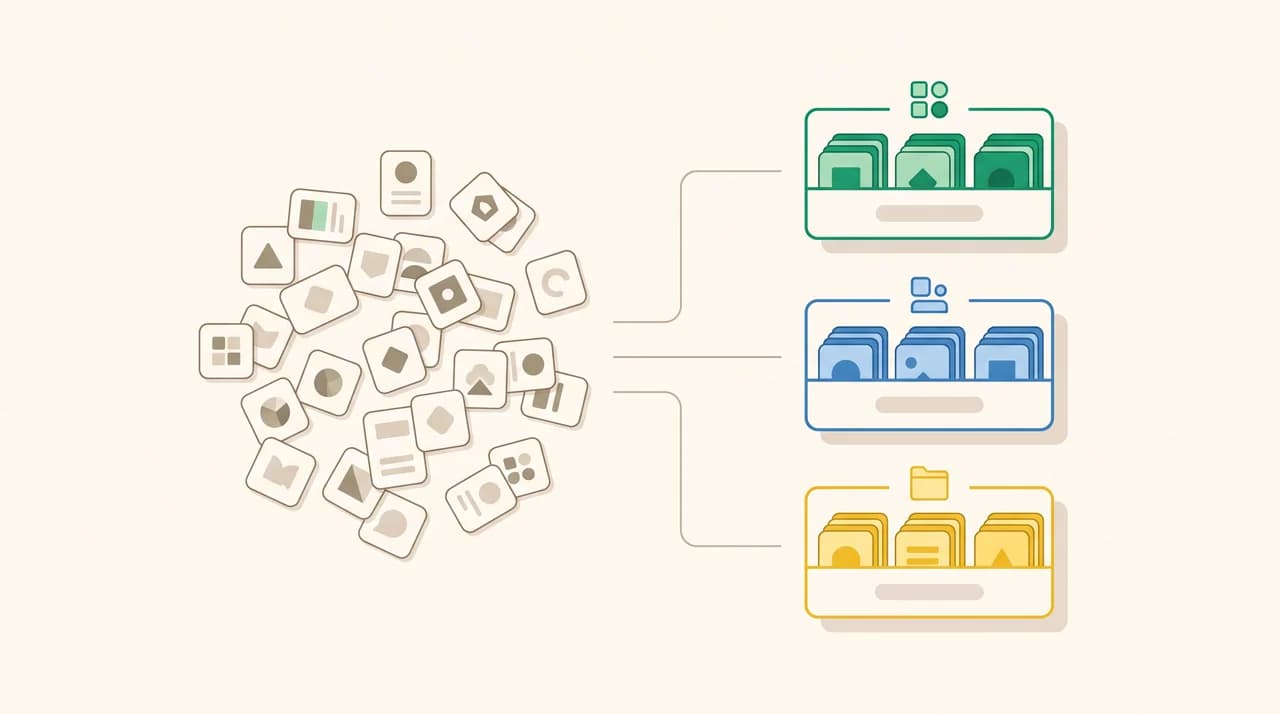
Match your real constraint, not the most impressive feature list. Most evaluation mistakes happen when a COS picks the tool with the most AI capability and then discovers the core workflow it needs — brief delivery, loop tracking, shared address management — is not actually in it.
| If this describes you | Start here | Also worth checking |
|---|---|---|
| You need a daily brief to know what to escalate, plus delegation and loop tracking | AI Emaily | Missive if a team address is involved |
| Your primary output is a structured morning digest for the principal, your own volume is modest | Cora | AI Emaily if you also need delegation and an audit trail |
| You carry Gmail, Outlook, and a legacy IMAP address all in one day | AI Emaily | Nothing else in this roundup covers all three |
| Every account you own is Gmail and you search the archive constantly | Shortwave | AI Emaily if a second provider is likely later |
| You want to change nothing about the inbox you already use | Fyxer | Gmail filters and labels for the noise problem |
| More than one person manages the same executive or leadership address | Missive | AI Emaily shared inbox for lighter coordination |
| You want the agent to act without reviewing every draft it produces | AI Emaily Autopilot | Serif — verify the escalation controls in the first week |
| Volume is very high and you process everything personally, by hand | Superhuman Mail | AI Emaily if you also want a configurable morning brief |
The verdict#
AI Emaily is our pick for most chiefs of staff, and the reason is specific enough to check: it is the only entry here that combines a configurable Living Brief for escalation surfacing, delegation with handoff notes and assignment status for loop closing, an audit log for every autonomous action, and coverage across Gmail, Outlook, and IMAP in one inbox. The COS role depends on not dropping things. These features map directly to that requirement.
Cora is the honest alternative if the COS's primary output is a morning brief and their own inbox volume is modest. Their product is built exactly for that workflow and is simpler to adopt than a full AI client. We said so above and we mean it.
Whatever you choose, audit the triage results for the first two weeks and build your escalation rules from what you find there. The principal is relying on the COS's judgment, and some of that judgment is now running inside a model that needs to be calibrated on the specific patterns of your org's communication before it can be trusted with what reaches the desk.
Frequently asked
See it in AI Emaily
Keep reading

Written by
Nafiul HasanNafiul Hasan is an entrepreneur and AI automation system builder with 10+ years of experience turning messy, manual workflows into reliable automated systems. He designs and ships AI enterprise solutions end-to-end — the agent logic, the data plumbing, and the product people actually use — and founded AI Emaily to give busy professionals their attention back. He writes here from the builder's seat: what works, what breaks, and how to put AI to work without giving up control.