What to Do When a Company Ignores Your Unsubscribe Request

The short answer
Under US CAN-SPAM law, a company has 10 business days to stop emailing you after you opt out. If it keeps sending, save the messages as proof, report it at reportfraud.ftc.gov, and filter or block the sender. Individuals cannot sue under CAN-SPAM; enforcement is the FTC's job.
What to do when a company ignores your unsubscribe request: the 10-business-day rule, how to document it, and where to file a spam complaint.
On this page
You clicked unsubscribe, and the emails kept coming. Knowing what to do when a company ignores your unsubscribe request is mostly about two things: the legal window the sender is actually bound by, and the order in which you escalate once that window has passed.
This post walks the ladder in order — wait out the window, document the violation, complain to the sender's provider, then report it to the regulator — and ends with the containment step that stops the mail reaching you while any complaint runs its course. It is guidance, not legal advice; for your specific situation, talk to a lawyer.
How long does a company have to honour an unsubscribe?#
Under the US CAN-SPAM Act, a sender must stop sending commercial email within 10 business days of your opt-out request. That is the number written into the statute at 15 U.S.C. § 7704. Until those 10 business days pass, a company that keeps emailing is not yet in violation.
Two related rules matter. The unsubscribe mechanism itself must keep working for at least 30 days after the message was sent. And the sender cannot make you do anything more than send a reply or visit one page to opt out — no login, no fee, no giving extra information.
This is US law only
What counts as a commercial email?#
CAN-SPAM only covers commercial email — messages whose primary purpose is advertising or promoting a product or service (15 U.S.C. § 7702). A newsletter, a sale announcement, or a product pitch qualifies, and the opt-out and 10-business-day rules apply to it.
Transactional and relationship messages are exempt. A receipt, a shipping update, an account or security notice, or information about something you already bought is not covered, so an opt-out does not stop those. That distinction matters before you decide a sender broke the law — chasing a receipt as a violation goes nowhere, and it weakens a complaint about the mail that genuinely is commercial.
Before you start#
A few checks save time and keep your complaint credible. Confirm the mail is genuinely commercial, that you used the sender's own unsubscribe link (not just replied "stop"), and that a full 10 business days have passed since your request.
- Is the message actually commercial, or is it a receipt / account notice that CAN-SPAM does not cover?
- Did you use the unsubscribe link or the address the email specified, so the request counts?
- Have 10 business days passed since you opted out? Weekends and holidays do not count.
- Is this a legitimate company, or a spammer forging its address? The escalation steps differ — a real business has a provider you can complain to; an outright scam is best blocked and reported.
The escalation steps, in order#
- 1
Wait out the window, then send one clear opt-out
Use the unsubscribe link in the email. If there is none, reply asking to be removed and keep a copy. The clock is 10 business days from this request.
- 2
Document that it was ignored
Save the emails that arrived after your opt-out. Keep the date you unsubscribed and screenshots showing dates and sender. If your mail app can show full headers, save those too — they record the true sending domain and time.
- 3
Complain to the sender's email provider
Legitimate senders use an email service provider (ESP) or bulk sender that enforces anti-spam rules. The sending domain in the headers usually reveals it. Many have an abuse@ address or an online report form; a provider can act faster than a regulator.
- 4
Report it to the FTC
File at reportfraud.ftc.gov. The FTC collects these reports to build cases; it does not resolve your individual complaint, but volume is how patterns get enforced. See consumer.ftc.gov for related guidance.
- 5
Only then, consider legal advice
Some US states have their own email or consumer-protection laws that reach further than CAN-SPAM. A consumer lawyer can tell you whether your state offers a route an individual can use — CAN-SPAM itself does not (see the FAQ).
How to unsubscribe and block by platform#
While a complaint sits in a queue, your inbox still needs to be usable. Each mail app gives you a built-in unsubscribe, a block, and a report-spam control, and they do different jobs. The table shows what each one offers.
| Platform | Built-in unsubscribe | Block sender | Report as spam |
|---|---|---|---|
| Gmail | Shows an "Unsubscribe" link by the sender name for List-Unsubscribe mail | Menu → Block sends future mail to Spam | Report spam button; trains the filter |
| Outlook / Outlook.com | "Unsubscribe" prompt on recognised bulk senders | Block adds the address to a blocked list | Report → Junk / phishing |
| Apple Mail | "Unsubscribe" banner at the top of marketing mail | Block Contact moves mail to Trash | Move to Junk; mark as Junk |
| Yahoo Mail | Unsubscribe link surfaced on bulk mail | Block adds address; incoming mail deleted | Spam button reports to Yahoo |
What to do when it doesn't work#
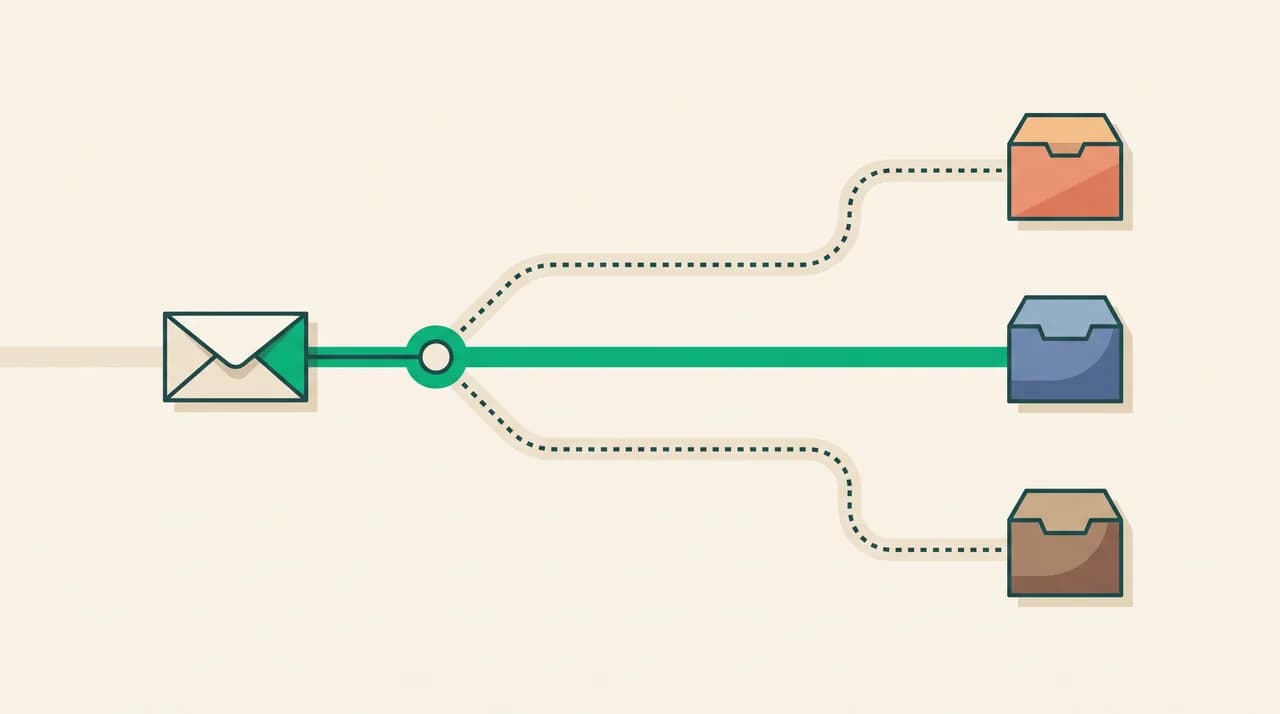
Blocking a single address is the fix everyone reaches for, and it is also the one that most often fails against a persistent sender. A block matches one address. A bulk sender that ignores opt-outs frequently rotates the address it sends from inside the same domain, so the message you blocked on Monday arrives from a fresh address on Thursday.
That leaves you re-blocking each new variant by hand, or building filters keyed on the domain, a subject pattern, or a phrase. Marking as spam trains your provider's filter, which helps, but it is a probability call, not a rule — legitimate-looking mail can still slip through. The realistic goal here is containment: keep the mail out of view while enforcement, if you pursued it, runs slowly in the background.
Don't click a suspicious unsubscribe link
A faster way to keep them out#
You have now done the manual version: waited the window, filed the report, built a block. The catch is that filtering a sender who ignores opt-outs is not a one-time job — an address rotation inside one domain quietly resets a per-address block, so you end up re-blocking variants for weeks.
AI Emaily is an email client we build, and its cold-email filter matches on sender behaviour and domain rather than a single address, so a rotation inside one domain does not reset it. Its rules brain keeps filing repeat offenders the same way each time, without a new rule per address. This does not replace reporting a violation to the FTC — it handles the containment step so the mail stops reaching you while any complaint runs its course. We build AI Emaily.
Frequently asked
See it in AI Emaily
Keep reading
Sources

Written by
Nafiul HasanNafiul Hasan is an entrepreneur and AI automation system builder with 10+ years of experience turning messy, manual workflows into reliable automated systems. He designs and ships AI enterprise solutions end-to-end — the agent logic, the data plumbing, and the product people actually use — and founded AI Emaily to give busy professionals their attention back. He writes here from the builder's seat: what works, what breaks, and how to put AI to work without giving up control.