Free Superhuman Alternatives: What $0 Actually Gets You

The short answer
Superhuman Mail has no free plan, but real free alternatives exist. Thunderbird and Zero are free open source with no caps. AI Emaily's free tier gives you the client plus AI triage and approved drafts on one connected account. Gmail and Outlook cost nothing because the platform earns elsewhere.
Free Superhuman alternatives sorted by funding model: which are genuinely free, which are capped tiers, and exactly what $0 buys you in July 2026.
On this page
- 01Is there a free version of Superhuman?
- 02Free means six different things on this page
- 03How we compared, and what we did not do
- 04Free Superhuman alternatives at a glance
- 051. AI Emaily — free for one account, with approval before send
- 062. Thunderbird — free with no tier games, and no AI
- 073. Zero (Mail-0) — open source AI, if you can host it
- 084. Shortwave — the live example of a free tier changing
- 095. Gmail with shortcuts on — free speed most people never enable
- 106. New Outlook — free, and it holds two providers at once
- 11Two more free routes, briefly
- 12What each Superhuman habit costs at $0
- 13Assume the free tier will change
- 14How to choose for your situation
- 15The verdict
Almost every list of free Superhuman alternatives is really a list of trials. This one is not. It covers tools you can keep using at $0, and it is blunt about what each one holds back to make that possible.
The useful sort here is not by feature count. It is by who pays for the thing you are not paying for, because that single fact predicts which limit you hit, when it moves, and whether it can be taken away.
One disclosure up front: we build AI Emaily, and its free tier leads this list. On a page about catches, that matters more than usual, so our free tier's limits are stated in full alongside everyone else's.
Is there a free version of Superhuman?#
No. Superhuman Mail is a paid product with no permanent free plan, and the $0 access people talk about online is usually a referral or partner trial that ends. So the real question is which free tool covers the part of Superhuman you actually use — the keyboard speed, or the AI.
- Our pick for AI at $0: AI Emaily's free plan — one connected account across Gmail, Outlook or IMAP, AI triage and drafts you approve before send.
- Free with no tiers at all: Thunderbird — open source, donation funded, no account cap, and no AI layer in the client.
- Free open source with AI in it: Zero (Mail-0) on GitHub, if you can self-host and bring a model key.
- Free keyboard speed you already own: Gmail with keyboard shortcuts switched on and custom keys mapped.
- Free and multi-account: new Outlook, which adds a Gmail account alongside a Microsoft one at no cost.
- Free with the hardware: Apple Mail, including on-device summaries on supported Apple devices.
- Free if you run servers: Inbox Zero, self-hosted, where the AI bill is your own model key.
- Not free any more: Shortwave, whose pricing page in July 2026 listed paid tiers and a trial rather than a free plan.
Free means six different things on this page#
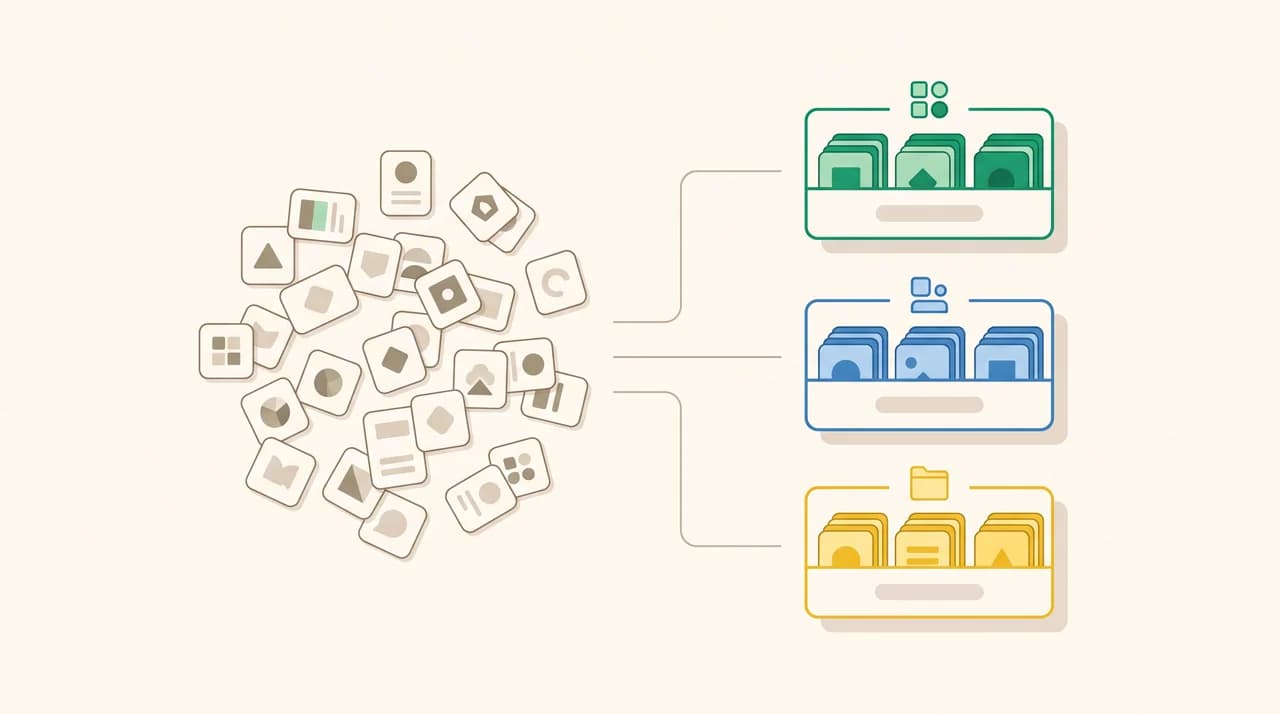
Every option below costs nothing to start, and none of them are free in the same way. Somebody funds the servers your mail passes through, and identifying who takes about a minute per product.
Read the row your candidate sits in before you read its review. The funding model tells you where the wall is more reliably than any feature list does.
| Funding model | What keeps it at $0 | The limit it produces | Examples on this page |
|---|---|---|---|
| Free and open source | Donations, sponsors and contributors | No cap and no vendor — you supply setup, hosting and support | Thunderbird, Zero (Mail-0), Inbox Zero |
| Free tier of a paid product | The customers on the paid tiers | Hard caps on accounts and AI usage, and the tier itself can be re-cut | AI Emaily |
| Time-limited trial | You do, once it ends | Everything stops at the same moment, and access is often referral-gated | Superhuman Mail, Shortwave |
| Platform-funded feature | Ads, or the Workspace, Microsoft 365 or hardware you already bought | Tied to one provider, and the stronger AI sits in the paid tiers | Gmail, Outlook.com, Apple Mail |
| Free for personal use only | Commercial licence holders | You are out of licence the day you use it for work | eM Client's free licence |
| Funded by monetising data | Buyers of the resulting commercial data | Visibility into what arrives in your mailbox | Unroll.Me, which runs on a data-monetisation model |
The sixth model deserves a plain sentence
How we compared, and what we did not do#
This compares documented capability, provider coverage and the shape of each free offer, read from vendor pages in July 2026. It is not a lab test, and we did not run eight clients side by side for a month, so nothing here is dressed up as one.
The criteria are the ones that decide whether a free option survives a real working week: is it a plan or a countdown, which providers it reaches, whether there is any AI at $0, and whether you keep control of what the AI does — approval before send, an undo window, an audit trail.
No competitor prices here, and check every plan yourself
Free Superhuman alternatives at a glance#
Use this to pick two candidates, not a winner. The last column is the one to read twice — it is where each option stops being free.
| Option | Kind of free | Works with | AI at $0? | Where $0 stops |
|---|---|---|---|---|
| AI Emaily | Free tier of a paid product, no expiry | Gmail, Outlook / Microsoft 365, IMAP | Yes — triage, summaries, drafts you approve | One connected account; small monthly AI allowance; Autopilot, context engine and brief are paid; BYOK is Autopilot and Team |
| Thunderbird | Free and open source, donation funded | Gmail, Outlook, IMAP, POP | No AI layer in the client | It does not stop — there is no paid tier of the client |
| Zero (Mail-0) | Free and open source, MIT licensed | Gmail and Outlook, depending on setup | Yes, with your own model key | You supply the server, OAuth credentials and AI spend |
| Gmail | Platform-funded | Your Google account | Varies by account type and region | Stronger AI sits in paid Workspace tiers |
| New Outlook | Platform-funded | Outlook.com, plus added Gmail and IMAP accounts | Varies by account and licence | Copilot capability comes with paid Microsoft 365; no COM add-ins or VBA |
| Apple Mail | Bundled with the hardware | Gmail, Outlook, IMAP | On-device summaries on supported devices | Apple devices only, and it is not an agent |
| Inbox Zero | Free and open source if self-hosted | Gmail, Google Workspace, Outlook | Yes, billed to your own model key | Hosted plans are paid; self-hosting costs infrastructure and time |
| Shortwave | Trial, not a free plan as of July 2026 | Gmail / Google Workspace | Only during the trial | The trial ends and everything stops together |
1. AI Emaily — free for one account, with approval before send#
We build AI Emaily, so read this as the informed pitch it is, and judge it on the limits below. The free plan is a plan rather than a countdown: no expiry, no card, and it does not collapse into a trial after two weeks.
It gives you the client on one connected account — Gmail, Microsoft 365 and Outlook, or any standard IMAP mailbox — with keyboard navigation, AI triage, thread summaries and drafted replies, plus a small monthly pool of AI credits. Nothing migrates; your mail stays with your provider and your address does not change.
What free does not include, plainly. One connected account, so the unified inbox we are best known for is the first wall you hit. The AI credit pool is small — sized to judge the agent, not to run on permanently. Autopilot, the client context and variables engine, and the scheduled brief are all paid, and bring-your-own-key comes with Autopilot and Team.
What is in it at $0 is the control layer most free AI tools skip. Copilot drafts and files, nothing sends until you approve it, actions are reversible inside an undo window, and an audit log records what the agent did. Drafting voice comes from a Personal Context brain and client profiles you write, not from a model reading your old mail, and we do not train on your mail.
Our limits, stated once: the macOS and Windows desktop apps are genuinely downloadable but are Electron shells around the web app, macOS is Apple Silicon only, there is no Linux build, Android is a PWA, and offline is partial by design.
2. Thunderbird — free with no tier games, and no AI#
This is the dimension we do not win, so here it is first. Thunderbird is free in the plainest sense on this page: open source, funded by user donations, no paid version of the client, no account cap, no usage meter, and no upgrade prompt three weeks in. Our free tier is capped at one account; Thunderbird's is capped at nothing.
It connects to Gmail, Outlook and any IMAP or POP mailbox over OAuth, so nothing migrates and your address does not change. It runs on Windows, macOS, Linux and Android, and it has shipped continuously for over two decades — a continuity record nothing else here can claim.
The trade is clean. There is no AI layer in the client: no triage agent, no drafted replies, no natural-language search. You get filters, tags and keyboard shortcuts you configure yourself — real automation, but rules you write rather than an assistant reading context.
Both halves are true at once. If you want an inbox nobody can price-change out from under you, and you accept doing triage by hand, Thunderbird beats every free tier here, ours included.
3. Zero (Mail-0) — open source AI, if you can host it#
Zero is an MIT-licensed email client on GitHub with AI built into it, connecting Gmail and Outlook accounts into a unified inbox. It is the closest thing on this page to a free AI email client with no vendor in the middle, and the code is inspectable rather than described in a policy page.
Free software is not free of cost. Self-hosting means a server, a database, your own OAuth credentials for each provider, and your own model API key — so the AI is billed to you by the token instead of being capped by someone's tier. For a technical reader that is a feature. For everyone else it is a project rather than a switch.
Judge it on repo health before it becomes your only inbox: commit recency, release cadence, open issue volume, and whether a hosted option is currently available. The failure mode of early-stage open source is a quiet stall, not an announced shutdown with an export window.
4. Shortwave — the live example of a free tier changing#
Shortwave is an AI-native Gmail client built by former Google engineers, and structurally it is the closest swap for Superhuman Mail if your world is entirely Google. Its plain-language search across an archive is genuinely strong.
It belongs on a free roundup for an awkward reason. Shortwave had a free plan; the pricing page we read in July 2026 listed paid tiers with a 14-day trial and no free plan at all. Older reviews still describe a free tier, so anyone shortlisting it for that reason should check the current page first.
State that without drama. A free tier is a business decision, not a promise: it exists while paying customers subsidise it, and it gets narrowed when the maths or the strategy moves. Most companies in this category will do it at some point.
One fair note on continuity: the founding team's public focus has shifted toward a separate agent product. That is a signal, not a shutdown, and it is Gmail and Google Workspace only either way.
5. Gmail with shortcuts on — free speed most people never enable#
If what you miss about Superhuman is throughput rather than AI, the cheapest fix is already in your browser. Gmail ships a full keyboard shortcut set that is off by default: turn it on in Settings, then map custom keys under Advanced.
An afternoon of setup gets you a surprising share of the workflow. Shortcuts cover archive, reply, next and previous conversation and jumping between labels; filters can label, archive, star, forward and skip the inbox on rules you define; multiple inboxes and search operators approximate a split view. The split view is only as good as the queries behind it, so it is worth learning how to use Gmail search operators before you build the panes.
Where it stops is delegation. Filters do what you told them, not what the mail needs, so nothing here reads a thread and decides. On AI, Google folded its standalone Gemini add-on into paid Workspace plans in March 2025, and what a free personal account includes varies by region and account type — check Google's own page, not any comparison table including this one.
6. New Outlook — free, and it holds two providers at once#
A Microsoft account gets you Outlook.com and the new Outlook client at no cost, and new Outlook can add other accounts alongside the Microsoft one, including Gmail. That makes it one of the few genuinely free ways to see two providers in a single window.
Two caveats before you settle in. The free consumer tier has historically been ad-supported, with ads removed by a paid Microsoft 365 subscription. And new Outlook is web-architected, so COM and VSTO add-ins, VBA macros and custom forms are not supported — which matters if you were bringing a Salesforce or dictation workflow with you.
On AI, Copilot capability now comes bundled with paid Microsoft 365 Business SKUs rather than sold standalone. So the free Outlook you sign up for is a capable multi-account client that costs nothing — not a free AI email client. Confirm what your specific account includes on Microsoft's page.
Two more free routes, briefly#
- Apple Mail — free with macOS, iOS and iPadOS, connects to Gmail, Outlook and IMAP, and summarises messages on-device on supported hardware. No agent, and irrelevant off Apple hardware.
- Inbox Zero — an open-source AI assistant that sits on top of Gmail, Workspace or Outlook rather than replacing the client. Hosted plans are paid; self-hosting has no licence cost and bills AI to your own model key.
- eM Client — a mature desktop client whose free licence covers personal, non-commercial use on a small number of mailboxes. Replacing a work inbox puts you outside it.
- Ignore any roundup still listing Postbox: eM Client acquired it and development ended in December 2024.
What each Superhuman habit costs at $0#
Free rarely replaces a paid client wholesale. It replaces specific habits, at a specific cost. Find the one or two you would actually miss.
| The habit you would miss | Free substitute | What you give up |
|---|---|---|
| Keyboard-first navigation | Gmail shortcuts with custom keys, or Thunderbird's configurable keys | Polish and consistency — you assemble it yourself |
| A command palette for everything | AI Emaily's free tier; Zero if you self-host | One account on our free tier; a server to run on Zero |
| AI replies written in your voice | AI Emaily free allowance, guided by a Personal Context brain you write | A small monthly credit pool, not a full working week |
| A split inbox that hides the noise | Gmail multiple inboxes and filters, or AI triage on a free tier | Rules you maintain, or a capped amount of AI doing it |
| Follow-up reminders | Gmail nudges and snooze, or Outlook flags with reminders | Less control over what resurfaces and when |
| Read statuses on sent mail | No good free equivalent, and tracking pixels are the usual mechanism | Nothing worth engineering around — most free clients block the pixels |
| Gmail, Outlook and IMAP in one window | Thunderbird, new Outlook, or AI Emaily on a paid plan | AI, on the two free options; our free tier stops at one account |
Assume the free tier will change#
Shortwave is the live example and it will not be the last. Expect any free tier you rely on to narrow eventually — that is not a reason to avoid them, it is a reason to structure around them.
Keep your mail with your own provider, export anything that lives only inside the tool, and prefer options where a withdrawn tier costs you an interface rather than an archive.
Three ways a free switch quietly costs money
How to choose for your situation#
Match your row and start with one option. Evaluating six free email clients at once is how people end up still using the paid one they meant to cancel.
| Your situation | Start with | Second look |
|---|---|---|
| You want AI triage and drafts at $0 | AI Emaily's free plan | Zero, if you can self-host |
| You never want a vendor to change your terms | Thunderbird | Zero (Mail-0) |
| You only really miss the keyboard speed | Gmail with shortcuts on | Thunderbird |
| You need two providers in one free window | New Outlook | Thunderbird |
| You are Gmail-only and want an AI client | AI Emaily's free plan | Inbox Zero, self-hosted |
| You run servers and want to own the stack | Zero (Mail-0) | Inbox Zero, self-hosted |
| You are entirely on Apple hardware | Apple Mail | AI Emaily's free plan, for the agent |
The verdict#
If you want the AI half of Superhuman at $0, AI Emaily's free plan is our pick, and we build it. It is a plan rather than a trial, it works on Gmail, Outlook or IMAP, and it includes the control layer free AI tools usually reserve for paid: approval before send, undo, audit log. It stops at one connected account and a small monthly AI allowance.
If you want the plainest kind of free, Thunderbird wins outright and it is not close: open source, donation funded, no cap of any kind, and no AI layer to speak of. Both halves of that sentence are the point.
Everything else is a variation on who is paying. Open source charges you in setup time, platform-funded options tie you to one provider, and a free tier of a paid product can be re-cut. Pick the funding model you can live with, then verify the limits on the vendor's own page — all of this was read in July 2026.
Frequently asked
See it in AI Emaily
Keep reading
Sources

Written by
Nafiul HasanNafiul Hasan is an entrepreneur and AI automation system builder with 10+ years of experience turning messy, manual workflows into reliable automated systems. He designs and ships AI enterprise solutions end-to-end — the agent logic, the data plumbing, and the product people actually use — and founded AI Emaily to give busy professionals their attention back. He writes here from the builder's seat: what works, what breaks, and how to put AI to work without giving up control.