Why Gmail Shows Duplicate Emails in Outlook or Apple Mail

The short answer
Gmail maps each label to a separate IMAP folder, so a message carrying multiple labels appears multiple times in your desktop email client. The All Mail system label holds every message in your account, making it the main source of duplicates. Hiding All Mail in Gmail's IMAP label settings removes the problem without deleting anything.
Usually apparent, not real: one message shown under multiple label-folder names. All Mail is the main cause. Hide it in Gmail's IMAP settings and duplicates stop appearing in Outlook or Apple Mail.
On this page
Gmail and IMAP clients like Outlook and Apple Mail disagree about what a folder is, and that disagreement is why the same email appears two or three times in your inbox. Why does Gmail show duplicate emails in Outlook is one of the most common Gmail IMAP questions, and the answer is almost never what it looks like: you almost certainly do not have two copies of the message. You have one message surfaced under multiple folder names.
Understanding what is happening takes about sixty seconds. Fixing it takes about two minutes. This guide explains the mechanism first — because knowing why the duplication appears tells you exactly which setting to change — then walks through the fix for Outlook, Apple Mail, and Thunderbird, with a platform-differences table and a diagnostic for the rarer case where the duplicates are real rather than apparent.
The short answer#
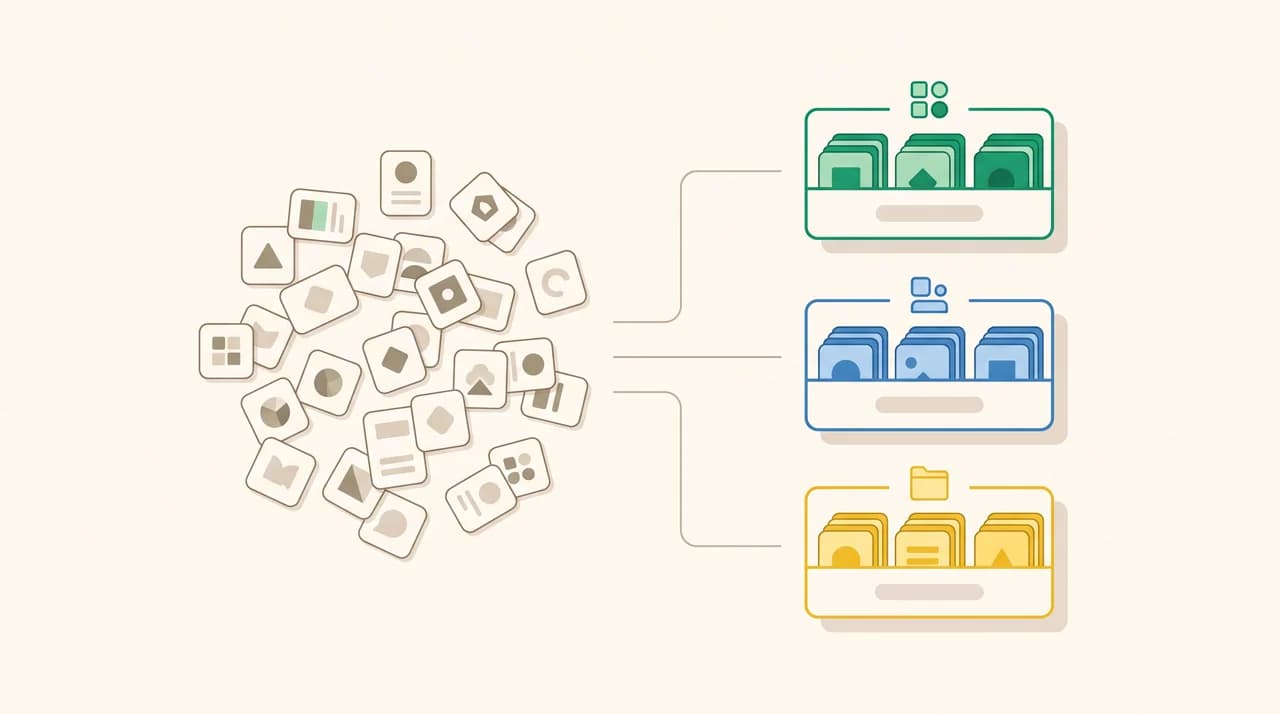
Gmail does not use folders. It uses labels, and multiple labels can apply to the same message simultaneously. When you connect Gmail to an IMAP client, Gmail translates each label into what looks like a separate folder. A message labelled Inbox and Work appears in both the Inbox folder and the Work folder inside Outlook or Apple Mail — the same physical message, displayed in two places.
The biggest culprit is a hidden system label called All Mail. Gmail stores every message under All Mail regardless of what other labels it carries, including messages already appearing in Inbox, Sent, and every custom label folder. When an IMAP client subscribes to All Mail as a folder, every message in your account appears at least twice: once in its normal location and once inside All Mail.
Sent items compound this further. Gmail stores sent messages under the Sent label but keeps them in All Mail too. If your client subscribes to both Sent and All Mail, every sent message appears in two places. Some clients add a third copy by filing sent mail locally in their own Sent Items folder, independent of Gmail's copy.
The fix is to hide All Mail from IMAP in Gmail's label settings. This does not delete any mail. It tells your email client not to show All Mail as a folder. Your messages remain intact and fully accessible in Gmail on the web. If sent-item duplication persists afterwards, the same settings screen lets you hide the Sent label from IMAP and let Gmail manage sent-item filing on its own.
Before you start: apparent vs real duplicates#
Most users reporting Gmail IMAP duplicates are seeing apparent duplication — the same physical message shown under two or more folder names. A smaller number are seeing real duplication: distinct copies with the same content but different timestamps or different internal message identifiers, which indicates something actually copied or re-delivered the message.
The way to tell the difference is to open two copies of the suspected duplicate and compare the date and time down to the minute, and the full subject line. Apparent duplicates always match exactly on both. Real duplicates differ by at least a few seconds, or show different received timestamps in the message headers. In Outlook you can view headers by opening the message and going to File > Properties. In Apple Mail, press Command-Shift-H. In both cases, look at the Received lines — apparent duplicates have identical headers; real ones differ.
Quick test before changing any settings
How to stop Gmail showing duplicate emails: step by step#
These steps use Gmail's web settings to control which labels are visible as IMAP folders. The change applies across every IMAP client connected to the account. You make it once in Gmail, and all clients pick it up within a few minutes.
- 1
Sign into Gmail on the web
Go to mail.google.com and sign into the account that is showing duplicates in your desktop client. IMAP label settings can only be changed through the Gmail web interface — there is no equivalent control inside Outlook, Apple Mail, or Thunderbird.
- 2
Open Settings and navigate to the Labels tab
Click the gear icon at the top right of Gmail, then click See all settings. Select the Labels tab. Three sections appear: System labels (Inbox, Sent, Drafts, All Mail, Spam, Trash), Categories (Social, Promotions, Updates, Forums), and your custom labels. Each row has a Show in IMAP column on the far right.
- 3
Hide All Mail from IMAP
In the System labels section, find the All Mail row. In the Show in IMAP column, click hide. The change saves automatically. This removes the All Mail folder from your IMAP client's folder tree and is the single most effective change for stopping Gmail IMAP duplicates. Your messages are not deleted or moved — they remain in All Mail in Gmail web. The change only controls what your email client sees.
- 4
Review the Sent, Drafts, Spam, and Trash rows
Still on the Labels tab, check the Sent row. If your client files sent mail locally and also subscribes to Gmail's Sent label via IMAP, sent messages appear twice. You can hide Gmail's Sent label from IMAP if your client manages its own Sent folder. Spam and Trash rarely cause duplication but can be hidden the same way if they appear as cluttered folders in your client. Hiding any system label from IMAP does not disable that label in Gmail itself.
- 5
Force a folder refresh in your email client
After changing the label settings in Gmail, your email client needs to rebuild its folder list. In Outlook, go to File > Account Settings > Account Settings, select the Gmail account, click Change, then More Settings > Advanced and use the folder subscriptions panel to verify All Mail no longer appears. In Apple Mail, go to Mail > Settings > Accounts > your Gmail account > Mailbox Behaviors. In Thunderbird, right-click the account > Subscribe, then confirm All Mail is unchecked. Quit and restart the client to force a complete folder-list refresh.
How different email clients handle Gmail IMAP folders#
The duplication pattern and the exact fix path differ by client, because each one translates Gmail's label model into IMAP folders in its own way. The table below captures where duplicates typically appear and where to resolve them for the four most common clients.
| Client | Where duplicates typically appear | Where to manage folder subscriptions | Common extra step |
|---|---|---|---|
| Outlook (classic) | All Mail + Inbox; Sent Items + All Mail | File > Account Settings > Change > More Settings > Advanced > IMAP subscriptions panel | Uncheck All Mail; in Mailbox Behaviors map Sent Items to Gmail's own Sent folder so Outlook stops filing a local copy |
| Outlook (new / Microsoft 365) | All Mail may still be visible; Sent doubling is less common because the new Outlook syncs labels differently | Settings > Mail > Sync email > manage folder visibility | Check the folder list after a full sync before adjusting — new Outlook resolves some duplication automatically on first connect |
| Apple Mail | [Gmail]/All Mail appears as a separate visible mailbox alongside Inbox in the sidebar | Mail > Settings > Accounts > your Gmail account > Mailbox Behaviors | Map Sent, Drafts, and Trash to Gmail's own IMAP folders under Mailbox Behaviors to prevent Apple Mail from filing client-side duplicates alongside Gmail's copies |
| Thunderbird | Every Gmail label appears as a separate folder under the [Gmail] folder tree, including All Mail | Right-click the Gmail account > Subscribe, then uncheck folders you do not need | Uncheck All Mail specifically; individual label folders can remain subscribed without causing duplicates as long as All Mail is hidden |
What to do when the duplicates persist#
If you hid All Mail and the same message still appears twice, the cause is different. The following are the most common sources of persistent or real duplication.
Multiple accounts configured for the same Gmail address. This happens when an account was added twice — once as IMAP and once as a legacy POP3 import — or when an IT migration left an old configuration active alongside a new one. In Outlook, go to File > Account Settings > Account Settings and check whether your Gmail address appears more than once. Remove the duplicate entry.
Client-side sent filing conflicting with Gmail's Sent label. Classic Outlook sends a message and immediately files a local copy under its own Sent Items folder while Gmail simultaneously stores a copy under the Sent label. With the IMAP Sent subscription still active, the result is two visible copies. In Outlook, go to Account Settings > your Gmail account > More Settings > Sent Items and disable the option to save sent messages locally. Let Gmail handle sent-item storage. Apple Mail has the equivalent under Mailbox Behaviors > Sent Mailbox.
Corrupt IMAP cache. When a client's local cache becomes corrupted, it can display stale copies alongside freshly synced ones. In Outlook, removing the Gmail account and re-adding it rebuilds the cache from scratch. In Apple Mail, Mailbox > Rebuild on the affected mailbox does the same without removing the account entirely.
Do not delete messages inside the All Mail IMAP folder
A faster way to use Gmail without IMAP folder confusion#
The steps above fix the duplication, but they address the symptom of a structural mismatch: IMAP was designed before Gmail's label model existed, and every client that speaks IMAP has to approximate labels as folders. That approximation is why the All Mail problem exists at all, and why it reappears whenever you add a new device or a new Gmail account to an existing client setup.
We build AI Emaily, an AI-native email client that connects to Gmail via the Gmail API rather than IMAP. Because it works with labels as labels — not as a folder tree requiring subscription management — the All Mail duplication problem does not occur. The client also handles routine inbox work continuously: the AI agent triages incoming mail, drafts replies in your voice using your Personal Context brain and per-sender client profiles, and handles routine messages on Autopilot within the rules you define, with approve-before-send in Copilot mode and a full audit trail either way. If managing IMAP subscriptions is not how you want to spend your time, AI Emaily offers a 7-day free trial on Pro and Autopilot plans at no charge if cancelled before day seven.
Frequently asked
See it in AI Emaily
Keep reading

Written by
Nafiul HasanNafiul Hasan is an entrepreneur and AI automation system builder with 10+ years of experience turning messy, manual workflows into reliable automated systems. He designs and ships AI enterprise solutions end-to-end — the agent logic, the data plumbing, and the product people actually use — and founded AI Emaily to give busy professionals their attention back. He writes here from the builder's seat: what works, what breaks, and how to put AI to work without giving up control.