Mail Merge in New Outlook: Limits and Better Alternatives


The short answer
No. Word's merge-to-email hands messages off through MAPI, and new Outlook does not support MAPI, so the merge finishes in Word and nothing sends. Run it in classic Outlook, use a mail-merge add-in built for new Outlook, or move anything above a few hundred recipients to an email service provider.
Mail merge in new Outlook: Word's merge-to-email needs MAPI, which new Outlook lacks. The paths that work, ranked, plus the sending limits nobody mentions.
On this page
- 01Does mail merge work in new Outlook?
- 02Why Word's merge to email fails in new Outlook
- 03Mail merge status by Outlook client
- 04What Word mail merge never did, even on classic
- 05The real options, compared
- 061. Word mail merge on classic Outlook — still the top pick for small lists
- 072. A merge add-in built for new Outlook — the pick if you must stay put
- 083. New Outlook's built-in mail merge — know what it is not
- 094. Power Automate or a Graph script — for merges that are really workflows
- 105. An email service provider — the right answer sooner than people think
- 116. Gmail's built-in mail merge — if you are not locked to Outlook
- 12The deliverability problem nobody mentions
- 13The sending limits that apply to your merge
- 14When you need an ESP instead — the honest line
- 15Where AI Emaily fits — and where it does not
- 16The short version
Does mail merge work in new Outlook?#
Partly, and not in the way most people mean. If you mean the Word-plus-Outlook workflow — a letter in Word, a contact list in Excel, Finish and Merge to email — then mail merge in new Outlook does not work. Word finishes the merge, reports success, and nothing arrives. Nothing lands in Sent Items either.
New Outlook does ship a small built-in merge of its own, and Microsoft's own new-versus-classic feature comparison lists mail merge as partially available rather than missing. That basic version sends one message to many people as separate copies so nobody sees the recipient list. It does not insert names, and it does not read a spreadsheet.
So the honest answer depends on what your merge does. If it is genuinely personalised — Dear Margaret, your renewal falls due on 14 March — new Outlook cannot do it today, and this article ranks the options that can. Facts here were checked against Microsoft documentation on 30 July 2026.
Why Word's merge to email fails in new Outlook#
Microsoft's own instructions for merging to email state that you must already have installed a MAPI-compatible email program. MAPI is the old Windows messaging interface Word uses to push finished messages into a mail client's outbox.
That same feature comparison lists MAPI as not supported in new Outlook. New Outlook is a web application in a desktop shell, so there is no local process for Word to hand messages to. When you start the merge, Word looks for classic Outlook, and if it cannot find it the messages go nowhere.
This is architecture, not a bug and not a setting you have missed. No registry key, repair install or default-app change fixes it, because there is nothing on the other end of the handoff.
Something is coming, but do not plan around it
Mail merge status by Outlook client#
Which client you are sitting in decides the whole answer, so start here. Label your situation before you pick a tool.
| Client | Word merge to email | Built-in merge | What to do |
|---|---|---|---|
| Classic Outlook for Windows | Works — full merge fields | Not needed | The free, full-fidelity path today |
| New Outlook for Windows | Does not work — no MAPI | Basic only: separate copies, no fields | Classic, an add-in, or an ESP |
| Outlook on the web | Not possible — Word cannot hand off to a browser | Basic only | Same options as new Outlook |
| Outlook for Mac | Works from Word for Mac when Outlook is the default mail app; not documented for the new Mac client | Basic only in the new client | Test before you rely on it; legacy Outlook for Mac retires for Exchange Online accounts in October 2026 |
| Outlook mobile | No | No | Not a merge surface at all |
| Outlook.com free account | No | Basic only | Sending caps make anything but a tiny list impractical |
| Gmail or Google Workspace | No — Word needs a MAPI client | Yes on several Workspace tiers, with merge fields | Use Google's own merge or an ESP |
What Word mail merge never did, even on classic#
Before you fight to get the old workflow back, check that it was actually doing the job. Microsoft documents these limits plainly, and they surprise people every year.
- No attachments. Microsoft's guidance is explicit: you cannot add attachments, but you can include links. The annual statement as a PDF was never possible this way.
- No CC or BCC. Word sends an individual message to each address and nothing else.
- No scheduling, no throttling, no retry. Everything goes at once, as fast as the client will submit it.
- No bounce handling. Dead addresses come back as individual non-delivery reports into your inbox, and nobody cleans the list.
- No opens, clicks or unsubscribe. There is no tracking and no one-click unsubscribe header, which matters if the message is marketing.
The real options, compared#
These are ranked for the common case behind this search: a small firm sending a few dozen to a few hundred personalised messages — client letters, renewal notices, event invitations — that should look individual and get replies back into a normal inbox.
The ranking flips above roughly a few hundred recipients. At that point every mailbox-based option becomes the wrong tool, for reasons covered further down.
| Option | Real merge fields | Attachments | Where replies land | Volume it suits |
|---|---|---|---|---|
| 1. Word mail merge on classic Outlook | Yes — any column in your list | No, links only | Your own inbox | Tens to a couple of hundred |
| 2. A merge add-in built for new Outlook | Yes | Yes in most, including per-recipient files | Your own inbox | Tens to a couple of hundred |
| 3. New Outlook's built-in mail merge | No — no fields, no list import | Yes, the same file to everyone | Your own inbox | A handful of recipients |
| 4. Power Automate or a Graph script | Yes, once you build them | Yes, once you build it | Your own inbox | Tens to low hundreds |
| 5. An email service provider | Yes, plus conditional blocks | Discouraged — link to the file instead | A reply-to address you choose | Hundreds upwards, with no ceiling |
| 6. Gmail's built-in mail merge | Yes, from a Sheet | Yes | Your own inbox | Up to Google's lower merge cap |
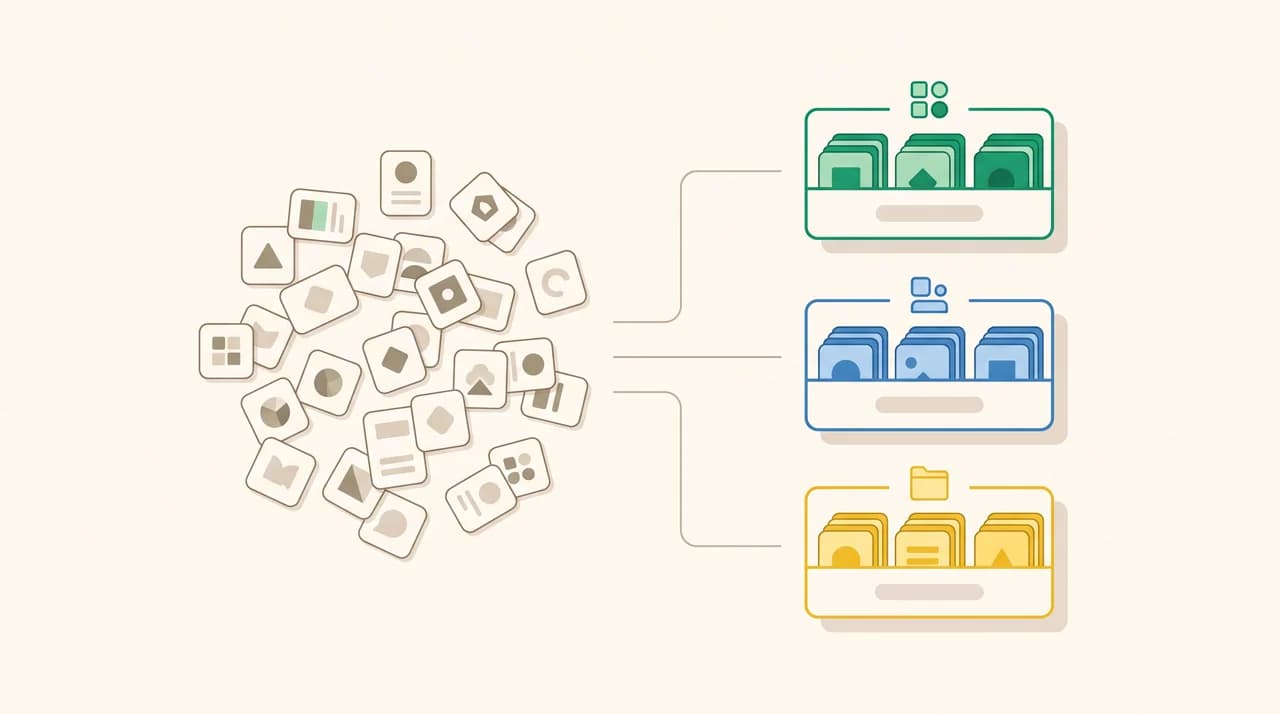
The split that matters is not feature count. It is whether the send belongs in a person's mailbox at all, or in a system built to send in bulk.
1. Word mail merge on classic Outlook — still the top pick for small lists#
For most people reading this, the fastest fix is the least exciting one: run the merge in classic Outlook. You already own it, it does full personalisation from any Excel column, and the messages come from your real mailbox so replies come straight back to you.
You do not need to abandon new Outlook to do it. Classic Outlook can stay installed alongside, and you can open it only when a merge is due. Word needs classic Outlook running and set as the default mail program at the moment of the merge, which is the step people miss.
Two costs are real. You keep a second client on the machine, and you still cannot attach a file — so an annual statement has to become a link to a document library rather than a PDF on the message. If the attachment is the point, skip to the add-in option.
Runway is not a problem here, whatever the headlines say. Classic Outlook is supported until at least 2029, so this is a plan with years in it rather than a stopgap.
Classic Outlook is not being switched off this year
2. A merge add-in built for new Outlook — the pick if you must stay put#
If IT has removed classic Outlook, or you need attachments, a dedicated merge add-in is the honest answer. These read a list, insert real merge fields, attach files — including a different file per recipient — and send through your own mailbox, so replies still come to you.
The critical detail is which build you buy. Older merge tools are COM add-ins, and new Outlook cannot load COM add-ins at all, so a licence for one of those is money spent on a product that will not appear. Vendors that support new Outlook ship a separate web add-in version.
Standss, for example, sells both: an EmailMerge COM add-in described as classic Outlook for Windows only, and EmailMerge 365, a web add-in the vendor states works with new Outlook, Outlook for Mac, Outlook on the web and classic. MAPILab's long-standing Mail Merge Toolkit is a COM add-in whose web support has been described as limited. Both are live products as of July 2026; check the current compatibility statement and pricing on each vendor's own page before buying.
Judge candidates on four things: does it install in new Outlook, does it throttle sends rather than firing everything at once, does it handle attachments the way you need, and does it leave a copy in your Sent Items so you have a record.
On the vendor page, look for the words web add-in, Office add-in, or explicit support for Outlook on the web. If all you can find is a downloadable installer and a ribbon in classic Outlook, it will not appear in new Outlook — so trial it in the client you actually use, not in classic.
3. New Outlook's built-in mail merge — know what it is not#
New Outlook and Outlook on the web include a basic merge, reached from the Options tab or the arrow beside Send. It takes one composed message and sends separate copies, so each person sees only their own address. Attachments go along, identically, to everyone.
What it does not do is personalise. There are no merge fields, so no names in the greeting, and you cannot import a list from Excel — the addresses are typed or pasted in. That makes it a better BCC, not a mail merge.
It is still worth knowing about for the case it fits: a short note to a committee or a class where individual copies are the whole requirement. Anything with a name in the first line needs one of the other options until the Advanced version actually ships.
4. Power Automate or a Graph script — for merges that are really workflows#
If the list already lives in SharePoint, Dataverse or a line-of-business system, a Power Automate flow that loops the list and sends a composed message is a durable answer. It is client-independent, so it survives the switch to new Outlook and works from a phone.
It suits recurring, triggered sends better than one-off letters: renewal notices generated from a due date, onboarding messages from a list row. Standard Office 365 Outlook connectors are included with most Microsoft 365 plans, and the flow's run history gives you a record of what went out.
The trade-off is that this is a small build, not an afternoon. Someone has to own the flow, and Exchange Online's message rate limit of 30 messages per minute per mailbox applies to it exactly as it does to everything else.
5. An email service provider — the right answer sooner than people think#
For anything that is really a campaign — a newsletter, an event push to a purchased list, a customer announcement — the correct tool is an email service provider such as Mailchimp, Brevo, Klaviyo or a transactional platform. Not because it is fancier, but because it does five things no mailbox merge does.
It sends over dedicated infrastructure with its own reputation. It adds a one-click unsubscribe header, which Google, Yahoo and Apple require for marketing mail. It handles bounces and suppression automatically. It throttles and schedules. And it tells you what happened.
Microsoft says this itself in the Exchange Online limits documentation: customers who need to send legitimate bulk commercial email, such as customer newsletters, should use third-party providers that specialise in these services. That is the vendor telling you not to use their mailbox for this.
The real cost is that replies go to a reply-to address rather than landing naturally in your inbox, and the message looks like marketing because it is. For forty personal client letters that is the wrong trade. For four thousand, it is the only sane one.
6. Gmail's built-in mail merge — if you are not locked to Outlook#
Several Google Workspace tiers include a mail merge in Gmail that pulls names from a Sheet, supports attachments and sends from your own address. It is genuinely the smoothest of the mailbox-based options, and worth knowing about if part of your organisation runs on Workspace.
It carries a deliberately lower cap than ordinary sending — Google's documented limits put the mail merge ceiling below the standard daily allowance, which tells you how the provider itself views bulk personalised sending from a person's mailbox.
The deliverability problem nobody mentions#
This is the part most mail merge guides leave out, and it is the part that can cost you your mailbox. A mail merge does not send one message to many people. It sends many nearly identical messages from a single personal account in a few minutes, which is the exact behaviour spam filters are built to catch.
Two separate things can go wrong. Your provider can throttle or block your account for exceeding a documented limit, which is recoverable. Or receiving providers can decide your address sends bulk mail, which quietly hurts every ordinary message you send afterwards — and that is much harder to undo.
Sending hundreds of near-identical messages from a normal mailbox puts the account at risk
The sending limits that apply to your merge#
These are per-provider caps on the sending account, and they apply no matter which merge tool you use. Numbers checked 30 July 2026; verify against your own tenant and the vendor's current documentation, because they change.
| Sending account | Documented limit | Per-message ceiling | What happens when you hit it |
|---|---|---|---|
| Microsoft 365 / Exchange Online | 10,000 recipients per 24-hour rolling window, per mailbox | Customisable up to 1,000 recipients | Sending stops until the window clears — potentially the next morning |
| Exchange Online throughput | 30 messages per minute per mailbox | Not applicable | Excess submissions are throttled and carried into later minutes |
| Tenant external recipients | A tenant-wide external cap scaled to licence count; trial tenants capped at 5,000 external recipients per day | Not applicable | Outbound external mail is blocked tenant-wide, not just for you |
| Default onmicrosoft.com domain | 100 external recipients per tenant per 24 hours | Not applicable | Non-delivery reports with 550 5.7.236 |
| Google Workspace | 2,000 messages and 3,000 unique recipients per day; 1,500 for Gmail's built-in mail merge | 2,000 per message, maximum 500 external | Sending blocked for up to 24 hours |
| Outlook.com free account | Reputation-based and much lower; new accounts start lower still | Not published as a fixed number | Sending blocked until the quota resets |
When you need an ESP instead — the honest line#
Volume is only half the test. Ask three questions, and if any answer is yes, the send does not belong in a mailbox.
- Is it marketing? If the recipient could reasonably want to unsubscribe, it needs a one-click unsubscribe header and a suppression list. Mailbox merges have neither.
- Did the recipients not individually agree to hear from you? A list bought, scraped or exported from an event badge scanner will generate complaints, and complaints attach to your domain.
- Is it over a few hundred at a time, or repeated weekly? Then you are running a sending programme, and it needs infrastructure, warm-up and monitoring.
If all three answers are no — a genuine, individually relevant note to people who know you, a few dozen at a time — a mailbox merge is fine and an ESP would be overkill. That is the annual client letter, and it is exactly the case options one and two exist for.
One middle path worth naming: send in batches. Two hundred contacts split across five mornings, with sends spread over the hour rather than fired at once, sits far better with receiving providers than one burst, and costs you nothing but patience.
Where AI Emaily fits — and where it does not#
We build AI Emaily, so this section has an obvious interest and we would rather be straight about it: AI Emaily is not a mail merge tool. It is an email client, not an email service provider and not a bulk sender. It has no list import, no merge fields and no campaign sending, and it is the wrong answer to the question this article is about.
The adjacent job it does do is a different one: individual replies rather than bulk sends. Drafting (/features/ai-drafting) writes each reply in your voice from a Personal Context you set yourself plus per-client profiles you control — not by reading through your old mail — and Copilot and Autopilot (/features/copilot-autopilot) chase the follow-ups on threads that went quiet, with approve-before-send, undo and an audit trail.
That matters after a merge, not during one. Forty personalised letters go out through Word and classic Outlook or an add-in; the replies that come back are forty individual conversations, and that is the part a client can help with. If what you need is to send the four thousand, use an ESP and ignore us for this one.
The short version#
Word mail merge to email does not work in new Outlook, because Word needs MAPI and new Outlook does not have it. The built-in merge in new Outlook sends separate copies but cannot personalise them.
For a few dozen to a couple of hundred genuinely personal messages, run the merge in classic Outlook — free, full merge fields, supported until at least 2029 — or buy a merge add-in built as a web add-in if you need attachments or cannot install classic.
For anything that is really a campaign, use an email service provider, and respect the sending limits on the way. A mailbox is not a sending platform, and treating it like one is how people lose the account they run their business from.
Frequently asked
See it in AI Emaily
Keep reading
Sources
- Microsoft Support — Use mail merge in Word to send bulk email messages
- Microsoft Support — Feature comparison between new Outlook and classic Outlook
- Microsoft Learn — Exchange Online limits (sending and receiving limits)
- Microsoft 365 Roadmap — feature 423047, Outlook: Mail Merge (Advanced)
- Microsoft Support — Sending limits in Outlook.com
- Google Workspace Admin Help — Gmail sending limits
- Google — Email sender guidelines
- Microsoft Learn — Guide to product availability and the stages of migration to new Outlook

Written by
Nafiul HasanNafiul Hasan is an entrepreneur and AI automation system builder with 10+ years of experience turning messy, manual workflows into reliable automated systems. He designs and ships AI enterprise solutions end-to-end — the agent logic, the data plumbing, and the product people actually use — and founded AI Emaily to give busy professionals their attention back. He writes here from the builder's seat: what works, what breaks, and how to put AI to work without giving up control.