Notion Mail Alternatives for Gmail Users (2026)

The short answer
Nothing forces an address change. Notion Mail was a front end on your Gmail account, so every message stays in Gmail. Plain Gmail is the free fallback. For AI triage and drafting on the same account, AI Emaily connects Gmail, Outlook and IMAP; Shortwave, Fyxer, Serif and Cora also connect to Gmail.
Notion Mail alternatives for Gmail users: keep your address, start with plain Gmail, then compare the AI clients that connect to your Google account.
On this page
- 01The short answer for Gmail users
- 02First, the part that has a deadline
- 03Option zero: just use Gmail
- 04What you give up by staying on Gmail
- 05So which gap actually matters to you?
- 06Do I have to change my email address? No
- 07How we compared these
- 08Notion Mail alternatives that connect to Gmail
- 09AI Emaily: Gmail plus everything else, with approval before send
- 10Shortwave: the strongest Gmail-only pick
- 11Fyxer: leave Gmail exactly as it is
- 12Superhuman Mail: keyboard-first, and a different company now
- 13Serif: for delegating rather than reviewing
- 14Cora: a brief instead of an inbox
- 15You may already have AI in Gmail
- 16Gmail API or IMAP? It changes how your labels behave
- 17Before you connect anything to your Google account
- 18How to choose, by what your Gmail day looks like
- 19The verdict
If you are looking for Notion Mail alternatives for Gmail, start with the fact that changes the whole decision: Notion Mail never held your mail. It was a front end on your Google account, connected over Gmail's API, and every message it showed you was already sitting in Gmail. It still is.
So when the inbox retires on 22 September 2026, a Gmail user loses an interface, not an archive. Your address does not change. Your threads, labels and history are exactly where they were the day before you installed it.
That makes the honest first recommendation an odd one for a page like this: you can just use Gmail. This post starts there, says plainly what you give up by doing it, then covers the tools worth paying for if that trade is not acceptable. Everything listed connects to an existing Gmail or Google Workspace account — nothing here asks you to change your address.
The short answer for Gmail users#
There is no single replacement, because Notion Mail sat between two different jobs. Some people wanted a tidier inbox to open. Others wanted the sorting and drafting done for them. Pick by which one you will miss.
- You mainly liked having a cleaner Gmail: use Gmail, with keyboard shortcuts, templates and multiple inboxes switched on. It costs nothing.
- You want an agent that triages, files and drafts on your Gmail account and asks before sending: AI Emaily. We build it, and it also covers Outlook and IMAP.
- You are Gmail-only and want the closest like-for-like client: Shortwave fits that reader best, and its search beats ours.
- You do not want to learn a new interface: Fyxer sits on top of Gmail rather than replacing it.
- You want the assistant to act rather than propose: Serif positions hardest on autonomy.
- You want to open the inbox less often, not open a nicer one: Cora leads with a digest.
- You process a lot of mail by keyboard: Superhuman Mail, now part of the renamed Superhuman company rather than the startup older reviews describe.
First, the part that has a deadline#
Your Gmail is not at risk. The Notion Mail layer is. Drafts written in the app, scheduled sends, snippets, auto-label rules and custom views are deleted if you have not exported them by 21 September 2026, and the inbox itself stops working the next day. Files attached to snippets have to be downloaded by hand.
Do that export before you evaluate anything. Choosing an email client always takes longer than planned, and the deletion date does not move for anyone who is still deciding. An hour now protects you even if you end up doing nothing in September.
Export by 21 September, then take your time
Option zero: just use Gmail#
For a large share of Notion Mail's Gmail users, the correct answer is to open Gmail and carry on. The mailbox is already there, the migration cost is zero, and a first-party client cannot be discontinued out from under you the way a third-party layer just was.
The reason Gmail feels worse than it is: most people never turned on the features a third-party client was doing for them. Keyboard shortcuts are off by default. Templates and multiple inboxes are buried in the Advanced tab. Undo Send ships at a short window that you can extend. Ten minutes of settings closes more of the gap than most people expect.
- 1
Turn on keyboard shortcuts
Settings, then See all settings, then the General tab. This is the single biggest change to how Gmail feels, and it is the thing keyboard-first clients are mostly selling.
- 2
Extend the Undo Send window
Also in General. Set it to the longest option available so a misfired reply is recoverable instead of something you have to apologise for.
- 3
Enable Templates
Settings, then Advanced. Templates are Gmail's version of snippets. Retype the snippets you exported from Notion Mail here — they are per account and hold no attachments.
- 4
Enable Multiple Inboxes
Also in Advanced. Each section is a saved search, so you can rebuild something close to a split inbox out of queries like is:unread from:@clientdomain.com.
- 5
Rewrite your auto-label rules as filters
Filters and Blocked Addresses. Work from the rule list you exported. Filters match senders, subjects and keywords rather than intent, so expect to simplify each rule as you go.
What you give up by staying on Gmail#
Being honest about this is the point of the section. Gmail matches Notion Mail on more than people assume, and misses it badly on exactly two things. The table separates them, checked against Gmail as of July 2026.
| What Notion Mail did | Gmail's native equivalent | The honest gap |
|---|---|---|
| Auto-label rules written in plain language | Filters on sender, subject and keywords | Filters match strings, not meaning. Anything that reads like a complaint is not expressible as a filter |
| AI draft replies in your writing voice | Smart Compose and Smart Reply, plus Gemini on eligible Workspace plans | Sentence completion and short canned answers, not a full drafted reply per thread waiting for you |
| Custom views and a split inbox | Multiple Inboxes plus saved searches | Static queries you maintain by hand, and fewer layout options |
| Snippets, including attached files | Templates | Plain text and formatting only, per account, with no attachments |
| Scheduled send, snooze, undo send | All three are native Gmail features | No gap at all — these never needed a third-party client |
| Keyboard-first navigation | Keyboard shortcuts, off by default | Capable once enabled, but you configure it yourself and there is no command palette |
| A second, non-Gmail account in the same place | Gmail could fetch other accounts over POP | Google stopped new POP setups after Q1 2026; existing connections run until January 2027 |
So which gap actually matters to you?#
If your Notion Mail habit was reading a tidier inbox with better keyboard flow, Gmail configured properly gets you most of the way, and the rest is muscle memory. Nothing on the paid list below will feel worth it in three months.
If your habit was arriving to an inbox that had already sorted itself and drafted the obvious replies, Gmail does not do that and is not trying to. Rows one and two of the table are the gap, and they are the reason the rest of this page exists.
That last row is worth a second look if you were using Gmail to pull in an old account over POP. Google stopped new setups after the first quarter of 2026 while letting existing connections run until January 2027, which is a real deadline rather than the immediate cutoff most news coverage reported. If that describes you, a client that speaks to several providers directly is solving two problems at once.
Do I have to change my email address? No#
Not for any option on this page. Every tool here connects to the Gmail or Google Workspace account you already own, over Google's API, with an OAuth grant you can revoke. Your address, your archive and your sending reputation stay exactly as they are.
The confusion has a real source. Notion Mail was built largely by the team that joined Notion through the Skiff acquisition in February 2024, and Skiff was a genuine email provider that issued its own addresses. When Skiff wound down in 2024, its users did have to move to a new address. Advice written for them does not apply to you.
Treat a demand to change providers as a red flag while you are shopping. Keeping your mailbox with a provider you control is the reason this shutdown costs you a weekend instead of a month, and it is the same reason the next one will too.
How we compared these#
The criteria below are the ones that change your working day, and they are deliberately not prices. Third-party pricing in this category contradicts itself and goes stale within weeks, so each section sends you to the vendor's own page instead of repeating a number we cannot stand behind.
- Connects to your existing Gmail account, with no new address and no migration. That was the entry requirement for this list.
- Form factor — a client you open instead of Gmail, or an overlay that leaves Gmail in charge. Most roundups blur this.
- Autonomy ceiling — suggest, draft or send? And what stands between the AI and your recipients: approval, undo, an audit log.
- Whether it also covers non-Gmail accounts, since a Gmail user with one Outlook address has a different problem to a Gmail-only user.
- What leaves with you — rules, snippets and drafts if you cancel or the vendor closes.
- Handling of your mail: whether the vendor trains models on it, and what it retains.
No prices, and no bake-off we did not run
Notion Mail alternatives that connect to Gmail#
Read the table as a shortlist generator. The sections underneath say what each option is actually like, including where each one falls down.
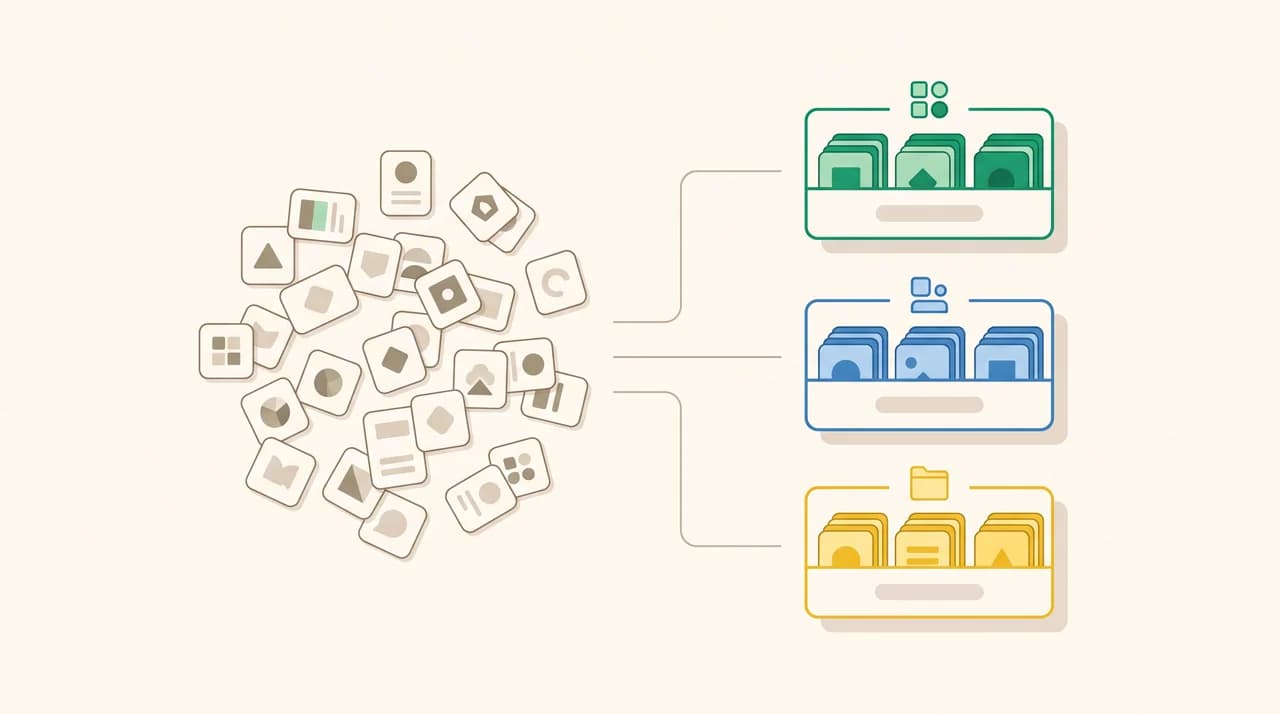
| Option | Form factor | Also covers | Autonomy ceiling | Best for the Gmail user who |
|---|---|---|---|---|
| AI Emaily | Client — web plus downloadable Electron desktop app | Outlook and Microsoft 365, standard IMAP | Copilot approves before send; gated Autopilot with undo and audit log | also has a non-Gmail account in play |
| Shortwave | Client | Nothing — Gmail and Google Workspace only | Assistant inside the client; you stay in the loop | is Gmail-only and lives in search |
| Fyxer | Overlay on the inbox you already have | Outlook | Drafts and sorts; you review and send | wants to change as little as possible |
| Superhuman Mail | Client | Outlook | AI capability varies by tier after the acquisition | processes high volume by keyboard |
| Serif | Assistant — confirm the form factor on the vendor site | Confirm the current provider list | Positions hardest on acting for you | wants to delegate rather than review |
| Cora | Digest layer over your mailbox | Confirm the current provider list | Triages and summarises; you reply | wants to open email twice a day |
| Gmail on its own | The mailbox itself | Nothing new | Whatever Google ships natively | only ever wanted a tidier inbox |
AI Emaily: Gmail plus everything else, with approval before send#
Disclosure first: we build AI Emaily. Hold this section to the same questions you would ask of the others.
It connects to your existing Gmail or Google Workspace account through Google's API — the same way Notion Mail did. Nothing migrates and your address does not change. Gmail labels arrive as labels rather than folders, and threading matches what you see on gmail.com.
The reason to pick it over the Gmail-only tools here is the second account: Outlook, Microsoft 365 and standard IMAP land in the same inbox. If Gmail genuinely is your only account, that advantage does not apply and you should weigh Shortwave seriously.
It runs in three authority modes. Manual is a plain fast client. Copilot is the default: the agent triages, labels, files and drafts, and nothing sends until you approve it. Autopilot is gated per rule, with an undo window and an audit log recording every action and why. Drafting voice comes from a Personal Context brain and per-client profiles you write and edit — not from a model reading your old mail. We do not train on your mail, and we run zero retention with our model providers.
The limits, plainly. The desktop app ships downloadable desktop apps for macOS (Apple Silicon only) and Windows, built as an Electron shell around the web app rather than a native-toolkit binary, there is no native Linux build, Android runs as a PWA with a native app on the roadmap, there is no watchOS app, and offline support is partial. Like every tool here, we cannot import Notion Mail's auto-label rules — you retype them. Start free at app.aiemaily.com/signup.
Shortwave: the strongest Gmail-only pick#
If your mail is entirely in Gmail and will stay that way, this is where we hand the recommendation over. Shortwave is an AI-native Gmail client built by former Google engineers, and for a Gmail-only reader it is the closest like-for-like replacement for what Notion Mail was: a modern client that takes over the interface on the same account, with AI in the middle of it rather than bolted alongside.
Its semantic search is the best thing in this group. Asking your inbox a question in ordinary language and getting the right thread back is what Gmail search never learned to do, and on that specific dimension it is stronger than what we ship. If search is the thing you reach for twenty times a day, that alone can decide it.
Two caveats to weigh rather than dismiss it with. It is Gmail and Google Workspace only, so a second Outlook or IMAP account stays outside it. And as of July 2026 its free plan has narrowed while the founding team's public focus has moved toward a separate agent product — not a shutdown, but a continuity signal that someone who just lost a client should price in. Confirm what the free and paid plans include on Shortwave's own page.
Fyxer: leave Gmail exactly as it is#
Fyxer is an overlay, not a client. It attaches to Gmail and works inside it — sorting what arrives, writing draft replies that appear in your normal drafts, and handling meeting notes. Your interface, your shortcuts and the Gmail mobile app all stay as they are.
With weeks rather than months on the clock, that is a genuine advantage. There is no new app to learn while you are also rebuilding rules, and if it does not suit you, removing it leaves your inbox untouched. If your main complaint is the volume of replies you have to write, it is the lowest-risk thing on this list to try.
Check the pricing model before you commit: Fyxer meters incoming email volume and charges for overage, which falls hardest on the heaviest inboxes — the ones that most need triage. The other limit is architectural. An overlay can only do what Gmail exposes to it, so it will not give you one inbox across providers and it cannot rebuild the custom views you lost.
Superhuman Mail: keyboard-first, and a different company now#
The naming first, because most of what you will read about this product predates the change. Grammarly acquired Superhuman, the email client, in July 2025, then renamed the parent company to Superhuman in October 2025. Today Superhuman Mail means the client and Superhuman Suite means the wider bundle. Any review calling Superhuman an independent email startup was written before all of that.
The client itself is unchanged in character: keyboard-first, speed-obsessed, built for people who work through a lot of mail by hand and want each action to be one keystroke. It connects to Gmail, and to Outlook if you need it.
After the acquisition, AI capability moved into a higher business tier. That matters when you compare: judging it against Shortwave or against us on the wrong tier is the most common mistake in this category, so confirm which tier holds the features you care about on the vendor's own page before you decide anything about value.
Serif: for delegating rather than reviewing#
Serif positions on autonomy harder than anything else here. The pitch is that the assistant does the work instead of proposing it, and it publishes per-seat pricing rather than hiding behind a sales call. If your complaint about Notion Mail was that you still had to open it and approve things, this is the shape of tool you are looking for.
Two things to confirm on Serif's own site before you sign up: whether it runs as its own inbox or attaches to the one you have, and which providers it supports today. That single fact decides how much changes on day one, and it is what comparison articles most often leave out.
The guardrail questions below apply to Serif, to our own Autopilot, and to anything else that offers to send on your behalf. Ask all three before you grant access to a mailbox you rely on.
Cora: a brief instead of an inbox#
Cora is digest-led. Rather than giving you a nicer mailbox, it sorts what arrives, holds the noise back and hands you a summary of what needs a human. You reply to those; the rest is filed without you looking at it.
That suits one Notion Mail user particularly well — the one whose real attachment was to the auto-labels doing the sorting rather than to the interface. If what you will miss is the sense that the inbox organised itself overnight, a digest layer gets you there faster than learning a new client will.
What you give up is the interface. Cora does not replace the client, so the app you open is still Gmail. Confirm which providers it supports today, and ask how reversible its triage is: anything that files mail for you should make it obvious what moved and trivial to pull a thread back.
You may already have AI in Gmail#
Worth checking before you pay for anything. Google retired the standalone Gemini add-on in March 2025 and folded Gemini into Workspace Business plans alongside a per-seat price rise, so many Workspace users already have an AI panel beside their inbox and have never opened it.
The real question is not whether you have AI. It is whether it does anything while you are not looking. An assistant answers when asked: summarise this thread, draft a reply, find that attachment. An agent works the queue in the background — reading what arrived, labelling it, filing what does not need you, preparing replies for what does.
If summarising a long thread on demand is all you wanted, the panel you already pay for does that. If what you miss is arriving to a sorted inbox with drafts waiting, that is a different category of product, and it is the one every paid option here is selling.
Gmail API or IMAP? It changes how your labels behave#
This is a Gmail-specific detail that decides how familiar a new client feels on day one, and almost nobody mentions it. Notion Mail used the Gmail API, which is why labels behaved like Gmail labels inside it. A client connecting over plain IMAP sees the same mailbox differently.
| Behaviour | Connected over the Gmail API | Connected over IMAP |
|---|---|---|
| Labels | Stay labels; one message can carry several at once | Appear as folders; a message with three labels shows up in three places |
| All Mail | Treated as the archive it is | Often shows every message a second time under All Mail |
| Threading | Uses Gmail's own conversation grouping | Rebuilt by the client from headers, so grouping can differ from gmail.com |
| Search | Can pass queries to Gmail search or to the vendor's own index | Usually limited to whatever the client has downloaded |
| Access | An OAuth grant you can revoke from your Google account at any time | OAuth or an app password depending on the client, and Workspace admins can switch IMAP off |
Before you connect anything to your Google account#
You are about to hand a new vendor access to years of correspondence, days after a vendor took an app away from you. Five minutes of diligence is proportionate.
Workspace users have one extra step. Admins can restrict which third-party apps reach Gmail data, so a new client may be blocked at sign-in until it is allowlisted. Ask your admin before you start a trial rather than after, or you will conclude the product is broken when it is only unapproved.
- Which scopes does it request — read, modify or send? A tool that only drafts should not need permission to send unattended.
- Does it store message bodies, and what is retained after you cancel?
- Does it train models on your mail? The answer should be no, in writing, and the vendor should know what its model providers retain.
- Is there approval before send, an undo window, and a readable audit log? Ask all three of every vendor here, ours included.
- Can you export the rules, snippets and templates you build in it, without contacting support?
What to demand from any AI that can send mail
How to choose, by what your Gmail day looks like#
Match your situation to the first column and start there. Trial two at most: evaluating six email clients in a few weeks is how people arrive at the deadline with nothing chosen.
| If this is you | Start with | Why |
|---|---|---|
| Gmail is your only account and you liked Notion Mail's interface | Shortwave | Closest like-for-like, strongest search; weigh the continuity note |
| Gmail plus an Outlook or IMAP account you keep forgetting to check | AI Emaily | All three in one inbox, no migration, approval before every send |
| You want AI to draft and file but never send unattended | AI Emaily in Copilot mode | Approve-before-send is the default, with undo and an audit log |
| Weeks left and no appetite for a new interface | Fyxer | An overlay leaves Gmail, your shortcuts and your mobile app alone |
| You want to delegate rather than review | Serif | Positions hardest on autonomy — compare its guardrails |
| You want a daily brief instead of an inbox | Cora | Digest-first by design, not a replacement client |
| You work through high volume by keyboard | Superhuman Mail | Keyboard-first; check which tier holds the AI features |
| Notion Mail was the only thing you were paying for | Gmail, configured properly | Free, nothing moves, and ten minutes of settings covers most of the gap |
The verdict#
For most Gmail users leaving Notion Mail, our pick is AI Emaily. It connects to the Google account you already have, brings any Outlook and IMAP addresses into the same inbox, and puts an approval step, an undo window and an audit log between the agent and your recipients. We build it, so weigh that — but it is the case we would make to a friend in the same position.
If you are Gmail-only and always will be, Shortwave is the better like-for-like and its search is stronger than ours. That is the one dimension we would hand over without arguing, and if search is how you work, it should decide your choice.
And if what you actually miss is a tidy inbox rather than an assistant, spend ten minutes in Gmail's settings before you spend money on either. Your mail never left Gmail. That is what makes this the cheapest switch you will ever be forced into, and the reason none of it is urgent once your export is done.
Frequently asked
See it in AI Emaily
Keep reading
Sources

Written by
Nafiul HasanNafiul Hasan is an entrepreneur and AI automation system builder with 10+ years of experience turning messy, manual workflows into reliable automated systems. He designs and ships AI enterprise solutions end-to-end — the agent logic, the data plumbing, and the product people actually use — and founded AI Emaily to give busy professionals their attention back. He writes here from the builder's seat: what works, what breaks, and how to put AI to work without giving up control.