Are Seed List Inbox Placement Tests Accurate? An Honest Look


The short answer
Partly. Seed tests reliably catch authentication failures, outright blocks, blocklisting and rendering problems — the deterministic issues. They are weak at predicting real inbox placement, because seed addresses have no engagement history and modern filters decide per recipient. Treat the placement number as directional, and confirm it against Google Postmaster Tools and real engagement data.
Are inbox placement seed tests accurate? They catch auth failures, blocks and rendering reliably, but not real inbox placement, which turns on engagement.
On this page
- 01The short answer: accurate for some things, not for placement
- 02What a seed list test is, and where the gap comes from
- 03Panel data vs seed data in deliverability
- 04How to run and read a seed test honestly
- 05Platform differences: what changes by mailbox provider
- 06When the numbers mislead: what to do
- 07A faster way — where AI Emaily fits, and where it doesn't
Are inbox placement seed tests accurate? Partly — and the honest answer depends on what you are asking them to measure. A seed list test is very good at catching the deterministic problems that break delivery outright, and much weaker at predicting whether your real subscribers will see your mail in their inbox. Treating the second as if it were the first is the mistake that sends people chasing a metric that was never designed to carry that weight.
This post explains what a seed list test actually measures, why its inbox-placement figure and your Google Postmaster Tools reputation can point in different directions, and where seed data ends and real-world engagement begins. It is written for senders — marketers, founders and deliverability owners — deciding how much to trust a placement report before a big send.
The short answer: accurate for some things, not for placement#
Seed testing sends your campaign to a fixed set of monitoring addresses spread across mailbox providers, then reports which folder each copy landed in. That design is reliable for anything a filter decides the same way for every recipient — authentication, gross blocks, blocklist hits and how the message renders. Those are pass or fail facts, and a seed address reveals them cleanly.
Where it gets shaky is the headline inbox-placement rate. Modern filters at Gmail, Outlook.com and Yahoo weigh how real people interact with your mail and how your sending domain has behaved over time. Seed addresses generate none of that history, so the one signal that most decides real placement is the one a seed panel cannot model. Read the placement number as a direction, not a promise.
- Authentication results — whether SPF, DKIM and DMARC pass and align for the message.
- Outright blocks — a domain or IP being rejected or deferred by a provider before it reaches any folder.
- Blocklist presence — whether your sending IP or domain shows up on a major list such as Spamhaus.
- Rendering and content — broken layout across clients, dead links, and obvious spam-trigger content.
- Big, directional changes — a before-and-after comparison when you switch template, domain or IP.
What a seed list test is, and where the gap comes from#
A seed list is a set of email addresses that you or a testing vendor own purely to receive test sends. You add them to your campaign, send as you normally would, and the tool checks each mailbox to see where the message arrived. Because the tool owns the mailboxes, it can report Inbox, Promotions, Spam or missing for every provider at once — visibility you never get from your live list.
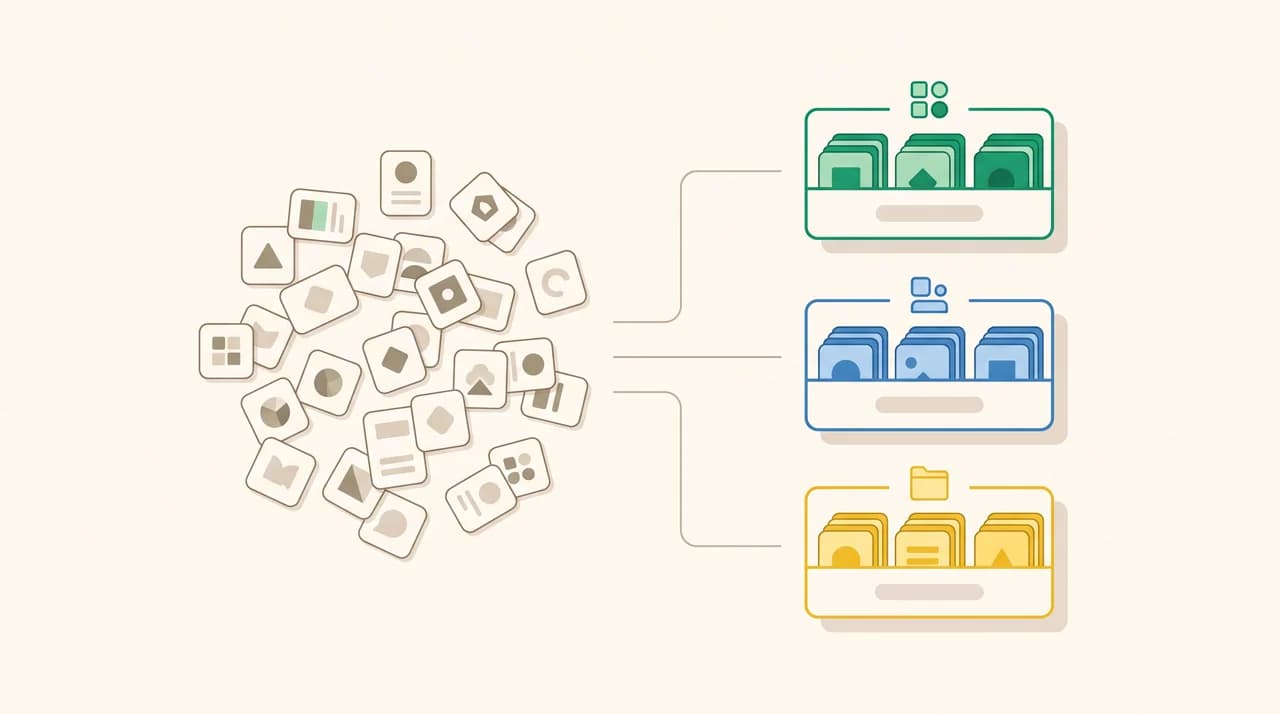
The gap is engagement. A real subscriber opens, replies, clicks, moves a message to a folder, or marks it as spam, and every one of those actions feeds the filter's model of your sender reputation. A seed address does none of this. From the filter's point of view it is a recipient who has never once shown interest — the exact profile that engagement-based filtering treats with suspicion. So a seed inbox result can look healthy while your dormant segment lands in spam, and it can look poor while your engaged core inboxes fine.
A seed address models the recipient that matters least
Panel data vs seed data in deliverability#
Deliverability vendors sell two very different kinds of measurement, and the words are easy to confuse. Seed data comes from the fixed monitoring addresses described above. Panel data comes from a large, opted-in group of real consumers whose anonymised placement is measured in aggregate — real mailboxes, real engagement, no per-message visibility. Panel data is generally the closer proxy for real-world inbox placement; seed data is the sharper diagnostic for pinpointing what broke.
| Dimension | Seed data | Panel data |
|---|---|---|
| Mailboxes used | Fixed addresses you or a vendor own | Real consumers who opted into a measurement panel |
| Engagement signal | None — the addresses never truly engage | Real opens, moves and complaints, in aggregate |
| Visibility | Exact folder per address, per provider | Aggregated rates; no per-message detail |
| Best for | Auth, blocks, rendering, before-and-after tests | A representative read on real inbox placement |
| Main limitation | Cannot model recipient engagement | Only covers panel members and their providers |
How to run and read a seed test honestly#
A seed test is worth running — you just have to run it for the questions it can answer and read the result with its limits in mind. Seed testing is sold by deliverability platforms and as free single-address scorers; features and coverage change, so confirm current details on each vendor's own site. Work through it in this order.
- 1
Decide what you are testing
Name the question first. Authentication, a suspected block, a rendering bug and a template change are all seed-test jobs. 'Will my list reach the inbox' is not — no seed test can answer that one on its own.
- 2
Get a current seed list
Pull a fresh address set from your testing tool each time. Vendors rotate seed addresses precisely because providers can learn and treat known ones differently, so a stale list drifts out of date.
- 3
Send the real thing, the real way
Include the seeds in — or mirror exactly — your actual send: same sending domain, same IP, same authentication, same creative. A test from a different setup measures a different sender, not yours.
- 4
Separate authentication from placement
Read the auth column first. If SPF, DKIM or DMARC is failing, fix that before you look at any folder result — an auth failure explains most spam placement, and it is the part the test reports with confidence.
- 5
Cross-check placement against real data
Compare the inbox rate with Google Postmaster Tools for Gmail and with your own engagement metrics. Where the seed test and real field data disagree, trust the field data for reputation and the seed test for the deterministic checks.
- 6
Re-run to see change, not to grade
Use seed tests as a before-and-after instrument. A single number in isolation says little; the same test before and after a change tells you which direction you moved.
Platform differences: what changes by mailbox provider#
Providers do not filter the same way, so a seed result means different things depending on the mailbox. The table is current as of August 2026; the bulk-sender rules in particular have moved recently, so verify each provider's own postmaster page before you rely on a threshold.
| Provider | How placement is decided | What a seed test catches | What it misses |
|---|---|---|---|
| Gmail | Sender reputation plus each recipient's engagement; the Promotions tab counts as delivered, not spam | Auth, blocks, and whether mail lands in a tab versus Spam | Real per-recipient placement — cross-check Google Postmaster Tools |
| Outlook.com / Microsoft | SmartScreen reputation; senders over 5,000/day need SPF, DKIM and DMARC (enforced since 5 May 2025), junk-foldered now and rejected later | Auth failures and junk-foldering on the consumer side | Corporate Microsoft 365 tenants behind their own gateways |
| Yahoo / AOL | Reputation and complaint rate; bulk requirements published on the Yahoo Sender Hub | Auth, blocks and folder placement for these domains | Your list's real engagement mix |
| Corporate / hosted gateways | A security gateway (for example Proofpoint or Mimecast) sits ahead of the mailbox | Little — consumer seed panels rarely include these | Almost everything; test with a real contact at the organisation instead |
| Apple iCloud Mail | Reputation-based; Mail Privacy Protection pre-loads images for many users | Folder placement for iCloud addresses | True open engagement, which Mail Privacy Protection inflates |
When the numbers mislead: what to do#
When a seed test and reality disagree, the disagreement is usually informative rather than a bug. Match your symptom to the likely cause below, and lean on the source that actually measures the thing in question.
| Symptom | Likely cause | What to do |
|---|---|---|
| Seed test shows 95% inbox, but subscribers report spam-foldering | Seed addresses do not model your recipients' engagement history | Trust Postmaster Tools and real complaint rates; segment by engagement and provider |
| Seed inbox rate contradicts Google Postmaster Tools | The two measure different things — a synthetic panel versus real field data | For Gmail reputation prioritise Postmaster Tools; use the seed test for auth and rendering |
| The rate swings from run to run | Small sample and point-in-time filtering | Run larger or repeated tests and read the trend, not any single figure |
| Everything lands in spam on the seed test | A gross, deterministic problem — failed auth, a blocklist hit, or spam-trigger content | This is where seed tests are reliable: fix authentication, check Spamhaus, and clean the content |
| Mail lands in Promotions and is scored as 'not inbox' | The tool counts a tab as a miss, though Gmail treats Promotions as delivered | Decide whether Promotions is acceptable for this mail before treating it as a failure |
Google Postmaster Tools needs volume to speak
A faster way — where AI Emaily fits, and where it doesn't#
If the question is whether your mail reaches the inbox, the right tools are the ones above: a seed-list test for the deterministic checks, Google Postmaster Tools for Gmail reputation, and your own engagement data for the truth about real recipients. AI Emaily is not a seed-list tester, a deliverability platform or an inbox-placement service, and it will not tell a sender whether a campaign inboxed. For that job, use the tools this post describes.
The adjacent thing we do sits on the other side of the send. AI Emaily is a mail client, so it reads the same SPF, DKIM and DMARC results on the mail arriving in your inbox, and its spam protection uses them to flag spoofed senders and phishing that failed authentication — the receiving-side version of the checks a seed test runs. So if you also want the mail that does reach you triaged and the risky senders caught, that is our job, not seed testing. We build AI Emaily, and it comes with a 7-day free trial on the Pro and Autopilot plans.
Frequently asked
See it in AI Emaily
Keep reading
Sources

Written by
Nafiul HasanNafiul Hasan is an entrepreneur and AI automation system builder with 10+ years of experience turning messy, manual workflows into reliable automated systems. He designs and ships AI enterprise solutions end-to-end — the agent logic, the data plumbing, and the product people actually use — and founded AI Emaily to give busy professionals their attention back. He writes here from the builder's seat: what works, what breaks, and how to put AI to work without giving up control.