Superhuman Mail vs the Superhuman Suite: What You're Actually Buying

The short answer
They are two different things. Superhuman Mail is the email client Grammarly acquired in July 2025. The Superhuman Suite is the bundle sold by the renamed parent company since October 2025 — Mail plus Grammarly's writing tools, a docs workspace, and the Go assistant. Check which one any price or review means.
Superhuman Mail vs Superhuman Suite: after the Grammarly rebrand, one name covers two products. How to tell which one a price or review means.
On this page
- 01What actually changed, and when
- 02Superhuman Mail vs the Superhuman Suite, at a glance
- 03How to tell which one a page is talking about
- 04Where Superhuman Mail is genuinely strong
- 05Where the Suite is the better fit
- 06Pricing: what you can trust, and what you can't
- 07Who each one is genuinely for
- 08A third option, honestly
- 09The short answer, one more time
If you are comparing Superhuman Mail vs the Superhuman Suite, start here: they are not two names for the same thing. They are two different products sold by the same company, and most of the content currently ranking for "Superhuman" does not tell them apart.
Superhuman Mail is the email client. The Superhuman Suite is the bundle the renamed parent company sells — Mail alongside Grammarly's writing tools, a docs workspace, and a cross-app assistant called Go.
That distinction decides whether a page you are reading is useful. A 2024 review describing "a fast email client from an independent startup" is describing a company that no longer exists in that form. A 2026 article quoting one figure for "Superhuman" may be quoting a bundle you never intended to buy.
This post covers what changed and when, a table that separates the two, a short test you can run on any page to work out which product it means, and an honest note on where each one fits. We quote no price for either — read on for why that is deliberate.
What actually changed, and when#
Two events, roughly three months apart, created the ambiguity.
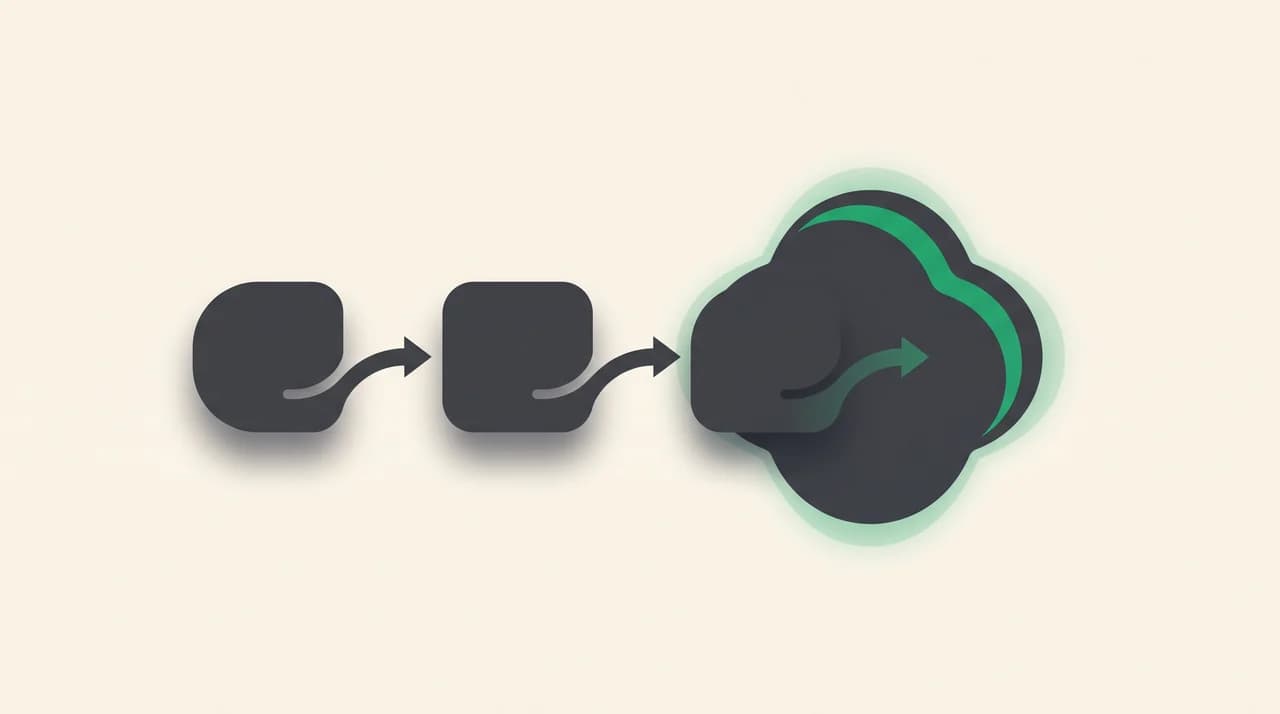
In July 2025, Grammarly acquired Superhuman — the email client. The product kept its name and kept shipping. For most users, nothing visible changed on day one.
Then on 29 October 2025, the parent company renamed itself Superhuman and announced the Superhuman Suite plus a new assistant, Superhuman Go. So the word stopped naming one email app and started naming a company, a bundle, and one product inside that bundle.
The email client is still there. It is now one item on a longer menu, which is precisely why a price or a feature claim needs a label attached to it.
| When | What happened | What "Superhuman" meant afterwards |
|---|---|---|
| Before July 2025 | Superhuman was an independent company selling one product | The email client, and only that |
| July 2025 | Grammarly acquired Superhuman, the email client | The same email client, under new ownership |
| 29 October 2025 | Grammarly renamed the parent company Superhuman and announced the Superhuman Suite and Superhuman Go | A company, a bundle, and the email client inside it |
| As of July 2026 | Superhuman's own site presents Mail, Grammarly, Docs, Calendar, Databases and Go under one brand | Depends entirely on context — check before you buy |
Yes, Superhuman is still an email app
Superhuman Mail vs the Superhuman Suite, at a glance#
The cleanest way to hold the difference in your head: Mail is a place you work. The Suite is a set of things you get, one of which is that place.
Details below reflect what Superhuman documented publicly as of July 2026. Product line-ups in this category move fast, so treat the vendor's own pages as the live source.

| Dimension | Superhuman Mail | Superhuman Suite |
|---|---|---|
| What it is | An email client you install and use as your inbox | A bundle of products sold together under one brand |
| Where you work | In its own app — desktop, mobile and web | Across the bundled apps, plus Go inside other tools you already use |
| The job it does | Get through email faster | Cover writing, documents and email across a workday |
| Email included | Yes — it is the email client | Yes — Mail is one component of the bundle |
| Grammarly writing help | Not what the product does | Yes, Grammarly is a suite component |
| Docs / workspace | No | Yes — the workspace that came from Coda, listed as Docs |
| Cross-app AI assistant | No | Yes — Superhuman Go |
| Typical buyer | An individual or a small team | A team or company buyer consolidating tools |
| Where to check current details | superhuman.com/pricing (titled "Superhuman Mail | Pricing" as of July 2026) | Superhuman's company and suite pages |
How to tell which one a page is talking about#
You do not need inside knowledge to sort this out. Five checks, in this order, will classify almost any article, review or pricing roundup in under a minute.
- 1
Check the publication date first
Anything published before July 2025 is describing the independent company and its email client only. Anything between July and October 2025 is the client under Grammarly ownership. Only content published after October 2025 can even be about the suite — and much of it still isn't, because plenty of pages were never updated.
- 2
Scan for the other product names
Search the page for Grammarly, Coda, Docs and Go. If any of those appear, the page is describing the suite, or mixing the two. If the page only ever discusses an inbox, keyboard shortcuts and triage, it is about Superhuman Mail.
- 3
Ask what one seat actually buys
If the described unit of purchase is one mailbox, that is Mail. If it is writing help across your apps, a docs workspace and an assistant, that is the suite. A page that cannot answer this question is not a page to buy from.
- 4
Follow the page's own links
Where does its call-to-action go? A Mail-scoped pricing page and the suite pages are different destinations on the same site. As of July 2026, superhuman.com/pricing carries a page title naming Mail specifically — a useful tell.
- 5
Look at the screenshots
An inbox with a command palette and keyboard-driven triage is Mail. An assistant panel sitting on top of a different application is Go. If the screenshots are older than the rebrand, so is everything else on the page.
The ten-second version
Where Superhuman Mail is genuinely strong#
This is worth saying plainly, because a disambiguation post that turns into a hit piece is useless to you. Superhuman Mail is a very good email client with a devoted user base, and its strengths are real ones our own product does not simply outclass.
Speed is the headline, and it is earned. The app is built around getting through mail quickly and it feels that way — interactions land immediately rather than waiting on a round trip. Superhuman's own marketing claims users get through their inbox twice as fast and save several hours a week; that is their claim rather than an independent finding, but the users who repeat it are not being polite.
- Keyboard-driven workflow. Nearly every action has a shortcut, and the command palette means you rarely reach for a mouse. Few email clients match it if that is how you like to work.
- Fit and finish. Years of iteration on one product shows — fewer rough edges, fewer half-finished corners than most of the category.
- Triage discipline. The split-inbox model and follow-up reminders are opinionated in a way that suits people who process mail in batches.
- Onboarding. Superhuman built its reputation partly on hands-on onboarding rather than dropping you into an empty app. Check whether that still applies to the plan you are considering.
Where the Suite is the better fit#
The suite exists because the company's bet is that inbox, documents and writing are one problem, not three. If that matches how your day actually looks, the bundle is the stronger buy.
The piece with no equivalent in a standalone email client is Go. An email client can only help you inside the email client. A cross-app assistant is meant to be present in the other tools where the work happens, which is a genuinely different proposition.
There is a consolidation argument too. One vendor, one invoice and one admin surface is worth real money to a team that is currently paying for a writing assistant, a docs tool and an email client separately.
The honest counterweight: buying the bundle purely for the inbox means paying for components you may never open, and buying Mail on its own means the writing and docs pieces are not included. Neither is a trap — they are just different purchases, which is the whole point of this article.
Pricing: what you can trust, and what you can't#
We do not quote a price for Superhuman Mail, for the suite, or for our own product in comparison posts. That is not coyness. When we checked third-party pricing pages for this category, they contradicted each other — different figures for the same product, some of them clearly predating the acquisition.
What is structurally true, and worth knowing before you open any pricing page: Mail is sold on its own and also appears inside the bundle, and AI capability moved between tiers after the acquisition. That last part matters more than the number. A review from 2024 telling you which tier includes a given AI feature may be pointing at a tier that no longer works that way.
So when you land on the vendor's page, confirm three things before you compare it to anything else.
- Which product the plan covers — Mail alone, or the bundle.
- Which tier the AI features you care about actually sit in, today.
- Whether the plan is billed per seat, and whether the figure shown is the monthly or the annual rate.
Assume any price you read elsewhere is stale
Who each one is genuinely for#
Strip out the branding question and the decision is fairly simple. It comes down to whether your bottleneck is email specifically, or knowledge work generally.
| If this is you | Likely fit | Why |
|---|---|---|
| You live in your inbox and want to move through it faster | Superhuman Mail | The whole product is built around that one job, and it does it well |
| You already pay separately for writing help, docs and email | Superhuman Suite | Consolidation is the argument, and it is a fair one |
| You want AI help inside apps that aren't email | Superhuman Suite | Go is the cross-app piece; a standalone email client cannot do this |
| You are buying for a team and want one vendor and one admin surface | Superhuman Suite | One invoice, one place to manage seats |
| Your mail is on a provider outside Gmail and Microsoft 365 | Check first | Documented provider support has been Gmail and Microsoft 365 accounts — confirm current support on the vendor's page |
| You want an agent that acts on email, with approval and an audit trail | Worth comparing a third option | This is a different product category from a faster inbox — see below |
A third option, honestly#
We build AI Emaily, so read this section as what it is: an interested party's summary, with the limits stated.
AI Emaily is an AI email client with three authority modes — Manual, Copilot and Autopilot. In Copilot nothing sends without your approval; Autopilot is gated, and every agent action is undoable and written to an audit log. It connects Gmail, Outlook and standard IMAP accounts in one inbox. It is not a mailbox host and it does not migrate your mail.
On voice, the framing matters: drafts come from a Personal Context you write yourself plus per-client profiles you set, not from a model reading your archive. We do not train on your mail. That is a deliberate trade — you do a little setup, and in exchange nothing is inferred about you from mail you never agreed to hand over.
Where Superhuman Mail is ahead of us, it is ahead. Raw speed and keyboard fluency are its purpose and its history; if those are your top two criteria, buy accordingly. Our limits are specific, and you should weigh them before switching anything.
- Desktop is a downloadable desktop app on macOS (Apple Silicon only) and Windows, built as an Electron shell rather than a hand-built native binary.
- There is no native Linux build.
- Android is a PWA today. The native app is on the roadmap, not shipped.
- Offline support is partial by design — some actions need a connection.
The short answer, one more time#
Superhuman Mail is the email client. The Superhuman Suite is the bundle that contains it, sold by the company that took the same name in October 2025. Any page that does not say which one it means cannot be trusted on price, and probably should not be trusted on features either.
Before you buy, open the vendor's own pricing page, note which product the plan covers and which tier holds the features you care about, and only then compare it to alternatives. As of July 2026 that is the only reliable method — the secondhand sources have not caught up.
Frequently asked
See it in AI Emaily
Keep reading
Sources

Written by
Nafiul HasanNafiul Hasan is an entrepreneur and AI automation system builder with 10+ years of experience turning messy, manual workflows into reliable automated systems. He designs and ships AI enterprise solutions end-to-end — the agent logic, the data plumbing, and the product people actually use — and founded AI Emaily to give busy professionals their attention back. He writes here from the builder's seat: what works, what breaks, and how to put AI to work without giving up control.