Best Outlook Add-Ins to Block Junk Email (2026)

The short answer
Outlook's built-in junk filter and Blocked Senders list handle the easy cases. Beyond that, Microsoft's built-in Report button, account-level services (SaneBox, Clean Email), Microsoft 365 gateways (Barracuda Email Protection, Hornetsecurity 365 Total Protection), and desktop pre-filters (MailWasher Pro) each add filtering Outlook can't do alone. Classic-only COM add-ins like SpamBully do not run in new Outlook.
Best Outlook add-ins to block junk email in 2026 — including which ones survive the switch to new Outlook and where the classic COM add-in cliff hits.
On this page
- 01The short answer
- 02How we compared
- 03Comparison table
- 04The tools
- 051. Outlook's built-in Report button (Microsoft)
- 062. SaneBox
- 073. Clean Email
- 084. Barracuda Email Protection
- 095. Hornetsecurity 365 Total Protection
- 106. MailWasher Pro (Firetrust)
- 117. SpamBully
- 12The adjacent option — AI Emaily
- 13How to choose for your situation
- 14One concession worth naming
The best Outlook add-ins to block junk email in 2026 are not what most listicles claim. The category shifted twice in the last eighteen months: Microsoft moved the Report Message and Report Phishing add-ins into maintenance mode and told admins to use the built-in Report button instead, and new Outlook is web-architected so the classic COM/VSTO add-ins that used to sit in this list simply do not load there.
So this guide compares what actually works, on the version of Outlook you actually use, verified against each vendor's own page in the week we published. Where a tool is a service that operates from your mailbox rather than a panel inside Outlook, we say so — because that is often the honest recommendation, and it survives the classic-to-new switch when a COM add-in does not.
The short answer#
For the vast majority of Outlook users, the right stack is: Outlook's own junk filter and Blocked Senders list, plus Microsoft's built-in Report button for anything the filter missed. That is free, ships with Outlook, works in new Outlook and classic Outlook and Outlook on the web, and trains Microsoft's back-end classifier on the messages you flag. Start there before you buy anything.
Add a paid tool only if you have a specific gap the built-in filter cannot close. The three real gaps are (1) low-effort mailing-list cleanup — messages you technically opted into and want unsubscribed en masse, which is where account-level services like SaneBox and Clean Email sit; (2) enterprise-grade filtering above what Exchange Online Protection provides, which is the Barracuda and Hornetsecurity slot; and (3) a POP3-fed desktop workflow where you want a preview-and-delete layer before mail hits Outlook, which is MailWasher Pro.
If you want triage that goes further than junk — a separate mail client that connects to your Microsoft 365 account and treats cold email and low-value mail as its own category — that is the adjacent shape we build. More on where that fits at the end.
How we compared#
Each tool was checked against its vendor's own live page for three things: does it still ship, does it work in new Outlook for Windows, and what shape does it take (in-Outlook add-in, account-level service, tenant gateway, or desktop pre-filter). Where a page did not answer a question, we said so rather than guessing.
We did not print competitor prices. Vendor pricing moves — SaneBox, Barracuda and Hornetsecurity have all revised their published packaging in the last twelve months — and a number frozen into a blog post is a lie by the time the reader arrives. Instead each entry describes packaging shape (free tier, trial, per-user, tenant contract) and points to the vendor's page for the current figure.
One exclusion worth naming: legacy classic-only COM add-ins that a Microsoft 365 shop cannot practically deploy anymore. SpamBully is included as the honest example of that category — it still ships, it still works if you run classic Outlook, and it will not appear in new Outlook. Every other classic-only tool sits behind the same cliff.
Comparison table#
| Tool | Shape | Works in new Outlook? | Where it filters | Packaging |
|---|---|---|---|---|
| Outlook built-in Report button | Microsoft feature, no install | Yes | In the client + trains Microsoft's back-end | Free with any Outlook / Microsoft 365 mailbox |
| SaneBox | Account-level service (no add-in) | Yes — service is client-agnostic | At the mailbox via IMAP/EWS, before Outlook syncs | 14-day trial, then tiered per-account plans |
| Clean Email | Account-level service + Auto Clean | Yes — service is client-agnostic | At the mailbox, moves/blocks/unsubscribes | Free trial, then per-account monthly or annual |
| Barracuda Email Protection | M365 API integration + admin console | Yes — filters before delivery to any Outlook | Tenant-wide, pre- and post-delivery | Per-user enterprise tiers, quote-based |
| Hornetsecurity 365 Total Protection | M365 tenant service + Outlook add-in | Yes — filters before delivery | Tenant-wide, admin-configurable | Four per-user plans (Plan 1–4), quote-based |
| MailWasher Pro | Desktop pre-filter app (not an add-in) | N/A — sits between server and any client | On your PC, before Outlook downloads | Free tier, paid one-off or lifetime |
| SpamBully | Classic Outlook COM add-in | No — classic Outlook for Windows only | Inside classic Outlook, Bayesian + rules | Free trial, one-off licence |
| AI Emaily (adjacent — separate client, not an add-in) | Standalone mail client that connects to your Microsoft 365 account | N/A — replaces the client, does not extend it | In our client, before you see the message | Free tier and paid plans; lifetime available |
The tools#
Roughly two hundred words each on what the tool is, where it runs, and who it is right for. Where the vendor page contradicts something you have read elsewhere, we go with the vendor page and date-stamp it.
1. Outlook's built-in Report button (Microsoft)#
This is not a third-party add-in but it belongs at the top of any honest list, because for most people it is the first and last stop. As of Microsoft's July 2026 guidance, the Report Message and Report Phishing add-ins that used to be the standard install are in maintenance mode and slated for deprecation — the built-in Report button is the replacement. It works in new Outlook for Windows, classic Outlook for Windows (current builds), Outlook for Mac, Outlook on the web, and the Outlook mobile apps.
What it does: select one or more messages, click Report, then Report junk or Report phishing. Junk-reported messages move to the Junk Email folder and the sender is added to your Blocked Senders list; phishing-reported messages are deleted. Reports also feed Microsoft's classifier, so the effect compounds across the tenant. Not junk reports move mail back out of Junk to the Inbox and correct the classifier the other way.
Where it is not enough: it does not unsubscribe you from mailing lists, does not learn per-user tone, and does not surface a queue of borderline messages for you to sweep. If your junk problem is really a mailing-list problem or an over-fitted classifier problem, keep reading. If it is unwanted senders you did not opt into, the built-in button plus Blocked Senders is often the whole solution.
2. SaneBox#
SaneBox is not an Outlook add-in in the usual sense — it is an account-level service that connects to your mailbox over IMAP or Exchange and moves messages between folders it creates (SaneLater, SaneBlackHole, SaneNews, and so on). Because the filtering happens at the mailbox layer, it works identically in new Outlook, classic Outlook, Outlook on the web, the mobile apps, and any other client pointed at the same account. That is the reason it belongs on a 2026 list: it survived the classic-to-new architectural change without needing to be rewritten.
The core anti-junk mechanism is SaneBlackHole. Drop a sender into that folder once and every future message from that address disappears from your inbox — a stronger form of Blocked Senders because it is enforced from the server side and travels with the account. SaneLater does the softer job of pulling unimportant-but-not-spam mail out of your primary inbox until you review it in a batch.
Packaging as of July 2026 (verify on sanebox.com/pricing): fourteen-day trial, then three tiers separated by number of accounts and add-on features. There is no perpetual free tier. SaneBox is the right pick if your problem is signal-to-noise across a legitimate but noisy inbox, and if you want the fix to survive whichever Outlook you end up using.
3. Clean Email#
Clean Email is the closest thing on this list to a general-purpose inbox cleanup service. It connects to your Outlook / Microsoft 365 account and groups mail into bundles you can archive, delete or unsubscribe from in bulk. Its Unsubscriber tool sends unsubscribe requests on your behalf and blocks mailing lists that ignore them — meaningful because a large share of what Outlook users call junk is really opted-in mail whose one-click unsubscribe never fires.
Auto Clean turns any sweep into a standing rule: once you have said what to do with newsletters from a given sender, it keeps doing it. Screener holds first-time senders in a separate view so you can allow or block them before they land in the inbox. None of this is an Outlook panel; it is a web app plus mobile apps that talks to your mailbox, so like SaneBox it works with every Outlook version.
Packaging as of July 2026 (verify on clean.email): free trial, then a per-account monthly or annual subscription with an added-account discount. Clean Email is the right pick if the bulk of your junk is mailing-list backlog and legitimate subscriptions rather than truly hostile spam — and if you want the unsubscribe workflow that Outlook itself keeps thin.
4. Barracuda Email Protection#
Barracuda's product for Microsoft 365 is not an in-Outlook add-in in the Ribbon sense — it is an API-based tenant integration that connects to Microsoft 365 without an MX record change and filters before delivery, then continues to inspect after delivery in case links are rewritten later. The Outlook-side presence is the Report button integration and the admin console; the filtering itself lives at the tenant.
That architecture matters for two reasons. First, it means it works with any Outlook client your users have — new, classic, Mac, web, mobile — because the filter runs upstream of the client. Second, its post-delivery clawback is a genuine capability the built-in filter does not have: if a link that looked clean at delivery time turns malicious three hours later, Barracuda can pull the message back from every inbox it landed in.
Packaging as of July 2026 (verify on barracuda.com): per-user tiered enterprise plans with quote-based pricing; free trial available on request. Barracuda is the right pick if you are an IT decision-maker with a Microsoft 365 tenant, existing anti-junk complaints that Exchange Online Protection is not solving, and enough seats that a per-user gateway makes budgetary sense.
5. Hornetsecurity 365 Total Protection#
Hornetsecurity's 365 Total Protection is the same architectural shape as Barracuda: a tenant-scoped service for Microsoft 365 with an Outlook add-in for the user-facing bits (release from quarantine, blacklist a sender, encrypt on send). Filtering happens before delivery and is administered from Hornetsecurity's console rather than from inside Outlook.
Packaging is a four-plan ladder — Plan 1 through Plan 4 — with each rung adding capabilities beyond spam and malware (archiving and continuity at Plan 2, backup at Plan 3, security awareness and permission management at Plan 4). Pricing is per-user, tier-based, and quote-driven; the vendor page does not publish the seat rate. Verify on hornetsecurity.com.
Hornetsecurity is the right pick if you want the same tenant-level filtering shape as Barracuda but you also want the adjacent Microsoft 365 protections (backup, archiving, awareness training) from a single vendor rather than three. Where it is not the pick: an individual user without a Microsoft 365 tenant of their own. These are B2B tools sold to admins, not to end users who want a cleaner inbox on their personal account.
6. MailWasher Pro (Firetrust)#
MailWasher Pro is the outlier on this list, and it is on it deliberately. It is not an Outlook add-in — it is a standalone desktop application that sits between your mail server and any local client, previews inbound messages, and lets you delete them from the server before Outlook (or Thunderbird, or eM Client) ever downloads them. The mechanism is old-school POP3 preview plus Bayesian learning, real-time blackhole lists, whitelist/blacklist, and rules.
That architecture is a mismatch for most modern setups. If you use Microsoft 365 or any Exchange/IMAP mailbox with server-side spam filtering already in place, MailWasher's pre-filter layer is redundant with what your provider does. Where it earns its place is the surviving population of POP3 users — small businesses on legacy hosts, ISP mail accounts that Outlook is downloading POP-style — for whom a local preview-and-delete step is genuinely the best answer.
Packaging as of July 2026 (verify on firetrust.com/products/mailwasher-pro): a free version with basic features, a paid Pro version priced as an annual or lifetime licence, thirty-day money-back guarantee. Right pick if you POP3 into Outlook. Wrong pick if your Microsoft 365 tenant is already scanning mail server-side — you want a tenant filter or an account-level service, not a client-side one.
7. SpamBully#
SpamBully is here for one reason: it is the honest example of what happens to every classic Outlook add-in in 2026. The product still ships (version 4.4.x updated in mid-2026, per Softpedia and Capterra listings), it still uses the Bayesian-plus-rules approach that worked well in Outlook 2016, and it still installs as a COM add-in in classic Outlook for Windows. And it does not run in new Outlook — not because SpamBully abandoned it but because new Outlook does not host COM add-ins at all.
That cliff is the single most under-covered fact in this category. A lot of round-ups still list classic-era anti-spam add-ins (SpamBully, Cloudmark Desktop, older versions of Comodo AntiSpam) as if they were live options for a 2026 buyer. They are live options only for people who plan to stay on classic Outlook — which Microsoft has committed to support at least through 2029 for perpetual and subscription licences, so this is a legitimate choice, but it is a choice, and it is not the direction the platform is going.
Packaging: free trial, then a one-off licence per install. Right pick only if you have made an explicit decision to stay on classic Outlook and want an in-client filter that trains locally on your mail. Wrong pick if you have moved to new Outlook for Windows, Outlook on the web, or the Mac client — SpamBully will not appear there.
The adjacent option — AI Emaily#
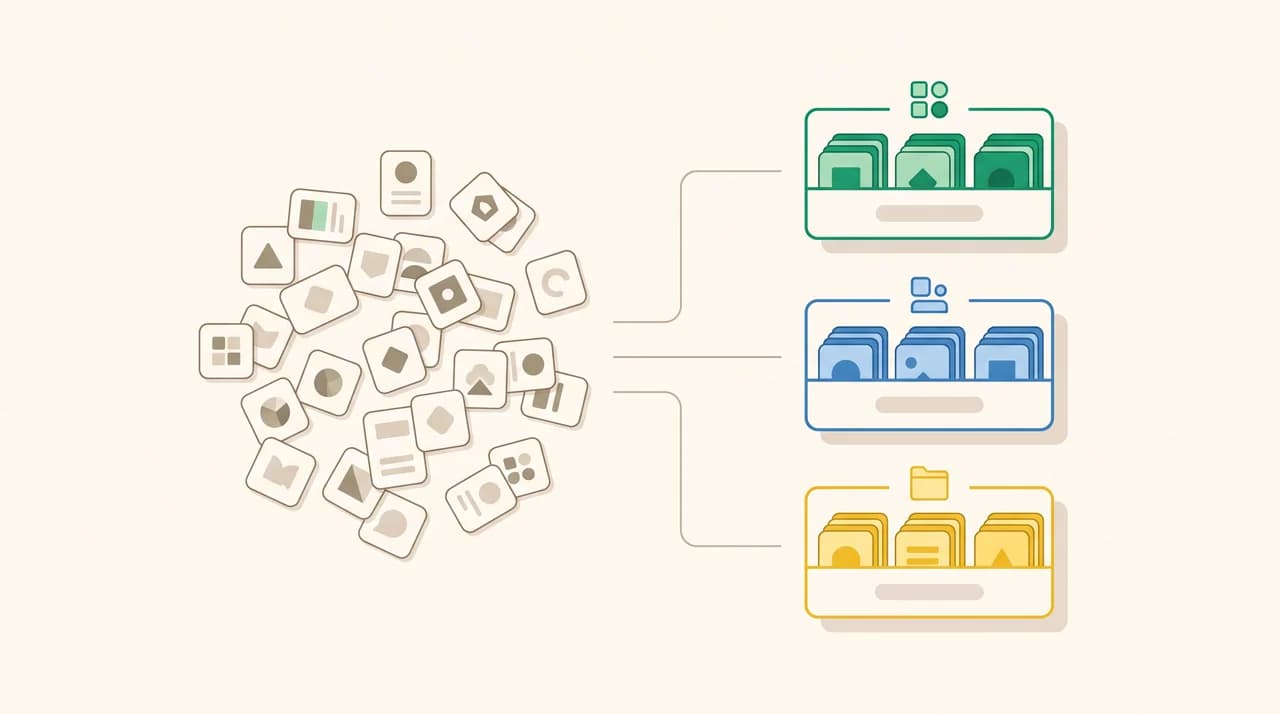
AI Emaily is not an Outlook add-in and we are not going to pretend it is. It is a separate mail client — web plus a downloadable macOS and Windows app, plus native iOS — that connects to your Microsoft 365 or Outlook.com account over Microsoft Graph and treats the noisy layer of the inbox (cold email, low-value newsletters, threads that need a nudge) as its own category. If you want a triage layer that lives inside Outlook itself, the tools above are the answer; if you are willing to change the client, this is the adjacent shape.
Where that helps with junk specifically: our cold-email filter matches on sender behaviour and domain rather than a single address, so a bulk sender rotating addresses inside one domain does not reset it — a common failure mode of the Blocked Senders approach. Spam protection is a separate layer on top. Both are describable rather than magical, and they are the mechanism, not a percentage number we would have to keep updating.
Where it is not the right answer: if you cannot or will not change email client, if you need a tenant-level filter your admin can push to a thousand seats (that is Barracuda / Hornetsecurity), or if the only thing you want is Microsoft's Report button to work better (that is Microsoft's problem to solve, not ours). We build AI Emaily. That is the disclosure and it is why we can be specific about where we do and do not fit.
One placement, stated plainly
How to choose for your situation#
The right pick depends less on features and more on where you live in the Outlook world.
- You are one person on Microsoft 365 or Outlook.com and junk is a few messages a week — use Outlook's own junk filter, Blocked Senders, and the built-in Report button. Do not spend money.
- You are one person and the problem is mailing lists you technically signed up for — Clean Email's Unsubscriber is the right shape; SaneBox is the right shape if you also want soft triage (SaneLater) alongside the blocking.
- You still run classic Outlook and expect to for the foreseeable future — SpamBully-style COM add-ins remain a valid choice, with the caveat that they will not travel with you when you move.
- You POP3 mail from an ISP or legacy host and want a preview layer before Outlook downloads — MailWasher Pro is the specifically-fits answer, and one of the last tools designed for that workflow.
- You administer a Microsoft 365 tenant and Exchange Online Protection is not stopping enough — Barracuda Email Protection or Hornetsecurity 365 Total Protection are the tenant-shaped options. Choose Barracuda for post-delivery clawback and a mature API integration; choose Hornetsecurity if you want adjacent capabilities (backup, archiving, awareness) from one vendor.
- You are willing to change client and want cold-email and low-value-mail triage on top of spam blocking — AI Emaily is the adjacent option, connects to your Microsoft 365 account, and is not an add-in.
One concession worth naming#
For the specific task of 'a button inside Outlook that reports junk and improves the tenant classifier over time,' Microsoft's built-in Report button is better than anything on this list — including AI Emaily, which is not an in-Outlook button at all. If your only requirement is that button, do not buy anything. That is the answer, and any page that dresses it up as more complicated to sell you a subscription is selling you the wrong thing.
The tools above earn their place only when the requirement is something the built-in button does not do: unsubscribing at scale, learning per-account, filtering before delivery for a tenant, previewing before download, or triaging beyond spam. Match one of those, and one of these fits. Match none of them, and Microsoft already ships the answer.
Frequently asked
See it in AI Emaily
Keep reading
Sources

Written by
Nafiul HasanNafiul Hasan is an entrepreneur and AI automation system builder with 10+ years of experience turning messy, manual workflows into reliable automated systems. He designs and ships AI enterprise solutions end-to-end — the agent logic, the data plumbing, and the product people actually use — and founded AI Emaily to give busy professionals their attention back. He writes here from the builder's seat: what works, what breaks, and how to put AI to work without giving up control.