How to Send Cold Email Without Burning Your Domain

The short answer
Never send cold outreach from the domain your customers reply to. Buy a separate sending domain, authenticate it with SPF, DKIM and DMARC, warm it slowly, keep daily volume low and lists tightly targeted, and treat spam-complaint rate as the one metric that decides whether you keep sending. Your main domain stays untouched.
How to send cold email without burning your domain: send from a separate, authenticated domain, keep volume low, and watch your spam-complaint rate.
On this page
If you have to send cold email and you also run a real business on that domain, the two jobs pull against each other. Outreach generates spam complaints and bounces to addresses that may not exist; your company domain carries the invoices, contracts and password resets your business cannot afford to lose. Knowing how to send cold email without burning your domain comes down to one decision made early: keep those two streams on separate domains, so a bad outreach week never touches the mail that matters.
This guide is written for the person protecting an existing domain, not the person chasing the largest possible send. The steps are deliberately conservative. They cost you some scale up front and buy you a domain reputation you can rely on for years, plus a clear rule for when to stop before real damage is done.
The short answer#
Send from a separate domain, never from your primary one. Register a distinct sending domain, authenticate it fully with SPF, DKIM and DMARC, and route every message through it. Warm it up over weeks before real volume, keep daily sends low, target tightly so complaints stay near zero, and watch the spam-complaint rate as the single number that tells you to slow down or stop.
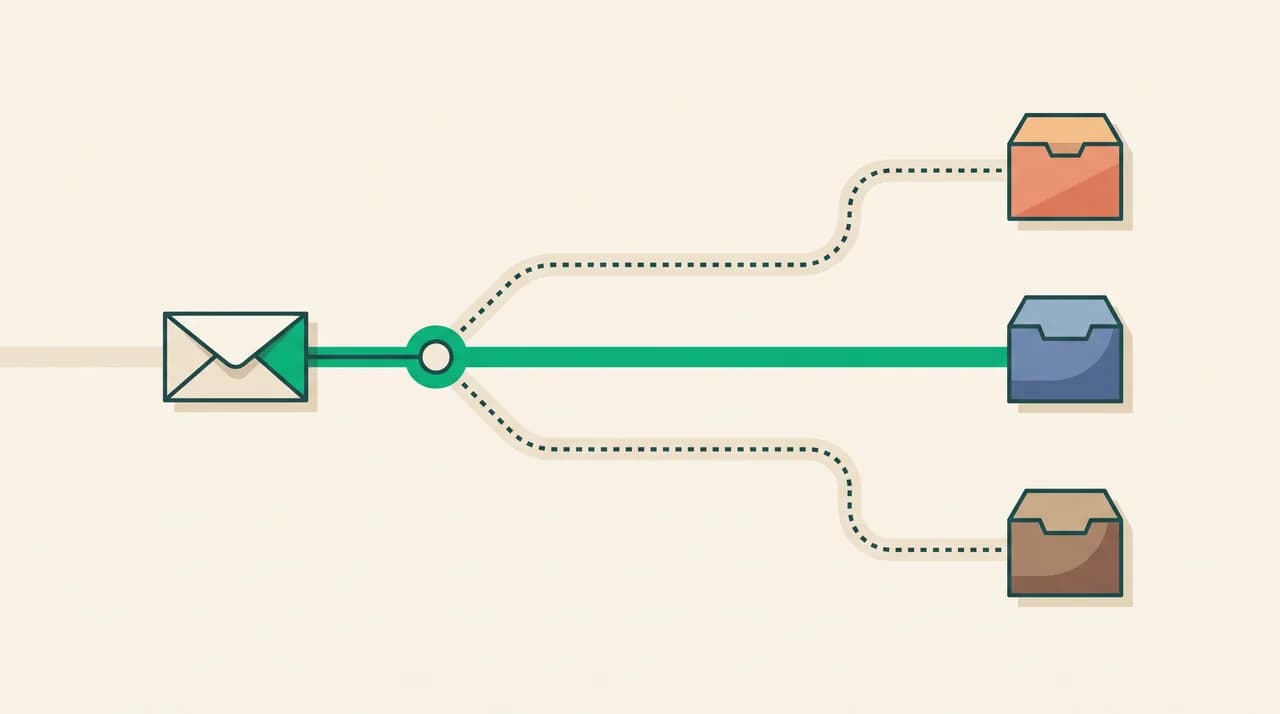
The logic is containment. Mailbox providers score sender reputation largely at the domain and IP level, so if outreach ever damages a reputation, you want that damage boxed into a domain you can afford to replace. A burned outreach domain is an annoyance you swap out; a burned primary domain can mean customer invoices landing in spam and password-reset mail that never arrives.
Why the primary domain is the one you protect
Before you start: what to set up first#
Two things must exist before you send a single message: a dedicated sending domain and correct authentication on it. Skip either and you are not protecting your primary domain, only delaying the harm. Get both in place, then never let outreach touch the main domain again.
- A separate sending domain. Buy a fresh domain used only for outreach, often a close variant of your brand, such as getbrand.com or try-brand.com beside your real brand.com. Point its mail at your sending platform, and make sure your primary domain never appears in the From address, the Return-Path or the links.
- SPF, DKIM and DMARC on that domain. All three authenticate the sending domain, not your main one. Gmail, Yahoo and Microsoft now require all three from bulk senders, and they are the baseline that keeps you out of the spam folder before reputation is even in question.
- A tracking domain that is yours, or none at all. If your platform adds open and click tracking, host it on a subdomain of the sending domain rather than a shared tracking domain that thousands of other senders have already worn out.
- Lists you have verified and a real reason to send to. Mail only addresses you can justify contacting and that a verification pass marks deliverable. Unknown-user bounces and spam traps, not angry replies, are what actually get a domain blocklisted.
How to send cold email without burning your domain, step by step#
With the sending domain and authentication in place, the sending itself is about restraint. Every step below trades a little volume for a domain reputation that survives a bad week. Work through them in order.
- 1
Isolate the sending domain
Connect the separate domain to your sending platform and confirm that nothing — From, Return-Path, links or tracking — routes through your primary domain. Publish SPF, DKIM and a DMARC record on the sending domain, starting DMARC at p=none so you can read the reports without blocking your own mail, then tighten the policy once alignment looks clean.
- 2
Warm the domain and each mailbox slowly
A brand-new domain with no history looks suspicious the moment it sends volume. Begin with a small number of genuine, reply-likely messages per mailbox per day and increase gradually over several weeks. Real human replies and near-zero complaints are what build reputation; there is no product that lets you skip the calendar.
- 3
Keep daily volume low, and per-mailbox volume lower
Stay well under the 5,000-messages-a-day mark that makes you a bulk sender to Gmail, and keep each individual mailbox far lower than that. Careful senders often cap a single mailbox in the low tens per day and add mailboxes rather than pushing any one harder. Providers watch volume per mailbox, not just your total.
- 4
Target tightly and write to the person
The cheapest deliverability win is sending only to people with a genuine reason to hear from you. A narrow, relevant, personal message earns replies and almost no complaints; a broad blast earns spam marks that no amount of authentication can outrun.
- 5
Verify every list before it goes out
Run each list through verification to remove invalid, catch-all and risky addresses. Unknown-user bounces and spam-trap hits are the fastest route to a blocklist, and they are almost entirely preventable with a verification pass and honest list hygiene.
- 6
Make opting out instant and easy
Give recipients a clear way to opt out, honor it on the first request, and never contact someone who has declined. Google, Yahoo and Apple require one-click unsubscribe for marketing mail; treat that as the floor. Suppression lists that actually work are a reputation asset, not a courtesy.
- 7
Watch the complaint rate, and stop when it climbs
Monitor your spam-complaint rate in the provider's postmaster tools. Google tells bulk senders to keep it under 0.10% and never let it reach 0.30%. Treat a rising rate as a stop sign to pause and fix targeting, not a threshold to creep up against.
A subdomain is not a separate domain
How the major mailbox providers differ#
The big providers enforce overlapping but not identical rules, and they change them. The table below reflects the published requirements as of 2026; confirm the current numbers on each provider's own postmaster or sender page before you rely on them, because deliverability rules are exactly the kind that shift under you.
| Provider | Bulk rules (as of 2026) | What non-compliant mail gets |
|---|---|---|
| Gmail (personal @gmail.com) | 5,000+ messages a day makes you a bulk sender; SPF, DKIM and DMARC, one-click unsubscribe, and a spam rate kept under 0.30% (aim under 0.10%) are required. Enforced since February 2024. | Non-compliant bulk mail is rejected, not merely spam-foldered; bulk status is permanent once assigned. |
| Yahoo / AOL | Applies bulk-sender rules aligned with Gmail's: SPF, DKIM, DMARC and one-click unsubscribe for high-volume senders, phased in through 2024. | Spam-foldered or blocked on authentication failures or poor reputation. |
| Microsoft (Outlook.com, Hotmail, Live) | Runs its own regime: SPF, DKIM and DMARC required for senders above 5,000 a day to its consumer mailboxes, effective 5 May 2025. | Routed to Junk first, then rejected at SMTP for senders that stay non-compliant. |
| Apple (iCloud Mail) | Publishes no volume threshold; expects proper authentication, honors DMARC, and asks for one-click unsubscribe on marketing mail. | Filtered on authentication and reputation; the specifics are not published. |
What to do when deliverability drops anyway#
Even a careful program has bad weeks. The signals that you are burning the domain are a climbing spam-complaint rate, a rising share of messages landing in spam, more bounces, or a sudden drop in replies. When you see them, slow down first and diagnose before sending another batch.
Most drops trace back to a handful of causes, and the fix depends on which one you have.
- Complaint rate climbing toward 0.30%. Your targeting is too broad or your list is too cold. Cut volume hard, tighten the list to people who will recognize you, and rebuild slowly. This is the one number that can permanently mark the domain.
- Bounces rising. Your list has stale or invalid addresses. Stop, re-verify everything, and remove catch-all and risky addresses before you resume.
- Authentication failing. An SPF, DKIM or DMARC record broke or was never aligned. Confirm the sending domain passes all three and that DMARC alignment is intact.
- Reputation already damaged. If the domain is genuinely burned, no setting rescues it quickly. Pause it, keep the primary domain clear, and stand up a fresh sending domain rather than flogging the burned one.
Rotate domains, not your reputation
Where AI Emaily fits, and where it doesn't#
One honest note before any recommendation: this guide is about sending, and AI Emaily does not send cold email, warm a sending domain, or run outreach campaigns. It is an AI email client for the inbox you read, not a sending platform. If you need software to send and warm outreach, pick a tool built for that.
Where it fits is the receiving side of the same problem. Every inbox you run receives cold outreach from other people, and AI Emaily's cold email filter sorts unsolicited outreach out of your primary inbox by sender behavior and domain rather than a single address — so a sender who rotates addresses does not reset it. It is the containment idea in this guide, applied to the mail you receive.
There is no public free plan; you can try it on a 7-day free trial on Pro or Autopilot, with nothing charged if you cancel before day seven. Current numbers live on the AI Emaily pricing page — check there, not a third-party summary.
We build AI Emaily, and we will say it plainly: it is not the tool that sends your campaigns. It is the one that keeps other people's campaigns out of your inbox and triages what is left.
Frequently asked
See it in AI Emaily
Keep reading
Sources

Written by
Nafiul HasanNafiul Hasan is an entrepreneur and AI automation system builder with 10+ years of experience turning messy, manual workflows into reliable automated systems. He designs and ships AI enterprise solutions end-to-end — the agent logic, the data plumbing, and the product people actually use — and founded AI Emaily to give busy professionals their attention back. He writes here from the builder's seat: what works, what breaks, and how to put AI to work without giving up control.