Why Does Cold Email Go to Spam? The Real Reasons

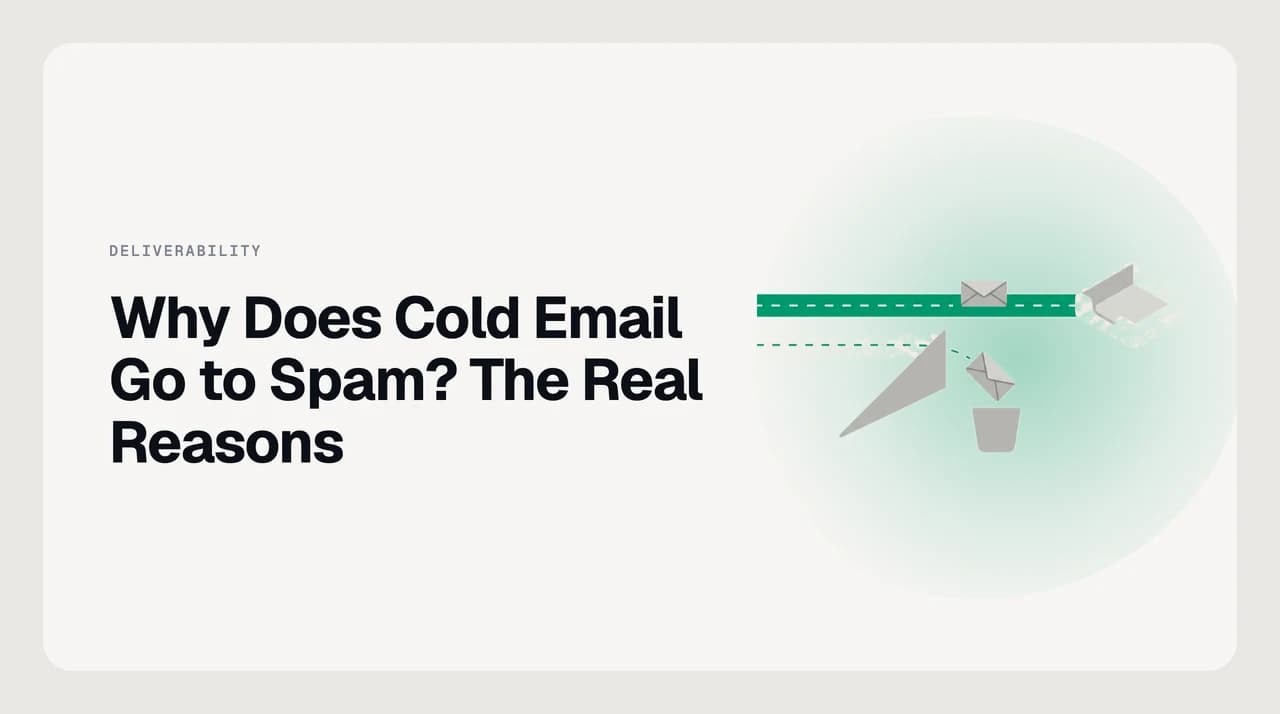
The short answer
Authentication only proves who sent a message, not whether anyone wanted it. Cold email lands in spam because it has no engagement history — no opens, replies, or prior contact — and low engagement plus spam-button clicks tell providers like Gmail and Yahoo the mail is unwanted, regardless of a passing SPF, DKIM, or DMARC check.
Why does my cold email go to spam? Authentication proves who sent a message, not that anyone wanted it — engagement decides inbox placement.
On this page
- 01The short answer
- 02Passing authentication is not a pass to the inbox
- 03Before you start: measure what the provider sees
- 04Steps to give cold email its best chance
- 05How the big providers differ
- 06What to do when it still lands in spam
- 07The limit no sender-side fix removes
- 08A faster way — if you are on the receiving end
You wrote a clean, personal message. Your domain passes SPF, DKIM and DMARC. It still landed in the junk folder. So why does your cold email go to spam when everything looks configured correctly?
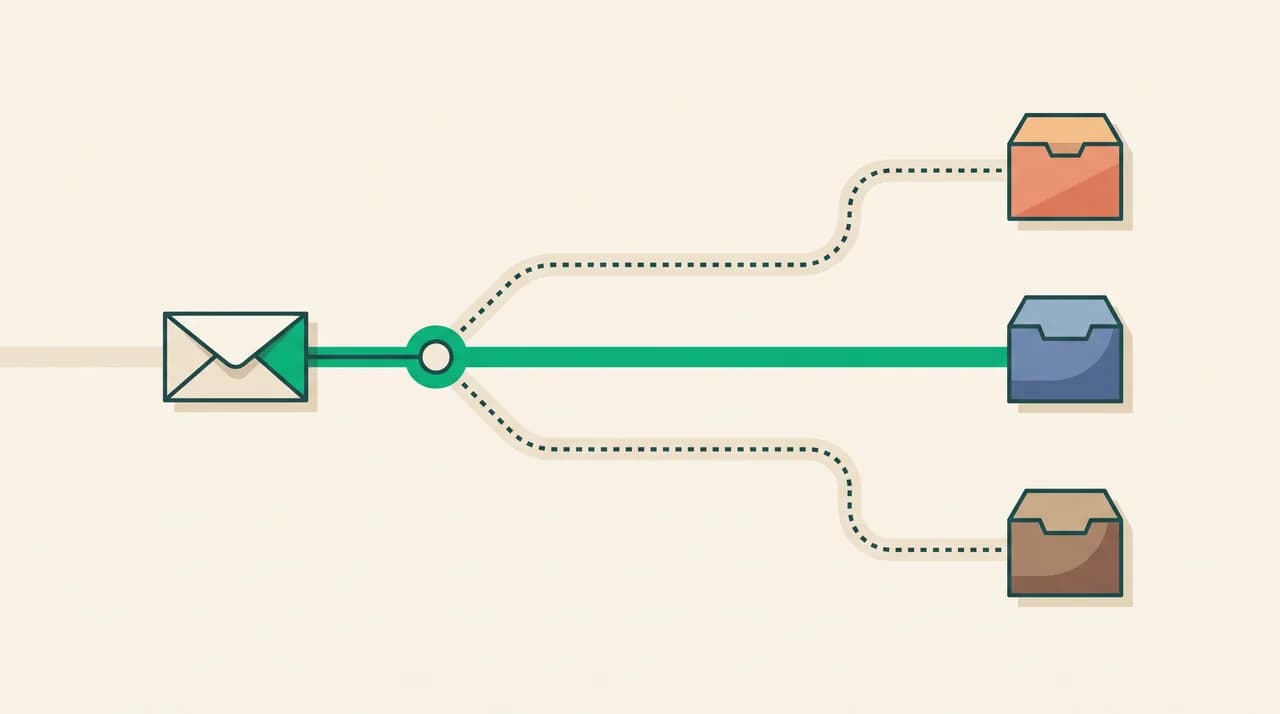
Because authentication only proves who sent a message — it says nothing about whether the recipient wanted it. Mailbox providers sort mail on three axes: authentication, sender reputation, and recipient engagement. Cold outreach can clear the first two and still fail the third, because it has no reply history, no prior contact, and a real chance the recipient reports it.
This post explains each axis, what you can actually control, and where a cold sender is structurally disadvantaged — including one limit you cannot engineer around.
The short answer#
Cold email goes to spam because low engagement and complaints outweigh a clean technical setup. Authentication and reputation get your message considered; engagement decides where it lands. A first-time sender to a stranger has no engagement history to lean on, so the provider treats the message with suspicion by default.
| Axis | What it proves | Why cold email struggles |
|---|---|---|
| Authentication | That the message really came from your domain (SPF, DKIM, DMARC) | Necessary, but spammers authenticate too — passing it is table stakes, not a ticket to the inbox |
| Sender reputation | How the domain and IP have behaved over time — complaints, spam-trap hits, bounce rate | A new or lightly used sending domain has little history, so one bad batch swings it fast |
| Recipient engagement | Whether people open, reply and keep the mail — or delete and report it | Cold recipients did not opt in, rarely reply, and are primed to hit the spam button |
Passing authentication is not a pass to the inbox#
The most common mistake is treating a green SPF, DKIM and DMARC check as the finish line. It is the starting line.
Two different bars
Before you start: measure what the provider sees#
You cannot fix placement you cannot see. Before changing anything, find out how the receiving providers score your mail — judging from your own inbox tells you nothing, because mail from your own domain often skips the filters that apply to strangers.
- Google Postmaster Tools shows your spam-complaint rate, domain reputation and authentication results for mail sent to Gmail. Google's line is a spam rate below 0.10%, and it says never to let it reach 0.30%.
- Microsoft's Smart Network Data Services (SNDS) and the Outlook.com postmaster pages show reputation for mail sent to Outlook and Hotmail addresses.
- Send a seed message to a fresh address on each major provider and read the raw headers for the SPF, DKIM and DMARC results.
- Know your real volume per domain. Crossing roughly 5,000 messages a day to personal Gmail accounts moves you into Google's stricter bulk-sender regime.
Steps to give cold email its best chance#
None of these guarantees the inbox — no one can, and any tool that promises delivery is overselling. What they do is remove the reasons a provider has to filter you.
- 1
Authenticate the sending domain
Publish SPF, add DKIM with at least a 1024-bit key, and set a DMARC policy. A policy of p=none satisfies the requirement, though p=quarantine or p=reject also protects your domain from spoofing. Gmail, Yahoo and Outlook.com all require all three for bulk senders.
- 2
Use a separate domain and warm it slowly
Send cold outreach from a dedicated domain, not your primary one, so a reputation hit does not sink your real mail. Ramp volume over weeks rather than blasting from day one — a brand-new domain sending thousands of messages reads as abuse.
- 3
Verify and segment the list
Remove invalid and role addresses (info@, sales@) that bounce or forward to complaints. High bounce rates and spam-trap hits are among the fastest ways to wreck a young domain's reputation. Google and Yahoo both warn against purchased lists.
- 4
Earn engagement, not just opens
Write messages that get replies. Providers weight replies and 'move to inbox' far above opens, and open tracking is unreliable anyway — Apple's Mail Privacy Protection pre-loads images, so many recorded opens are machine fetches, not people.
- 5
Make unsubscribing trivial
Include a working List-Unsubscribe header with one-click support (RFC 8058) and honour requests quickly — Yahoo requires processing within two days. A visible way out lowers the chance a recipient reports you as spam instead.
- 6
Watch the complaint rate and slow down when it climbs
Keep spam complaints below 0.10% in Postmaster Tools; at 0.30% Gmail actively filters or rejects. If a campaign spikes complaints, pause it — reputation recovers slowly, over weeks of good behaviour, not overnight.
How the big providers differ#
The three axes are universal, but each provider enforces them on its own thresholds and its own timeline. Several of these changed in 2025, so most older advice is out of date. Figures below are current as of August 2026 — check each provider's page before you rely on them.
| Provider | Bulk threshold | Authentication | Spam-rate line | What changed recently |
|---|---|---|---|---|
| Gmail | ~5,000/day to personal Gmail, counted per primary domain (subdomains aggregate) | SPF + DKIM + DMARC (p=none accepted) | Keep below 0.10%; never reach 0.30% | Non-compliant bulk mail can now be rejected outright, not just spam-foldered |
| Yahoo / AOL | Bulk senders | SPF and DKIM both, plus a DMARC policy that passes | Keep below 0.30% | Unsubscribe requests must be processed within 2 days; purchased lists discouraged |
| Outlook.com / Hotmail | Over 5,000/day | SPF + DKIM + DMARC | Not published as a single figure | Requirement live since 5 May 2025; junk-foldering now, with rejection planned |
| Apple / iCloud | Not published | SPF, DKIM and DMARC expected | Not published | Expects one-click unsubscribe for marketing mail; Mail Privacy Protection distorts open rates |
What to do when it still lands in spam#
If mail keeps going to spam after you have authenticated and cleaned the list, the cause is almost always reputation or engagement, not a missing DNS record. Work from the signal, not the guess.
- Check Postmaster Tools and SNDS for a reputation drop or a complaint spike, then correlate it with the campaign that caused it.
- Cut volume and tighten targeting. A smaller, more relevant send that earns replies rebuilds reputation faster than a larger one that gets ignored.
- Fix content that trips filters: broken links, a mismatched 'from' name, heavy images with little text, or link shorteners that mask the destination.
- If you cross a bulk threshold, expect harder enforcement. Gmail can now reject non-compliant bulk mail, and Outlook.com has signalled the same.
The limit no sender-side fix removes#
There is one thing you cannot engineer around. A growing share of recipients now run AI filters that route unsolicited outreach out of the inbox on purpose, no matter how clean your setup is.
To those filters, a perfectly authenticated, well-written cold pitch is still a cold pitch. If your outreach is genuinely unwanted, the most durable fix is not a better spam workaround — it is sending to people more likely to want it.
A complaint rate is not a moral verdict — but the provider treats it as one
A faster way — if you are on the receiving end#
Everything above is sender-side work, and it is the only work that moves the needle. No email client or inbox app improves your deliverability, and any tool that claims to guarantee cold email reaches the inbox is overselling. If you send outreach, the tools that actually help are dedicated sending platforms, deliverability testers, and Google Postmaster Tools — not a mail client. AI Emaily is a mail client; it will not send your campaigns or warm your domain, and we won't pretend it does.
Where AI Emaily fits is the other side of this problem. Part of why cold email increasingly fails is that recipients run filters that move unsolicited outreach out of the inbox deliberately — and AI Emaily's cold-email filter is one of them. It matches on sender behaviour and domain rather than a single blocked address, so a rotation across new addresses does not reset it, and the outreach you did not ask for stays out of your real conversations. If you are the one drowning in cold pitches, that is the job it does. We build AI Emaily.
Frequently asked
See it in AI Emaily
Keep reading
Sources

Written by
Nafiul HasanNafiul Hasan is an entrepreneur and AI automation system builder with 10+ years of experience turning messy, manual workflows into reliable automated systems. He designs and ships AI enterprise solutions end-to-end — the agent logic, the data plumbing, and the product people actually use — and founded AI Emaily to give busy professionals their attention back. He writes here from the builder's seat: what works, what breaks, and how to put AI to work without giving up control.