How to Stop Unsolicited Emails at Work (Gmail and Outlook)

The short answer
A work address must stay open to genuine first contact — a customer or partner might reach you cold. The answer is filters that divert rather than delete, plus selective blocking of persistent senders. Know which controls your email admin owns, so you ask for the right things.
How to stop unsolicited emails at work in Gmail and Outlook — without blocking genuine first-contact messages from customers and partners.
On this page
The problem with a work address is that you cannot switch off first contact. Each week, a handful of those unsolicited messages are from genuine customers who found your email on a company website, a press release, or a public filing. Block the whole category and you block them too.
Three common fixes look productive but only move the problem. Blocking individual senders works until they rotate to a new domain or a colleague's address. Marking messages as spam without a systematic filter in place trains the platform, but the next sender from a fresh address still lands in your inbox. Clicking Unsubscribe on senders you do not recognise confirms to them that the address is live and actively read — the opposite of what you want.
The durable fix is a filter that routes the entire category to a named folder you review on your own schedule. That keeps your inbox clear, preserves every message, and does not create a gap for a genuine first contact to fall through. This guide covers Gmail — both personal Google accounts and Google Workspace — and Microsoft Outlook, including Microsoft 365 managed accounts. Every procedure below was verified against current Google and Microsoft support documentation.
Before you start#
Two things to settle before you touch any settings.
First, check whether your account is managed. If you log in with a company email address and an IT department controls the domain, you are on a managed account. On Google Workspace, your admin controls org-wide spam policies, routing rules, and safe-sender overrides from the Admin Console. On Microsoft 365, your admin manages anti-spam policies through the Microsoft Defender portal, including bulk-mail thresholds, quarantine rules, and gateway-level domain blocks. Several of the most effective controls in either platform sit with the admin, not with you. Knowing this before you start means you write one clear request to IT rather than hunting for a setting that does not exist in your account.
Second, be clear about what you are solving. Unsolicited work email falls into two forms: genuine first contact from customers, candidates, or partners who reached you cold, and commercial bulk mail with no legitimate reason to reach you. Your goal is to separate these two forms — not merge them into a single block. The steps below are ordered around that distinction.
Your address is probably already public
Steps: the order that works#
Do these in order. Steps 1 and 2 give immediate relief. Step 3 covers what to stop doing. Steps 4 and 5 handle the cases that individual-user controls alone cannot fix.
- 1
Set up a filter that diverts, not deletes
This step comes first because it is the only one that does not risk losing a legitimate message. In Gmail: click the search bar and select Show search options. Enter your criteria — the From field for a sending domain you want to catch, or Has the words for common pitch phrases such as 'wanted to reach out' or 'quick question'. Click Create filter at the bottom, then choose Skip the Inbox and Apply the label. Create a label called Cold Outreach or Review Later. In Outlook: right-click an unsolicited message, hover over Rules, and select Create rule. For more control, go to Settings, then Mail, then Rules, click Add new rule, name the rule, set a condition such as From contains a word or Subject contains a phrase, and set the action to Move to a specific folder. Name that folder. Check it on a schedule you choose — daily or weekly — rather than as live inbox. No message is discarded; anything legitimate waits for you when you look.
- 2
Block only confirmed bad actors
Reserve blocking for senders with no plausible legitimate reason to contact you: repeated commercial pitches after you have already declined, bulk templates from services you never signed up for, anything that appears to be phishing or sourced from a data broker list. In Gmail: open the message, click the three-dot More button at the top right of the message, and select Block followed by the sender's name. Gmail routes all future mail from that address to Spam. In Outlook: right-click the message and select Block, then Block Sender. Outlook moves the message to Junk Email. One important detail: the Junk Email folder in Outlook auto-deletes messages after 14 days and they cannot be recovered after that. Check it periodically until you are confident your block criteria are correct.
- 3
Stop clicking Unsubscribe on senders you do not recognise
For legitimate mailing lists you knowingly signed up for, the Unsubscribe link works and is legally required under CAN-SPAM in the United States — senders must honour opt-out requests within 10 business days. For bulk commercial mail from senders you never opted into, clicking anything in the message confirms to the sender that the address is live and actively monitored. That address may then be marked as verified and resold to other list brokers, increasing future volume. Mark those messages as spam instead and do not interact with any element in the message body.
- 4
Report spam to train the platform filter
In Gmail: select the message and click the three-dot More menu, then select Report spam. In Outlook: right-click the message and select Mark as Junk. Both actions move the message and help the platform refine its filter for similar messages in future. Neither action prevents a persistent sender from switching to a new address or domain, which is why the filter in Step 1 is the more durable fix. Reporting accelerates the platform's detection and helps other users on the same service, but it does not substitute for a systematic rule of your own.
- 5
Escalate the right controls to your admin
Some controls are not available to end users. On Microsoft 365, gateway-level domain block lists, bulk-mail thresholds, and quarantine settings are configured through the Microsoft Defender portal at security.microsoft.com — that requires admin permissions. On Google Workspace, org-wide routing rules and spam handling policies are managed from the Admin Console and apply across the whole domain. Write a brief, specific request to your IT team: name the sending domains or sender patterns causing the problem, and ask them to add those to the gateway block list. That stops the problem at the organisation's perimeter rather than requiring you to filter each individual message as it arrives.
Gmail vs Outlook: what each platform lets you do#
The two platforms handle blocking and junk differently in ways that affect how you design your filter approach. The key practical difference: Outlook's Junk Email folder auto-purges after 14 days with no recovery, so it matters which action you apply. The table below shows what you can configure as an individual user versus what sits with your admin.
| Control | Gmail | Outlook / Microsoft 365 | Who controls it |
|---|---|---|---|
| Filter to a review folder | Create filter via Show search options, then Skip Inbox and Apply label | Create inbox rule: Settings, Mail, Rules, Add new rule, Move to folder | You |
| Block a single sender | More menu, then Block [sender] — routed to Spam | Right-click, Block, Block Sender — moved to Junk Email | You |
| Block a domain | Create filter where From field contains @domain.com | Settings, Mail, Junk email, Blocked domains, Add | You |
| Junk folder auto-purge | No automatic purge | 14 days, then permanently deleted | Fixed by platform |
| Org-wide spam threshold and quarantine | Admin Console — Workspace accounts only | Microsoft Defender portal — M365 accounts only | Admin only |
| Gateway domain block list | Admin Console routing rules — Workspace only | Defender portal allow and block list | Admin only |
What to do when it keeps coming anyway#
If you follow the steps above and volume does not fall within two weeks, the source is usually one of three things: your address is on a commercial data broker list being resold repeatedly, your public listing is being scraped on a regular schedule, or a set of senders is rotating through new domains to bypass filters you have already set.
For rotating domains from a single company, add the company name or a distinctive phrase from their message templates as a keyword condition in your Gmail filter or Outlook inbox rule. That catches new domain variants without requiring a new block for each individual address. The condition Subject contains works well for this — most companies' outreach follows a consistent template regardless of which domain they send from.
For data broker reselling, there is no inbox-level fix. Many senders are outside the reach of CAN-SPAM enforcement, and adding each new address manually is not sustainable. The practical response is to escalate to your admin, as described in Step 5: a gateway block on a company's registered sending domains is far more effective than filtering after delivery.
For website scraping, that is a conversation with your web team rather than a filter change. A contact form alongside or instead of a listed address reduces the harvest rate for future sources, though it does not help addresses already in circulation.
Do not set your filter action to Delete
A faster way to sort without building every rule manually#
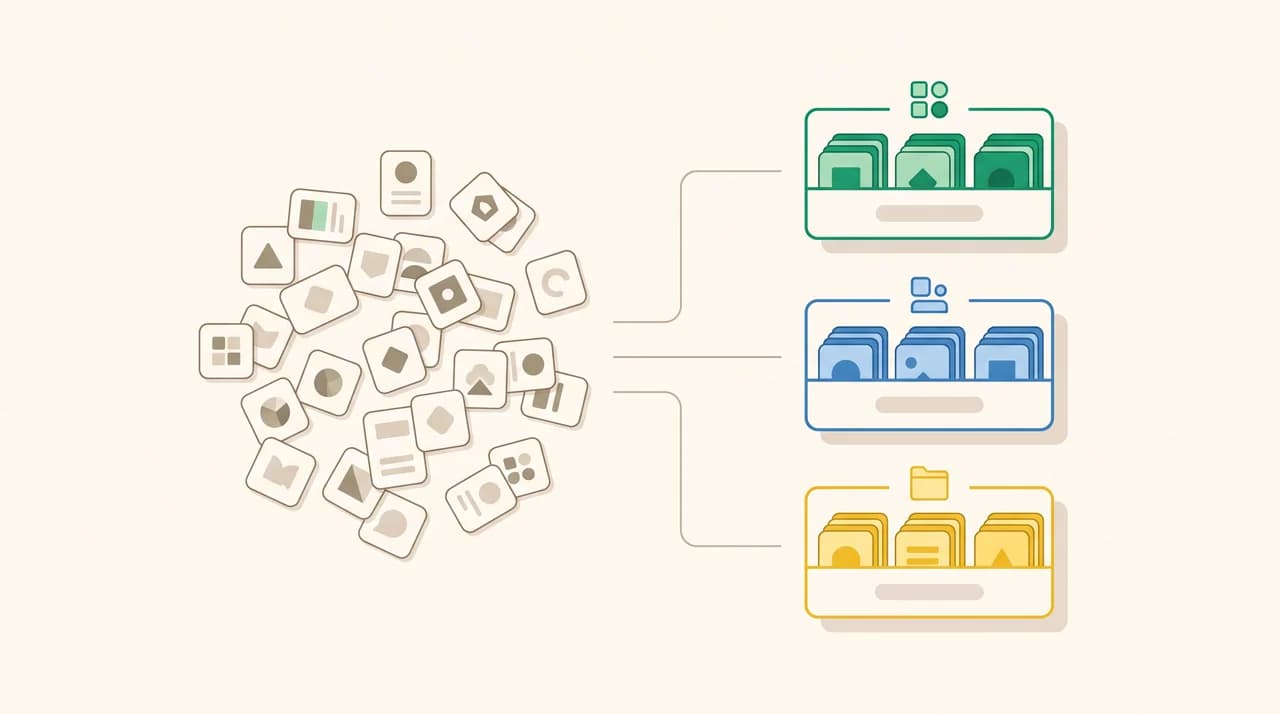
The manual filter approach above works, but it requires ongoing maintenance. New sender patterns mean new filter rules, and eventually you are managing an expanding list of conditions rather than managing your inbox.
We build AI Emaily, an AI-native email client with a dedicated cold-email filter designed for exactly this situation. It identifies unsolicited commercial outreach automatically and moves it to a separate tray — outside your inbox but visible on demand. The filter does not delete anything and does not make irreversible decisions. Anything the system is uncertain about surfaces for you to confirm before it is acted on. No genuine first-contact message disappears silently.
Your review choices shape what the filter routes going forward. When you move a message back to the inbox or confirm it as outreach, those signals refine the filter's classification for your account. You set the sensitivity through your Personal Context settings; the system applies it consistently rather than requiring you to write a new rule each time a sender adopts a new domain or template.
AI Emaily connects to Gmail and Outlook accounts, including managed accounts on Google Workspace and Microsoft 365. The cold-email filter does not require manual rule configuration beyond enabling the feature after connecting your account.
Disclosure
Frequently asked
See it in AI Emaily
Keep reading
Sources
- Gmail Help — Create rules to filter your emails
- Gmail Help — Block or unblock someone in Gmail
- Microsoft Support — Mark email as junk or block senders in Outlook
- Microsoft Support — Use inbox rules in Outlook
- Microsoft Defender — Configure anti-spam policies in Microsoft 365
- FTC Consumer Advice — Spam and unwanted email

Written by
Nafiul HasanNafiul Hasan is an entrepreneur and AI automation system builder with 10+ years of experience turning messy, manual workflows into reliable automated systems. He designs and ships AI enterprise solutions end-to-end — the agent logic, the data plumbing, and the product people actually use — and founded AI Emaily to give busy professionals their attention back. He writes here from the builder's seat: what works, what breaks, and how to put AI to work without giving up control.