How to Opt Out of Marketing Emails From Companies

The short answer
Go to your account settings on the company's website and find a Communications, Notifications, or Email Preferences page. Turn off promotional categories while keeping order confirmations, shipping updates, and security alerts. Under US CAN-SPAM, the company must honour the change within 10 business days.
Stop marketing emails but keep order updates using a company's email preference centre — step-by-step for major platforms, plus what to do when it fails.
On this page
If you want to stop marketing emails from a company without losing order confirmations and shipping updates, the route is the account-level preference centre, not the unsubscribe link in the footer. The preference centre controls the whole relationship: promotional blasts, newsletters, product announcements, order updates, shipping alerts, and account security notices each sit on their own toggle. Turn off the categories you don't want; the rest keeps arriving.
Most people skip the preference centre because it takes a few more steps than a single click — and because it requires logging into your account rather than acting from inside the email. The result is a false choice between enduring the promotions and losing the useful transactional mail alongside them.
This guide covers the preference centre route: how to find it, which email categories to expect, and where major platforms put these controls. The route works for companies you have an account with. If you never signed up with the sender, the path is different — that is covered in the related article on getting off email mailing lists. And if you use the preference centre and the emails keep arriving, the article on what to do when a company ignores your unsubscribe request covers the next steps.
Preference centre vs unsubscribe link: what each one does#
The unsubscribe link in a marketing email's footer is typically a List-Unsubscribe mechanism tied to the specific campaign or mailing list that sent that message. Clicking it removes your address from that list. If the same company runs a separate newsletter list, a promotions list, and a product-update list, you may need to click through each one separately. The mechanism itself — how that click is processed behind the scenes — is explained in the sibling article on what happens when you click unsubscribe.
A preference centre is an account setting, not a campaign action. It is a page on the company's website where they map out all of their email programmes and let you enable or disable each one. The change writes to your account record and applies to every future email from that company's sending system, not just the next campaign in the series.
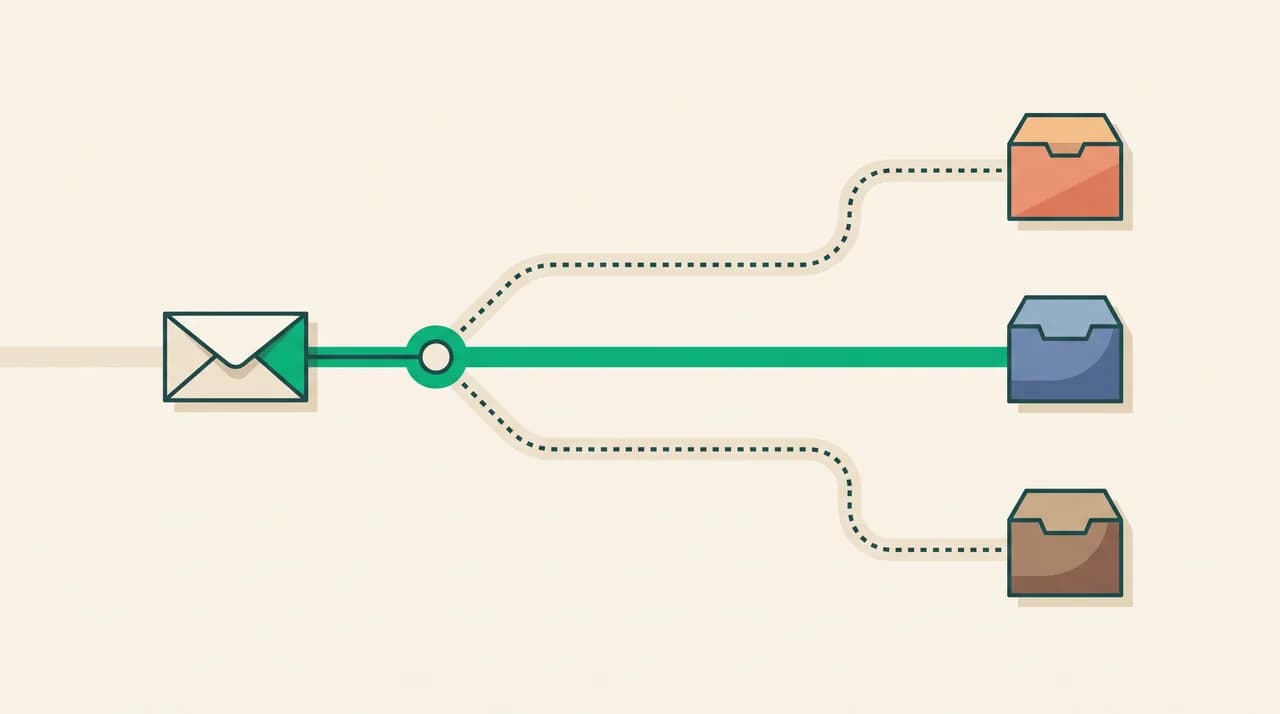
A preference centre also gives you the tools to keep what matters. Transactional email — order confirmations, shipping notifications, password reset links, account security alerts — is normally a separate category that you can leave enabled while turning off everything promotional. A plain unsubscribe link does not offer this distinction: it removes you from a list, and that list may be the one that includes your receipts.
When to use each
How to find and use a company's email preference centre#
The preference centre is almost always inside your account settings on the company's website, not inside the email itself. The reliable path is through account settings rather than the email footer.
- 1
Log in to your account on the company's website
Go to the company's website and sign in with the email address you used when you registered. If you can't remember your password, use their password reset rather than creating a new account — a new account starts a new preference record and does not carry over your history or notification settings.
- 2
Navigate to account settings
Look for a menu labelled Account, My Account, Profile, or Settings. On most platforms this appears in the top-right corner behind your name or avatar. Click through to the main settings page.
- 3
Find the email or communications section
Inside account settings, look for a section labelled Notifications, Communications, Email Preferences, Marketing Preferences, or Subscriptions. The exact label varies by company. If you don't see it in the main settings menu, check a Privacy or Data settings subsection.
- 4
Review the email categories
The preference page should list each type of email the company sends. Common categories include Promotional offers, Sales and deals, Newsletters, Product updates, Order and shipping notifications, Account security alerts, and Partner or third-party offers. Read each label before toggling so you know what each one covers.
- 5
Turn off promotional categories and keep transactional ones
Disable promotional, sales, newsletter, and deal categories. Leave order confirmations, shipping updates, payment receipts, and security notifications enabled. If a category is ambiguous, keep it on for now and return once you've confirmed the label covers only what you want to stop.
- 6
Save your preferences and note the date
Click Save, Confirm, or Update preferences. Make a note of the date. Under US CAN-SPAM, the company must stop sending commercial email within 10 business days of your opt-out. If marketing mail continues past that window, the sender may be in violation of the law.
Where to find email preferences on major platforms#
The path to the preference centre differs significantly by platform. The table below maps the most common ones as of July 2026. Company settings navigation changes periodically, so verify the current path on the platform's own support pages if the route listed here has moved.
| Platform | Path to email preferences | Streams you can control separately |
|---|---|---|
| Amazon | Amazon.com > Account & Lists > Account > Communication Preferences | Promotional offers, Seller messages, Order and shipping, Shopping recommendations, Review requests, Special occasion reminders |
| linkedin.com > Me > Settings & Privacy > Notifications > Email | Connection updates, Job alerts, LinkedIn News, Promotional offers, InMail and messages, Product announcements | |
| myaccount.google.com > Data and privacy > Manage your data and privacy | Google product updates, Promotional offers, Featured content, Surveys and research invitations | |
| Microsoft | account.microsoft.com > Privacy > Manage your data and privacy | Microsoft offers and promotions, Product and service updates, Research invitations, Partner offers |
| Meta (Facebook / Instagram) | facebook.com > Settings > Notifications > Email | Account activity, Friend and connection activity, Marketplace alerts, Promotions and tips, Product announcements |
| Shopify-based stores | Store website > My Account > Email Preferences (label varies by store theme) | Marketing and promotions vs order and account notifications — specific labels differ store by store |
What to do when marketing emails keep arriving after you opt out#
Give the process the 10-business-day window that CAN-SPAM mandates before concluding something is wrong. Marketing emails you were already scheduled to receive before you made the change may still arrive during that period — that is expected, not a violation.
If promotional mail continues past 10 business days, check these causes first. A company may operate multiple brands or subsidiaries with separate email systems: opting out of one brand's promotions does not automatically apply to its sister brands or parent company. You may need to locate the preference centre for each brand individually.
A second common cause is third-party data sharing. Some companies share subscriber addresses with named marketing partners as a separate programme. Those partner emails are governed by the partner's own preference centre, not the original company's. Check whether the current sender is the company itself or a listed partner, and work through the preference-centre process on the partner's own site.
If you have confirmed that a preference change was not honoured and the legal window has passed, your practical options are: set a client-side filter rule in your email app to auto-archive future messages from that sender address, use your provider's block or report function, or file a report with the FTC at reportfraud.ftc.gov for US-based senders. The FTC uses aggregate complaint data to prioritise enforcement action rather than acting on individual reports.
CAN-SPAM covers US senders — other rules apply elsewhere
A faster way: keeping preferences enforced when they slip#
Updating a preference centre once takes a few minutes. Doing it across every account you've accumulated over the years — and then verifying that each change held after the next campaign cycle — is the part that compounds into real time lost. Every new account signup creates a new preference record to manage.
AI Emaily's Rules Brain lets you define inbox rules that automatically file, archive, or label incoming mail by sender address, sending domain, or sender behaviour pattern. Once you've set a preference and want a backstop for the mail that makes it through anyway, a rule handles it silently without requiring another trip to the sender's settings page. The cold-email filter adds a parallel layer for the category this post is not about — commercial mail from senders you have no account with — intercepting it before it reaches the inbox regardless of what any preference centre says. We build AI Emaily.
Frequently asked
See it in AI Emaily
Keep reading

Written by
Nafiul HasanNafiul Hasan is an entrepreneur and AI automation system builder with 10+ years of experience turning messy, manual workflows into reliable automated systems. He designs and ships AI enterprise solutions end-to-end — the agent logic, the data plumbing, and the product people actually use — and founded AI Emaily to give busy professionals their attention back. He writes here from the builder's seat: what works, what breaks, and how to put AI to work without giving up control.