Best Email-to-CRM Sync Tools for Sales Teams (2026)

The short answer
The best email-to-CRM sync is native OAuth two-way sync (HubSpot, Salesforce's Einstein Activity Capture, Pipedrive, or Close) rather than manual BCC, because only OAuth sync supports a standing exclusion list. Add specific domains or addresses to that list before connecting — that's what stops personal mail from being logged, not disabling sync entirely.
The best email to CRM sync tools compared — HubSpot, Salesforce, Pipedrive, Close — and how to stop personal mail from being logged.
On this page
Searching for the best email-to-CRM sync tools usually means one of two problems: emails aren't landing on the right contact record without a manual BCC every time, or a sync has already logged something personal it shouldn't have. Both come down to the same three mechanisms — a BCC or forwarding address, OAuth-based two-way sync, or a sidebar extension — layered onto HubSpot, Salesforce, Pipedrive and Close.
We compared what each mechanism actually captures, what it takes to keep personal mail off the record, and where a client-side email tool like AI Emaily (which we build) genuinely fits — and where it plainly doesn't.
The short answer#
If your CRM is HubSpot, Salesforce, Pipedrive or Close, the sync you want is already sitting in that CRM's settings: turn on OAuth-based two-way sync instead of relying on a BCC line, and build the exclusion list before you connect a mailbox, not after. That one setting decides whether a doctor's note, a resignation email, or a family thread ends up on a deal record.
AI Emaily leads this table because it's the tool most readers land here from, not because it syncs to a CRM — it doesn't, and we're saying that plainly rather than stretch the claim. What it does is keep the inbox itself clean before anything reaches a CRM: Rules route sales threads, a cold-email filter keeps unsolicited outreach out of a rep's view, and Copilot holds every AI-drafted reply for approval. If the real complaint is an unmanageable sales inbox rather than a missing CRM connector, start there. If the complaint is specifically "nothing is logging to the CRM," the other seven entries below are the ones that solve it.
- Need it now, no new tool: turn on your CRM's own two-way sync and populate the exclusion list first.
- Live mostly in Gmail: Streak or Copper put the CRM in the sidebar, at the cost of a per-seat subscription (and Streak no longer has a free CRM tier).
- Compliance-sensitive team — legal, healthcare-adjacent, finance: don't enable sync until the exclude list is populated; see the callout below.
- Problem is really "my sales inbox is chaos," not "nothing logs to the CRM": that's a different job, and it's the one AI Emaily is built for — not CRM sync.
How we compared#
We didn't run these tools ourselves against a live CRM instance. We compared documented capability on four dimensions that decide what a rep actually experiences, checked against each vendor's own current help pages rather than review-site summaries.
- Sync direction — does the tool only read mail into the CRM, or does it also let you send and receive from inside the CRM?
- Capture trigger — automatic OAuth sync in the background, a BCC address you have to remember to add, or a sidebar you click per email.
- Personal-mail control — a standing exclude list (addresses or domains) that applies before capture, versus "be careful what you BCC."
- Packaging shape — free tier, trial-only, or per-seat, described without a specific price, since every number on a pricing page ages within a quarter.
The comparison table#
Packaging shapes were checked against each vendor's own pricing or help page in late July 2026 — verify the current page before you buy. Two of these vendors renamed tiers within the past year, which older reviews still get wrong.
| Tool | Category | Sync mechanism | Personal-mail control | Packaging shape |
|---|---|---|---|---|
| AI Emaily | AI email client | Not a CRM connector — Rules + cold-email filter clean the inbox upstream of whatever CRM sync you use | Automation scopes to chosen senders/labels; nothing is sent to a CRM by us | Free tier + paid plans — check /pricing for current numbers |
| HubSpot Sales Hub | CRM with native sync | BCC/forwarding address, or OAuth two-way sync via the Sales extension | "Never log" list — specific addresses or whole domains | Free CRM tier; paid Starter/Professional/Enterprise, per seat |
| Salesforce (Inbox + Einstein Activity Capture) | CRM with native sync | Einstein Activity Capture connects the mailbox and calendar; Inbox layers tracking on top | Org-wide Excluded Addresses list, extendable (not overridable) per user | Bundled into per-seat editions; Inbox/EAC availability depends on edition — confirm with Salesforce |
| Pipedrive | CRM with native sync | Full two-way sync per connected inbox, or Smart BCC per message | Choose sync scope (all mail vs. contacts only) and which folders sync | Per-seat tiers — Lite/Growth/Premium/Ultimate — 14-day trial, no free plan |
| Close | CRM with built-in email | Two-way sync built into the base product from the entry tier up | No named exclude-list feature found on Close's own site — confirm current options directly | Per-seat tiers — Solo/Essentials/Growth/Scale — 14-day trial |
| Copper | CRM for Google Workspace | Sidebar sync inside Gmail, two-way with Calendar and Drive | No domain-exclude list documented on Copper's public site as of this writing | Per-seat tiers, 14-day trial, no free plan |
| Streak | Gmail-native CRM (extension) | Lives inside Gmail; BCC-based logging plus a sidebar pipeline view | Manual — you decide per email whether to add the BCC line | No free CRM tier (removed 2024–2025); free email tools remain, paid CRM plans per seat |
| Manual BCC-dropbox (any CRM) | Baseline method | You add the CRM's BCC address to emails you choose to log | Fully manual — accurate only because a human remembered, not because anything filtered | No separate cost beyond whatever CRM plan you already have |
Why over-capture is the real risk#
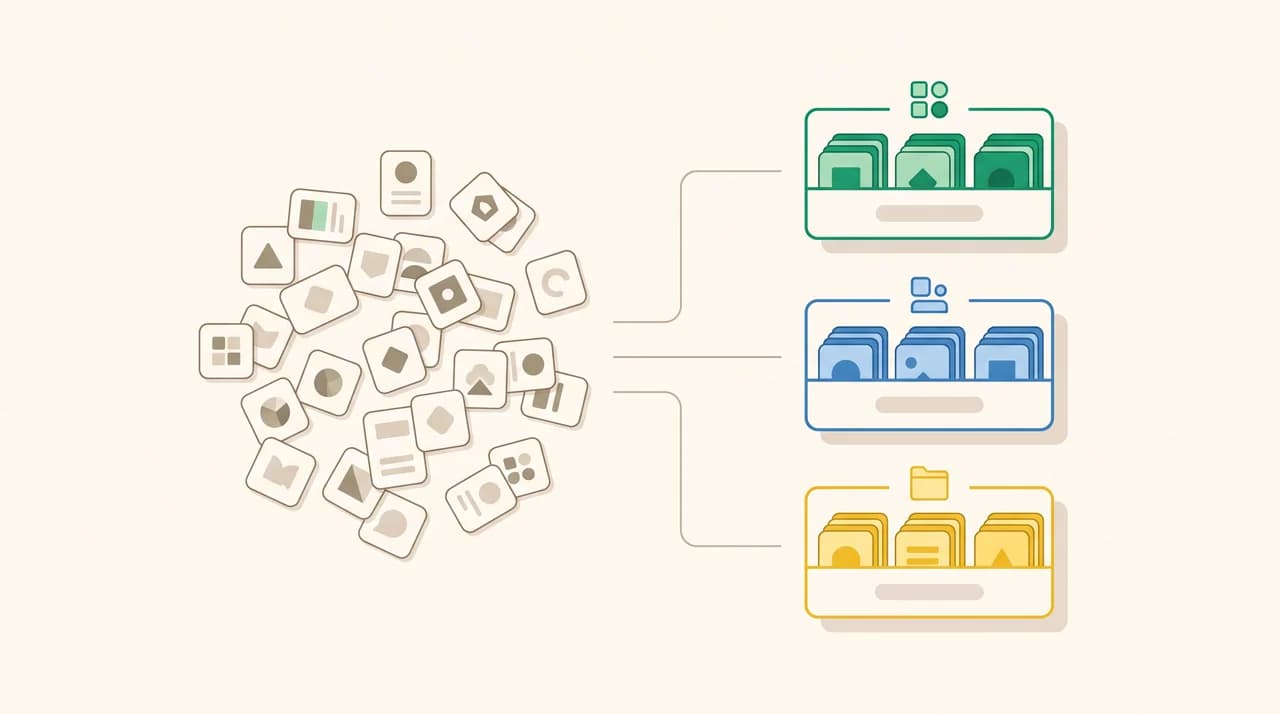
Over-capture isn't hypothetical. An OAuth-based two-way sync connects to the whole mailbox, not just the threads tied to a contact record. Without an exclude list, a doctor's note, a resignation email typed from a personal account and cc'd to a manager, or a family thread can all land on a CRM record other reps can open.
Every major CRM in this list ships the fix, but ships it as an opt-in step, not a default. HubSpot calls it the "never log" list. Salesforce calls it Excluded Addresses, set org-wide and extendable per user. Pipedrive lets you choose which folders sync and whether to sync all mail or only mail matching a contact. None of them turn this on for you.
Set the exclude list before you connect, not after
AI Emaily#
AI Emaily is an AI-native email client, not a CRM connector — the honest place to start given the topic of this page. Two-way CRM sync isn't built, and we're not going to describe a roadmap intention as a shipped feature the way some vendor pages treat their own pricing.
What is shipped, and relevant if a rep's real problem is an unmanageable sales inbox rather than a missing connector: the Rules and Context Brain engine files and routes threads by sender, subject and content; the cold-email filter keeps unsolicited outbound sellers out of a rep's primary view without touching real prospect replies; and Copilot holds every AI-drafted reply for approval before it sends, with an audit trail and undo. None of that writes back to HubSpot, Salesforce, Pipedrive or Close today.
Where this matters for the sync question: if the complaint is "I can't find the deal-relevant thread in the noise," a cleaner inbox solves that upstream of any CRM connector, and pairing AI Emaily with your CRM's own native sync (below) gets you both. If the complaint is specifically "nothing is logging to the CRM," this page's other seven entries solve that — we'd rather point you there than pretend otherwise.
One dimension we'll concede outright: Close and HubSpot have spent years building two-way email sync into a sales pipeline as a first-class feature, with an exclude list, activity timelines and reporting attached to it. We haven't built that, and we're not attempting to duplicate it. We build AI Emaily — an email client that sits upstream of whichever CRM sync you choose.
HubSpot Sales Hub#
HubSpot's email sync is the most mature version of "BCC or OAuth, your choice" in this list. Connect a Gmail or Outlook mailbox via the Sales extension for automatic two-way sync, or use the BCC/forwarding address on emails sent from elsewhere — both routes log to the matching contact and create one if none exists.
Personal-mail control is a named feature: the "never log" list, populated with specific addresses or entire domains. Add it before connecting — messages already logged don't retroactively disappear just because the address is added later, so check HubSpot's current documentation on that behavior before you assume otherwise.
Packaging: HubSpot's CRM has a genuine free tier, with paid Sales Hub tiers layered on for sequences, forecasting and reporting. Confirm current seat pricing on HubSpot's own page — it's split into core and sales seat types, which is easy to misread from a review site.
Salesforce: Inbox and Einstein Activity Capture#
Salesforce splits this into two products that get confused constantly. Einstein Activity Capture (EAC) is the connector — it links your mailbox and calendar to Salesforce and controls what data moves and what's excluded. Salesforce Inbox is the layer on top — a sidebar, email tracking, and scheduling inside Gmail or Outlook. You can run EAC without Inbox; you generally can't get Inbox's tracking without EAC underneath it.
Exclusion is org-wide first: an admin sets a baseline Excluded Addresses list that applies to every EAC user, and individual users can add to it — but, per Salesforce's own documentation, users can extend that list, not override or narrow it. That's a stronger default than a per-user opt-out, and worth knowing if you're the admin setting this up for a team.
Packaging is bundled into Salesforce's broader per-seat editions, and whether EAC or Inbox is included, an add-on, or unavailable depends on which edition you're on — confirm directly with Salesforce rather than assuming parity across editions.
Pipedrive#
Pipedrive's email sync connects a full inbox — Gmail, Outlook, or generic IMAP — for two-way sync, and separately offers Smart BCC: a personal BCC address you add per email when you don't want the whole inbox connected.
Sync settings let you choose scope: all mail, or only mail matching an existing contact, plus which folders to include and how often to sync. That's a meaningfully different control than an exclude list — closer to an allow-list, syncing in what matches rather than filtering out what doesn't.
Pipedrive renamed its tiers in 2025: Essential became Lite, Advanced became Growth, Professional and Power merged into Premium, and Enterprise became Ultimate. If you're comparing against older content — including some still-live review sites — those old names are stale. No free plan; every tier gets a 14-day trial.
Close#
Close builds email as core product rather than an integration — two-way sync is available from the entry tier (Solo) up, syncing every sent and received message against the matching contact regardless of whether it went out through Close's own composer or Gmail/Outlook.
That's a real structural difference from bolting a sync feature onto a general-purpose CRM: there's no separate "connect your inbox" add-on to buy, because email is the primary interface. The tradeoff is that Close is built for outbound-heavy sales teams specifically — a weaker fit if your CRM needs are mostly service or renewals rather than new-business email volume.
We didn't find a public, named exclude-list feature on Close's own site comparable to HubSpot's never-log list or Salesforce's Excluded Addresses. If personal-mail exclusion is a hard requirement, confirm the current mechanism directly with Close before you commit. Packaging is per-seat across four tiers — Solo, Essentials, Growth, Scale — with a 14-day trial.
Copper#
Copper is built specifically for Google Workspace teams: it lives in the Gmail sidebar, syncs two-way with Calendar and Drive, and auto-enriches contact records from conversations without much manual filing.
That tight Workspace integration is also the limit — a weaker fit if your team runs Outlook or a mixed environment, since the product's pitch is depth inside one ecosystem rather than breadth across providers.
We didn't find a documented domain-exclusion list on Copper's public site at the level of detail HubSpot or Salesforce publish; if keeping personal mail off records matters, ask Copper directly what controls exist before connecting a mailbox. No free plan — a 14-day trial across per-seat tiers.
Streak#
Streak turns Gmail itself into the CRM — pipelines, stages and contact data live in the sidebar of your actual inbox, with logging built around a BCC address rather than a background OAuth sync.
That makes personal-mail control entirely manual: there's no standing exclude list to configure, because nothing syncs unless you add the BCC line to that specific email. It's the most over-capture-resistant option here for exactly that reason — but only if reps actually remember to add it every time, which is the same discipline problem BCC logging always has.
One thing worth correcting if you're comparing against older reviews: Streak removed its free CRM tier in 2024–2025. The free tools that remain — tracking, mail merge, snippets — don't include the CRM or pipeline features; every CRM tier is now paid, per seat.
The manual BCC-dropbox baseline#
Every CRM in this list supports a BCC or forwarding address as a fallback, and it's worth listing on its own because plenty of teams still run entirely on it rather than a connected sync.
The honest tradeoff: BCC logging captures exactly what a human decided to log, which means zero over-capture risk and zero automatic capture. A rep who forgets the BCC line — which happens on exactly the busy days logging matters most — leaves nothing on the record at all.
If your team's actual failure mode is missing records rather than over-logged ones, the fix isn't a fancier sync tool. It's moving from BCC to whichever native two-way option your CRM already ships, with the exclude list populated first.
How to choose for your situation#
Match the tool to the failure mode you actually have, not the one that sounds more sophisticated.
- Records go missing because reps forget to log: move from manual BCC to your CRM's native two-way sync (HubSpot, Salesforce/EAC, Pipedrive, or Close) — automatic capture removes the human step that's failing.
- Personal mail is showing up on records: the fix is the exclude list, not disabling sync — populate it with specific addresses and, where supported, whole personal domains before you reconnect.
- You live in Gmail and want the CRM there: Streak or Copper put the pipeline in the sidebar, at the cost of a per-seat subscription (and Streak's CRM tier is no longer free).
- The real problem is an unmanageable sales inbox, not a sync gap: no tool on this list — including AI Emaily — fixes that by connecting a CRM. It's fixed by cleaning the inbox first, which is what AI Emaily's Rules and cold-email filter do; pair it with your CRM's own sync rather than expecting either tool to replace the other.
Verify before you buy
Frequently asked
See it in AI Emaily
Keep reading
Sources
- Gmail API — reference documentation
- Microsoft Graph — mail API overview
- HubSpot Knowledge Base — Exclude recipients from CRM email and meeting logging
- Salesforce Help — Considerations for Excluding Data from Einstein Activity Capture
- Pipedrive Knowledge Base — How can I choose which emails I want to sync?
- Close — Pricing

Written by
Nafiul HasanNafiul Hasan is an entrepreneur and AI automation system builder with 10+ years of experience turning messy, manual workflows into reliable automated systems. He designs and ships AI enterprise solutions end-to-end — the agent logic, the data plumbing, and the product people actually use — and founded AI Emaily to give busy professionals their attention back. He writes here from the builder's seat: what works, what breaks, and how to put AI to work without giving up control.