Leaving Classic Outlook for Windows: Alternatives in 2026


The short answer
You have three: keep classic Outlook, which Microsoft supports until at least 2029; move to a third-party client such as AI Emaily, eM Client or Thunderbird, which connects to your existing Microsoft 365 mailbox without moving it; or use Outlook on the web. Client-only rules, Quick Steps, signatures and PST archives do not follow you.
Alternatives to classic Outlook for Windows in 2026: what moves, what breaks, and how to switch to a third-party client without touching your mailbox.
On this page
- 01This is a choice, not a deadline
- 02What actually moves, and what doesn't
- 03The one real exception: mail that only exists on your PC
- 04Pre-switch capture checklist
- 05The switch, step by step
- 06What breaks when you leave classic Outlook
- 07Running both clients in parallel, and rolling back
- 08Which client to move to
- 09AI Emaily: one inbox across Outlook, Gmail and IMAP
- 10When we are not the right answer
- 11Who should not do this
- 12The verdict
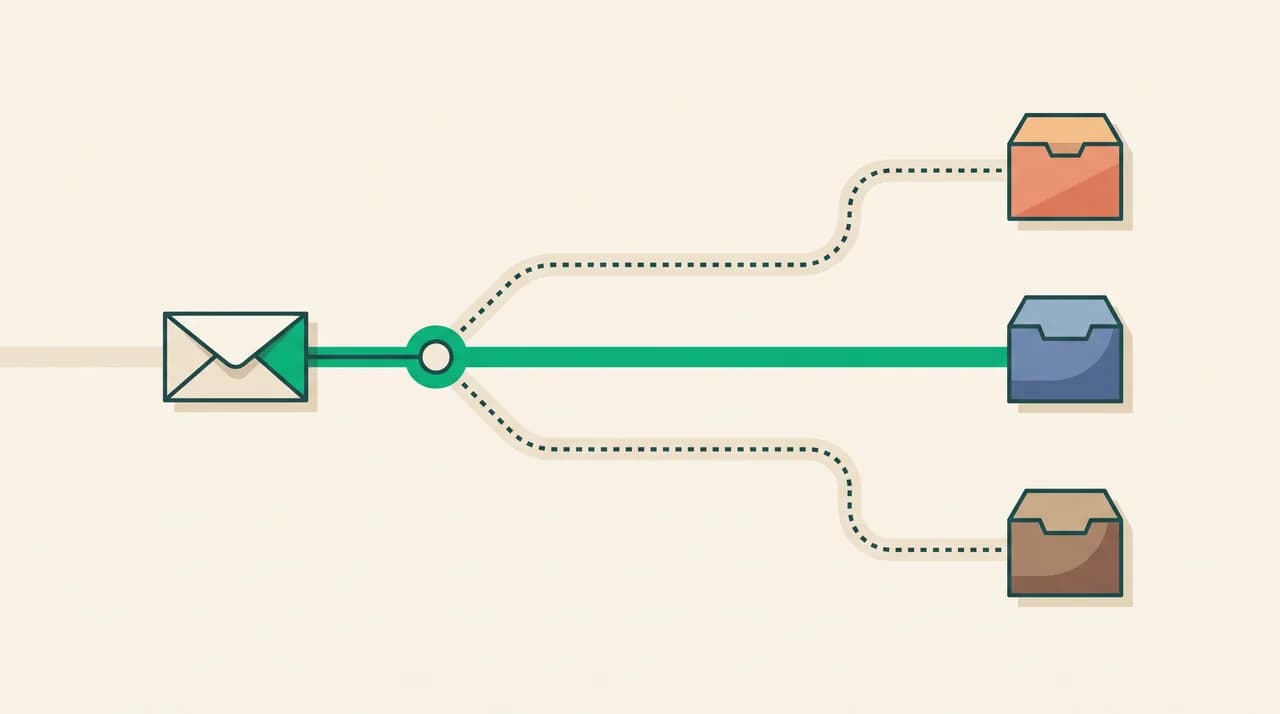
Start with the reassurance, because it is the thing most people are actually worried about: connecting a third-party client does not move or copy your mailbox. Your mail, folders, contacts and calendar live on Microsoft's servers. A new client signs in and reads them, the way a second phone does. Nothing is relocated, nothing is deleted, and your address does not change.
This guide is for people weighing alternatives to classic Outlook for Windows in 2026 as a deliberate decision — you have used classic for years, you do not want new Outlook either, and you are wondering what a third client would actually cost you. It is not written for someone who was flipped onto new Outlook overnight; that reader has a different set of options, and our companion piece on alternatives to the new Outlook app covers them.
What follows is the practical version: what moves, what does not, what to capture before you touch anything, and how to run both clients side by side so the whole thing stays reversible.
Connecting a client is not a migration
This is a choice, not a deadline#
Plenty of pages will tell you to hurry. As of July 2026, Microsoft supports classic Outlook for Windows through both perpetual and subscription licensing until at least 2029, and no firm final cutover date has been announced — the published wording is 2026 and beyond.
The migration runs in three stages: opt-in, then opt-out, then cutover, with at least twelve months' notice before each reaches production rings. New Outlook became the default for small and medium business in January 2025. Enterprise opt-out is scheduled for 1 March 2027, moved back roughly a year from an earlier April 2026 plan.
That March 2027 date comes from message centre post MC949965, updated 20 February 2026. Message centre posts are tenant-scoped and never published to Microsoft Learn, which is exactly why the old date is still circulating everywhere. If you are an admin, confirm it in your own admin centre rather than trusting any blog, including this one.
So there is no gun to your head. Leave classic because a different client does the job better, not because of a date somebody misread.
Do not switch because of a 2026 shutdown headline
What actually moves, and what doesn't#
Almost everything you think of as your email lives on the server, not in Outlook. Outlook is a window onto a mailbox — a very good one, with twenty years of local features bolted to it. The server-side things follow you anywhere. The bolted-on things do not.
This table is the whole decision in one place. Read the third column as what a new client sees on day one.
| Item | Where it actually lives | What a new client sees |
|---|---|---|
| Mail and folder structure | On the Exchange or Microsoft 365 server | Everything, after the first sync. Nothing is copied or moved |
| Contacts stored in the mailbox | Server, in the mailbox | Syncs where the client supports contacts; otherwise absent |
| Calendar, meetings and invites | Server | Syncs where the client supports calendar; invites keep working |
| Categories and follow-up flags | Server, as mailbox properties | Usually survive as labels; classic's colour mapping often does not |
| Server-side rules | Run by Exchange, not by Outlook | Keep running regardless of which client you open |
| Client-only rules | Only execute while classic Outlook is open on that PC | Stop running the moment you stop opening classic |
| Quick Steps | A classic Outlook construct | Not read by any other client — rebuild them |
| Signatures | %APPDATA%\Microsoft\Signatures, plus a roaming copy on some Microsoft 365 accounts | Nothing. Copy the HTML across by hand |
| Autocomplete recipient suggestions | A hidden item in your mailbox that only Outlook reads | Empty at first, then refills as you send |
| PST archives | Loose .pst files on your PC or a file share | Invisible until you upload or import them |
| COM and VSTO add-ins, VBA macros | Windows code loaded into the classic Outlook process | Nothing. They do not run outside classic, including in new Outlook |
The one real exception: mail that only exists on your PC#
There is a case where the reassurance at the top needs a caveat. If your account was set up as POP, or if a rule has been dragging mail into a local PST for a decade, then some of your mail genuinely is not on the server — it is in a file on that machine, and no client you connect will find it.
Check before you plan anything else. In classic Outlook, open File, then Account Settings, then Data Files. That list shows every PST currently open and its full path. If you see anything other than an OST for your main account, you have local-only mail.
The fix that works with every client is to put that mail back on the server: create a folder in your online mailbox, then drag the PST contents into it in classic Outlook and let it upload. Once it is server-side, it is visible everywhere forever. Watch your mailbox quota while you do it, and move in batches rather than all at once.
Pre-switch capture checklist#
Thirty minutes with classic Outlook still open saves an unpleasant week. You are capturing the things that live only on this machine, in a form you can retype into anything.
- 1
Export and screenshot your rules
File, Manage Rules and Alerts, Options, Export Rules writes an RWZ file. No other client can read that file — treat it as a specification you will retype. Screenshot the rules list too, because the screenshot is easier to work from.
- 2
Mark which rules are client-only
In the rules list, client-only rules are labelled as running on this computer only. Those are the ones that die the day you stop opening classic. Server-side rules survive untouched, so plan to rebuild the client-only ones first.
- 3
Copy your signatures folder
Paste %APPDATA%\Microsoft\Signatures into Explorer and copy the whole folder. Each signature is an HTML file plus an images folder. You will paste the rendered signature into the new client rather than importing the file.
- 4
Write down your Quick Steps
For each one, note the name, what it does, and how often you use it. Most people find two of their eight are load-bearing. Those two become rules, saved replies, or agent instructions in the new client.
- 5
Find every PST and back it up
File, Account Settings, Data Files lists them with paths. Copy the files somewhere backed up before you change anything. Never delete a PST during a switch — it is the one thing on this list you genuinely cannot recover.
- 6
List your COM add-ins
File, Options, Add-ins, then set Manage to COM Add-ins and click Go. This list is your blocker list. If anything on it is in your daily path with no web equivalent, read the section on who should not do this before going further.
The switch, step by step#
Do this on a normal working day, not a Friday night. You want to be at your desk with classic still installed when the first surprise arrives.
- 1
Check your mailbox will accept a third-party client
Admins can disable IMAP and POP per mailbox, and many tenants require admin approval before a new app gets consent to your data. Ask first. This is the single most common reason a planned switch stalls on day one.
- 2
Connect the account with OAuth, not a password
A current client signs you in through Microsoft's own consent screen and never asks for your password. If a client asks you to type your Microsoft password into its own form, stop — basic authentication has been off for Exchange Online mailboxes for years.
- 3
Let the first sync finish before judging anything
Large mailboxes take a while and clients differ in how much history they pull down initially. Check the folder count against classic, then open something from three years ago rather than only looking at the inbox.
- 4
Rebuild the rules that matter, server-side where you can
Work from your screenshot. Anything you can express as a server-side rule in Outlook on the web will then apply in every client you ever use, including classic. That is a permanent upgrade, not a migration chore.
- 5
Paste your signature back and send a test
Send one to yourself and one to a colleague on a different provider. Check images render and links work — signature images are the most common thing to break in a switch, and nobody notices for a month.
- 6
Change the default mail client last
Only repoint Windows mailto links once everything above has passed. Until then, other apps keep opening classic, which is exactly what you want while you are still deciding.
- 7
Leave classic installed for at least 30 days
Do not uninstall, do not remove the profile, do not clear the OST. It costs you disk space and buys you a rollback that takes one double-click.
What breaks when you leave classic Outlook#
Nothing here is a surprise if you read the first table, but this is the version organised by what you will actually notice, in roughly the order you will notice it.
| What breaks | Why | What to do about it |
|---|---|---|
| Client-only rules | They need classic running on that PC to execute | Rebuild the ones that matter as server-side rules |
| Quick Steps | A classic-only construct with no equivalent format | Recreate as a rule, a saved reply, or an agent instruction |
| Search Folders | Saved classic-side searches, not real folders on the server | Recreate them as saved searches in the new client |
| Signatures | Stored locally in Outlook's own format | Paste the HTML in once and forget about it |
| Autocomplete suggestions | Held in a hidden mailbox item only Outlook reads | Nothing to do. It refills within a fortnight |
| PST archives | Local files that are not part of the mailbox | Upload into a server folder, or keep classic to read them |
| COM add-ins, VBA macros, custom forms | Windows desktop code that only classic loads | Keep classic for that specific workflow |
| Voting buttons and public folders | Exchange-native features surfaced only by Outlook | Keep classic, or move the workflow off email |
| Granting mail-folder delegate permissions | Still assigned from classic Outlook, even though calendar delegation works in new Outlook | Someone in the organisation keeps classic installed |
| A complete offline archive | Classic's OST is a full local copy of the mailbox | Check the new client's offline model before you commit |
Running both clients in parallel, and rolling back#
This is the part that makes the decision safe, and almost nobody mentions it. Classic Outlook and a third-party client can both be connected to the same mailbox at the same time, indefinitely. They are both reading the same server, so read status, moves and deletions show up in both within seconds.
Give yourself a month. Work in the new client, keep classic open on the second monitor, and let the gaps announce themselves rather than trying to predict them. The two things people miss in a paper evaluation are a monthly report that arrives from an automated sender and a rule they forgot existed.
Rolling back is not a project. You open classic, and everything is there, because it was always on the server. The only losses are things you deleted locally during the trial — which is exactly why the checklist says to keep the PSTs and the signatures folder.
- Do not let both clients run automation on the same mailbox. Turn off duplicate rules or triage in one of them, or you will get double-filing and blame the wrong client.
- Keep classic as the delegate-permission and PST tool even after you switch. It costs nothing to leave installed.
- Test on a phone in the same month. A desktop switch changes your mobile client too, and phone triage is where most people actually live.
- Do not cancel or uninstall anything in the first 30 days. The whole point of parallel running is that the decision stays cheap.
The 30-day parallel rule
Which client to move to#
Four options are worth your time, and they suit genuinely different people. Our own client is first because this is our site — the disclosure is in the section under the table.
| Client | Connects to | Runs on | Pick it when |
|---|---|---|---|
| AI Emaily (ours) | Outlook and Microsoft 365, Gmail, IMAP | Web, macOS and Windows desktop apps, iOS app, Android PWA | Your accounts are split across providers and there is more mail than you can hand-sort |
| eM Client | Microsoft 365 and Exchange, Gmail, IMAP | Windows, Mac | You want classic Outlook's shape back, including opening PST archives |
| Thunderbird | Microsoft 365 over IMAP with OAuth, Gmail, IMAP | Windows, Mac, Linux | Free and open source, local storage, or you are on Linux |
| Outlook on the web | Your existing Microsoft mailbox | Any browser | You want to test life outside the classic desktop before changing anything |
AI Emaily: one inbox across Outlook, Gmail and IMAP#
AI Emaily is ours — we build it, so weigh this section with that in mind. It connects Outlook and Microsoft 365 accounts alongside Gmail and standard IMAP, so the accounts you currently open in three windows arrive in one inbox. Nothing migrates and your mail stays with Microsoft; the Outlook setup walkthrough is at /docs/connect-outlook.
The multi-account case is where we are genuinely the strongest answer on this page. Classic Outlook can hold several accounts, but a personal Gmail, a client's IMAP mailbox and a Microsoft 365 account never really feel like one workspace in it. If your leaving-classic problem is fragmentation rather than nostalgia, that is the thing we fix.
It runs on three authority levels. Manual is a fast client with the AI out of the way. Copilot is the default: the agent triages, files, summarises long threads and drafts replies, and nothing sends until you approve it. Autopilot is gated, with an undo window and an audit log of every action taken. Drafting voice comes from a Personal Context you write and client profiles you edit, not from a model reading your old mail — and we do not train on your mail.
Our limits, stated once. The desktop apps are downloadable and real, but they are an Electron shell around the web app rather than a native-toolkit binary, so they will not match a native client on memory footprint or deep OS integration. macOS is Apple Silicon only and not distributed through the Mac App Store. There is no Linux build. Android is a PWA with a native app on the roadmap, and there is no watchOS app. Offline is partial by design — you can read and draft offline, but this is not a complete local archive the way classic Outlook's OST is.
When we are not the right answer#
If what you want is classic Outlook's shape back — a real desktop application with mail, calendar, contacts and tasks in one window, local storage and proper offline — eM Client is a closer match than we are. It also opens PST files directly, which matters enormously to anyone with a decade of local archives. That is a genuine concession, not a polite one: we are an AI client that changes how you work, and eM Client is a conventional client that restores how you already worked.
On Linux the answer is Thunderbird, because we have no Linux build at all. It is free and open source, it keeps mail locally, and it connects a Microsoft 365 mailbox over IMAP with modern OAuth sign-in. What you trade is polish — configuration is manual and support is a forum thread.
Neither of them runs COM add-ins either. Nothing outside classic Outlook does, which is the next section.
Who should not do this#
Some readers should close this tab and stay on classic Outlook. Saying so is the honest version of the advice, and you have until at least 2029 to change your mind.
- You depend on a COM or VSTO add-in. Salesforce logging, DocuSign, dictation tools, document management, a compliance add-in your industry requires — that code loads into the classic Outlook process on Windows and runs nowhere else, including new Outlook. If you use it forty times a day, no client on this page replaces it.
- You work out of PST archives daily. If opening ten-year-old local mail is part of your job and uploading it to the server is not an option, stay on classic or move to eM Client, which reads PST files directly.
- You use Exchange-native features that only Outlook exposes. Public folders, voting buttons, custom forms and granting mail-folder delegate permissions all still need classic. The delegation one catches out whole organisations, because calendar delegation already works in new Outlook and mail-folder delegation does not.
- You run VBA macros. There is no import path anywhere. Rebuilding in Power Automate or Microsoft Graph is a project, not an afternoon.
- You are offline for long stretches. A full local archive is a classic Outlook strength. Check any replacement's offline model honestly against how you actually work, including ours.
- Your admin blocks third-party clients. If IMAP is disabled on your mailbox and app consent is locked down, this is a conversation with IT, not a software decision.
The verdict#
If any of the six situations above describe you, stay on classic Outlook and stop reading roundups. Microsoft's own support window backs that up, and nothing on this page is worth breaking a tool you use every hour.
If your accounts are scattered across Microsoft 365, Gmail and something IMAP, and the real problem is volume rather than the client, AI Emaily is where we would start — and we build it. It connects your Microsoft mailbox without migrating anything, drafts from a Personal Context you control, and sends nothing without your approval unless you deliberately turn Autopilot on.
If you want the old shape rather than a new one, eM Client is the better fit and we will not pretend otherwise. On Linux it is Thunderbird. Whichever you pick, connect it alongside classic, keep both for thirty days, and let the parallel month make the decision instead of an article.
Frequently asked
See it in AI Emaily
Keep reading
Sources
- Microsoft Learn — Guide to product availability and the stages of migration to new Outlook
- Microsoft Support — Outlook for Windows: the future of Mail, Calendar and People on Windows 11
- Microsoft Support — Feature comparison between new Outlook and classic Outlook
- Microsoft Support — Outlook help and learning
- Directions on Microsoft — Microsoft delays by a year its new Outlook rollout
- eM Client — official site
- Thunderbird — official site

Written by
Nafiul HasanNafiul Hasan is an entrepreneur and AI automation system builder with 10+ years of experience turning messy, manual workflows into reliable automated systems. He designs and ships AI enterprise solutions end-to-end — the agent logic, the data plumbing, and the product people actually use — and founded AI Emaily to give busy professionals their attention back. He writes here from the builder's seat: what works, what breaks, and how to put AI to work without giving up control.