Why You Can't Stop Junk Email on Your iPhone (and What Fixes It)

The short answer
Junk email keeps arriving after you block a sender on iPhone because of five separate causes: the default setting marks mail as blocked but leaves it in your inbox; the block does not apply to Gmail or Outlook accounts in Apple Mail; senders rotate addresses; a display name matches but the address differs; or the mail is spoofed.
Blocked senders still arrive on iPhone because of five fixable causes. Here's how to diagnose each one and actually stop the junk.
On this page
- 01Why your blocked sender keeps arriving — and which fix applies
- 02Fix 1: Change what blocking actually does on your iPhone
- 03Fix 2: Block at your email provider, not just in Apple Mail
- 04Fix 3: What to do when the address is not what it looks like
- 05How to tell which cause applies to you
- 06Preventing junk from coming back
- 07Where AI Emaily fits
You blocked the sender. You blocked the sender again a month later. The junk is still there every morning. If you have wondered why you can't stop junk email on your iPhone even when blocking is supposedly in place, blocking can fail for five completely separate reasons — and each has a different fix.
This page is a diagnosis. The five causes are in a table below with a confirmation test and the right fix for each. No part of this assumes the previous block worked.
Why your blocked sender keeps arriving — and which fix applies#
The causes look identical from the outside but are mechanically distinct. Identify yours before you act.
| Cause | How to confirm | Fix |
|---|---|---|
| Blocked Sender Option is set to Leave in Inbox (the default) | Settings > Mail > Blocked Sender Options reads 'Mark as Blocked, Leave in Inbox' — the block is active, but the mail stays visible by design. | Change to Move to Trash. Fix 1. |
| The junk is arriving in a Gmail, Outlook or other non-iCloud account | Check which account the message lands in. If it is not an iCloud account, Apple's block list cannot reach that provider's server. | Block inside Gmail or Outlook directly. Fix 2. |
| The sender rotates addresses | Tap the sender name in the open message to reveal the full From address. If it differs from the address you blocked, the sender is rotating. | Block by domain at the provider level. Fix 3. |
| The display name matches but the underlying address is different | The visible name looks familiar; tapping it reveals an address you never blocked. | Block the actual From address, not the display name. Fix 3. |
| The mail is spoofed — it never came from the blocked address | The From field shows the blocked address, but message headers reveal a different actual sender or a failed authentication check. | Report as phishing and act at the provider level. Fix 2. |
Fix 1: Change what blocking actually does on your iPhone#
When you tap Block this Contact in Mail, iOS marks the sender as blocked — but by default the mail stays in your inbox. Apple calls this 'Mark as Blocked, Leave in Inbox' and it is the factory default. The block is working; the behavior just does not match what 'block' implies.
- 1
Open Settings and tap Mail
On iOS 18 it may be under Settings > Apps > Mail.
- 2
Tap Blocked Sender Options
Three choices appear: None, Mark as Blocked, Leave in Inbox, and Move to Trash.
- 3
Select Move to Trash
Future mail from any blocked sender now goes to Trash instead of your inbox. Mail already sitting in the inbox does not move retroactively.
- 4
Review your blocked list
Go to Settings > Mail > Blocked to confirm the addresses you intended to block are there. The list syncs across Apple devices on the same Apple ID.
The setting that surprises almost everyone
Fix 2: Block at your email provider, not just in Apple Mail#
If the junk is arriving in a Gmail, Outlook or Yahoo account added to Apple Mail, changing Blocked Sender Options does nothing. For those providers, Apple Mail is just an IMAP client — the provider's server delivers whatever it wants and has no knowledge of your iOS block list. Blocking inside the provider's own interface stops the sender before the message reaches your phone.
- 1
Identify which account is receiving the junk
Open the message in Apple Mail and check which account it belongs to. That account determines where you need to block.
- 2
Open the provider in a browser
Go to gmail.com, outlook.com or mail.yahoo.com. The web interface exposes provider-level blocking controls that the iOS Mail app does not.
- 3
Block the sender from within that message
Gmail: three-dot menu > Block [name]. Outlook: three-dot menu > Block. Yahoo Mail: More > Block Sender.
- 4
Report as spam at the same time
Blocking stops future mail from that address. Reporting as spam trains the provider's filter — do both, especially for spoofed mail that appears to come from a legitimate address.
Fix 3: What to do when the address is not what it looks like#
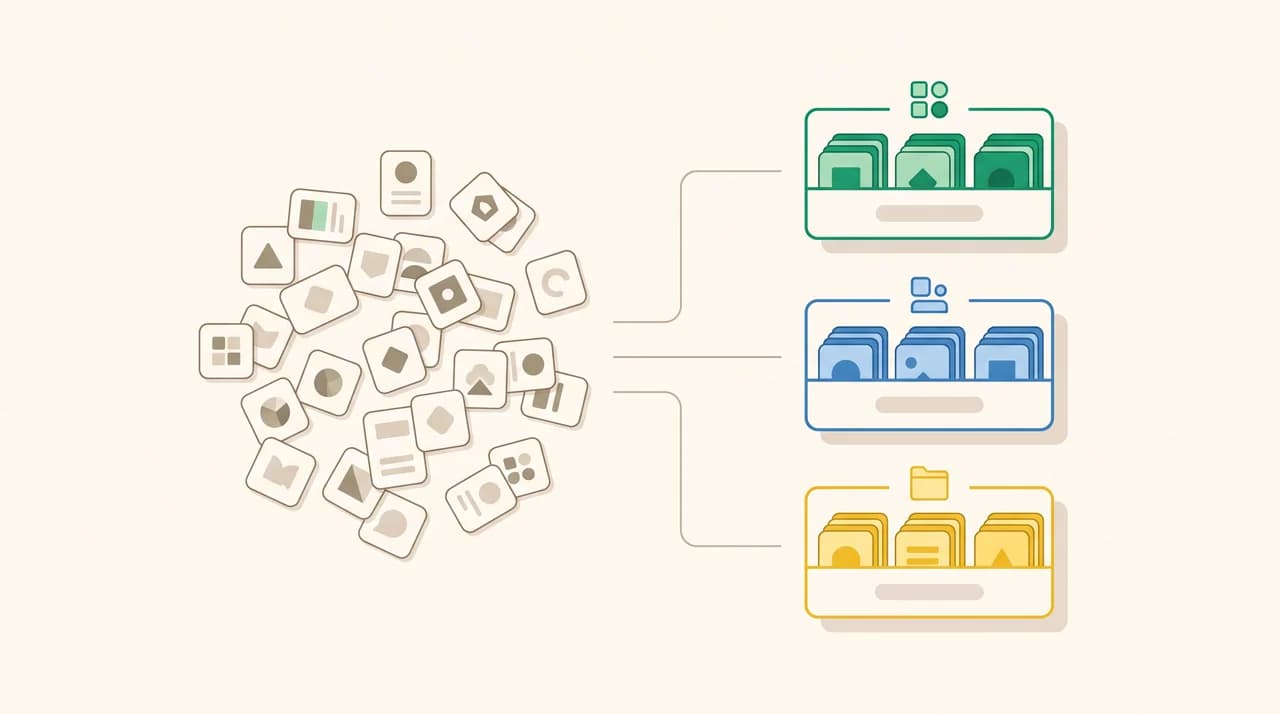
Causes three, four and five share a root: the address doing the sending is not the one you can see. A rotating campaign cycles through many addresses in one domain; a display-name spoof hides a different address behind a familiar name; spoofed mail fakes the From header entirely. Blocking the visible address stops none of these. Act at the domain level instead.
- Tap the sender name in an open message to reveal the actual From address. Confirm you are looking at the real sending domain before deciding what to do.
- In Gmail or Outlook web, create a filter that matches the full sending domain — the part after the @ sign — rather than one address. A domain rule catches every rotated variant at once.
- For spoofed mail that appears to come from a legitimate address, do not block that address — it would block the real person it impersonates. Report as phishing so the provider's filter learns to catch the forged header.
- Use your provider's bulk spam reporting when the same campaign reaches you repeatedly. Providers tune their filters faster on spam reports than on individual blocks.
How to tell which cause applies to you#
Run these checks in order and stop at the first match. Go to Settings > Mail > Blocked Sender Options. If it reads 'Mark as Blocked, Leave in Inbox' — that is the answer. Fix 1 resolves it regardless of anything else.
If Move to Trash is already set, open a junk message and check which account it arrived in. Gmail, Outlook, Yahoo or any non-iCloud account means Fix 2.
If the account is iCloud and Move to Trash is set, tap the sender name and compare the full From address against Settings > Mail > Blocked. If the address is not in the list, the sender rotated — Fix 3.
If the From address does match your blocked list exactly, the message is likely spoofed. Report as phishing rather than junk and use Fix 2 to act at the provider level.
Preventing junk from coming back#
Blocking stops junk that is already arriving. These three habits reduce what arrives in the first place.
- Do not click Unsubscribe in mail you never signed up for. In unsolicited mail, unsubscribe links often confirm your address is active and increase its value on spam lists. Report as junk instead.
- Use a secondary address for online signups and shopping so your primary address stays off marketed lists.
- Check your email provider's spam filter strength — most offer a more aggressive setting that catches rotating-address campaigns before individual blocks become necessary.
Where AI Emaily fits#
The root problem with address-by-address blocking is that a bulk sender can cycle through hundreds of addresses in a single domain faster than you can add them to a list. AI Emaily's cold-email filter matches on sender behavior and domain pattern rather than a single address, so a rotation does not reset it — new addresses from the same campaign are caught without you chasing each variant. The rules brain handles ongoing triage so the mail that matters surfaces and the rest does not. We build AI Emaily.
Frequently asked
See it in AI Emaily
Keep reading

Written by
Nafiul HasanNafiul Hasan is an entrepreneur and AI automation system builder with 10+ years of experience turning messy, manual workflows into reliable automated systems. He designs and ships AI enterprise solutions end-to-end — the agent logic, the data plumbing, and the product people actually use — and founded AI Emaily to give busy professionals their attention back. He writes here from the builder's seat: what works, what breaks, and how to put AI to work without giving up control.