Can You Stop Junk Email Before It's Delivered?

The short answer
Yes, but only the receiving mail server can do it. During an SMTP session, the server can reject a message before accepting it — permanently, at the connection stage. A consumer using Gmail or Outlook.com cannot add anything earlier than the provider's own spam filter, which runs after acceptance.
Can you stop junk email from being delivered? Only your mail server can — here's what acts at each stage and what you can control.
On this page
Can you stop junk email from being delivered before it reaches your mailbox? The short answer is yes — but only if you control the receiving mail server. For most people on Gmail, Outlook.com, or another hosted provider, that server belongs to Google or Microsoft. The pre-delivery rejection layer is theirs, not yours.
Understanding why requires mapping what actually happens during email delivery. 'Stopping delivery' and 'filtering after acceptance' are two different mechanisms, and most reader frustration with junk email comes from expecting one tool to do the job that belongs to another layer entirely. This post walks through each stage in delivery order, names who controls it, and says plainly what you can and cannot configure as a consumer mailbox user.
What Happens During Email Delivery#
Every email travels over SMTP — the Simple Mail Transfer Protocol, standardised in RFC 5321. The sending server opens a TCP connection to the receiving server, and the two exchange a short handshake before any message content is transferred. This handshake is the pre-delivery window: the only stage where the receiving server can permanently refuse a message before it is ever accepted.
During the handshake, the receiving server can check the sender's IP address against reputation databases, validate that the sending domain is authorised to send from that IP (SPF), and confirm the message carries a valid cryptographic signature (DKIM). If a check fails hard enough, the server issues a 5xx SMTP error — a permanent rejection. The sending server gets the error, the message is never stored on the receiving side, and delivery stops there.
Once the receiving server accepts the DATA phase and replies with '250 OK', the message is in the system. What happens next is sorting, not rejection: the server routes the message to an inbox or spam folder. The sending server has already deleted its outgoing copy. The distinction matters because, from this point, no amount of client-side action can 'stop delivery' — the message was already delivered; you are only deciding which folder to put it in.
Who Actually Controls the Pre-Delivery Layer#
If your address is @gmail.com, Google's servers handle the SMTP handshake. Google checks sender reputation, SPF, DKIM, and DMARC automatically, and they query IP reputation data to reject connections from known spam infrastructure. You cannot configure anything earlier than this — there is no dial for it in Gmail settings, because the receiving server is Google's, not yours.
If your organisation uses its own domain (@yourcompany.com), an IT administrator can route the domain's MX records through a dedicated security gateway such as Mimecast, Proofpoint, or Barracuda. The gateway becomes the first SMTP endpoint; it applies its own reject policy before forwarding clean mail to the downstream mail server. This is true pre-delivery blocking, but it requires owning the domain and managing the MX configuration. It is not available to a personal Gmail or Outlook.com account.
Google Workspace and Microsoft 365 admins have more configuration options than free-tier users — quarantine policies, custom spam thresholds, tenant-level allow and block lists. But those settings still apply at Google's or Microsoft's server layer. The admin is configuring a provider's server, not installing an independent gateway.
What You Can Actually Control — and When Each Control Acts#
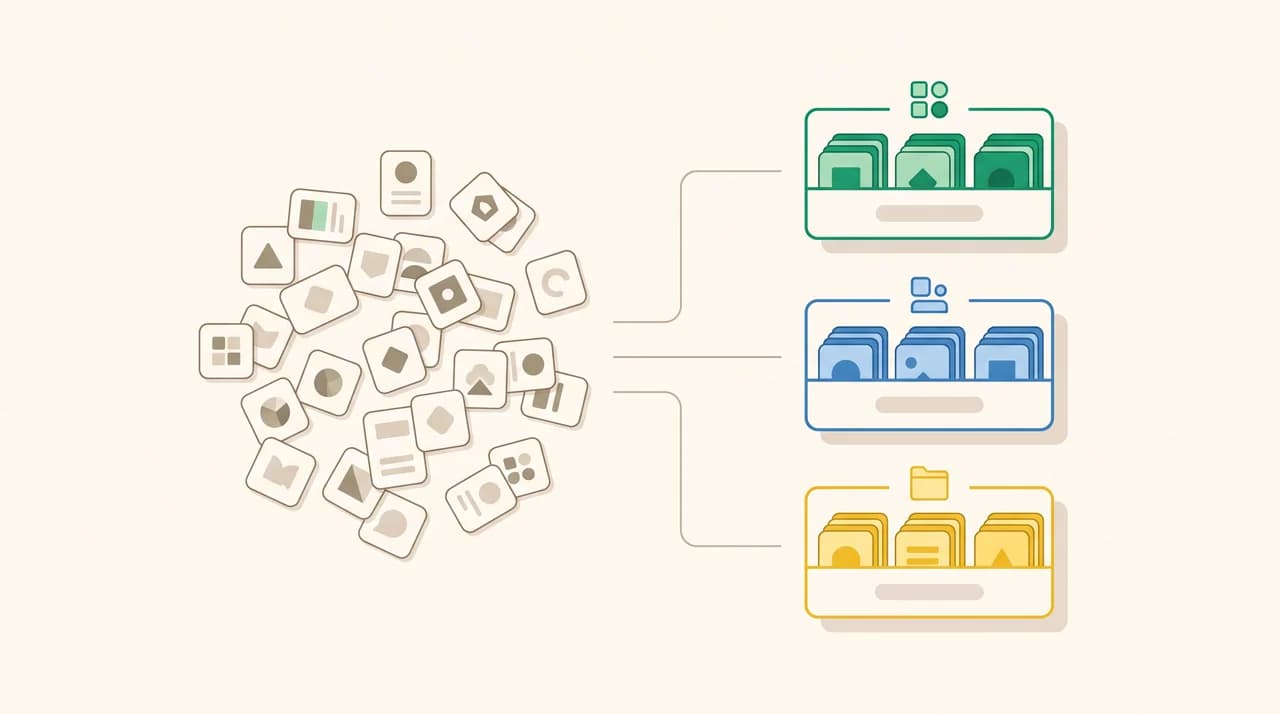
The table below maps each common spam control to the delivery stage where it applies, who can set it, and whether it is available to a consumer on a free Gmail or Outlook.com account.
| Control | Stage | Who sets it | Available on free Gmail / Outlook.com? |
|---|---|---|---|
| SMTP rejection via IP reputation / DNSBL (e.g. Spamhaus ZEN) | Before acceptance — during the SMTP handshake | Mail server operator (Google, Microsoft, or your IT admin) | No — this is the provider's layer entirely |
| Third-party email security gateway (Mimecast, Proofpoint, Barracuda) | Before acceptance — as the first MX hop in the delivery path | Domain owner or IT admin on a custom domain | No — requires owning your domain and editing MX records |
| Provider spam filter (Gmail spam engine, Exchange Online Protection) | After acceptance — server sorts the message into inbox or spam | Provider; users train it by marking spam and not-spam | Yes — via Report spam and Not spam actions |
| Server-side rules and filters (Gmail Filters, Outlook Rules) | After acceptance — applied to messages already in the mailbox | End user via provider settings | Yes — in provider settings |
| Block sender | After acceptance — future mail from that address routes to Junk | End user | Yes — but only matches an exact sending address |
| Mail client triage (sorting rules, cold-email filter, priority separation) | After acceptance — in the mail client after sync | End user via client settings | Yes — depends on the client |
Common Misconceptions About What Stops Delivery#
The most common confusion is that blocking a sender stops delivery. It does not. When you block an address in Gmail or Outlook.com, future messages from that address are moved to Junk or Trash after the server accepts them. The server still processes the message; it is sorted differently. This is also why bulk senders rotating through new sending addresses bypass a block — each new address is unknown to the block list.
A related misconception: creating an email filter stops delivery. Filters also run post-acceptance. The message arrives in your mailbox system; the filter then decides which folder it goes to. A filter cannot refuse a message the server already accepted.
Reporting spam does eventually influence pre-delivery behaviour, but at one remove. When you mark a message as spam, Gmail uses that signal to tune its spam engine, which may affect how similar messages are handled at the SMTP layer in the future. You are contributing a signal to the provider's model — not configuring a gateway of your own. The effect is real, but the decision and the mechanism are the provider's.
SPF, DKIM, and DMARC are sending-side controls, not receiving-side ones
How This Shows Up in AI Emaily#
AI Emaily is a mail client. It connects to your mailbox after the server — Gmail's, Outlook's, or whichever IMAP provider you use — has already made its acceptance decisions. We are precise about this because the subject of this post is delivery stages: AI Emaily does not sit in the SMTP path and cannot prevent your mail server from accepting a message. What it does is triage what lands. The cold-email filter keeps unsolicited outreach separated from your working inbox rather than mixed into it. The spam-protection layer surfaces phishing and spoofing signals that the server's own filter sometimes passes through. Rules you configure run on every sync, automatically. None of that reaches back before delivery — but it is what a client can do with the mail that does arrive, and it is where most of the day-to-day junk problem lives. We build AI Emaily.
Frequently asked
See it in AI Emaily
Keep reading
Sources

Written by
Nafiul HasanNafiul Hasan is an entrepreneur and AI automation system builder with 10+ years of experience turning messy, manual workflows into reliable automated systems. He designs and ships AI enterprise solutions end-to-end — the agent logic, the data plumbing, and the product people actually use — and founded AI Emaily to give busy professionals their attention back. He writes here from the builder's seat: what works, what breaks, and how to put AI to work without giving up control.